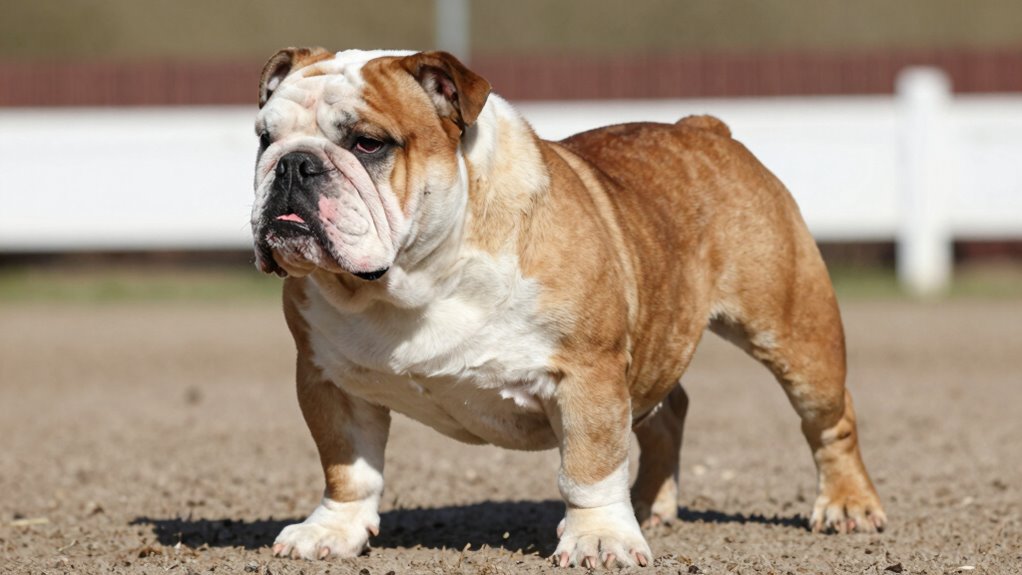
We bred English Bulldogs for bull baiting—a brutal sport where dogs gripped tethered bulls by the nose, lasting up to two hours. They needed wide chests, low centers of gravity, and powerful jaws—measuring 12–15 inches at the shoulder, built for endurance, not speed. Their undershot bite locked on. When the Cruelty to Animals Act of 1835 banned the practice, everything changed. What came next reshaped their destiny in ways we’re still untangling today.
Key Takeaways
- English Bulldogs were originally bred for bull-baiting, a brutal sport requiring strength, tenacity, and a powerful grip.
- Their low center of gravity and sturdy build helped them withstand and control charging bulls in combat.
- Broad jaws and strong necks were selectively bred to maintain a firm grip during bull-baiting matches.
- Short muzzles reduced the risk of injury when clamping onto bulls, enhancing their effectiveness in fights.
- After bull-baiting was banned in 1835, breeding shifted toward developing a gentle, companionable family pet.
Origins in Bull Baiting: The Bloody Sport That Shaped the Breed
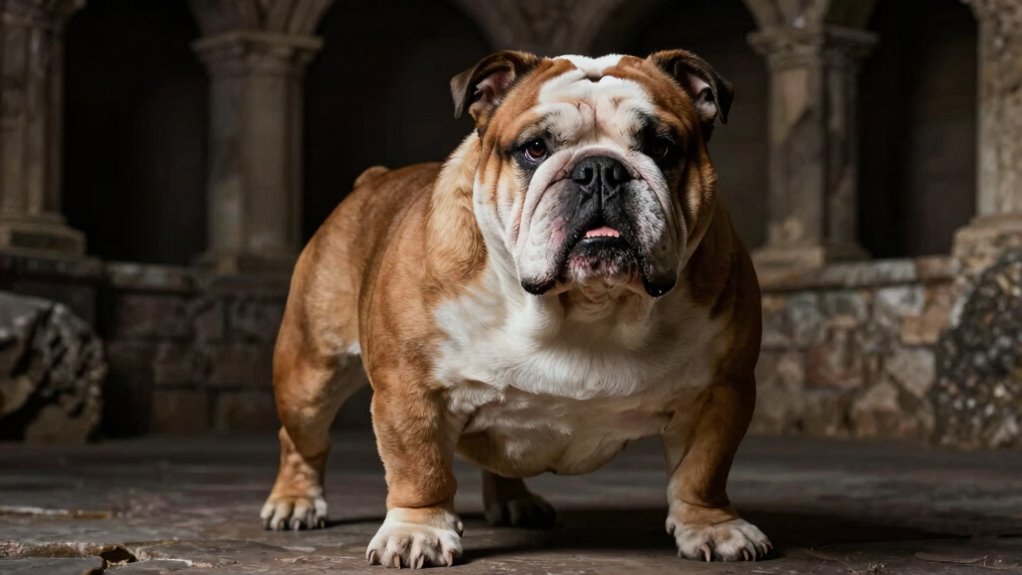
While bull-baiting might sound like a relic from a distant, more violent era, it’s the very foundation of the English Bulldog we recognize today. We bred these dogs for one purpose: bullbaiting. Since the 5th century, we shaped the breed to latch onto bulls with powerful builds and strong jaws built for grip and endurance.
The sport was brutal, yes, but it defined their form—low to the ground, broad-chested, relentless. By 1210, bullbaiting was already official in England, and our Bulldogs became symbols of tenacity.
But when the ban came in 1835, everything changed. No longer needed, the breed faced steep decline. Numbers dropped. Purpose vanished. Yet we refused to let them disappear.
We redirected our focus—reshaping not just looks, but spirit. We softened their frame. And importantly, we nurtured a gentle nature beneath the wrinkled face. Today, providing durable chew toys helps channel the grip and chewing instincts that were once bred into them for sport, allowing these dogs to satisfy their natural inclinations in healthy, constructive ways.
The Bulldog we recognize now? He’s a survivor of bloodsport, yes—but also a rebirth. From violence, we built peace. From aggression, loyalty. And that transformation? That’s where his true strength lies.
Physical Traits Developed for Combat and Control
We shaped the English Bulldog for battle, and every curve of their body tells that story. Originally bred for bull-baiting, their physical traits served a brutal purpose.
We built them low to the ground—just 12 to 15 inches tall—with a muscular, stocky frame, often weighing 40 to 50 pounds, to anchor them during combat. Their broad heads, wide jaws, and pronounced underbite let them grip and control livestock with relentless force. The short, flat face wasn’t just for looks; it reduced the chance of injury when bitten or tossed. A low center of gravity helped them stay upright during a bull’s violent charge.
Even their compact build was calculated—compact, tough, and unyielding. Today, bulldogs are still recognizable by these traits, though they no longer fight. While bull-baiting was banned and their role changed, these features remain.
And now, they come with health concerns—breathing issues, joint stress—side effects of a body built for war, not peace. We made them this way. Now, we’re learning how to care for them differently, including providing proper supportive footwear to address mobility challenges that develop as these dogs age.
The Ban That Changed Everything: 1835 and the End of Bull Baiting
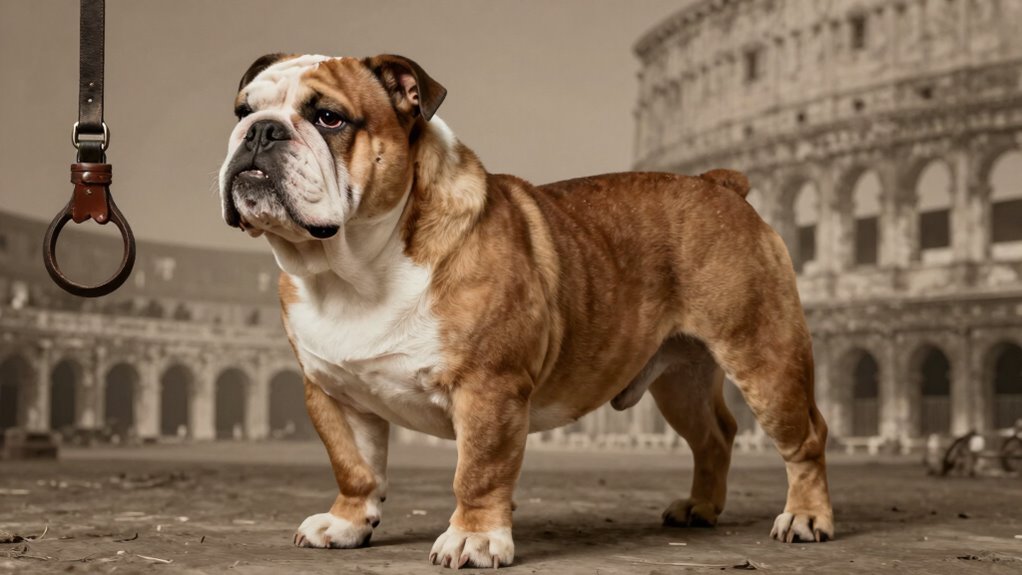
After centuries of shaping Bulldogs for battle, we faced a turning point in 1835—the year bullbaiting was outlawed by the Cruelty to Animals Act. This brutal sport, practiced since 1210, had forged our breed’s defining characteristics: powerful jaws, low-slung frames, and relentless grip.
But with bullbaiting gone, demand for fighting dogs collapsed. We, the Bulldog breeders, stood at a crossroads. No longer tools of combat, our dogs risked extinction.
So we made a choice—shift from aggression to connection. We began refining the very traits we once prized, replacing fieriness with gentler temperaments. The broad skull, wrinkled face, and stocky build remained, but now served a new purpose.
These breed characteristics weren’t for tearing—they were for charming. We nurtured patience, calmness, loyalty. The same powerful jaws that once gripped in arenas could now engage in healthy chewing behaviors that strengthened dental health and mental well-being in peaceful domestic settings.
Though dog shows launched in 1859 and the Bulldog Club formed in 1864, the true transformation began in 1835. That’s when we chose to make Bulldogs not just survivors, but companions.
A family dog, not a fighter. A quiet revolution, written in every wagging tail.
Transition to Companionship: A New Role for Bulldogs
Because the world no longer demanded fighters, we reimagined the Bulldog from the ground up—transforming strength into serenity, aggression into affection. We shaped the breed English Bulldogs into gentle companions, guided by love and purpose.
Today, our devotion shows in their temperament and family compatibility—qualities we’ve nurtured since the 1800s. These are the traits that define us together:
- Calm temperament: Steady nerves, low reactivity, and emotional resilience make Bulldogs ideal for homes with children.
- Affectionate nature: They seek closeness, leaning into laps and greeting each family member with soft grumbles.
- Family compatibility: Their moderate size (40–50 lbs) and indoor adaptability suit apartments and houses alike.
- Reliable companions: Loyal without neediness, they offer quiet presence, not constant demand.
We didn’t just change their job—we changed their heart. Now, in living rooms and on couches, their purpose is clear: to love, and be loved. Maintaining their health and comfort as beloved family members includes regular attention to their sensitive skin, which benefits greatly from proper grooming care.
The Bulldog’s strength is no longer measured in grip or grit, but in the warmth of their gaze and the comfort of their nearness.
The Rise of Dog Shows and Breeding for Appearance
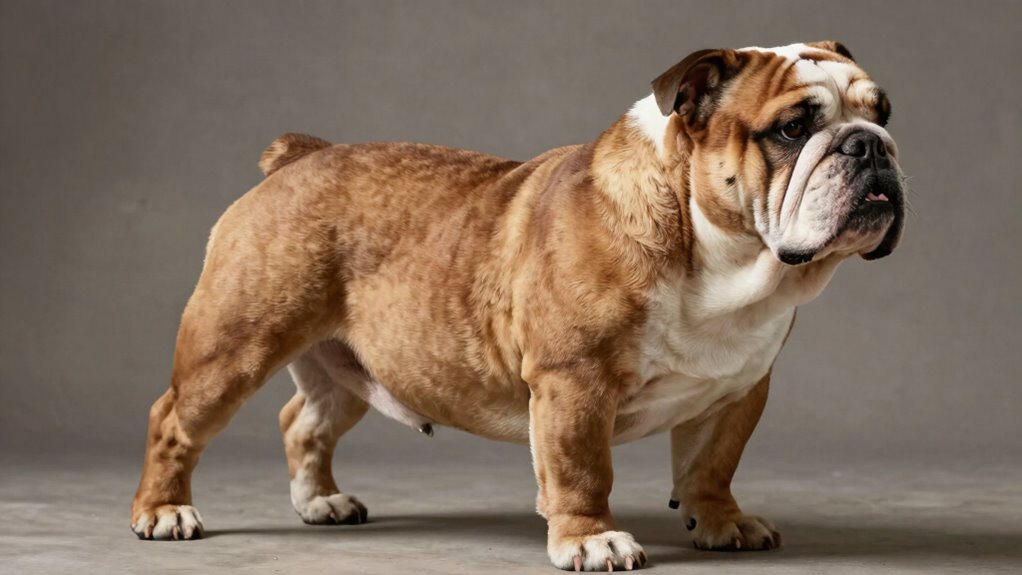
Dog shows emerged in 1859, shifting how we saw Bulldogs—from calm companions to carefully crafted representations of breed ideals. We began valuing appearance as much as temperament, turning breeding into a focused effort to refine physical traits.
These early dog shows gave us a stage to compare our Bulldogs, nudging us toward consistent breed standards. By 1864, the Bulldog Club formed, guiding us with clear goals: a wide head, pronounced underbite, and stocky frame of about 40–50 pounds. We weren’t just raising pets—we were shaping legacy.
The Bulldog Club, Inc., established in 1894, upheld English breed standards, ensuring our dogs mirrored those ideals. In 1877, Bulldogs stepped into the Westminster Kennel Club Show, a milestone proving their new role as show dogs.
We prioritized symmetry, proportion, and structure—details judges could measure. Breeding became precise, intentional, with careful attention to safety features and physical standards that extended beyond appearance to overall breed health. Each generation grew closer to the ideal, judged not for strength or aggression, but for adherence to appearance and balanced physical traits.
We weren’t discarding the past—we were redefining it, one show ring at a time.
Formation of Breed Clubs and Standardization
While the spotlight turned to conformation and type, we took deliberate steps to formalize what a Bulldog should be—inside and out.
We knew that consistent dog breeding demanded structure, especially as the English Bulldog breed evolved. Our mission? Preserve its unique look, temperament, and heart—while guarding against worsening health problems.
- In 1875, the Bulldog Club incorporated and created the first breed standard, setting strict guidelines for jaw length, wrinkle depth, and shoulder width.
- Though the original club faded, the Bulldog Club, Inc. emerged in 1894, becoming the oldest mono-breed kennel club in the U.S.
- The first Bulldog Club of America meeting in 1890 unified breeders and laid groundwork for national consistency.
- Full breed recognition by the American Kennel Club followed, ensuring standards were upheld across shows and litters.
Together, we shaped more than appearance—we built a legacy rooted in purpose, balance, and care.
From Fighting Pits to Family Homes: Becoming a Beloved Pet
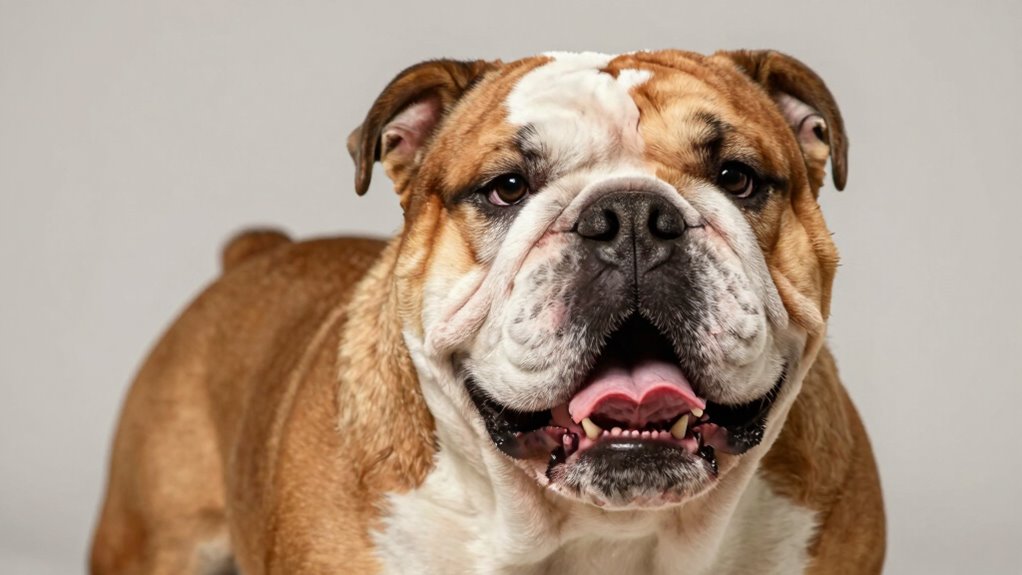
We didn’t just reshape the Bulldog’s body—we redefined its role in our lives. Once forged in the brutal world of bull-baiting, we transformed English Bulldogs into calm, loving companion animals. After the 1835 ban on bull-baiting, we saved them from extinction by refining their breed standards and nurturing their gentle temperament. By the early 1900s, they weren’t guarding pits—they were napping on sofas, becoming loyal family pets.
| Era | Role | Temperament |
|---|---|---|
| 1210–1835 | Bull-baiting | Aggressive, tenacious |
| 1864–1900 | Breed refinement | Calm, trainable |
| 1900–1950 | Family companion | Affectionate, patient |
| Today | Beloved pet | Gentle, sociable |
We founded the first Bulldog Club in 1864, guiding their shift from combat to cuddles. Now, their soft snorts and wrinkled smiles charm homes worldwide. With compact builds—typically 40–50 pounds—and a lifespan of 8–10 years, they fit seamlessly into family life. We bred not just for looks, but for heart. Today, their quiet courage and steady presence make English Bulldogs more than pets—they’re family.
Modern Breeding Challenges and Ethical Considerations
Because the very traits we shaped for centuries now threaten the bulldog’s well-being, we must confront the consequences of selective breeding head-on.
We love our English Bulldogs deeply, but we can’t ignore the health issues built into their bodies. Our breeding practices have narrowed their genetic diversity to an inbreeding coefficient of 10%—more than double the average for purebreds. This has serious consequences:
- Brachycephalic Obstructive Airway Syndrome (BOAS) affects nearly all English Bulldogs, limiting their ability to breathe, exercise, and stay cool.
- Skin fold dermatitis causes chronic infections due to deep wrinkles bred for “character.”
- Dystocia is so common that over 80% of Bulldog births require C-sections.
- The American Kennel Club has yet to enforce reforms addressing these ethical concerns.
We must act—not out of blame, but out of love. Breeding for extreme looks over function has gone too far.
By prioritizing genetic diversity and health over appearance, we can honor the breed’s future. Responsible choices today mean healthier, happier Bulldogs tomorrow.
Let’s lead with care, clarity, and courage.
Frequently Asked Questions
What Was the Purpose of an English Bulldog?
we bred english bulldogs for bulldogging, shaping their stocky build and determined temperament. today, we cherish their gentle nature, adapt training for health issues, and celebrate their role in our homes—companions shaped by breeding history, physical characteristics, and evolving temperament traits.
What Was the Original Purpose of Breeding Bulldogs?
we bred bulldogs to fight bulls—bull baiting was their purpose, shaping their stocky build and fierce temperament traits. our shared bulldog history reveals working dogs forged in grit, then softened over the evolution timeline, transforming breed characteristics from combat to calm, all for love.
Do Bulldogs Have a Purpose?
we believe bulldogs do have a purpose today — their calm temperament traits and loving nature make them cherished companions; despite health concerns, their breed evolution highlights resilience, and their modern roles celebrate both historical significance and unique bulldog characteristics.
Why Can’t English Bulldogs Mate Naturally?
We can’t mate naturally—juxtaposed with desire, our bodies resist. Natural mating challenges arise from breeding difficulties explained by historical breeding practices, health implications discussed, genetic factors considered, and canine reproduction issues we endure together.
Conclusion
We bred Bulldogs to pin bulls, not charm them off couches. Their squat frames—12–15 inches tall, broad chests, undershot jaws—were weapons, not quirks. Then 1835 hit, bull-baiting died, and suddenly, we wanted cuddly lap guards instead. We reshaped them: shorter muzzles, softer temperaments, show-ring flourishes. Now, we wrestle ethical dilemmas—health vs. looks, history vs. humanity. We made them fight; then we made them cute. Now, we make amends.