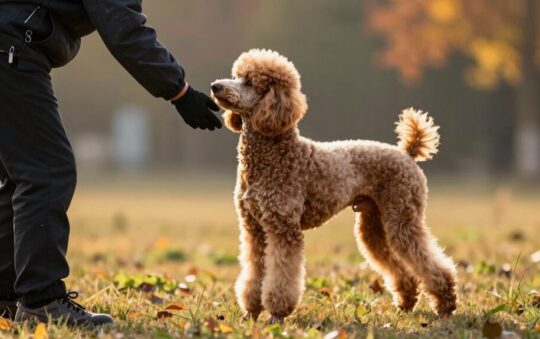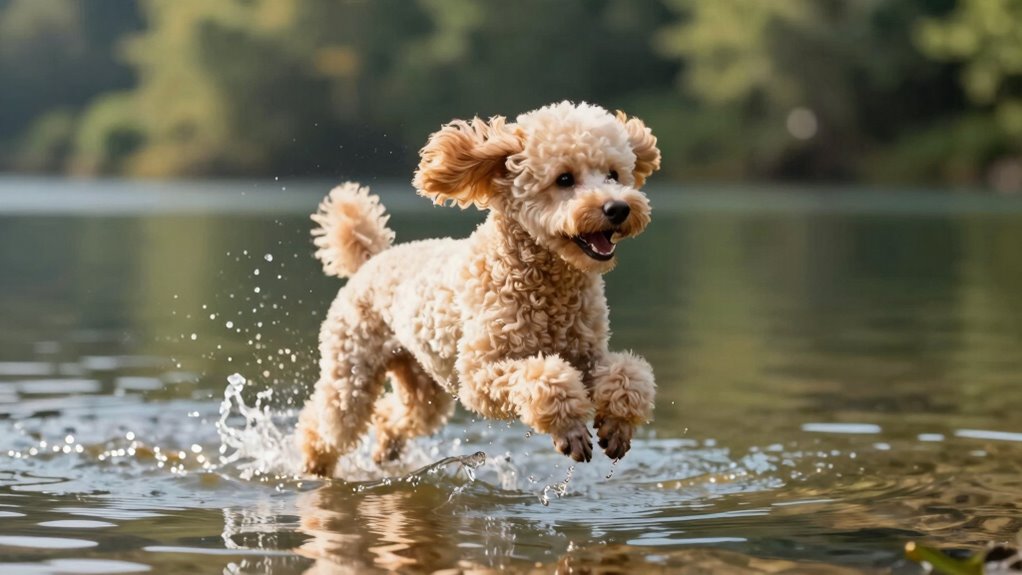
We’ve all seen it—a poodle charging into a lake like it was born to swim. That’s because they practically were. Descended from German water retrievers, they’ve got webbed feet, a dense curly coat that repels water, and a drive to fetch from deep water. You’ll notice their powerful hind legs propel them smoothly, while their coat traps air for buoyancy. It’s not just instinct—it’s engineering. And what happens when instinct meets anatomy? Something fascinating unfolds.
Key Takeaways
- Poodles inherit strong swimming instincts from their origins as water retrieval dogs bred for stamina and precision in water.
- Their dense, water-repellent curly coat and webbed feet enhance buoyancy and propulsion, making swimming natural and efficient.
- Instinctual drive to retrieve and play in water stems from deep genetic memory of their original working role.
- Positive early experiences, gradual exposure, and social cues from other dogs encourage comfort and enjoyment in water.
- All Poodle sizes can enjoy water, with activities tailored to their preferences, promoting safety, confidence, and bonding.
The Historical Roots of Poodles as Water Retrievers
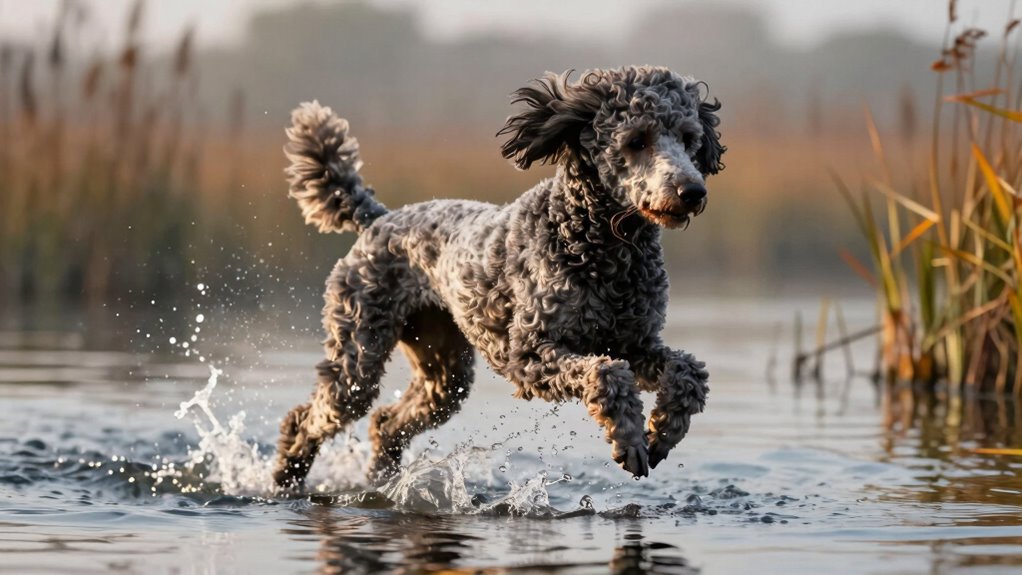
While they’re often seen in show rings with intricately groomed coats, poodles were never just fashion statements—we were built for action, especially in the water.
We’re water dogs, bred for purpose, not just looks. Our name comes from the German “pudel,” meaning “to splash,” and that’s no coincidence—we lived in lakes and rivers, retrieving ducks in cold, tough conditions.
Hunters in Germany bred us for stamina, intelligence, and precision in wet environments. Our dense, water-repellent curls protect us, keeping our core warm while slicing through currents, much like how insulation materials in specialized gear maintain body heat in harsh conditions.
We weren’t just around water—we thrived in it. Every instinct we’ve pulses with the legacy of retrieval, shaped by years of selective breeding for aquatic efficiency.
Think of us as working dogs first, performers second. We’re agile, alert, and wired to respond—whether fetching a duck or chasing a ball into the pond.
That drive? It’s not trained. It’s inherited. So when you toss a stick near water, know this: you’re not just playing. You’re honoring centuries of history—our roots, our purpose, our truth.
We were born for this.
Natural Swimming Abilities and Physical Adaptations
Because we were forged in the chill of northern European lakes and marshes, our bodies evolved for one clear purpose: moving through water with power and precision.
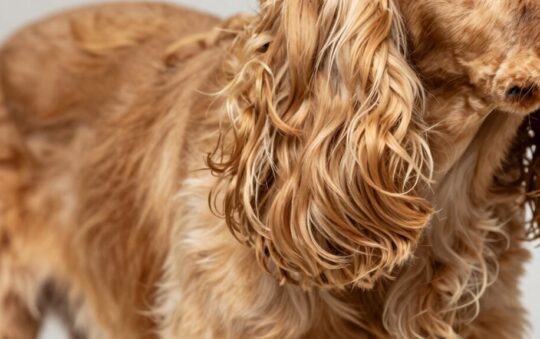
Poodle Parents notice quickly—we don’t just tolerate water, we enjoy swimming with unmistakable ease. That’s no accident. Our curly, water-repellent coat resists saturation, keeping us light and agile. Each strand forms dense, springy curls measuring 1–2 inches, creating a barrier that slows water absorption.
We’ve webbed feet, with skin stretching fully between toes, granting powerful strokes. Our build is lean and muscular—deep chests for lung capacity, tapered muzzles to cut drag, and strong hindquarters driving propulsion.
These traits aren’t hints. They’re blueprints. We were built for retrieval, trained by centuries of ducking under cold waves, emerging with game clamped gently in our jaws. The chewing action from retrieving waterfowl also strengthened our jaws, much like how chewing stimulates saliva production in modern dogs to support oral health.
Today, that history means we dive, paddle, and splash instinctively. Whether it’s a pond, pool, or puddle, we move through liquid like it’s second nature. You don’t have to teach us to swim. You just have to let us in. And watch.
The Role of Instinct in Water Play
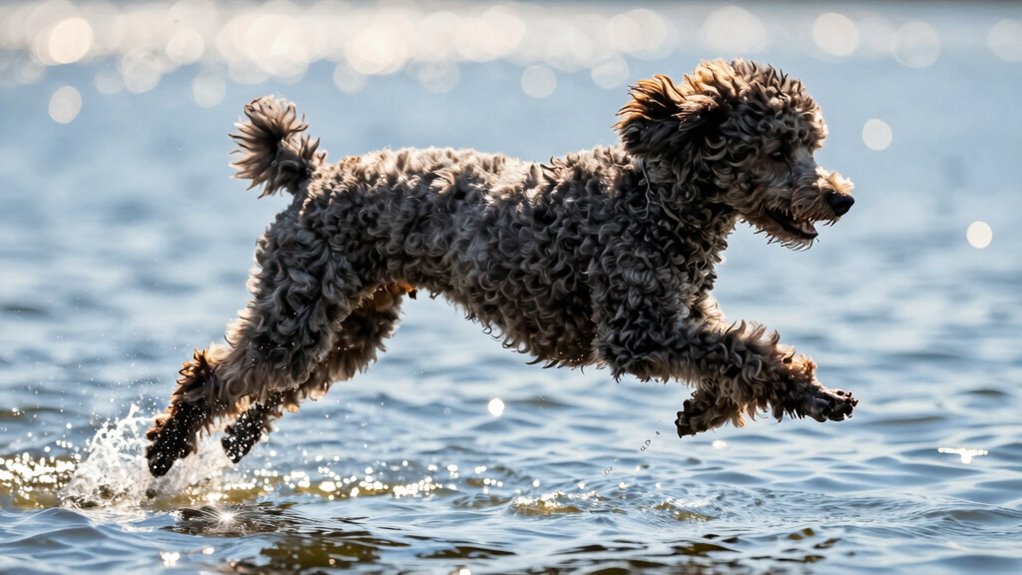
When we hit the water, it’s not just play—it’s purpose in motion. We’re dog descendants of hunters, bred to dive, retrieve, and thrive where land meets water.
Our name, “poodle,” comes from the German “pudel,” meaning “to splash”—a clue to our roots as Water Dogs. We don’t just tolerate water; we’re wired to engage with it. Instinct drives us to leap into lakes, paddle through streams, and fetch toys like it’s second nature.
That’s because for centuries, we were trained to work in water, using our webbed feet, dense coats, and keen minds to retrieve game in wetlands. Even today, when we splash, we’re tapping into deep genetic memory.
Just like our webbed feet give us an advantage in water, proper joint health support ensures we can continue swimming and retrieving well into our senior years without discomfort. Not every one of us rushes in—the degree of comfort varies—but the urge to retrieve, to swim, to *pudel* is bred in the bone. You’ll see it in our focused eyes, our quick turns in water, the way we carry objects back to you with pride.
We’re not just playing. We’re honoring who we’ve always been—Water Dogs, born to make waves.
How Training and Environment Influence Water Affinity
Our instincts may pull us toward the water, but how we respond depends on what happens next. Training shapes that response. When we’re introduced gently—paws first, then legs, then full play—water activities become joy, not fear.
We thrive on positive reinforcement: a cheerful voice, a treat, or a tossed toy in shallow water builds confidence fast. Life vests, snug and buoyant, keep us safe and relaxed during early swims, letting us paddle without panic.
Social cues matter too—we notice when other dogs plunge in, tails high, and soon we follow, drawn by their boldness. Consistent training, even just two short sessions a week, deepens our comfort and skill. Regular grooming with quality grooming tools keeps us comfortable and confident during water play by preventing matted coats that can trap water and debris.
You can start at eight weeks old, in calm, clean water under 75°F. Together, these experiences bond us to water not by instinct alone, but by trust, routine, and your steady presence.
When you guide us with patience, water activities transform from uncertain dips into something we seek, tail-wagging, every chance we get.
Variations in Water Preferences Among Poodle Sizes
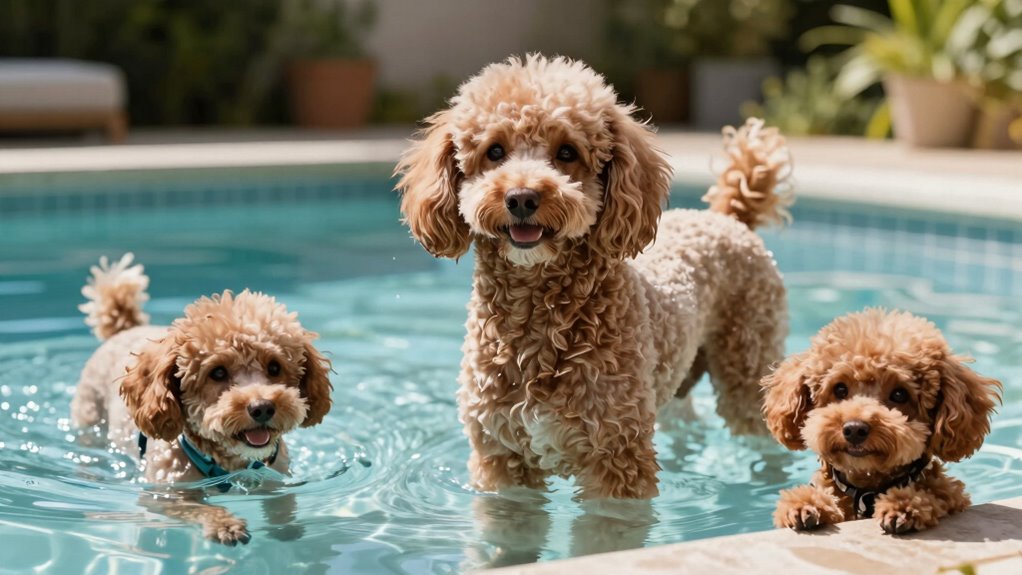
While we all stem from the same water-loving ancestry, not every one of us dives in with the same gusto—our size plays a role in how we experience the water. As one of the most versatile dog breeds, Poodles share a lineage rooted in water retrieval, but our individual preferences vary.
Standard Poodles, standing 15 inches or taller and built for endurance, typically embrace deep water with confidence, their strong limbs powering through with ease. Miniature Poodles, sized 10 to 15 inches, often enjoy water play but may hesitate to swim, preferring shallow splashing or wading.
Toy Poodles, under 10 inches and more delicate, usually favor staying near the shore, dipping paws rather than plunging in. Still, every one of us can enjoy water to some degree—exposure, personality, and positive experiences shape our comfort. Just as mental stimulation during mealtime can improve a dog’s overall well-being, water play tailored to individual preferences can enhance a Poodle’s physical and psychological health.
Whether we’re full-bodied swimmers or cautious dabblers, our love for water ties us together across sizes. With patience, even the shyest of us can learn to appreciate the joy water brings.
The Link Between Intelligence and Water-Based Activities
We’ve all got sharp minds, but it’s what we do with them that sets us apart—especially in the water. As highly intelligent dogs, we thrive on challenges, and swimming fuels both our brains and bodies. We love water not just for the splash, but for the mental game it brings—figuring currents, chasing toys, and learning fast.
Our smarts let us pick up cues quickly, sometimes after just a few tries. We solve problems mid-swim, like how to grab a floating toy or navigate around obstacles. That’s why water play feels so rewarding—it’s fun *and* a puzzle.
Check out how our intelligence shapes our watery joys:
| Skill | Water Activity Benefit | Example |
|---|---|---|
| Word recognition (400+) | Understands swim commands | “Fetch,” “Wait,” “Turn” |
| Fast learning | Masters paddle techniques | Adapts stroke in deep water |
| Problem-solving | Retrieves tricky toys | Navigates logs to reach ball |
| Focus | Excels in training | Learns retrieve-return sequence |
| Curiosity | Stays engaged longer | Explores new ponds confidently |
We’re not just smart—we’re built to love water, think fast, and play well.
Encouraging Safe and Fun Water Experiences for Poodles
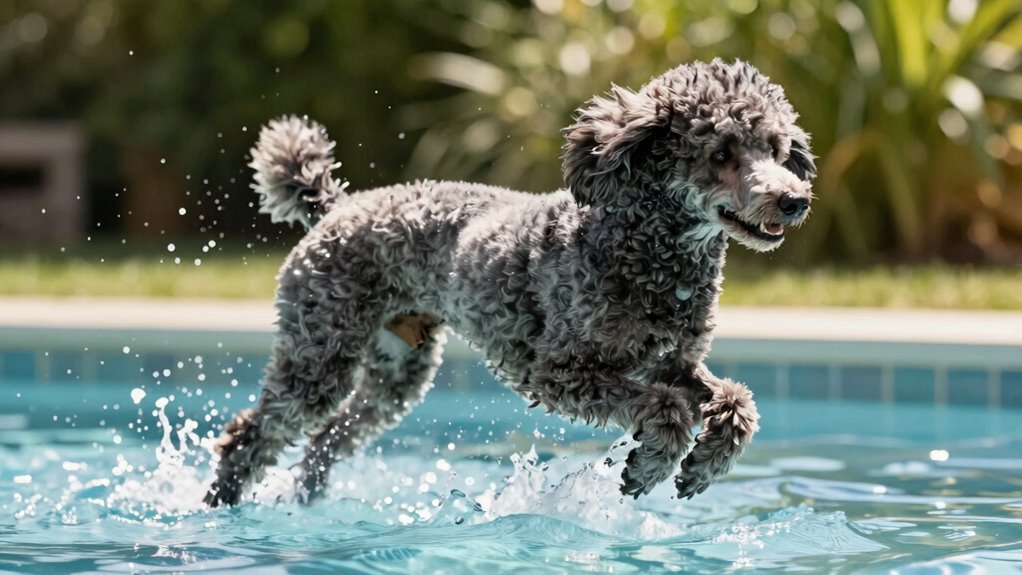
Building on the mental edge we bring to water play, safety and confidence shape how we experience the fun. We grow more confident when introduced gradually—starting in shallow water, about 6 inches deep, using floating toys to encourage retrieval.
We wear life jackets with secure belly straps, giving us extra buoyancy and helping us feel steady. You stay close by—constant supervision isn’t just watchful, it’s essential—for catching slips and guiding safe exits.
Shade and cool zones matter, especially in heat; a 3-foot-wide kiddie pool filled to 5 inches offers safe, low-pressure play. When we see other dogs paddling with joy, we’re more likely to wade in ourselves.
Positive reinforcement—treats, praise, calm voices—reinforces trust. Confidence builds not in leaps, but in small steps: one paw, then another. You control the pace.
Together, we learn that water isn’t just safe—it’s ours to explore. With your steady presence, every splash becomes a shared moment of trust.
Frequently Asked Questions
Why Do Poodles Love Water?
We love water because of our poodle behavior and water preferences—it’s in our blood. We’re born to splash, swim, and retrieve, so we plunge in with joy, splashing you playfully, always craving that wet, wild fun together just like our ancestors did long ago.
Are Poodles Good With Water?
Yes, we’re great with water—we thrive in it. Our water retrieval roots shine through our strong swimming skills. We’re confident, playful, and enthusiastic to plunge in with you, making every splash-filled moment together joyful and intimate.
What Dog Breed Loves Water the Most?
we’ve found newfoundlands love water the most, their strength and heart shine in aquatic dog activities; these water loving breeds rescue and swim with us, turning every splash into a tender, trusting moment we cherish together—pure, joyful connection.
Do Poodles Like to Play in Water?
We’ve seen it in the way they leap—water playtime feels like home, tapping into swimming instincts as old as rivers. You know that joy? We share it with you, watching our poodles splash, trust deep, love strong, every dip a quiet promise between us.
Conclusion
We’ve explored how poodles’ love for water runs deep—quite literally. From their origins as duck retrievers to webbed feet and waterproof coats, they’re built for it. Instinct drives them, training shapes it, and smart minds crave the challenge. Whether toy or standard, each size engages differently. We guide them best with calm, consistent exposure. Think of it like tuning an instrument: match their natural rhythm, and the result is pure harmony between dog and water.