
A Poodle once barked 42 times in three minutes at a fluttering mailbox flag—sharp, insistent yelps like alarms. We’ve all been there: the sudden outbursts, the relentless noise, the neighbor’s stare. Barking is normal, even expected, but when it becomes chronic, it signals something deeper. Triggers hide in plain sight—separation, sounds, unseen stimuli. We’ll help you uncover them, then dismantle the cycle—one calm, deliberate step at a time.
Key Takeaways
- Poodles bark excessively due to intelligence, sensitivity, and reactions to anxiety, excitement, or environmental stimuli.
- Identify triggers like strangers, noises, or separation by logging barking episodes and recognizing patterns.
- Reduce barking by ignoring unwanted behavior and rewarding silence with treats or praise.
- Prevent barking with daily physical exercise and mental stimulation through puzzle toys and training.
- Create a calm environment using quiet spaces, white noise, and consistent routines to reduce stress.
Common Reasons Poodles Bark Excessively

When left alone or confined, we often notice our poodles start barking more than usual—and it’s usually due to anxiety, especially separation anxiety triggered by isolation or small, restrictive spaces.
As Poodle owners, we recognize this breed feels deeply: their intelligence and sensitivity make them prone to excessive barking when stressed. Barking also flares with excitement—greetings, play, or sudden movement spark quick, sharp bursts.
Environmental triggers like loud noises, passing cars, or distant dog barks keep them on alert. Their natural protectiveness drives them to bark at strangers near their territory, and if we react—even positively—we reinforce the behavior.
Boredom worsens it. Without 60–90 minutes of daily exercise and mental engagement, frustration builds, fueling more barking. We see it often: without structure, even the calmest poodle develops habits that disrupt harmony. Incorporating activities like recall training in open spaces can provide the mental stimulation and freedom poodles need to reduce anxiety-driven barking.
Understanding these causes—separation, excitement, environment, protection, and boredom—helps us address excessive barking at its roots. We don’t just manage noise; we meet needs.
For every bark, there’s a reason. With patience and consistency, we can guide our poodles toward quieter, more secure lives.
How to Identify Your Poodle’s Barking Triggers
We already understand why poodles bark—separation anxiety, excitement, environmental stimuli, protective instincts, and boredom—but spotting the *exact* cause starts with close observation.
When your Poodle barks, we pay attention—not just to the sound, but to the moment. We note who’s around, what just happened, and how his body looks. Is he stiff? Wagging? Growling low or yipping high? These clues help us pinpoint barking issues.
We document each episode: time, location, trigger (like passing cars, doorbells, or strangers), and duration. Patterns emerge fast—maybe your Poodle barks every morning at 8:15 when the mail truck turns the corner, or every time the wind knocks the gate.
We distinguish excitement from alertness, so we can respond correctly. Unwanted barking often links to specific sights, sounds, or distances. We start logging this data for a full week—just 7 days can reveal what’s really driving your Poodle barks. For anxious barking episodes, calming collars or other soothing tools can complement your behavior training efforts while you work on addressing the root causes.
Once we identify the triggers, we can calmly, clearly guide him toward quieter responses—without confusion, without stress. Knowledge isn’t just power—it’s peace.
The Role of Anxiety and Fear in Poodle Barking

While some poodle barks signal joy or alertness, others stem from deeper discomfort—especially anxiety and fear. We’ve observed how quickly their stress surfaces through excessive barking.
When left alone, changes in routine or unfamiliar visitors can trigger anxiety. Their barking spikes, often high-pitched and rapid—a clear cry for reassurance. Loud noises, like thunderstorms or fireworks, ignite fear-based reactions; even a car backfiring can set them off.
It’s clear that their sensitivity isn’t fussiness—it’s instinct. Excessive barking in these moments is their way of saying, “I’m not okay.” Left unmanaged, it becomes a pattern. Managing anxiety-related barking can benefit from natural anti-inflammatory ingredients like turmeric, which may support overall wellness and reduce stress responses.
But we can help. A quiet, predictable space—like a corner with their bed and favorite toy—offers safety. We stay calm, avoid over-pampering, and gently redirect.
Early socialization, starting as early as 8 weeks, builds confidence. We expose them gradually—to sounds, people, places—so fear of the unknown fades.
We’re not fixing them; we’re guiding them. With patience, their barks grow less frantic, more purposeful.
Using the Extinguish Method to Reduce Unwanted Barking
Because barking often seeks attention, ignoring it head-on can stop the cycle in its tracks. When our Poodle barks for demands, we turn away or leave the room—no eye contact, no words.
This is the core of the Extinguish Method: we don’t reward the bark. Instead, we wait for silence, then praise and offer a treat or play. Quiet becomes the behavior that gets results.
In dog training, consistency is non-negotiable; everyone in the home must respond the same way each time. A single slip—giving in just once—reinforces the barking long-term.
We never punish our Poodle for barking; fear or confusion only fuels more noise. Over days and weeks, our dog learns: silence earns rewards, barking earns nothing.
The method works because it reshapes motivation. We’re not suppressing the bark—we’re redefining what it means. For additional reinforcement during quiet moments, consider offering dog-specific toothpaste or other low-calorie treats that reward calm behavior without excess calories.
With patience, our Poodle chooses calm.
This isn’t quick, but it’s lasting. We’re teaching connection through quiet, not chaos.
Setting Up for Success: Preventing Barking Before It Starts

When life keeps us busy, setting up our Poodle for success means tackling barking before it starts—by addressing the root causes, not just the noise.
We’ve learned that consistent daily exercise—like 30 to 60 minutes of brisk walks or fetch—burns excess energy that often fuels barking. We make time for mental workouts too, using puzzle toys or short training games to keep their sharp minds engaged.
Early and ongoing socializing is nonnegotiable; we expose our Poodle to new people, dogs, and environments gradually, building confidence and reducing fear-based reactions.
We create a calm environment with a designated quiet space—often a cozy corner with a soft bed, dim lighting, and background white noise or calming music at 50–60 decibels. For walks during low-light hours, a no-pull harness with reflective trim enhances safety while reinforcing calm, controlled behavior on leash.
We leave chew toys or long-lasting treats when we’re away, turning alone time into quiet time.
Together, these habits—exercise, socializing, and a calm environment—form the foundation of prevention.
We’re not just managing barking. We’re shaping a more balanced, peaceful life for our Poodle—and for us.
Training Your Poodle to Bark and Be Quiet on Command
Once your Poodle has a solid foundation of exercise, socialization, and environmental calm, we can begin shaping their vocal behavior with precision.
Training your Poodle to respond to the “speak” and “quiet” commands gives us control over when the dog barks, and when they stay quiet—turning noise into communication.
We make this work through consistency, timing, and love:
- Say “speak” the moment your Poodle barks naturally, then reward instantly—this links the command to the behavior.
- After “speak” is learned, say “quiet” when they pause, wait two seconds of silence, then reward; this teaches deliberate quiet.
- Practice both commands daily in different rooms, with mild distractions, so your Poodle learns to respond anywhere.
We never reward random barking—only responses to our command.
With positive reinforcement like treats and soft praise, we build trust and clarity.
Training your Poodle this way doesn’t suppress their voice; it gives them a language.
Soon, we’ll say “speak,” and they’ll bark once. We’ll whisper “quiet,” and they’ll melt into stillness.
The Importance of Exercise and Mental Stimulation
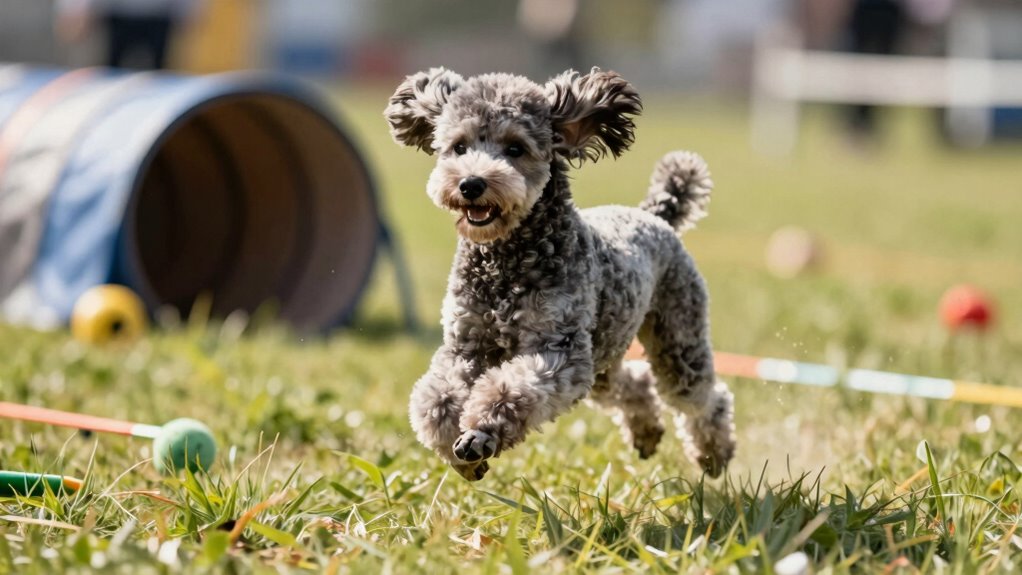
While training builds communication, we can’t overlook what fuels a Poodle’s behavior: energy. We need to channel it right. Without enough exercise—anywhere from 30 minutes to 2 hours daily, depending on size and drive—our Poodles pack on restless energy, and that often pours out as barking dogs. It’s not defiance; it’s a cry for engagement. We understand this.
Mental stimulation matters just as much. Puzzle toys, scent games, short training drills—these quiet the mind like a switch. A tired Poodle isn’t just physically spent; she’s mentally satisfied. Interactive play, like fetch or agility drills, doubles the payoff: exercise plus mental stimulation in one joyful burst.
When we skip this, boredom and anxiety creep in, turning small sounds into barking fits. We’ve seen it. But when we mix routine with surprise—new routes, new toys, new challenges—our Poodles stay calm, focused. We keep reactive barking low by keeping their brains busy.
This isn’t optional. It’s daily care. We give them this, and we’ll hear less noise, more peace.
Creating a Calm and Secure Environment for Your Poodle
We’ve covered how exercise and mental challenges drain excess energy and curb barking at the source, but managing your Poodle’s surroundings is just as powerful in shaping quiet behavior.
When we create a calm and secure environment, we help reduce anxiety and set the stage for lasting peace. Let’s build that sanctuary together:
- Designate a quiet space with a soft bed, familiar toys, and minimal distractions—this becomes your Poodle’s go-to retreat when overwhelmed.
- Introduce calming scents like lavender or chamomile through diffusers or sprays; these natural aromas help soothe the nervous system and promote relaxation.
- Play gentle background sounds—classical music at 50–60 decibels or white noise—to mask sudden noises and maintain a steady, tranquil atmosphere.
We don’t need grand gestures—just small, intentional choices that signal safety.
By anchoring their world in consistency and comfort, we give our Poodles the emotional security they crave. A settled mind barks less.
Together, we’re not just quieting noise—we’re nurturing calm from the ground up.
Managing External Influences That Trigger Barking

Because what happens outside your home can fuel your Poodle’s barking, controlling their exposure to external triggers isn’t just helpful—it’s essential.
We understand how external influences like passing cars, strangers walking by, or nearby barking dogs can set off your pup. These stimuli don’t just annoy—they spike anxiety and fuel mimicking behaviors, making reducing barking feel impossible.
But we’ve got strategies that work. First, apply frosted window films or use lightweight blinds to block visual triggers—no full blackout needed, just enough to blur motion.
Consider setting up a quiet zone away from street-facing walls, ideally 6–8 feet from windows. Introduce white noise or calming music at 50–60 decibels to mask sudden sounds.
We also recommend regular, positive socialization: short, controlled park visits or calm neighborhood walks help your Poodle see the world as less threatening. Over time, these steps reduce reactivity.
Frequently Asked Questions
How to Train a Poodle Not to Bark?
We train our poodle not to bark by spotting barking triggers, using positive reinforcement, and giving consistent commands. We stay patient, reward quiet moments, and redirect energy so we strengthen our bond and keep peace together.
Why Do Poodles Bark All the Time?
We’ve noticed you’re wondering why Poodles bark all the time—coincidentally, we were just exploring that. Poodle temperaments make them alert and vocal; Barking triggers often stem from anxiety or excitement. We use Socialization techniques to help them stay calm and connected with us.
What Is the 3 Bark Rule?
We call it the 3 bark rule—we let our poodles express bark communication signals freely up to three barks, respecting their poodle temperament traits while guiding them with effective barking solutions that build trust and calm together.
At What Age Do Poodles Calm Down?
We notice a sweet coincidence—just as life settles into rhythm, so do our Poodles. Around 2 to 3, we see Poodle maturity bloom, Poodle behavior softens, and that wild Poodle energy? It mellows, darling, it really does.
Conclusion
We’ve walked this path together, and now we see: barking isn’t rebellion, it’s communication. We steady the storm with routine—30 minutes of morning exercise, 15-minute focus games, a quiet crate nook tucked in the corner. Triggers lose power when met with calm, consistent cues. We train *quiet* like a muscle. We build silence, brick by brick, reward by reward. Peace isn’t magic—it’s method.