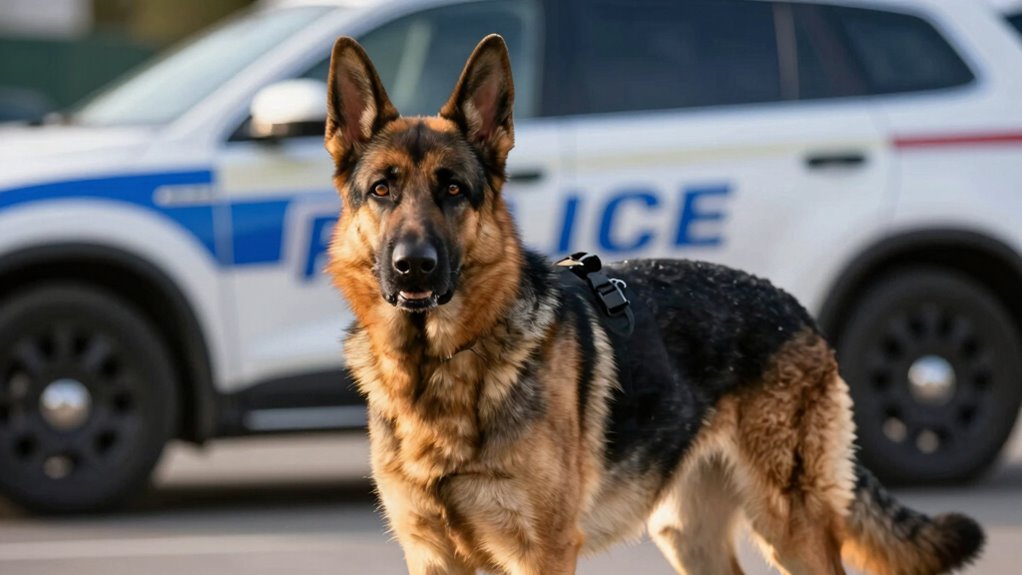
You might not know that German Shepherds make up over 80% of police dog units worldwide. We rely on them for their sharp minds, powerful 75–95 lb frames, and unmatched work drive. They learn complex commands in under 5 repetitions and obey 95% of the time. Their keen senses, loyalty, and adaptability in high-stress roles set them apart—discover what truly makes them the backbone of modern law enforcement.
Key Takeaways
- Bred for intelligence, loyalty, and work ethic, German Shepherds excel in police roles due to their purpose-driven origins.
- They master commands with 95% first-time obedience, showcasing exceptional trainability and problem-solving skills.
- With a bite force up to 238 PSI and athletic build, they possess the physical power for suspect control and endurance.
- Highly versatile, they perform detection, tracking, protection, and search-and-rescue missions with precision and reliability.
- Strong handler partnerships built on trust and communication ensure effective performance while balancing safety and control.
History of German Shepherds in Police Work
When it comes to police work, few breeds have shaped history like the German Shepherd. We trace their rise to Max von Stephanitz, who in the early 1900s bred German Shepherds for purpose, not looks. He valued intelligence, loyalty, and persistence—traits that made them stand out immediately among working dogs.
By the 1910s, German police departments began formal tests, and by the 1920s and 1930s, they were standard in law enforcement roles. Their service didn’t stop there. During World War I, they served in the military as Red Cross dogs, messengers, and ammunition carriers—proving adaptability under pressure.
We’ve seen how those early successes laid the groundwork for modern use. Today’s K-9 units rely on the same strengths forged over a century ago. German Shepherds aren’t just part of history—they helped define it.
Their precision, drive, and reliability keep them at the forefront of police work worldwide. We trust them because their record speaks for itself. Like other working dogs with demanding roles, German Shepherds benefit from peptides for joint support and overall wellness to maintain their physical capabilities throughout their service years.
Intelligence and Problem-Solving Abilities
We rely on German Shepherds because they think as much as they act. Their intelligence isn’t just impressive—it’s essential.
German Shepherds rank among the brightest dog breeds, mastering commands in under five repetitions and obeying first-time instructions 95% of the time. That sharp mind powers their problem-solving abilities, helping them navigate complex scenarios like tracking suspects or locating hidden narcotics.
We trust them in police work because they stay focused, adapt quickly, and show remarkable trainability. They thrive on challenges, needing mental stimulation as much as physical exercise. Their calm demeanor under pressure can be further supported by calming supplements to manage stress during high-intensity operations.
In high-stress situations, their decision-making skills shine: they assess danger, follow cues, and respond with precision. We don’t just command them—we partner with them.
Their ability to read environments, make split-second choices, and remain calm under pressure sets them apart. German Shepherds don’t just react; they think, adjust, and solve.
That’s why we depend on their intelligence, trainability, and unwavering focus every single day. Their minds are as strong as their instincts.
Physical Strength and Athletic Performance
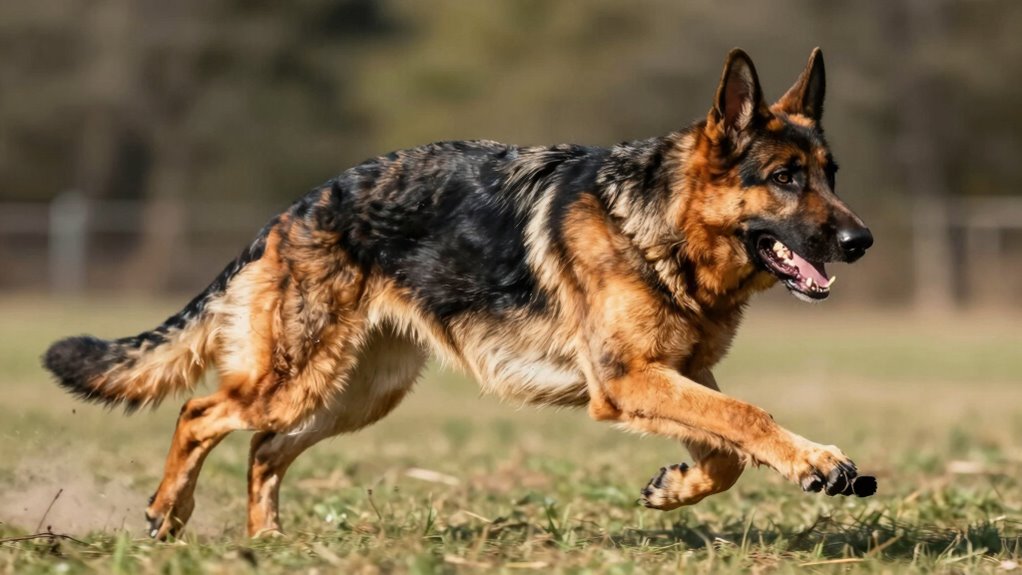
Strength, speed, agility—German Shepherds bring raw physical power to police work every day. We rely on their physical strength and athleticism to tackle the toughest demands of the job. With a bite force up to 238 PSI, they subdue suspects safely and effectively. Their robust body isn’t just imposing—it’s built for action, combining strong legs and a balanced frame that powers through chases, climbs, and jumps.
German Shepherds move with precision. Their agility lets them weave through rubble, scale fences, or dart into tight spaces during search operations. Whether it’s tracking through forests or clearing buildings, their endurance keeps them going hour after hour. We depend on that stamina during long shifts and high-pressure missions.
This breed’s athleticism isn’t just impressive—it’s essential. From explosive sprints to steady, focused patrols, German Shepherds meet every challenge with power and control. In police work, where seconds count and performance is non-negotiable, their physical strength, endurance, and agility make all the difference. We trust them because they deliver—every single time. Like all working dogs, German Shepherds benefit from appropriate outlets for their energy, with engaging toys helping to maintain their mental sharpness and physical well-being during downtime.
High Drive and Work Ethic
Because they’re born with an instinct to chase and capture, German Shepherds excel in police work where focus and urgency matter most. We see it every day: their high prey drive turns routine patrols into precision operations.
These dogs are motivated, not just by training, but by a deep, wired desire to act. You can feel their commitment when they lock onto a scent or suspect, refusing to let go. Their relentless pursuit instinct means they don’t hesitate, not even under pressure.
With a strong work ethic, they thrive in demanding police tasks—tracking fugitives, detecting narcotics, or storming buildings. They’re enthusiastic to please, yes, but it’s more than that. It’s bravery paired with discipline. We rely on their consistency, their ability to perform repeatedly, shift after shift. Their sustained focus and resilience can be supported through proper nutrition and anti-inflammatory ingredients that maintain joint health during intense physical activities.
Working lines are bred for this—higher drive, sharper focus, unbreakable focus. Each bark, each stride is purposeful.
And when seconds count, their determination doesn’t waver. They’re not just doing a job. They’re fulfilling a role born in their genes and shaped by years of selective breeding. You can trust them—fully, completely.
Versatility Across Law Enforcement Roles
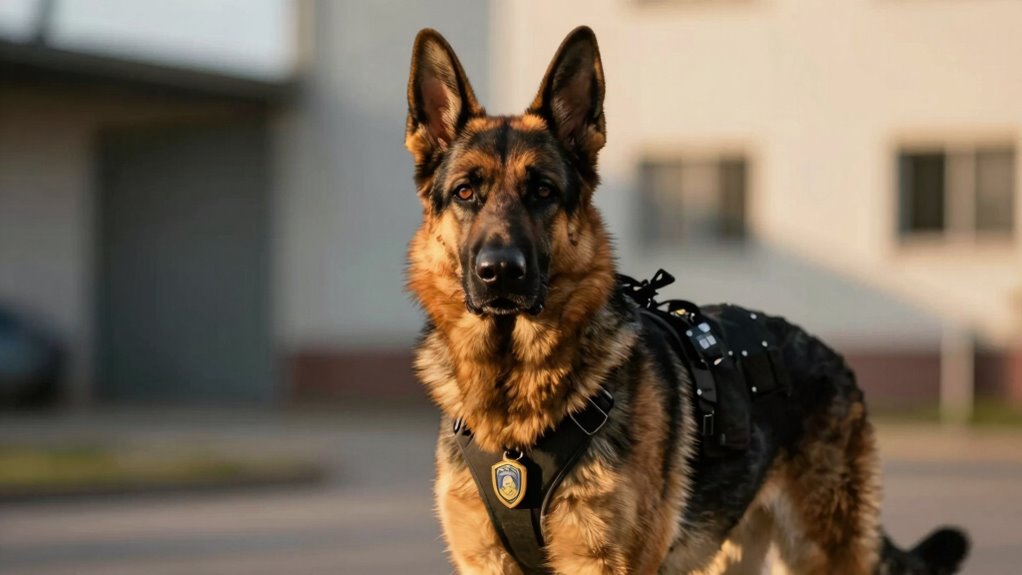
When it comes to police work, few breeds match the German Shepherd’s ability to adapt and excel across multiple roles. We rely on German Shepherds because they’re truly versatile—equally effective in tracking, detecting, and protecting.
These police dogs serve in diverse law enforcement capacities: searching for missing persons, locating hidden drugs or explosives, patrolling high-risk areas, and supporting tactical operations. Their keen noses and sharp instincts make them masters at tracking scents over long distances, even in dense urban or rugged terrain. They’re trained to detect substances at parts-per-trillion levels, a precision that saves lives.
What sets them apart is their adaptability—they shift seamlessly from calm detection work to immediate defensive action when needed. German Shepherds assess threats intelligently and respond with controlled precision, making them dependable in crises. Like slow feeders that provide mental stimulation during meals, these dogs benefit from the cognitive demands of complex police work that keeps their minds engaged and sharp.
They also participate in search and rescue, often covering miles in a single mission. This range of skills—and their consistent performance—makes them indispensable.
In law enforcement worldwide, German Shepherds aren’t just helpers; they’re essential partners, built for complexity, trained for precision, and trusted without question.
Temperament and Handler Partnership
While not every dog can handle the pressure of police work, German Shepherds thrive in high-stakes environments thanks to their balanced temperament and mental resilience.
Our calm, composed nature lets us stay focused amid chaos—sirens blaring, crowds surging, tension thick. We don’t panic. Instead, we assess, adapt, and act with precision. This temperament builds the foundation of a powerful partnership with our handler. Trust runs deep; our loyalty isn’t earned overnight—it’s wired into us. We’ll obey, protect, and stand firm because we’re driven to please.
You rely on us to be reliable. When you call, we respond—no hesitation. Our focus narrows to your commands, your safety, your mission. We’re protective without being aggressive, alert without overreacting. This balance makes us effective, predictable, and safe under pressure. Just as regular dental care keeps working dogs healthy and functional, consistent training maintains our mental sharpness and operational readiness.
Together, we move as one unit: communicating through cues, glances, and years of shared experience. That’s the heart of the handler-partnership—not just training, but connection. You lead, we follow, and we guard your back as fiercely as our own.
Frequently Asked Questions
Why Are Most Police Dogs German Shepherds?
we’re german shepherds because our intelligence levels, loyalty factors, and temperament traits shine in training techniques. our physical abilities, breed history, and health considerations make us reliable partners you can trust in every mission we face together.
What Is the #1 Police Dog?
We’ve seen a thousand battles, and still, the German Shepherd reigns as the #1 police dog—our top pick for police dog selection. We trust their working dog characteristics, master their canine agility training, sharpen their dog scent detection, and rely on advanced K9 training techniques. These law enforcement canines outshine all police dog breeds. We bond, we train, we protect—together.
What Is the #1 Most Protective Dog?
We’re the #1 most protective dog because our guard dog instincts run deep. We’ve got loyalty traits you can trust, natural canine instincts for family protection, and we thrive on training techniques that sharpen our edge—no aggressive breeds match us when it comes to love wrapped in strength.
Who Would Win, German Shepherd or Belgian Malinois?
we’d say it depends—german shepherds pack more bite strength and endurance, while belgian malinois agility wins pursuits; both ace scent detection, but breed temperament and police dog training shape who ultimately triumphs in the field.
Conclusion
We’ve seen their sharp minds, 30-mile tracking range, and 700 PSI bite force. We’ve watched them leap six feet in pursuit, solve complex scent puzzles, and stand firm under pressure. German Shepherds aren’t just dogs—we trained them, trust them, rely on them. Their heart rate stays steady at 120 bpm even mid-chaos. That bond? Unbreakable. That focus? Laser-precise. So when silence falls and danger rises—know this: they’re ready. We’re ready. Together.