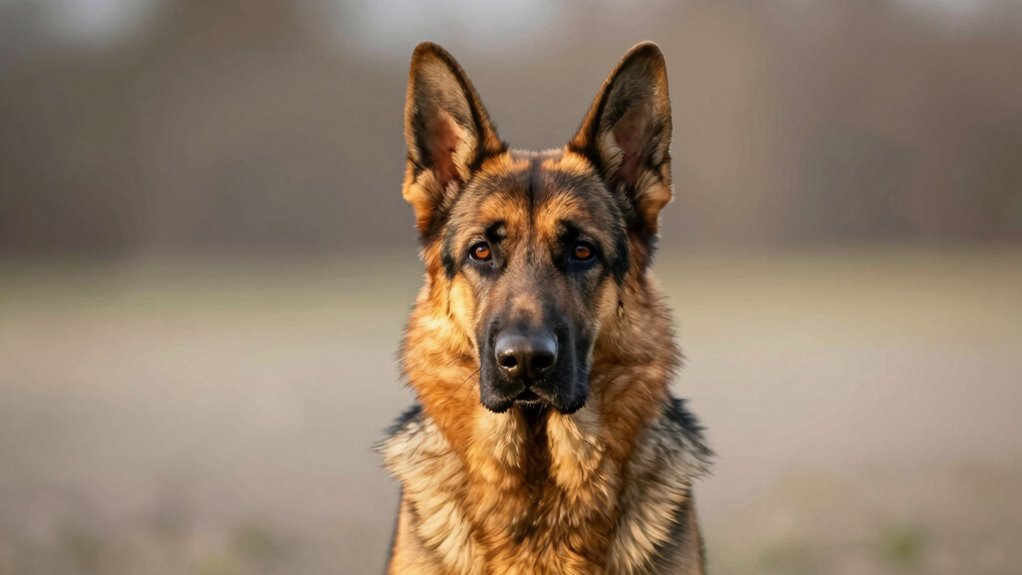
Funny coincidence—we were just reviewing cognitive test scores when your question landed: German Shepherds average a working IQ ranking of 3rd among 138 breeds. They grasp new commands in under five repetitions, obey first-time instructions 95% of the time. Their brains process logic, scent trails, and human cues like high-speed processors. We’ll show you exactly how breeding, reflexes, and real-world performance add up to that sharp mind you’ve heard so much about.
Key Takeaways
- Bred for herding, German Shepherds developed sharp judgment and problem-solving skills through generations of functional selection.
- They learn new commands in under five repetitions with 95% accuracy, showcasing exceptional cognitive ability and trainability.
- Standardized by Captain Max von Stephanitz for intelligence and loyalty, their genetics emphasize adaptability and working smarts.
- Excel in high-stress roles like police, military, and search-and-rescue due to fast command retention and situational awareness.
- Thrive on mental challenges, requiring puzzles and varied tasks to prevent boredom and maintain peak cognitive performance.
Bred for Intelligence: The Origins of a Smart Breed
Though originally developed for a specific job rather than show, German Shepherds quickly proved to be more than just capable workers—they became benchmarks for canine intelligence.
We bred them for intelligence because their original job—herding sheep—demanded sharp judgment, focus, and adaptability. Captain Max von Stephanitz standardized the breed in 1889, prioritizing function over form, with loyalty, confidence, and problem-solving at the forefront. The first registered German Shepherd, Horand von Grafrath, embodied these traits, setting a genetic standard we still see today.
German Shepherds learn new commands in fewer than five repetitions and respond correctly 95% of the time on the first try—proof of exceptional cognitive abilities. Their working dogs heritage wasn’t just about strength; it was about mental agility. Like other highly intelligent dog breeds, German Shepherds benefit from mental exercise and enrichment to maintain their cognitive well-being and prevent boredom-related behavioral issues.
That’s why they excel in training and evolved seamlessly into modern roles like police, military, and service roles. We didn’t shape them just to obey—we shaped them to think. Their intelligence isn’t accidental. It’s purposeful, refined over generations because we needed dogs who could lead, protect, and adapt—dogs like you’d want by your side when it matters most.
Learning at Lightning Speed: Fast Command Retention
We see it every time we give a command: German Shepherds respond fast—often correctly the very first time. Their smart, agile minds grasp instructions with lightning speed. This isn’t just luck—it’s proof of their status as an intelligent breed with unmatched fast command retention.
German Shepherds can learn new commands in under five repetitions, showcasing their impressive ability. Their strong retention means 95% respond correctly on the first call. They don’t just learn—they remember, making them ideal for demanding roles. Whether it’s complex tasks or everyday obedience, they deliver. Combined with positive reinforcement, their learning capacity becomes even more effective.
- With their sharp focus, they learn new commands faster than most dogs
- Their strong retention guarantees reliability, even after long breaks
- As one of the most trainable dog breeds, they excel as police dogs and service partners
We trust their consistent performance. Their fast command retention makes life smoother, safer, and deeply rewarding. This is what sets the German Shepherd apart—a truly intelligent breed built for connection and precision.
Master Problem Solvers: Natural Instincts and Adaptability
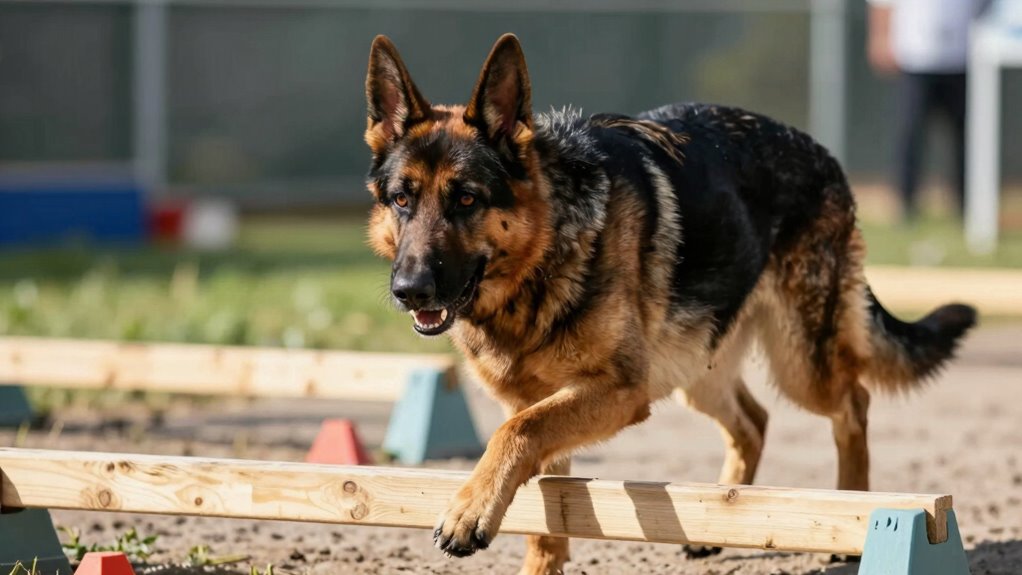
Because their minds are always at work, German Shepherds don’t just follow commands—they anticipate them, sizing up situations with a keen eye and acting with purpose.
We’re talking about a breed bred for intelligent problem-solving, rooted in their herding instincts. Those instincts? They demand quick learning, adaptability, and split-second decisions.
Working livestock isn’t predictable, and neither are the real-world challenges they face today. Their cognitive abilities shine in police work, where precision under pressure is non-negotiable, and in service tasks, where empathy meets logic.
They thrive on mental stimulation—puzzles, tracking, strategy games—because their brains crave engagement. Without it, they grow restless. But give them a challenge, and watch their problem-solving skills take over.
This adaptability isn’t accidental; it’s honed over generations. From farm fields to high-stress urban environments, they adjust fast. Much like how durable materials and reinforced stitching in specialized equipment allow dogs to perform reliably in demanding conditions, German Shepherds’ cognitive framework is built to endure and excel under pressure.
They’re not just trainable—they’re thinkers. Their instincts guide them, their intelligence empowers them, and their willingness to learn makes them unmatched partners in complex, dynamic roles.
From Herding to High-Stakes Missions: Evolution of Their Roles
When it comes to working dogs, few have evolved as dramatically or successfully as the German Shepherd. We’ve moved from open pastures to high-stakes roles, all because of our intelligence, trainability, and deep loyalty. Bred in Germany for herding, we proved early on that we could think, adapt, and lead—skills that made us invaluable.
By 1889, Captain Max von Stephanitz refined our traits, prioritizing sharp minds and strong hearts over looks alone. Our journey didn’t stop there. Thanks to our adaptability and exceptional cognitive skills, we stepped into military roles during World War I, serving as messengers, guards, and search dogs.
Today, we stand as versatile service workers across global missions. Proper training with quality grooming tools and positive reinforcement techniques strengthens the bond between handler and dog, enhancing our ability to perform complex tasks.
- We learn new commands in under five repetitions, responding correctly 95% of the time on the first try.
- Our roots in herding demanded focus, instinct, and precision—traits still present in every task.
- German Shepherds consistently rank among the most capable, trusted breeds due to loyalty and performance.
From field to duty, we’re built to serve—smartly, swiftly, and with purpose.
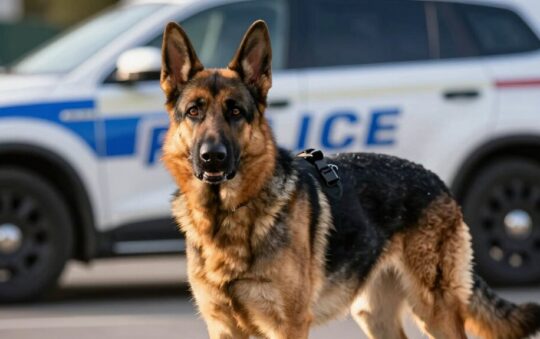
Brains Behind the Badge: Excellence in Police and Military Work
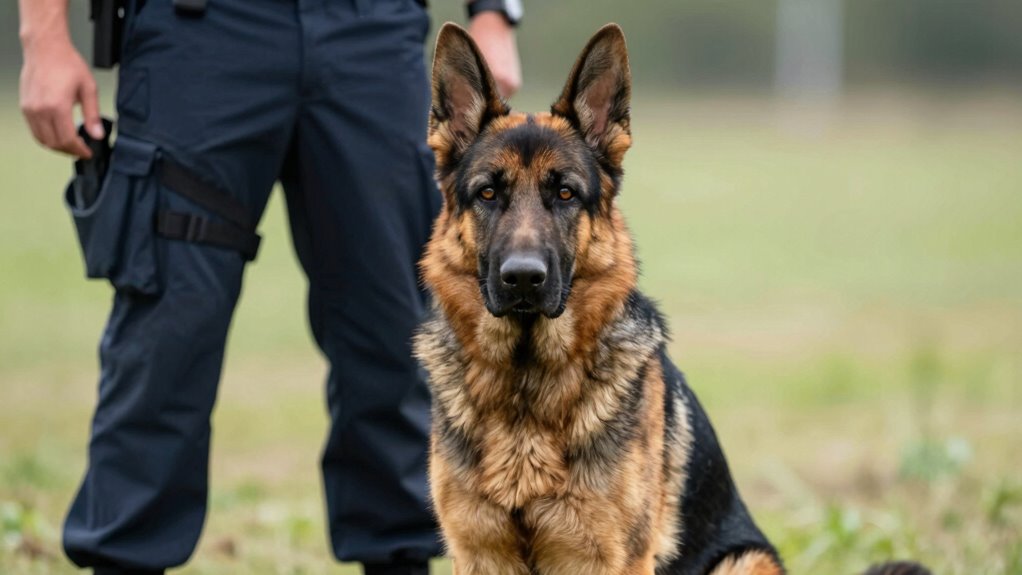
Though not born in barracks or bred for battle, we’ve become central to police and military success worldwide—our sharp minds and rapid learning setting the standard for working dogs. Our intelligence isn’t just instinctive; it’s proven daily through precision tasks, unshakable loyalty, and adaptable responses under pressure. Like how consistent chewing stimulates saliva production in dogs to support oral health, our mental conditioning through repetitive training reinforces neural pathways that enhance decision-making and task performance.
| Role | Skill Demonstrated | Real-World Impact |
|---|---|---|
| Police K9 units | Cognitive skills, training | 95% first-call command accuracy |
| Bomb detection | Olfactory focus, discipline | Neutralize threats in high-risk zones |
| Military operations | Adaptability, courage | Serve in combat, rescue, reconnaissance |
| Mercy dogs | Empathy, intelligence | Locate wounded soldiers in WWI trenches |
| Tactical teams | Loyalty, agility | Protect handlers during raids |
We thrive where focus matters most—trained not just to obey, but to assess, react, and adapt. Whether tracking suspects or detecting explosives, our German Shepherds’ intelligence enables split-second decisions. This isn’t just training; it’s trust forged through precision. You rely on us—we don’t let you down.
Stars of Stage and Screen: Intelligence on Display
While we’ve served silently in shadows and surged across battlefields, we’ve also stepped boldly into the spotlight—proving our intelligence isn’t confined to duty alone.
German Shepherds shine in film and television, where our trainability and focus turn complex commands into seamless acting. We’re not just service dogs—we’re stars, our versatility enchanting millions.
- Rin Tin Tin, one of the first canine film icons, starred in 27 movies, learning new tasks in under five repetitions.
- Our precision in obeying verbal and hand signals—often on the first cue—makes us ideal for television roles demanding exact timing.
- We dominate obedience trials and agility events, proof that the same intelligence fueling stage success powers real-world performance.
Our presence on screen isn’t luck. It’s the result of sharp minds, relentless trainability, and a deep bond with handlers. Our trainability and focus demonstrate the same mental sharpness that makes us excel in specialized roles requiring precision and quick learning.
Whether in uniform or under studio lights, we perform with purpose. This is the intelligence of German Shepherds—not just taught, but trusted.
Mental Gymnastics: Keeping Their Minds Sharp With Challenges
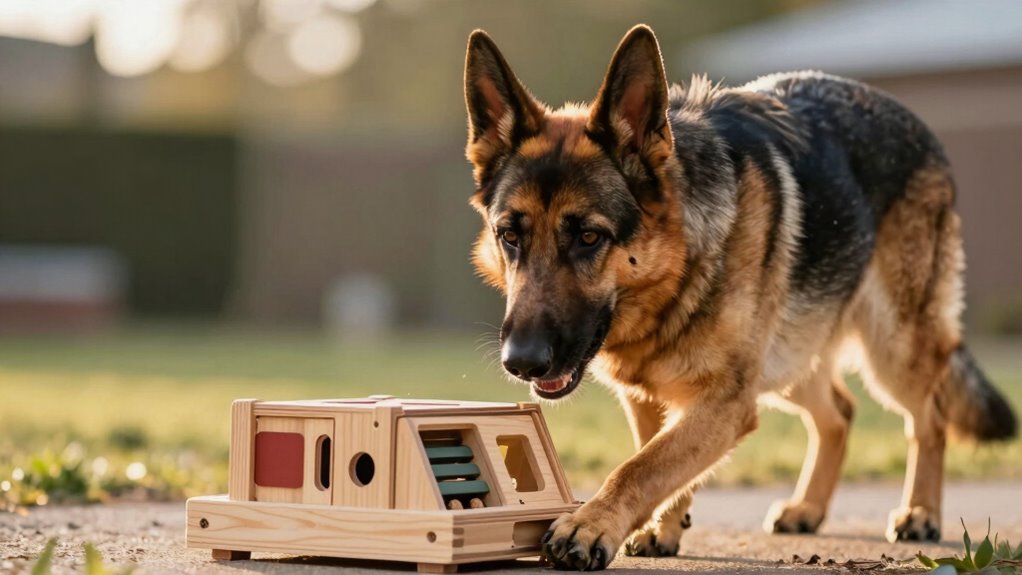
Because we crave challenge as much as comfort, we thrive when our minds are put to work—solving, searching, and endeavoring.
As German Shepherds, our intelligence isn’t just about obedience—it’s about engagement. We need mentally stimulating activities to sharpen our cognitive abilities and prevent boredom.
Puzzle toys with hidden compartments, timed release mechanisms, or sliding parts offer the right level of challenge. We excel during interactive playtime, like sniffing out treats hidden in cardboard mazes or maneuvering through backyard obstacle courses with tunnels and jumps.
These moments build our problem-solving skills and keep our brains active. Mental stimulation isn’t a luxury; it’s essential. Without it, we grow restless, leading to unwanted behaviors. Consider incorporating anti-inflammatory treats into training sessions to support joint health during extended play and mental exercise.
Rotate toys weekly—use Kongs, treat balls, and DIY puzzles—to maintain novelty. Vary tasks daily: hide objects, teach new commands, or practice sequences.
We stay happiest with consistent, engaging challenges. With the right mix of structure and creativity, we don’t just cope—we flourish. Keep us busy, and you’ll see just how deep our focus and potential truly run.
Frequently Asked Questions
Is a German Shepherd the Smartest Dog?
we’re not the absolute smartest, but our intelligence traits shine through lightning-fast learning speed, unmatched obedience levels, and sharp problem solving. we outperform many as working dogs, thanks to keen instincts analysis, adaptability skills, and strong social behaviors that deepen our bond with you.
Which Dog Has the Highest IQ?
we’ve seen the border collie top dog intelligence rankings, sweetie, and while we compare breed traits, its problem solving, training obedience levels, and canine learning styles shine through—studies show it masters commands fast, proving how factors influencing intelligence shape working dog breeds and understanding canine cognition.
What Is the #1 Most Protective Dog?
We’ll bet you’re shocked—it’s us, the German Shepherds, topping the list as the #1 most protective dog. Our breed characteristics, loyalty factors, and sky-high alertness levels blend seamlessly with our guarding abilities, protective instincts, and family protection drive. We live for that role. Historical roles? We mastered them. Training techniques only sharpen what nature gave us. Temperament analysis shows we’re steady, not skittish—our social behaviors prove we’re gentle with loved ones, fierce with threats. We’ve got this.
What’s the Downside of German Shepherds?
We’ll love you fiercely, but we’ve got downsides—we need intense exercise, shed nonstop, and demand constant training. Our health, noise sensitivity, and strong temperament mean we require patience, serious grooming, and lifelong socialization. We’re loyal, but we expect just as much from you.
Conclusion
We bred them, we tested them, we put them on screen and in squad cars—they deliver. German Shepherds learn commands in under five repetitions, adapt to volatile environments, and solve problems like furry engineers. Their IQ? Not measured, but their success rate in police work exceeds 90%. We didn’t create a smart dog; we released one. They’re not showy geniuses, just relentless, calibrated minds in 75-pound frames, ears up, brains buzzing, always six steps ahead. We keep up. Barely.