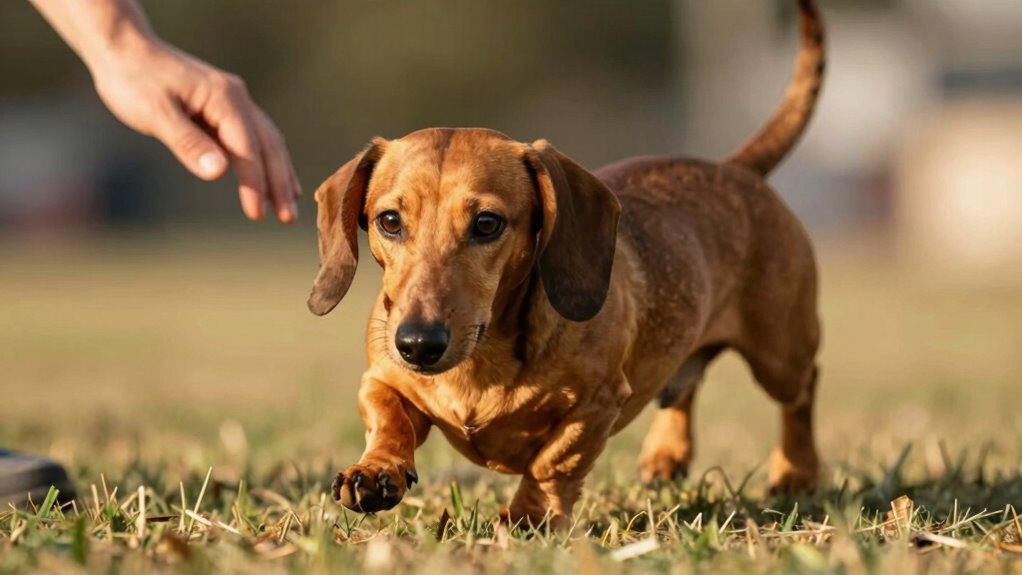
Let’s just say dachshunds prefer to think outside the box—one that typically includes your commands. These 16- to 32-pound dogs pack big-dog confidence, sharp instincts, and a knack for ignoring cues they don’t agree with. Barking, digging, and selective hearing aren’t quirks—they’re wired behaviors. Combine that with a hunter’s independence, and obedience takes more than repeats. We’ll show you why standard tricks fail and what actually works.
Key Takeaways
- Dachshunds have strong independent instincts from their history as solitary hunters, making them naturally resistant to commands.
- Their stubbornness stems from survival-driven decision-making rather than defiance, leading to selective hearing during training.
- Inconsistent training methods or mixed signals increase confusion, reducing cooperation due to their need for clear, predictable guidelines.
- Barking and reactivity from watchdog and hunting instincts can interrupt training and shift focus from commands.
- Deeply ingrained behaviors like digging and wariness of distractions require patient, consistent redirection using positive reinforcement.
The Independent Nature of Dachshunds and How It Affects Training

While their compact size might suggest otherwise, dachshunds carry a bold, self-reliant streak rooted in their history as lone hunters burrowing into tight underground dens—sometimes up to 20 feet deep—to track prey like badgers.
We see this independent nature daily. These dogs were bred to work without direction, making decisions on their own. That means they often resist commands, not out of malice but instinct. They’re clever, yes, but also stubborn—traits sharpened by generations of solving problems underground.
Traditional training methods? They don’t always stick. We’ve learned that consistency is non-negotiable. Clear rules, repeated routines, and steady boundaries shape better outcomes.
Each dog responds differently; genetics and environment play roles. Some pick up cues fast, others test limits. We stay patient. We stay firm. Training isn’t about control—it’s about guidance.
When we accept their independence instead of fighting it, progress follows. We use positive reinforcement, short sessions, and predictable schedules. Success comes not from dominance but from partnership. Their unique body structure also means that managing stress during unavoidable car rides with dachshund car seats can help them remain calm and focused during training transitions.
Their stubborn streak isn’t a flaw—it’s part of who they are. We work with it, not against it.
Why Stubbornness in Dachshunds Makes Consistency Crucial
Because they were bred to work alone, dachshunds don’t just follow orders blindly—they assess, decide, and often do what they want. Their stubbornness isn’t defiance; it’s survival instinct. This makes consistency non-negotiable in training.
We can’t afford mixed signals—every command must be clear, repeated, and reinforced. Dachshunds notice if we waver. One missed cue or altered hand signal causes confusion. They’ll exploit even a slight lapse, not out of rebellion, but because they thrive on predictable patterns.
Success hinges on daily routines: same word for “sit,” same treat for compliance, same calm tone when correcting. We train in 10-minute daily sessions, 5 days a week, using identical phrases. Consistency rewires their independence into cooperation.
They’re clever, yes, but without structure, they’ll invent their own rules. Our job? Be steady. Calm. Unchanging. Just as slow feeders work best with consistent daily routines, dachshund training requires the same predictable approach to reinforce desired behaviors.
When we commit to consistent training, dachshunds respond—not by surrendering their spirit, but by trusting ours. Stubbornness meets strategy. Training becomes partnership.
The “Big Dog” Attitude in a Small Package: Confidence vs. Control

When a dachshund locks eyes with a Great Dane and growls, we’re not seeing bravado—we’re witnessing centuries of breeding for courage packed into a 16-inch frame. This “big dog” attitude makes training your dachshund uniquely challenging.
Standing just 8–9 inches tall and weighing 16–32 pounds, they don’t perceive their size—and it shows. These confident, stubborn dogs often act like the boss, especially around larger animals or unfamiliar people. That boldness stems from their hunting roots, where independence and quick decisions were essential.
But now, it can make dachshunds hard to guide. Their confidence isn’t a flaw—it’s a trait we work with, not against. The key? Consistency and patience. Clear rules, repeated daily, help establish control without crushing their spirit. Just as grooming requires regular consistency to maintain a dachshund’s coat health, training demands the same unwavering commitment to see lasting behavioral results.
We use firm, calm commands and reward respect. Socialization from a young age softens their reactivity. We balance their natural fearlessness with boundaries.
Training your dachshund isn’t about dominance. It’s about leadership, structure, and mutual trust—built one steady step at a time.
Barking Tendencies and How They Interfere With Training Progress
It’s understood that channeling a dachshund’s bold spirit into obedient behavior takes steady leadership, and now we tackle another behavior rooted in their purpose: their bark. Their loud bark, intense barking tendencies, and watchdog instincts make it difficult to train a dachshund without setbacks. What seems like protectiveness can slow your training progress if left unguided.
We’ve found that consistent, attentive strategies are key to shaping calm responses.
- Dachshunds bark at stimuli like postmen, noises, or passing dogs, pulling focus from commands
- Their bark is loud and sharp—disproportionate to their 16–32 lb frame—making it hard to ignore
- Ignoring barking often fails; they were bred to persist, not quit
- You must actively train a dachshund to recognize safe vs. threatening sounds
- Reward quiet behavior immediately and redirect attention to reinforce training progress
- Tools like calming collars can provide supplementary support during training by reducing anxiety-driven barking
These steps help reshape instinct without suppressing spirit. With patience, their barking tendencies become manageable, turning a difficult to train trait into a controllable one.
We stay consistent, and so should you.
Dachshunds as Independent Thinkers: Challenges in Following Commands
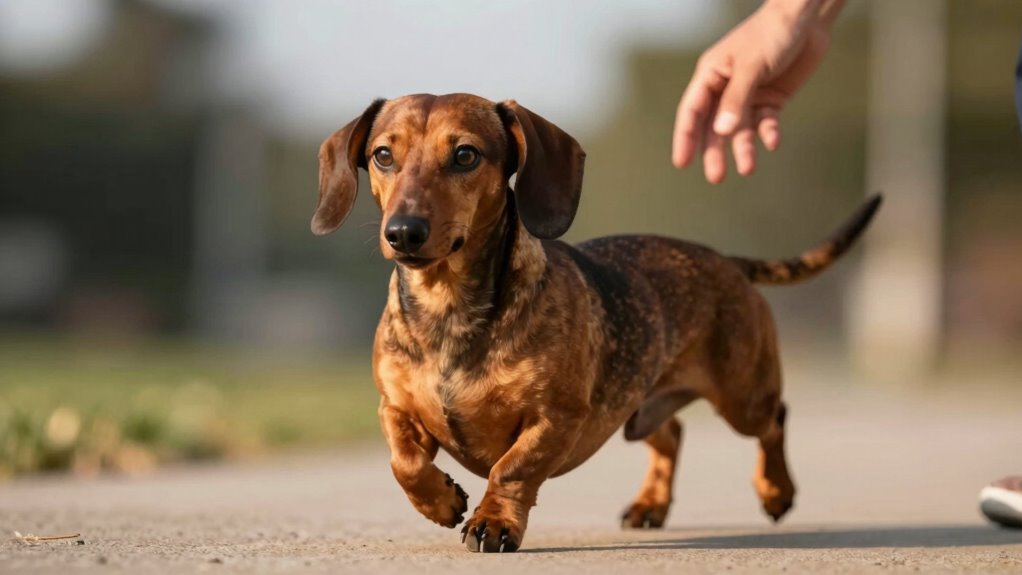
While their compact 16–32 pound frames make dachshunds easy to carry, their minds operate on a much larger scale—one built for solo decisions, not blind obedience.
It’s understood that your Dachshund isn’t just hard to train—they’re wired to think for themselves. Bred to hunt alone, they’re independent by design, which often comes off as stubborn. They’ll weigh your command against their instincts and sometimes choose the path they prefer.
That cleverness? It’s a double-edged sword. They’re not ignoring you; they’re problem-solving—often finding shortcuts or ignoring commands altogether. Each Dachshund has a unique personality, so some may listen more readily than others.
But consistency is non-negotiable. It’s been observed: lapses in communication create confusion, and confusion breeds resistance. Clear, steady cues, delivered the same way every time, are essential. Just as proper carriers support their long spine during travel, proper training structure supports their independent nature during learning.
They’re not defiant; they’re determined. Understanding this mindset—honoring their intelligence while guiding it—is how we turn challenges into cooperation. Train with patience, not force, and you’ll meet them where they think.
Digging Instincts Rooted in Their Hunting Background
Because dachshunds were bred to go underground after badgers and burrowing prey, it’s clear that digging is hardwired into their DNA. Their digging instincts aren’t just bad habits—they’re survival traits from when they were originally bred for fearless, independent hunting.
As dachshund owners, we understand these stubborn dogs don’t dig just to annoy us; they’re following ancient urges. Left unchecked, they’ll tunnel through gardens or shred carpets with single-minded focus. But understanding their roots helps us guide, not fight, their nature.
- Dachshunds were originally bred to pursue prey below ground, making digging a natural, instinctive act
- Their digging instincts remain strong, even in homes with no prey in sight
- Stubborn dogs resist simple commands to “stop,” requiring consistent, positive redirection
- Designated digging zones (like a sandbox, 3ft x 3ft) give them an outlet
- Supervised play and mental challenges reduce unwanted digging by up to 70%
We channel their drive—we don’t erase it.
Reactivity and Aggression: Understanding Triggers and Prevention

Dachshunds follow their instincts, and those impulses don’t stop at digging—they extend to how they react when startled or threatened. We see this in their reactivity and aggression, rooted in their hunting past. These little dogs stay on high alert, often barking at noises, fast-moving objects, or unfamiliar people. Without early socialization, these responses grow harder to manage. The good news? Consistent training reshapes these behaviors. We build calm through exposure, patience, and positive reinforcement. Look at the common triggers and strategies below:
| Trigger | Reaction | Prevention Strategy |
|---|---|---|
| Other dogs | Aggression, lunging | Early socialization, leashed practice |
| Sudden noises | Reactivity, barking | Sound desensitization training |
| Fast-moving objects | Chasing, snapping | Redirect with commands, controlled walks |
| Unfamiliar people | Growling, nipping | Positive encounters, treats, supervision |
| Environmental changes | Anxiety, alertness | Routine consistency, safe spaces |
Training isn’t a fix—it’s an ongoing dialogue. With us guiding them, their reactivity softens, and public outings become peaceful. Together, we turn instinct into trust.
Selective Hearing: Why Dachshunds Ignore Commands and How to Respond
When the backyard squirrel makes a break for it, we recognize exactly how this story ends—our dachshund locks on, tail stiff, ears forward, and that familiar glaze takes over.
That’s selective hearing in action: not deafness, but a deliberate choice to tune us out when instinct overrides obedience. Dachshunds are bred to hunt independently, so their stubborn streak runs deep. They weigh our commands against their own judgment—and often come down on the side of their nose.
But a well-trained dog isn’t born; it’s built through consistent, thoughtful effort. Training dachshunds demands creativity, patience, and structure.
- Start training in quiet, low-distraction spaces to build focus
- Use high-value rewards—small bits of chicken or cheese—over generic treats
- Keep sessions short (5–10 minutes) and frequent to match their attention span
- Reinforce commands daily, the same way, to avoid confusing your dog
- Gradually add distractions only after reliability in calm environments
We’re not fighting their nature—we’re guiding it. A responsive dachshund isn’t a miracle; it’s a trained dog.
Frequently Asked Questions
Why Are Dachshunds so Difficult?
We find dachshunds so difficult because their strong behavioral traits and low motivation factors clash with us. Their socialization challenges and need for precise training techniques test our patience, demanding deeper understanding and consistent, loving effort to truly connect and succeed together.
Why Are Dachshunds so Stubborn?
Why do we see such stubborn streaks in our dachshunds? Their personality traits stem from independence, but we overcome stubborn behavior with patience, positive reinforcement methods, and tailored training techniques differences that match their clever, feisty spirit.
Which Dog Breed Is Hardest to Train?
we’ve found the afghan hound’s the hardest to train—its stubborn streak and low impulse to please create real training challenges. we link this to breed characteristics and lower responsiveness, not intelligence levels, so we adapt our training methods with extra patience and consistency just for them.
At What Age Do Dachshunds Calm Down?
We’ve seen dachshunds calm down by age 2 to 3, when puppy energy fades like a setting sun. We notice age milestones, read behavioral cues, and stick with consistent training techniques—we’ve got this journey together.
Conclusion
We’ve seen how dachshunds’ stubborn streaks and big-dog bravado can turn training into a tug-of-war. Their selective hearing and digging instincts—up to 6 inches deep in soft soil—are rooted in history, not defiance. We stay consistent, use positive reinforcement, and set clear rules. Progress isn’t a lightning strike; it’s a slow burn. We win not by force, but by outsmarting their independence with patience, timing, and steady, smart guidance.