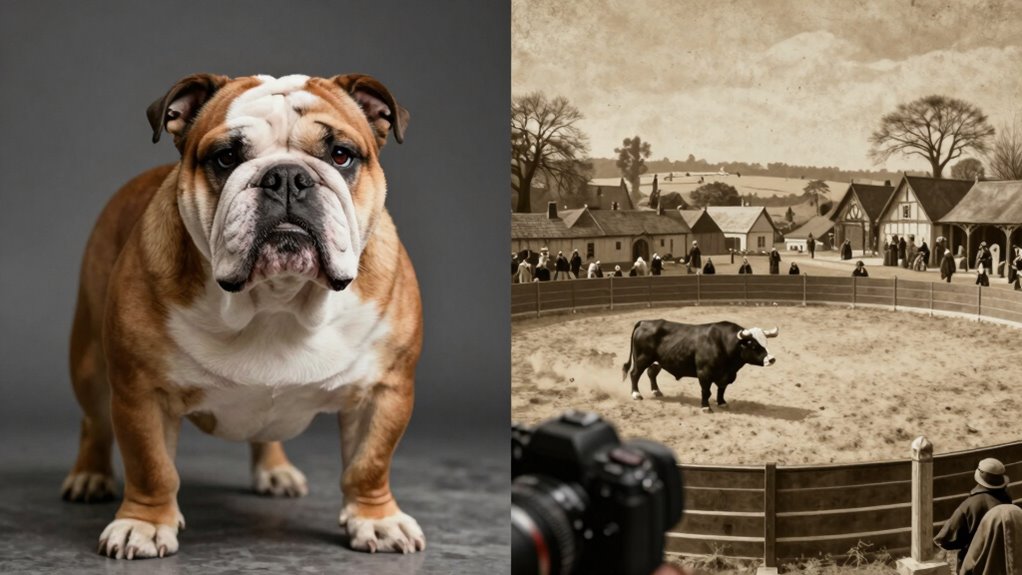
We trace English bulldogs back to medieval England, with the first records appearing around 1210. They were built for bull baiting—broad heads, short muzzles, shoulders like stone walls. These dogs weighed 40–50 pounds, low to the ground, built for power, not speed. Their jaws delivered up to 300 PSI, designed to grip and hold. That role vanished in 1835 with new animal protection laws. What happened next changed everything.
Key Takeaways
- English Bulldogs originated in medieval England, with documented records dating back to 1210 for use in bullbaiting.
- They were bred for physical strength, featuring short muzzles, low statures, and a powerful bite force of up to 305 psi.
- Bulldogs in the 1700s were tenacious fighters with wide heads, brachycephalic skulls, and thick skin folds to withstand combat.
- The ban on bullbaiting in 1835 under the Cruelty to Animals Act led to a redefinition of the breed’s purpose and characteristics.
- Selective breeding in the 19th century transformed Bulldogs from aggressive working dogs into gentle, companion-focused pets.
Origins in Medieval England
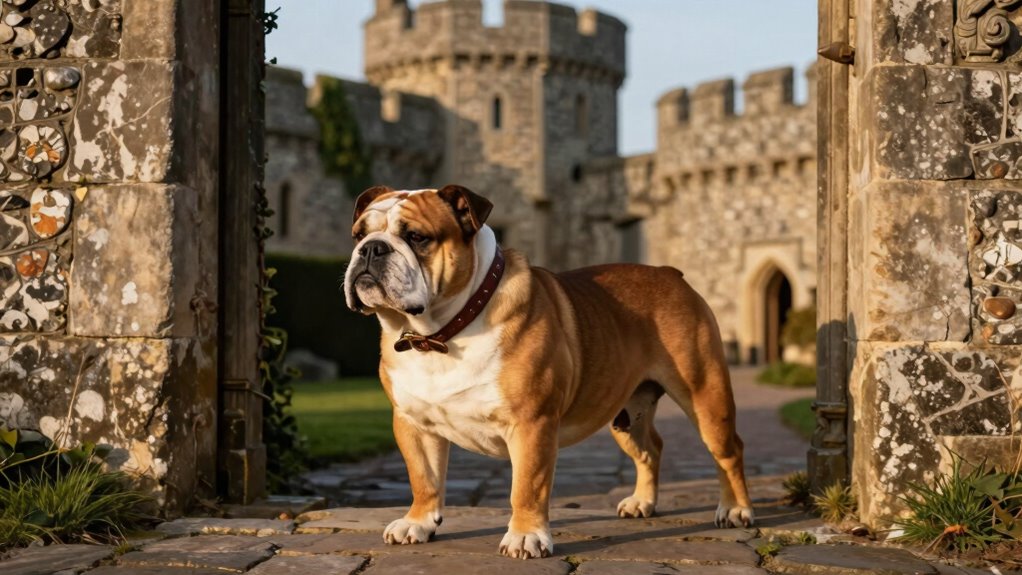
While their gentle demeanor today might surprise you, English Bulldogs trace their roots to the brutal arenas of medieval England, where they were bred for one purpose: bullbaiting.
We picture them now as couch companions, but the original English Bulldog was forged for combat. In 1210, bullbaiting became officially recorded, pitting these dogs against raging bulls.
We bred them for power—short muzzles, low centers of gravity, massive shoulders—all designed to grip and hold. Their jaws delivered up to 305 psi of bite force, anchoring them to a bull’s nose.
This wasn’t random cruelty; it was organized, public, and deeply embedded in the culture of medieval England. The Bulldog breed thrived because of it, physically molded by these violent demands.
We valued tenacity above all—unyielding grip, fearless nerve, and endurance. Every trait served the arena. Though their task seems barbaric now, it shaped the form we recognize today: broad chest, wrinkled face, stocky legs.
Modern Bulldogs benefit from the same mechanical chewing action their ancestors used, as studies show that hard treats can reduce plaque buildup just as their intense mastication once did.
Even as their purpose shifts, we honor this past. The resilience that built the Bulldog breed still lives in their quiet courage.
The Rise of Bull Baiting
When we think of bulldogs today, we imagine them curled up on a sofa, not clamping onto a bull’s snout—but in the 18th century, that’s exactly what they were built for.
Back then, bullbaiting was everywhere—town squares packed with crowds, bets flying, bulls enraged with pepper. Bulldogs, our brave, stocky companions now, were the chosen breed for this brutal sport. They weighed 40 to 50 pounds, low to the ground, built to dodge and seize. Their jaws locked by design, their courage unshakable.
We bred them for it—generation after generation forged in the violence of the arena. It wasn’t just sport; it was culture, spectacle, ritual.
But conscience grew. The Cruelty to Animals Act of 1835 changed everything. It banned bullbaiting, ending centuries of sanctioned bloodshed. That law didn’t just stop a sport—it redirected a breed’s destiny. Much like how selective breeding once shaped bulldogs for combat, the deliberate reshaping of their temperament after the ban demonstrates how calcium and phosphorus balance and nutritional care became important factors in developing healthier, calmer dogs.
Bulldogs lost their purpose overnight. Yet that moment saved them. We began reshaping them, not for combat, but for calm. For hearths, not arenas.
The bulldog’s spirit stayed, but its role transformed—forever.
Physical Traits Shaped by Purpose
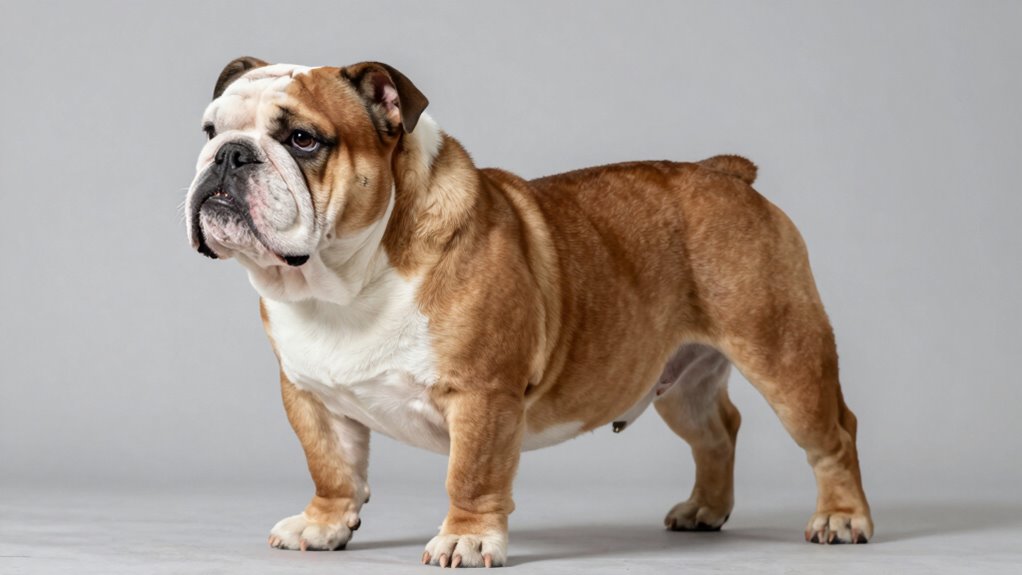
One bulldog in ten from the 1700s weighed between 40 and 50 pounds, built low to the ground with a broad chest and powerful limbs—we bred them that way for a reason.
We shaped the bulldog for a singular purpose: bull-baiting, a brutal sport demanding strength, tenacity, and grit. Their wide heads, pronounced underbites, and brachycephalic skulls let them grip tight and breathe under pressure—no give, no slip.
We favored thick skin folds across the neck and shoulders; they absorbed bites, shielded essential areas, and took punishment without tearing. The short, flat coat wasn’t just neat—it reduced drag and prevented snagging mid-tussle.
Every inch of muscle, bone, and hide served function. Broad chest? Stability. Low center of gravity? Control. Powerful jaws? Relentless hold.
We didn’t craft beauty for beauty’s sake—we bred for performance. You see it still—those iconic traits echo in today’s bulldog, softened now, reimagined for companionship, yet rooted in a past where form followed fight.
We built them tough, and that legacy lingers, even as the sport faded. This strong jaw strength remains evident in modern bulldogs, making them natural chewers who require durable toys to satisfy their inherent need to bite and gnaw.
The End of a Brutal Sport
Although bull-baiting had been part of English culture since its first recorded event in 1210, we didn’t outlaw the sport until 1835 with the passage of the Cruelty to Animals Act—a turning point that changed the fate of the Bulldog.
When bullbaiting was banned, we shifted focus toward animal welfare, and suddenly, the Bulldog’s original purpose vanished. Without the pits and the crowds, the breed faced steep decline—many thought it couldn’t survive.
But dedicated Bulldog breeders stepped in. They didn’t just save the breed—they reimagined it. No longer bred for jaw strength or aggression, Bulldogs began evolving through care, not combat. This transition prioritized improved digestion and health alongside temperament, reflecting a broader shift in how we understood canine welfare.
By the mid-1800s, we saw the rise of dog shows and breed clubs, where appearance and temperament mattered. These communities established clear breed standards: a stocky build of about 40–50 pounds, a broad chest, and that iconic pushed-in nose.
We turned away from violence and leaned into companionship. It wasn’t an end, but a pivot—one that brought Bulldogs into our homes, not our arenas.
Transformation Through Selective Breeding
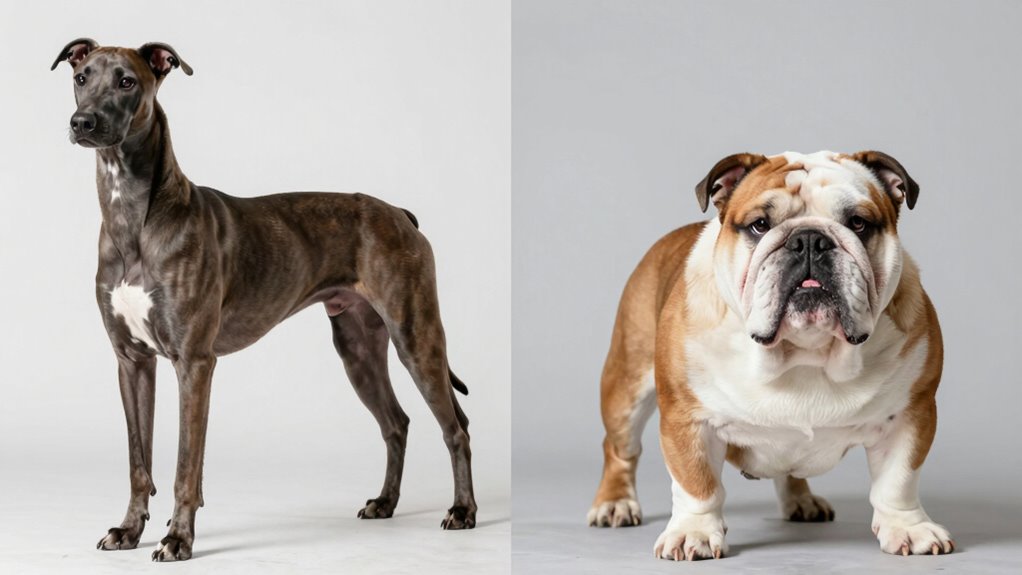
As we turned away from the bloodsport that once defined them, we took deliberate steps to reshape the Bulldog through careful, intentional breeding.
No longer needed for bullbaiting, English Bulldogs began a transformation — from aggressive, muscular fighters to calm, affectionate companions.
We favored gentler temperaments, shorter muzzles, and the iconic wrinkled face, though these changes brought breeding problems like respiratory issues and birthing difficulties.
By the late 1800s, our focus shifted to health and temperament, ensuring Bulldogs thrived in homes, not arenas.
The Bulldog Club, formed in 1894, united breeders committed to this vision.
We didn’t just change their role — we redefined their entire being.
This transformation wasn’t accidental; it was guided, precise, and deeply intentional.
We tracked lineage, evaluated structure, and prioritized well-being.
Just as modern breeding practices now address mobility challenges in senior dogs, our historical breeding decisions required ongoing refinement to support the health of our Bulldogs.
Through our choices, the Bulldog became a symbol of resilience and reinvention.
Today’s English Bulldogs carry the weight of that history — and our responsibility.
We shaped them, and now, we must protect what we’ve built.
Establishment of Breed Standards
Breed standard. We shaped our bulldog’s future through the establishment of breed standards, starting with the original Bulldog Club in 1864. Though short-lived, it laid the groundwork.
By 1875, the revived Bulldog Club formalized breed standards to preserve the look and temperament we love. Across the Atlantic, the Bulldog Club of America met in 1890 and adopted nearly identical standards by 1894.
We shifted focus post-bull-baiting—aiming for gentler temperaments and sounder builds. Then came rising health concerns. A pivotal BBC documentary exposed breathing and mobility issues, prompting The Kennel Club to revise breed standards in January 2009—mandating less extreme features, like shorter muzzles and looser skin folds.
Here’s what matters to us:
- A muzzle never less than 2 inches
- Shoulder height averaging 14–15 inches
- Wrinkles that don’t impede vision
- Temperament that’s calm, not aggressive
- Breathing that’s effortless, not labored
We stand by clear breed standards—because your bulldog’s health concerns are ours, too.
Journey to Family Homes
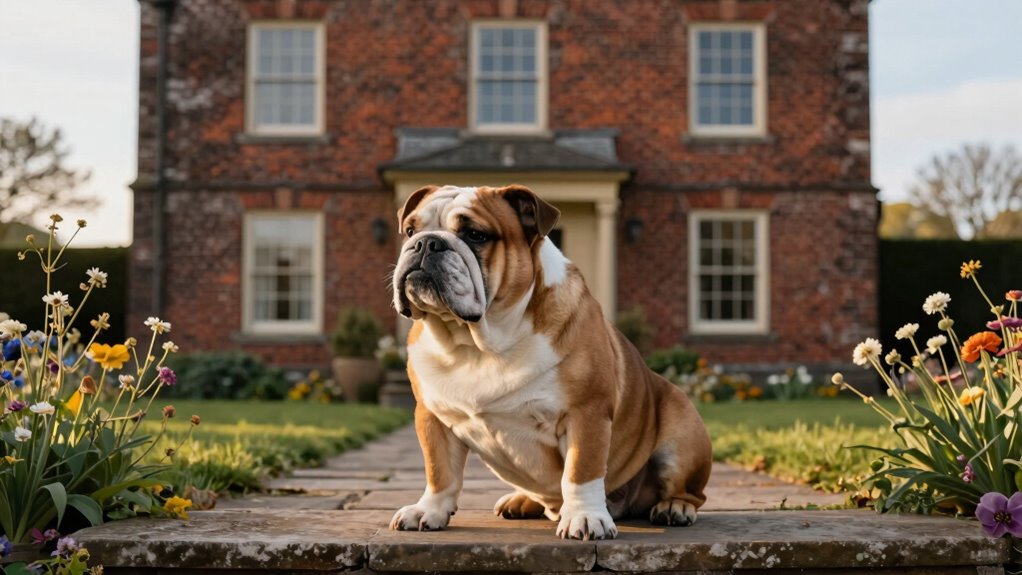
When the ban on bull-baiting took effect in 1835, we couldn’t let the English Bulldog fade into history—we rolled up our sleeves and reimagined its future.
We shifted focus from aggression to temperament, knowing the bulldog deserved a second chance. By 1864, the Bulldog Club formed, standardizing the breed’s look and behavior, steering it toward life as family pets.
We bred for gentleness, not fight, softening their edges while keeping their bold silhouette. Today’s bulldog thrives in homes, not arenas—calm, loyal, and deeply affectionate.
We’ve always known they’re brachycephalic dogs, with shortened snouts, yet we’ve learned to care for their unique needs. While some still face breathing problems, responsible breeding helps reduce risks.
Their compact size—around 14 to 15 inches tall, 40 to 50 pounds—fits snugly into daily life. From working-class companions to living-room favorites, we’ve guided them into hearts and homes.
You’re not just raising a pet—you’re continuing a legacy of resilience, love, and reinvention with every gentle snore.
Health Challenges in Modern Bulldogs
Though they carry themselves with quiet dignity, we can’t ignore the health hurdles modern English Bulldogs face—decades of selective breeding have left them with some of the most pronounced physical challenges among dog breeds.
We care deeply about their well-being, and recognizing common health issues is a crucial step forward. The Bulldog Club of America emphasizes responsible breeding to reduce suffering, urging owners to stay vigilant.
These dogs often struggle with a brachycephalic airway, making breathing laborious, especially in heat. Hip dysplasia affects nearly 74% of tested Bulldogs, while skin fold dermatitis requires daily cleaning.
And due to their large heads, over 80% of litters are born via Caesarean section—a routine yet serious intervention.
- Average lifespan: 7.39–9.8 years
- Brachycephalic airway obstructive syndrome limits oxygen flow
- 73.9% affected by hip dysplasia
- 17% suffer skin fold dermatitis
- Caesarean section needed for most births
Bulldogs in Culture and Society
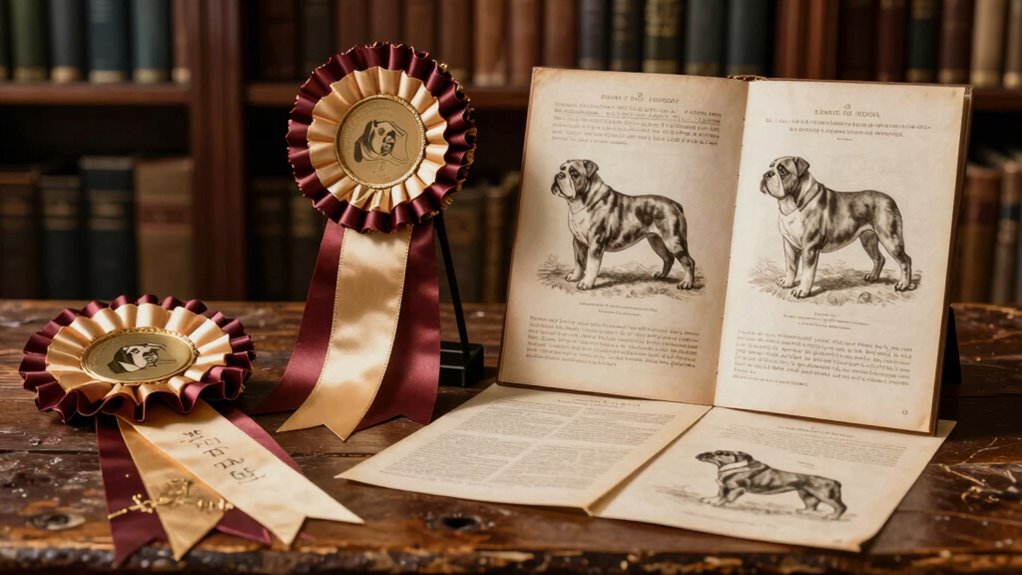
We’ve walked through the realities of modern Bulldog health—short muzzles, tricky births, joints under strain—and yes, those issues matter deeply.
But we also carry something stronger: the bulldog as a living emblem of resilience. Once forged in the brutal past of bull-baiting—a barbaric sport now banned—we’ve reshaped this breed into a companion of quiet courage.
Today, bulldogs are cultural symbols of grit and loyalty, mirrored in Winston Churchill’s defiant WWII stance and honored by the BBC as national icons. Universities, sports teams, and corporations adopt them not just for familiarity, but for what they represent: endurance, heart, a refusal to quit.
And that shift—from arena to hearth—reflects a deeper evolution in animal welfare. We no longer demand blood; we offer love.
Their wrinkled faces, stocky builds (typically 40–50 pounds, 12–15 inches tall), and calm demeanor make them ideal family pets. Across borders, their presence grows, not through force, but through connection.
We see ourselves in them. And in how we’ve changed them, we see how we’ve grown.
Frequently Asked Questions
How Did English Bulldogs Originate?
We started as bull-baiting dogs, tough and tenacious, but we’ve softened; our temperament traits now favor calm loyalty, though health concerns like breathing issues remain. We thrive on gentle training techniques, and our breed standard celebrates a sturdy, kind-eyed companion just like us.
What Did the Original Bulldog Look Like?
We see the original bulldog appearance clearly: stocky at 55lbs, we recall their broad heads, underbites, thick folds—historical traits we love. These breed characteristics, original features like brindle coats, remind us of their fierce, tender legacy we cherish together.
Were Bulldogs Bred for a Purpose?
Yes, we bred bulldogs with purpose—shaping their bulldog history through purpose driven breeding. Their breed characteristics forged in function, not chance. We molded their canine evolution, turning fierce past into gentle present, just for you.
Where Did Bulldogs Evolve From?
We trace our bulldog ancestry to the Alaunt, where breed development shaped our stocky frame and tenacity—each wrinkle tells of historical significance, our genetic traits a footprint of resilience we’ve carried from bloodsport to your living room.
Conclusion
We’ve walked with bulldogs from medieval alleys to modern living rooms. Once built for bullbaiting—wide heads, 16-inch chests, jaws like vices—they now thrive as calm companions. Selective breeding softened their aggression, not their spirit. Today’s bulldogs weigh 40–50 pounds, brachycephalic by design, health-optimized yet delicate. They’re not fighters; they’re family. Like phoenixes risen from a brutal past, they stand: sturdy, wrinkled, and devoted, one snort at a time.