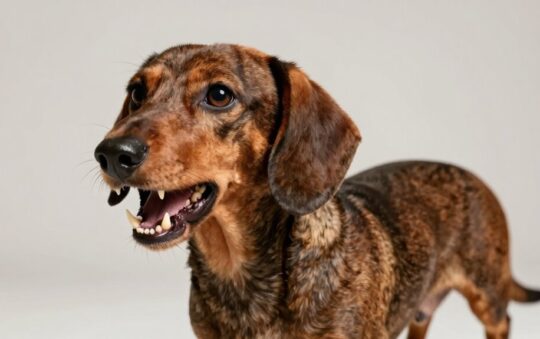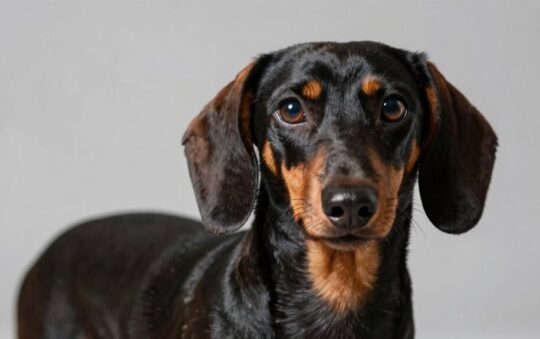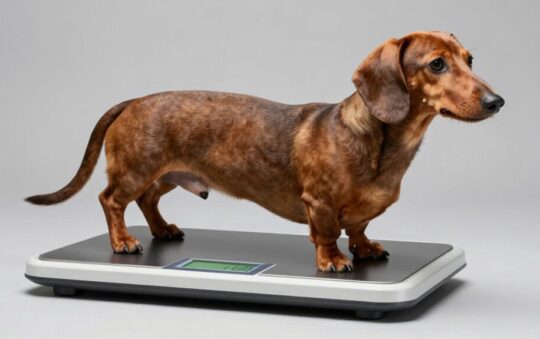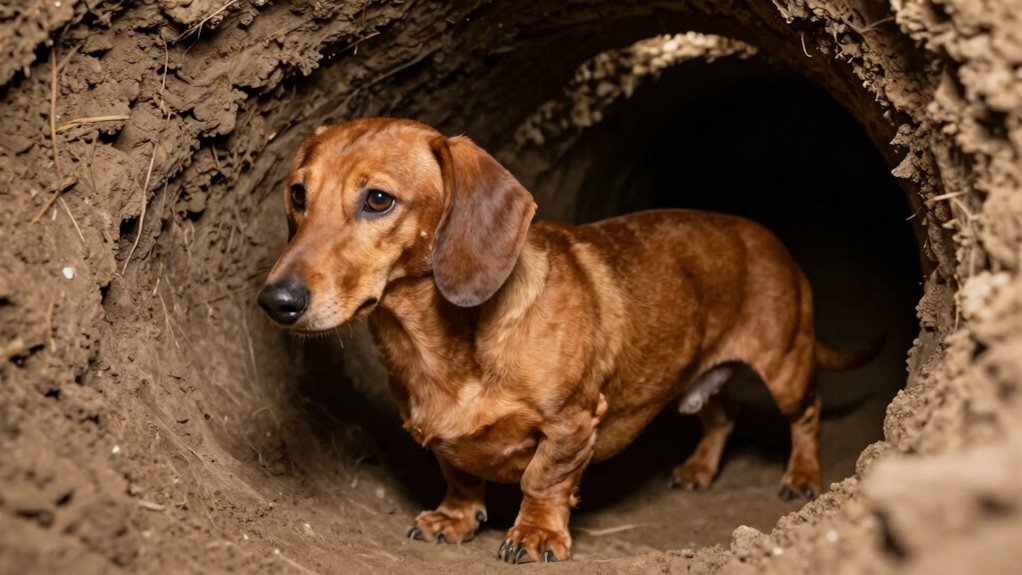
We bred dachshunds for one clear purpose: hunting badgers in tight underground dens. Their short legs—just 8 to 9 inches tall—let them dig and wriggle through tunnels, while their long spines gave reach and flexibility. We designed them with strong chests, muscular front paws, and a nose tuned to track prey over 100 yards. Boldness mattered as much as body shape—you’ll see that next.
Key Takeaways
- Dachshunds were bred in Germany to hunt badgers and other small game in forest dens.
- Their long bodies and short legs enabled them to burrow and navigate underground tunnels effectively.
- They possess a strong prey drive and determination, essential for tracking and confronting prey.
- Dachshunds were trained to bark loudly to alert hunters while pursuing game below ground.
- Their powerful digging feet and keen sense of smell made them efficient den hunters.
Bred to Hunt Badgers and Small Game
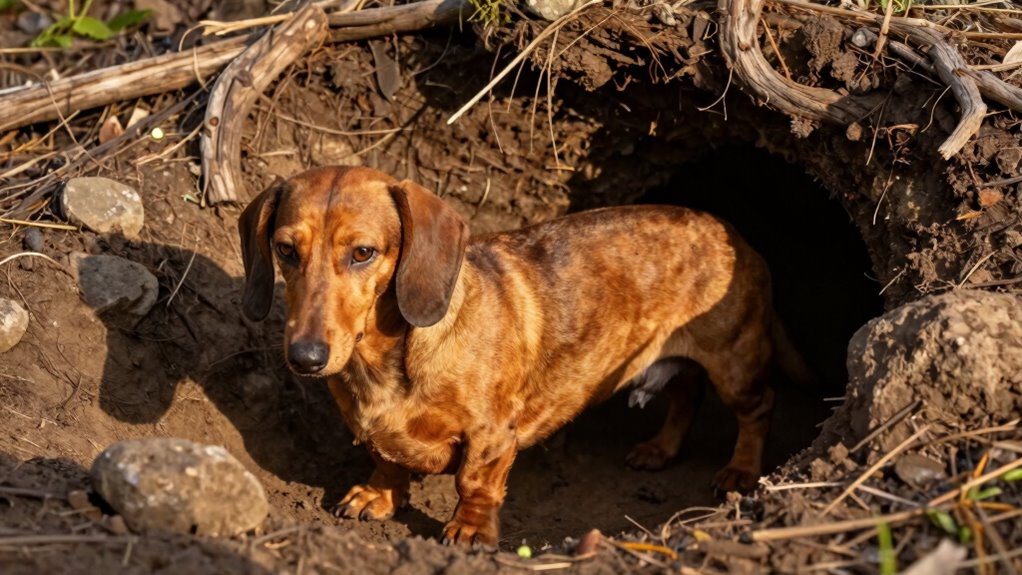
While their short legs and elongated bodies might suggest otherwise, we bred dachshunds for a fearless, high-stakes purpose: hunting badgers and small game across the dense forests and burrow-rich fields of Germany.
We needed dogs that could hunt with courage, scent sharpness, and tenacity. The standard dachshund’s 11–16 inch body, deep chest, and strong forelegs let it plunge into tight tunnels after a badger, holding its ground in dark, narrow dens.
We named them “Dachs-hund” for good reason—they chased, confronted, and flushed out the badger, barking fiercely so we’d know where they were.
When game was smaller, like rabbits, we relied on the miniature dachshund, under 11 inches long and under 11 pounds—compact, swift, and just as driven.
Though built differently, both types shared the same heart: a hunter’s instinct. Their long spines flexed through dirt-packed turns, their noses stayed locked on scent, and their voices rang clear underground.
This strong chewing drive and determination, originally honed for digging and hunting, remains evident in modern dachshunds and is why durable chew toys are essential for managing their natural behaviors today.
We didn’t breed them to sit on laps—we bred them to hunt. Every part of them answers to that call.
Designed for Digging and Underground Pursuits
Because they were built for the job, we designed dachshunds to dig, dive, and dominate underground hunts—every inch of their form shaped by function.
We bred them low to the ground, with short, powerful legs, long spines, and deep ribcages—built for stamina, not speed. Their compact, paddle-like feet are perfect for digging, slicing through soil like shovels. We strengthened their forelimbs and crowned them with a prominent breastbone, acting like a natural bulldozer to push through tight tunnels.
Every trait serves a purpose: sniffing out a badger deep underground, chasing it into its own den, and holding ground until we arrive. Their keen nose detects scent trails up to 12 inches below earth. And when they’re out of sight, their loud, sharp bark echoes through the soil, telling us exactly where they are.
This isn’t just instinct—this is precision engineering. We shaped them for one mission: to go underground, face danger head-on, and flush out the badger, no matter how narrow the passage or dark the tunnel. They don’t hesitate. They were made for this. Their long bellies and low stature also make them naturally suited for navigating tight underground spaces where larger dogs cannot venture.
Varieties Developed for Different Hunting Roles
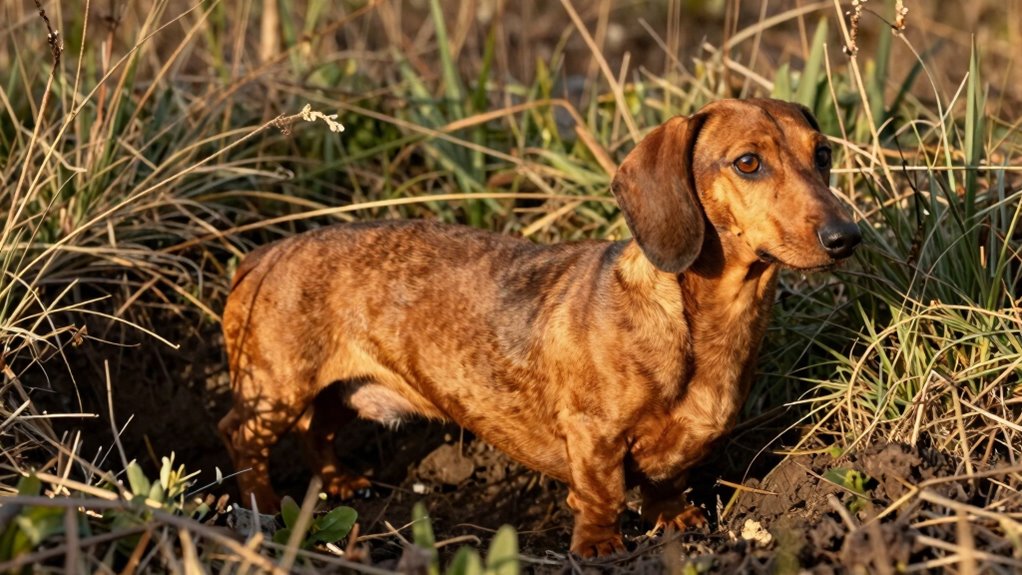
We built dachshunds for function first, and as hunting demands changed, so did their forms. We developed varieties developed for different hunting roles—standard, at 16 to 32 pounds, took on badgers and boars, while miniature, under 11 pounds, tracked rabbits with speed and precision. Each was shaped by purpose, not just size.
We refined coat types to match terrain: smooth-coated, the original, offered speed and low resistance underground; longhaired, with sleeker fur, handled cold forest floors; wirehaired, bearded and tough, braved thorny briar patches with skin protected. These weren’t cosmetic choices—they were survival tools.
Yet across all types, one truth holds: hunting instincts remain wired deep. You’ll see it in the way they dig at corners of the backyard, freeze mid-step at a rustle, or bolt after squirrels with laser focus. They weren’t bred to sit laps—they were forged to pursue, flush, and fight underground. Much like how slow feeders designed for dogs help manage eating behaviors shaped by their heritage, dachshunds’ instinctual drive to work persists despite modern domestication.
We built them to work, not just to please. And though homes replaced dens, those instincts never left. They’re still hunters at heart—compact, driven, and ready.
Fearless Temperament Tailored for the Hunt
When you’re bred to take on a badger in its own den, courage isn’t optional—it’s required. We were forged for this: to enter dark, narrow tunnels, heart steady, eyes locked on prey, ready to hunt badgers ten times our size.
That’s why each of us carries a fearless temperament, not by accident, but by centuries of purpose. As a dog built for the underground chase, hesitation could mean failure—or worse. We don’t just bark; we use our loud, sharp voices to signal hunters above while we push deeper.
Tenacity, energy, and unyielding focus drive us forward. We dig hard, move fast, and don’t back down, even when faced with fierce resistance. These instincts aren’t relics—they’re wired into us.
That boldness that surprises you when we meet a squirrel? That’s the same fire that once made us effective hunters. You don’t need a big body for a big heart. In fact, we prove the opposite—every dash, every bark, every determined pause at a hole in the ground. Our natural chewing instincts, developed through centuries of hunting, make us excellent candidates for mental stimulation through appropriate toys and activities.
Physical Traits That Enabled Effective Hunting
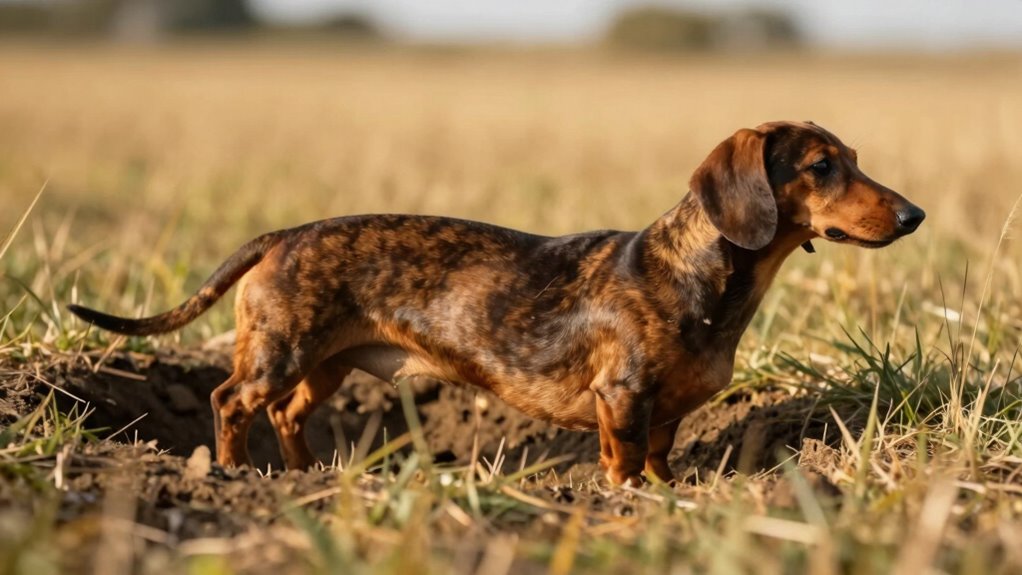
Our fearlessness isn’t the only trait forged for the hunt—our bodies are built for action underground. As a Dachshund, every part of us works together to chase prey through tight tunnels. Our long, stout bodies reach deep into dens, while our short legs let us crawl without getting stuck. We’re not just brave—we’re shaped for the job.
Thanks to our keen sense of smell, we can track animals even in complete darkness. And no matter your preferred coat type—smooth, wirehaired, or longhaired—we’re all built for function. Regular grooming with proper brushing tools helps maintain our coat’s health and functionality in the field.
Here’s how our bodies make us effective hunters:
- Long, muscular torso – 12–15 inches in length, allowing full extension into burrows.
- Short legs – Under 6 inches tall, perfect for slipping into badger holes.
- Large, paddle-shaped front paws – Built to move soil quickly while digging.
- Well-angled shoulders – Deliver powerful, efficient digging strokes with every thrust.
We don’t just look the part—we’re engineered to go deep and bring results.
Transition From Working Dogs to Family Companions
Though bred for the burrow, we’ve long since tunneled our way into homes and hearts as devoted companions. Dachshunds today are far more likely to nap on a couch than chase prey underground. Our shift from hunting roles to beloved family companions began in the 20th century, especially in the U.S., where cities embraced our compact size and bold spirit.
| Then | Now |
|---|---|
| Hunting badgers in German forests | Curling up beside children at bedtime |
| Valued for scent drive and digging | Cherished for affection and personality |
We still carry instincts—digging, barking, chasing toys—with energy that surprises many. But now, those traits bond us to you, not the hunt. Most dachshunds live as companions, not hunters. Yet understanding our past helps you meet our needs. You walk us, train us, love us—not for work, but for connection. We’re small (usually 16–32 lbs), tenacious, and loyal. And though we were born to hunt, we now live to love.
Legacy of the Hunter in Today’s Dachshund
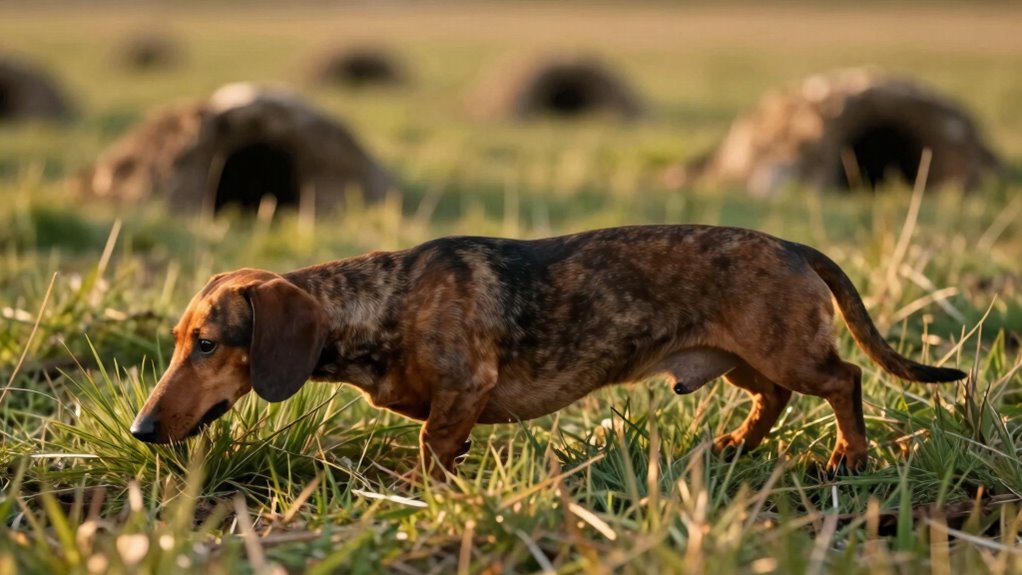
While we no longer spend our days deep in badger dens, the traits forged in Germany’s forests still shape who we are.
We may nap on your sofa now, but make no mistake—we’re built with purpose. That stubborn streak, the keen nose, the urge to dig? All remnants of our work as a true badger dog. Our hunting instincts haven’t faded; they’ve simply found new outlets, like chasing squirrels or burrowing under blankets.
Even our bark—loud and insistent—once guided hunters to our location mid-chase.
Our coat varieties: smooth, longhaired, and wirehaired, each evolved for terrain and weather. The smooth coat, sleek and low-maintenance, was ideal for swift movement through dirt and bramble.
You still see the hunter in us through:
- Persistent digging, even in your backyard
- An unrelenting focus when tracking scents
- Boldness despite our small frame—never backing down
- A strong prey drive, twitching at every rustle
We may be companions now, but we carry the past proudly in every inch of our 16-32 pound frame.
Frequently Asked Questions
What Were Dachshunds Originally Used For?
We were originally used for hunting badgers, relying on our strong hunting instincts and unique breed characteristics. Our historical significance shines through our fearless burrowing and loud barks, helping hunters track prey—we’re small, bold, and built for the chase, aren’t we?
Were Dachshunds Used in WWII?
we fought beside you, we stood with you, we stayed loyal to you—dachshunds served in WWII, reshaping dachshund symbolism, boosting dachshund popularity, proving our hearts through dachshund training, and winning yours all over again, even in war’s darkest hours, love never fled
Why Did Dachshunds Hunt Badgers?
we hunt badgers because our breeding shaped us to take on their tough, territorial nature—we’ve got the instincts, courage, and bodies built for it. through breed evolution, we became perfect for tracking and confronting them underground, where their habits make escape hard.
Why Did We Breed Dachshunds?
We bred dachshunds to be fearless little warriors, exaggerating their hunting instincts to dive fearlessly into dark burrows. You love them not just as companion animals, but because their breed evolution turned tenacious hunters into your most loyal, warm-hearted confidants.
Conclusion
We bred dachshunds for purpose, not just for looks. Our short-legged hunters—a mere 7 to 9 inches tall, up to 32 pounds—dug into dens, fearless. Their 16-inch spines curved with intent; long bodies slipped where badgers couldn’t flee. Cold noses tracked; strong jaws held. Today, couches replace burrows, yet that keen scent drive, that stubborn bark, symbolizes a legacy rooted deep in earth and instinct. We see past their size: they carry forests in their bones.