
Most pet owners don’t realize that scent familiarity can matter more than sight during pet introductions. We use separate rooms, at least 10 feet apart, to start. Each space has its own food bowls, litter box, and bedding—no sharing. We swap scents daily using soft cloths rubbed on each pet. We watch for relaxed blinks or slow tail wags, not just growls. This method builds trust before face-to-face contact even happens. What happens next could make or break their future together.
Key Takeaways
- Start with gradual introductions, keeping the Chihuahua and cat separated and slowly acclimating them to each other’s scents and sounds.
- Create separate, secure spaces for each pet, including elevated areas for the cat and a quiet crate for the dog.
- Keep food, water, and litter boxes in distinct locations to reduce competition and stress between the pets.
- Use positive reinforcement to reward calm behavior when they see each other, gradually decreasing distance over time.
- Monitor body language closely during interactions and end sessions immediately if either pet shows signs of fear or aggression.
Keep Their Resources Separate
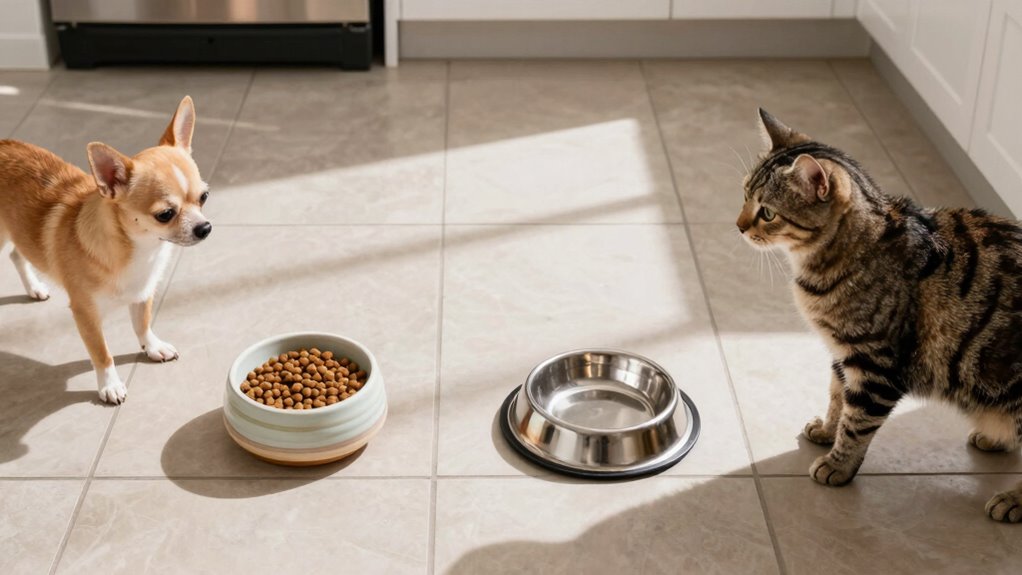
While it might seem convenient to let your Chihuahua and cat share food bowls, litter areas, or favorite spots, doing so can spark tension and set back their bonding process. We keep their resources separate to help our cat and dog feel secure, respected, and less stressed.
Let’s face it—dogs and cats have different needs. We place food and water bowls in distinct zones: at least 10 feet apart, with one set elevated for the cat. We provide one litter box per cat, plus an extra, all located in quiet, low-traffic areas, never near the Chihuahua’s potty spot.
We designate individual spaces—each with their own bed, toys, and resting areas—measured and arranged for full privacy. Our Chihuahua gets durable chew toys, while our cat has personal scratching posts, ideally 32 inches tall.
We monitor and refresh supplies daily. This consistent separation doesn’t push them apart—it actually helps our cat and dog become best buddies. When pets feel safe and understood, trust grows. Just as pet-safe formulations are essential for maintaining a clean home environment without compromising their health, providing separate resources ensures both animals can relax without competing or feeling threatened.
We’re not just managing space—we’re nurturing peace. And peace is where friendship begins.
Train Your Chihuahua With Positive Reinforcement
We keep their food bowls 10 feet apart, give the cat her own high-up bed, and make sure the litter box is nowhere near the dog’s zone—all of that sets the stage for calm, but now it’s time to shape how our Chihuahua behaves when they’re actually in the same room.
We use positive reinforcement to teach calm behavior the moment the cat enters the space. Every time our Chihuahua stays relaxed instead of lunging or barking, we click and reward with a pea-sized treat. Clicker training marks the exact moment of good choices, strengthening learning. To make training rewards even more enticing, we occasionally use bacon spray on their favorite treats, which can enhance motivation during these critical bonding sessions.
We practice training commands like “leave it” and “stay,” reinforcing them with praise or a quick tug on their favorite rope toy. These cues help our dog respect boundaries while interacting with the cat.
We start with the cat 15 feet away, then slowly decrease the distance over days, always rewarding stillness and soft eyes. Short, twice-daily sessions of 5 minutes keep our pup focused.
With consistency, our Chihuahua learns that calm behavior around the cat means good things happen.
Provide Each Pet With Personal Safe Spaces
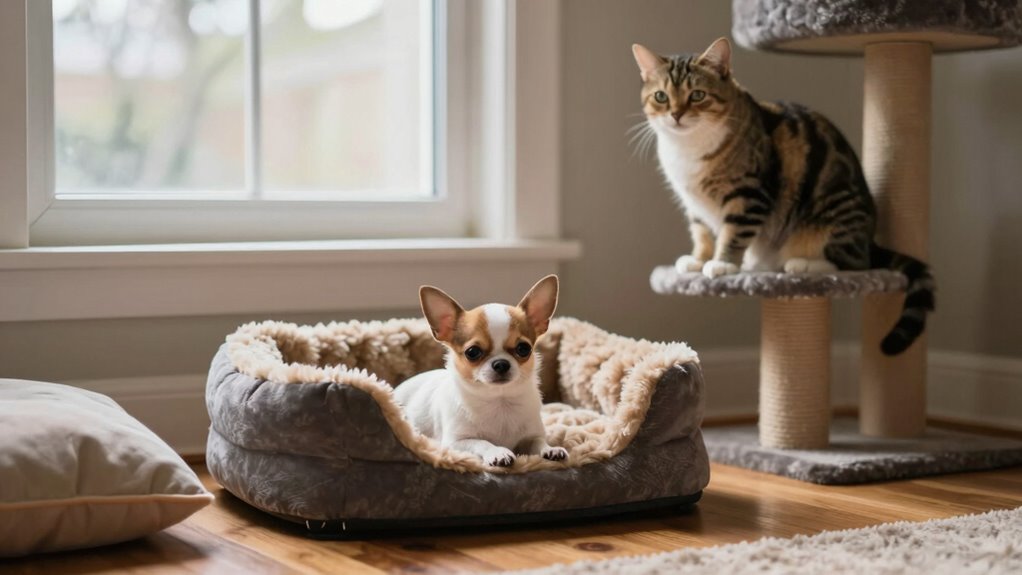
Since every pet needs a personal retreat to feel secure, we make sure both our Chihuahua and cat have dedicated safe spaces they can claim as their own.
These safe spaces reduce stress and give each pet a calm atmosphere when they feel overwhelmed. For our cat, we’ve created a secure environment up high—think sturdy cat trees or wall shelves at least 6 feet tall—places where paws touch no dog.
We’ve placed a FELIWAY Optimum diffuser nearby to maintain a calming scent. Our Chihuahua’s comfortable area? A cozy 24-inch crate in a quiet corner, lined with soft bedding, just big enough to turn around in.
It’s his den, his rules. We never disturb them there. We check both spots weekly—clean bedding, no dust, fresh water nearby. When setting up these spaces, we also ensure proper ventilation in shared living areas, as good airflow helps maintain a healthy environment for both pets.
These aren’t just spots; they’re emotional anchors. By honoring their need for separation, we actually build trust. A peaceful home isn’t about constant togetherness—it’s about providing safe spaces that make harmony possible.
Spend Dedicated One-On-One Time With Each Pet
When we give each pet our full attention, we build trust and reduce tension in the home. We spend dedicated one-on-one time to nurture our bond with each animal, ensuring they feel secure and loved.
Our Chihuahua thrives on daily walks and short training sessions—we do five minutes of “sit” and “stay” every morning. Our cat loves chasing wand toys at dawn and dusk, matching her natural energy peaks. During these moments, we keep an eye on their moods, adjusting play or cuddle time as needed.
When pets are getting equal, focused attention, jealousy fades. We schedule 10–15 minutes per day for solo play, grooming, or quiet sitting. This isn’t just routine—it’s connection. One-on-one time lets us notice small changes in behavior, preferences, or comfort levels. Regular grooming during these sessions also strengthens our bond with each pet, fostering connection between pet and owner while maintaining their health.
We strengthen trust, meet individual needs, and create a calmer atmosphere overall. Our dog learns obedience; our cat learns to relax around human touch. Both gain confidence.
And when they’re eventually together, that confidence helps them coexist peacefully. We’re not just raising pets—we’re raising friends.
Monitor Their Body Language Closely
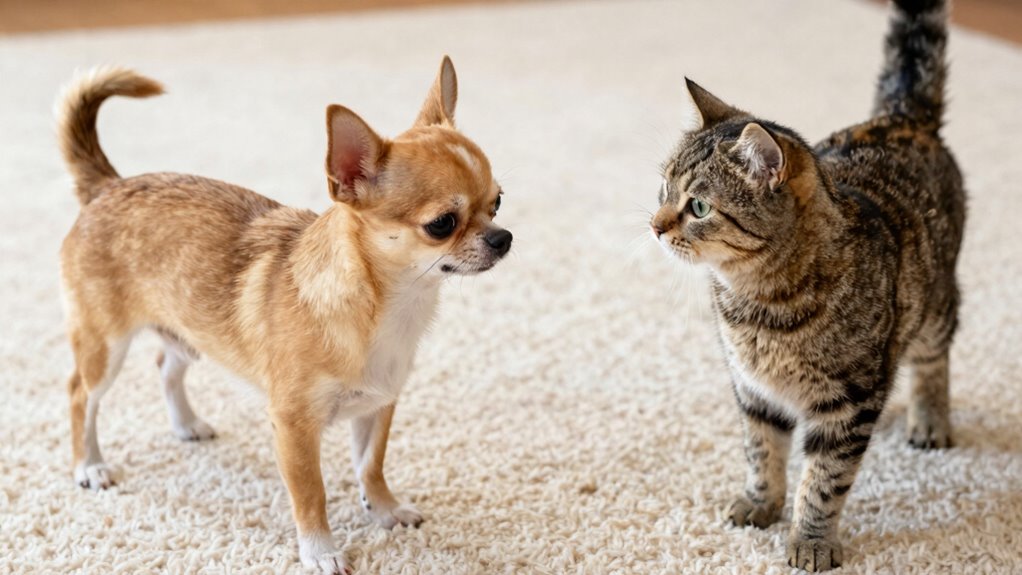
While keeping your pets in the same room, stay alert—body language speaks louder than barks or meows. We monitor every flick of the tail, every twitch of the ear, because those small signs tell us how the dog and cat truly feel.
If our Chihuahua stiffens, stares intensely, or barks sharply, that’s a red flag—he’s too amped up. Likewise, if the cat’s ears pin back, her tail swishes fast, or she crouches low, she’s uneasy.
But we also watch for softer moments: when the cat blinks slowly, that’s trust, a quiet “I’m safe” to us and the dog. A wagging tail on the dog, a calm approach from the cat—these are quiet wins.
We stay close during interactions, ready to redirect or pause if either shows stress—like hiding, growling, or darting away. Monitoring isn’t passive; it’s active love. In high-stress moments, consider using tools like pheromone technology to help ease tension between your pets.
We’re their guides, reading the unspoken cues so both feel secure. By tuning in, we help the dog learn patience and the cat gain confidence—laying the real foundation for friendship.
Recognize Signs They’re Building a Bond
Though progress can be subtle, we discover to spot the quiet milestones that signal a true connection is forming. We watch closely for signs they’re becoming comfortable—like sharing space without hiding or growling.
When our Chihuahua holds a loose posture, tail wagging near the cat, it’s a clear sign of acceptance. We notice playful interactions: gentle pouncing, mock chasing—never fearful, always light. These moments build trust.
If the cat approaches the dog without fear, brushes past, or settles nearby, we understand trust is deepening. Affection shows in quiet ways: the dog licking the cat, the cat rubbing against the dog’s side. These aren’t random acts—they’re deliberate gestures of bonding.
We see mutual grooming as a peak sign of friendship, rare without real comfort. No stiff tails, no flattened ears—just calm, open bodies. We celebrate these small wins, realizing each one strengthens their bond.
We don’t rush it. Instead, we honor the process, reading every glance, every shared nap, every quiet moment they choose to be near. That’s how we recognize—it’s working.
Be Ready for Challenges and Setbacks
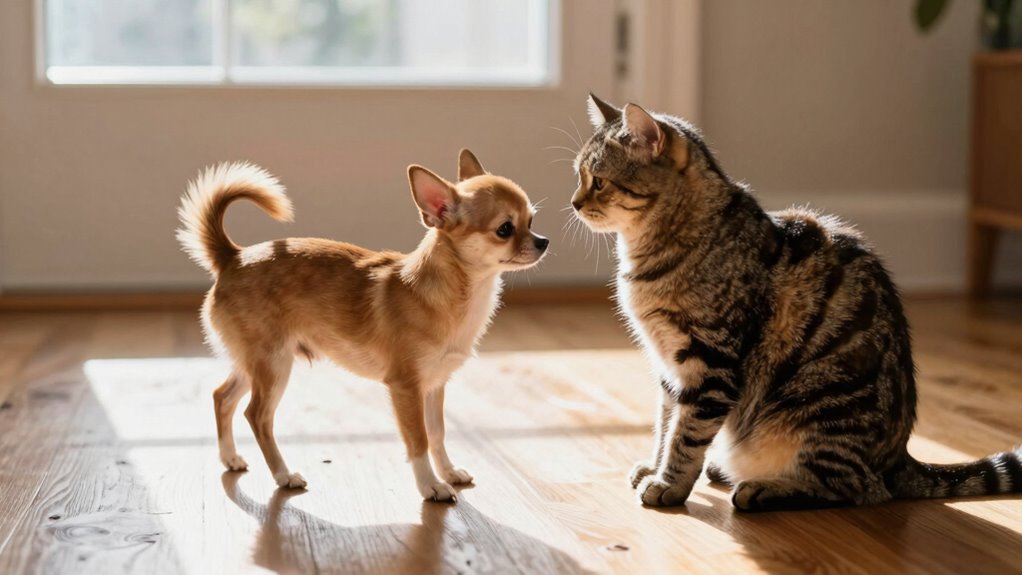
If tensions arise, we don’t panic—we expect them. It’s normal for our pets to show initial fear or anxiety, especially when a hyper little Chihuahua meets a darting kitten.
Keep in mind that fast movements can trigger growling or hiding—we’ve seen it before. Setbacks happen, even after progress, and that’s okay. What matters is how we respond.
We monitor body language closely: stiff postures, raised fur, hissing, or barking tell us it’s time to pause. We never force interactions. Instead, we give both pets safe zones—a cozy bed, a high perch, a gated room—where they can retreat and decompress.
These spaces help them become more familiar on their own terms. We keep sessions short, positive, and gradual. Patience isn’t just helpful—it’s non-negotiable. Some pairs bond in days; others take weeks or months. Rushing pushes them back.
We stay calm, consistent, and observant. Every small step forward counts. We’ve got this—together.
Frequently Asked Questions
How to Get Chihuahua and Cat to Get Along?
We start by introducing pets slowly, using scent swaps and baby gates. We create mutual space where both feel safe. We use positive reinforcement during calm moments and include playtime activities to build trust and bond through love and patience.
What Is the 3 3 3 Rule for Dogs and Cats?
We see it like this: three days, three weeks, three months—the 3 3 3 rule guides pet introdu在玩家中. We watch behavioral cues, give safe spaces, and use gradual exposure so we all adjust, bond, and breathe together through the chaos, one quiet moment at a time.
How Long Does It Take for a Dog and Cat to Become Friends?
it is understood the friendship timeline varies—often weeks to months—because each pet’s individual personalities shape how they connect. we use gradual introduction and positive reinforcement, letting them bond at their own pace while we guide with love and patience.
Can Chihuahuas Be Friends With Cats?
Yes, we’ve seen Chihuahuas and cats become close. It’s understood Chihuahua behavior can excite fast, but we honor Cat instincts by using calm Socialization techniques. We make Pet introductions slow, so we build trust—we’ve watched them nap together, lick each other, and play as family.
Conclusion
We’ve walked this path before, even if it feels like trying to sync a steam engine with a smartphone. Patience, consistency, and structure get us there. Stick to separate bowls, 6-foot leashes for controlled meetups, and 10-minute supervised sessions. Watch for soft blinks, side-by-side resting, and mutual grooming—signs they’re syncing. Setbacks? Expected. We adjust, retrain, and move forward, together.