
Over 70% of Cavalier King Charles Spaniel owners report successful cat-dog cohabitation with proper training. We start by managing scent introductions using a cat’s blanket on day one, letting our Cavalier sniff for 3–5 minutes while leashed. We reward calm behavior immediately with small, soft treats—¼-inch cubes work best. We keep first face-to-face meetings under 10 minutes, always supervised. Our next step? Building trust through consistency, one structured interaction at a time.
Key Takeaways
- Begin socialization early, ideally between 3 to 14 weeks, to shape positive associations with cats.
- Use leashed, supervised introductions in neutral spaces to ensure safety and control initial interactions.
- Reward calm behavior near cats immediately with treats, praise, or a clicker to reinforce good choices.
- Establish separate safe zones and provide cats with high perches to reduce stress and prevent chasing.
- Conduct short, daily training sessions focusing on commands like “sit” and “leave it” near cats.
Understanding Instinctual Behaviors in Cavaliers

While we can’t erase a Cavalier King Charles Spaniel‘s natural instincts, we can guide them toward calm, positive interactions with cats through informed, consistent training.
It’s clear these dogs carry instinctual traits rooted in their history—like a quick burst of excitement toward fast-moving small animals. That means when a cat darts, our Cavaliers might respond on impulse.
But here’s the good news: early exposure in their first 3 to 14 weeks shapes how they view cats long-term. We’ve seen that supervised interactions with cats during this window build familiarity and reduce chasing.
We also notice window-watching can fuel excitement, so we manage their space—closing blinds or using baby gates. Understanding these instinctual traits helps us choose the right training techniques: short, daily recall drills, leash-guided introductions, and rewarding calm behavior with treats. A calm training approach is further supported by ensuring your Cavalier receives moderate protein and fat content appropriate to their breed, which contributes to stable temperament and focus during training sessions.
We stay alert, especially during initial interactions with cats, because even gentle Cavaliers can act on reflex. With patience and structure, we build trust—not just between pets, but in our role as their calm, steady guide.
Creating a Safe and Positive First Impression
Since first impressions set the tone for a lifelong relationship, we start strong by preparing both pets for success.
We understand your Cavalier has a strong desire to explore, so we keep them leashed during first meetings—this keeps everyone safe and helps us guide behavior with care.
Before face-to-face contact, we let our Cavalier sniff the cat’s blanket or toys; familiar scents build comfort slowly, quietly.
We make sure the cat has a safe space—a high perch, a crate, or a room with a baby gate—where they can observe without feeling trapped.
We watch closely, reading every tail flick and ear twitch. When our Cavalier stays calm, we use praise and treats as positive reinforcement, linking good behavior with rewards.
We keep sessions short—just 5 to 10 minutes—and end before tension rises.
Creating a consistent routine helps both pets feel secure during this adjustment period, reducing anxiety and building confidence in their shared space.
Our goal isn’t just peace, but trust. With patience, consistency, and love, we show both pets that sharing a home feels safe, natural, and right.
Using Positive Reinforcement During Interactions

When your Cavalier stays calm around the cat, we reinforce that behavior immediately—timing is critical, ideally within one to two seconds of the action.
We use positive reinforcement like small treats, soft praise, or a clicker to mark good choices. That instant feedback boosts training effectiveness and helps your dog link calm behavior with rewards.
When they obey “sit” or “leave it” near the cat, we reward generously—this shapes their decisions. Gradual exposure, paired with consistent positive reinforcement, teaches your Cavalier to read social cues correctly: a still posture, soft eyes, no lunging.
We keep sessions short—3 to 5 minutes—so focus stays sharp. Over time, these repeated moments build trust. Calm behavior becomes a habit, not luck.
We’re not just managing reactions—we’re teaching peaceful coexistence from the start. Every treat, every quiet moment, every “good boy” in the right instant moves us closer.
Just as mental stimulation during mealtime can reshape a dog’s focus and behavior, intentional training moments with cats build new neural pathways that support calm coexistence.
We’re showing our dogs that cats mean good things when we stay calm. That’s how harmony begins.
Establishing Boundaries and Supervised Coexistence
Because first impressions shape long-term relationships, we start by setting clear boundaries the moment our Cavalier King Charles Spaniel meets the cat. Establishing boundaries early—like keeping our dog leashed and letting the cat choose when to approach—helps us manage emotions and reduce stress.
We use supervised interactions in a neutral space, such as the living room, for short 10- to 15-minute sessions, gradually increasing time as comfort grows. During these moments, we rely on positive reinforcement: treats and calm praise follow whenever our Cavalier stays relaxed and respectful.
We watch body language like a hawk—flattened ears, stiff tails, or crouching can signal fear or overstimulation in either pet. We respond quickly, redirecting or pausing as needed. A no-pull harness with a front leash attachment can help redirect our dog’s focus during these critical interactions. Both pets have separate safe zones—a cozy bed for the cat, a designated crate or mat for the dog—where they can retreat without disturbance.
These routines aren’t strict rules; they’re loving guides that help us build trust. We stay present, patient, and consistent because peace isn’t rushed—it’s grown, one calm moment at a time.
Encouraging Long-Term Harmony Through Socialization
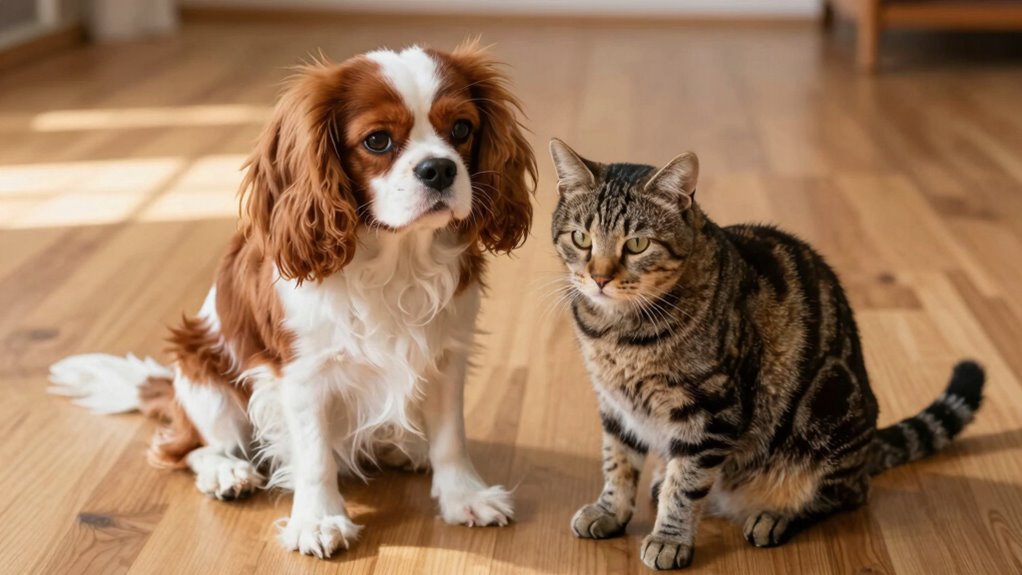
While every introduction sets the stage for how our Cavalier King Charles Spaniel and cat will coexist, long-term harmony depends on consistent, positive socialization. We build compatibility early by guiding our pets through calm, structured interactions. Below are key moments we nurture daily:
| Moment | Action |
|---|---|
| First encounters | Leashed pup, cat in carrier, 3 feet apart |
| Shared space | 10-minute play sessions, increasing by 5 daily |
| Feeding time | Placed 6 feet apart, using positive reinforcement |
| Rest periods | Separate beds, 4 feet apart, same room |
| Training cues | “sit,” “stay” rewarded with treats, calm praise |
We use positive reinforcement to celebrate gentle behavior, strengthening trust. Our Cavalier King Charles Spaniel learns respect, not fear. Just as homeopathic remedies are tailored to individual dogs’ unique behaviors and health profiles, our training approach recognizes each pet’s distinct personality and needs. Socialization isn’t a phase—it’s our ongoing rhythm. We schedule at least two 15-minute joint sessions daily, ensuring familiarity. Compatible pets aren’t born—they’re shaped through our steady care, attention, and love. We’re not rushing; we’re building a lifelong bond. Each quiet glance, each shared nap, confirms we’re on the right path.
Frequently Asked Questions
Do Cavalier King Charles Get Along With Cats?
Yes, we find Cavaliers usually get along with cats thanks to their gentle Cavalier temperament. We use calm cat introductions, consistent training tips, and early socialization techniques to build trust, strengthening bonds we cherish in our close-knit furry families.
Are King Charles Cavaliers Hard to Train?
we’ve trained them in under 20 tries—they’re quick learners. with gentle training techniques and their sweet temperament traits, we tackle obedience challenges easily. early socialization tips? just let us love them; they follow our lead every time.
Do Spaniels Get Along With Cats?
We’ve found spaniels often get along with cats when we use gentle socialization techniques, read cat behavior closely, manage dog instincts, and stay patient. Our training tips build trust—we bond through calm, consistent love, helping them become peaceful pals in our home.
What Are Common Behavioral Problems in Cavalier King Charles Spaniels?
We see separation anxiety, barking issues, chewing habits, and socialization challenges in our Cavaliers. We understand it’s tough, but we’re in this together—consistent love and guidance help them feel secure and behave calmly around cats and other pets.
Conclusion
We guide, reward, and reinforce daily. Calm conduct, clear cues, and consistent commands create connected companions. We start slow, supervise closely, keep leashes six feet, limit initial interactions to five-minute intervals, and prioritize patience. Positive pairings—treats, toys, tandem time—build trust. We establish zones: cat trees at 60 inches high, dog-free zones, baby gates at doorways. Together, we train, tame, and transform tendencies. Together, we foster friendship, foster peace, foster forever family balance.