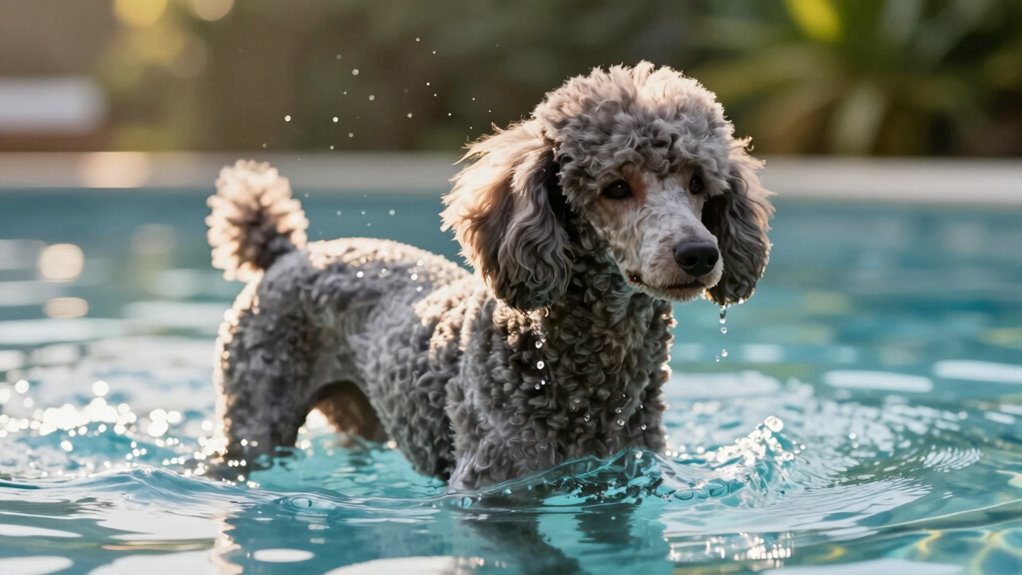
We introduce, we guide, we guarantee safety—every step matters when teaching poodles to embrace water. Not all take to swimming naturally; some hesitate, tremble, or retreat. A properly fitted life jacket with a top handle (minimum 2-inch-wide straps, buoyant foam core) boosts confidence and control. Shallow entries, consistent cues, and soft rewards build trust. We start at the steps, not the deep end. Comfort grows with routine, not force. You’ll see the shift—one splash, one wade, one moment of willingness—and know it’s working.
Key Takeaways
- Poodles vary in water interest; some love swimming, while others need gradual, positive exposure to build confidence.
- Use a properly fitted life jacket with handles to support buoyancy, safety, and confidence in and around water.
- Start swimming lessons in shallow water with short 2–3 minute sessions to establish comfort and prevent overwhelm.
- Encourage participation through positive reinforcement, including treats, praise, and calm verbal cues during water activities.
- Supervise closely in pools or open water, ensuring easy exits, shade, and rest to maintain safety and well-being.
Understanding Poodle Behavior Around Water
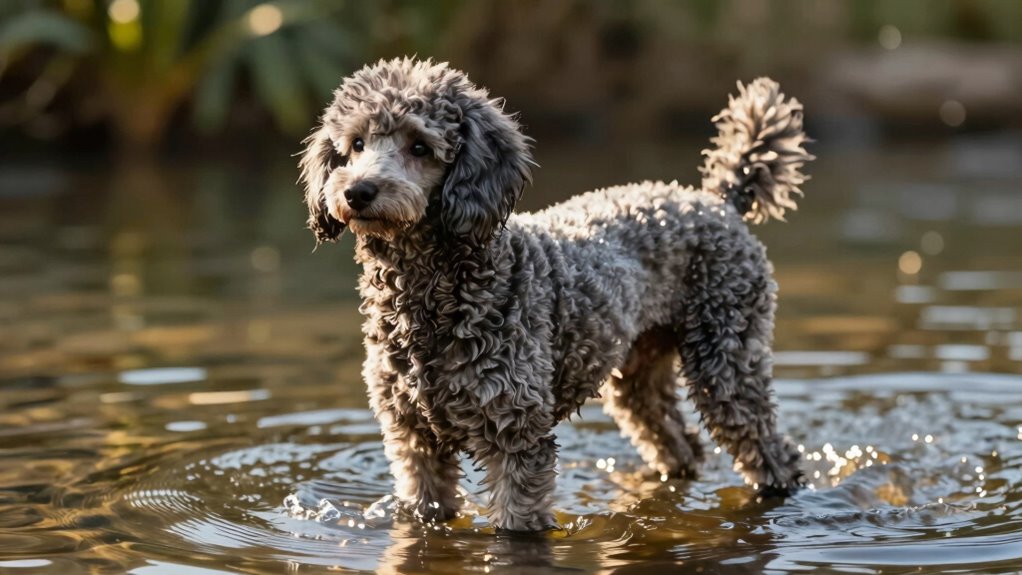
While some poodles dive right in, many of us notice our dogs hesitate at the water’s edge, preferring to wade rather than swim. Poodles interact with water in diverse ways—individual behavior ranges from joyful splashing to cautious观望.
Most stay in shallow areas, rarely venturing into deep water unless drawn by toys or other dogs. Swimming isn’t instinctive for all; some show anxiety, especially without early exposure. We’ve seen how gradual, positive reinforcement builds comfort—one treat, one step, one calm moment at a time.
Start in inches of water, let them explore at their pace. Avoid forcing entry; instead, encourage with voice and play. Many of our poodles enjoy rain, puddles, or hoses, yet still avoid full swimming. That’s okay. Comfort matters more than submersion.
Each dog’s threshold differs—some paddle briefly, always near steps. We respect that. With patience, consistency, and gentle exposure, confidence grows—the same principle applies to grooming experiences where low-stress environments help pets remain calm. But never mistake hesitation for failure. It’s not about depth; it’s about trust.
We guide, they decide. Together, we find what makes them feel safe—because every poodle deserves to move through water on their own terms.
Signs of a Poodle’s Discomfort in the Pool
We watch closely when our poodles meet the water, because their safety depends on us reading the signals right. Signs of discomfort aren’t always obvious, but we learn to notice them. Excessive panting, whining, or barking tells us they’re anxious. We see clawing at the sides, a clear plea to escape. Some struggle to keep head above water, limbs flailing, bodies tense. Their body language speaks volumes—a tucked tail, stiff posture, wide eyes. These aren’t just quirks; they’re warnings.
We’ve seen poodles refuse to enter the water altogether, preferring to stand in shallow areas, pads just barely wet. That’s not stubbornness—it’s a preference for safety. They trust us to honor their limits. We don’t force them in. Instead, we observe, listen, and adjust. Consider pairing water exposure with positive reinforcement training to help anxious poodles build confidence gradually and associate the pool with rewarding experiences.
Each dog communicates differently, but the message is the same: comfort matters. When we recognize these signs early, we protect both trust and well-being. Swimming should never feel like a struggle—for them or for us.
Benefits of Using a Life Jacket for Poodles
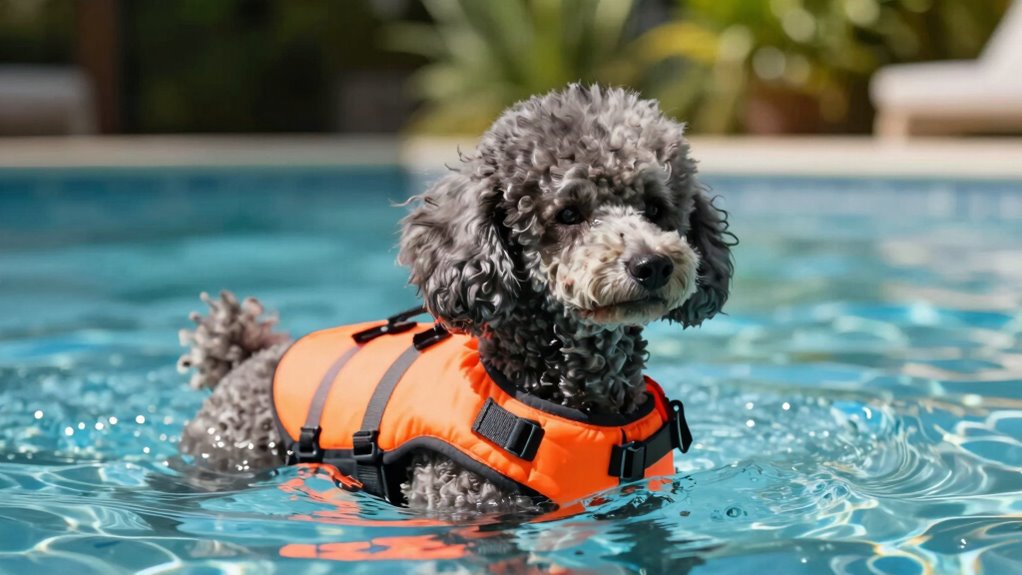
When introducing poodles to water, fitting them with a life jacket isn’t just a precaution—it’s a game-changer for safety and confidence. We’ve seen how life jackets transform timid dips into joyful splashes, especially for poodles new to deep water. These safety precautions do more than keep heads above water—they build trust, one paddle at a time.
- Life jackets provide essential buoyancy, keeping poodles’ hips elevated and aligned for balanced, efficient movement.
- Enhanced control reduces strain on owners and allows secure guidance during entry and exit.
- Panic reduction is immediate; the jacket’s support calms nerves when poodles feel overwhelmed.
- Gradual exposure in controlled environments helps them develop real swimming skills without fear.
- Even strong swimmers benefit—especially in open water, where currents and fatigue pose hidden risks.
We know deep water can intimidate, but with proper gear, poodles gain confidence quickly. Buoyancy isn’t about weakness—it’s smart preparation. Similar to how raised floors prevent moisture seepage in dog houses, life jackets create a protective barrier that allows poodles to enjoy water safely.
When we prioritize safety precautions like life jackets, we’re not just protecting our poodles. We’re inviting them into water with patience, care, and steady support.
Choosing the Right Life Jacket With Handles
A life jacket with a handle gives us far greater control when helping our poodle navigate the water, especially when they’re just gaining confidence. Those handles let us lift them easily, guide their movement, and offer quick support—key moments where control means everything.
We look for a life jacket with strong buoyancy, so their hips stay up and swimming feels natural. Secure straps are non-negotiable; they keep the jacket in place, ensuring a snug fit that won’t shift during play.
We check sizing guidelines carefully—measuring chest girth and weight—so the fit matches their frame perfectly. Just as accurate sizing is crucial for proper fit and protection, we prioritize getting the dimensions right for our poodles’ water safety gear. Bright colors like neon orange or electric blue boost visibility, helping us spot them fast, even in choppy water. High visibility isn’t just practical—it’s a safety must.
Together, buoyancy, handles, secure straps, and a snug fit create a life jacket that’s both comfortable and reliable. We trust these features to keep our poodles safe, supported, and smiling in the water.
Building Confidence Through Gradual Exposure
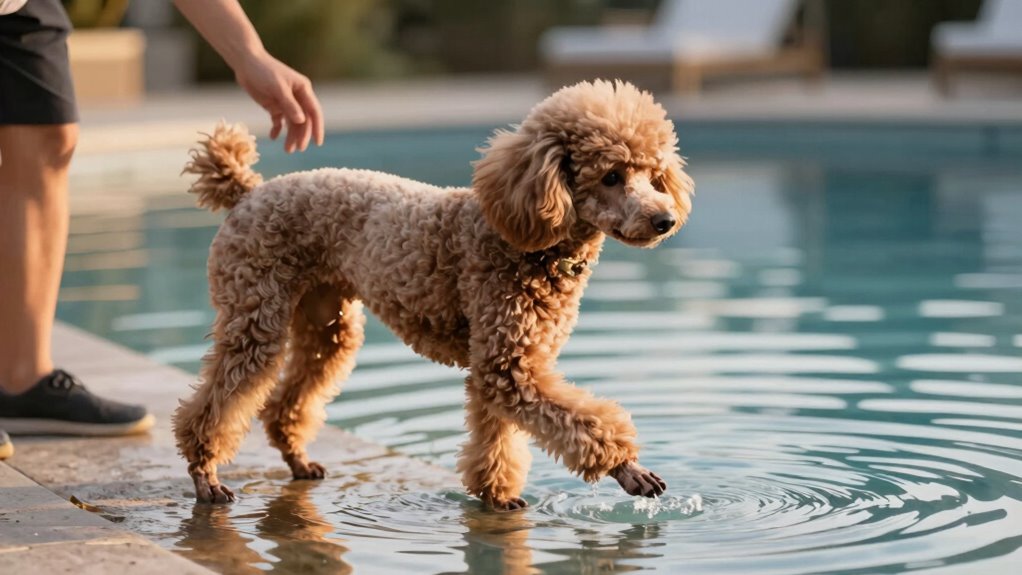
Though some poodles take to water naturally, most gain confidence best through structured, step-by-step introduction, and we start where the water barely covers their paws.
Gradual exposure in shallow areas lets them explore without overwhelm, helping us build confidence at a pace that feels safe. We keep the environment calm, supportive, and free of pressure, always using life jackets for security and peace of mind.
With consistent practice, they begin forming positive associations, slowly linking water with comfort and success. We avoid rushing them into deeper water, instead letting curiosity lead. Over time, steady experience strengthens their swimming skills and trust. Similar to senior dogs who benefit from enhanced stability and grip during mobility challenges, poodles gain confidence when their environment provides secure footing and supportive equipment.
- Begin in water no deeper than 6 inches to promote comfort
- Use life jackets with secure handles for safety and support
- Limit sessions to 10–15 minutes to prevent fatigue
- Praise softly and stay close to reinforce a calm environment
- Progress only when your poodle shows enthusiastic interest in retrieving activities
Encouraging Swimming With Toys and Play
We’ve built a foundation of trust and comfort in shallow water, letting our poodles adjust at their own pace—now we turn to play as a powerful tool for turning hesitation into action. Introducing toys that float sparks curiosity, making retrieving toys a natural extension of play. We create a playful environment where water activities feel like fun, not fear, using gradual exposure to deepen their confidence and comfort. Toss a floating toy just beyond paw reach—this small challenge encourages swimming without pressure. Pair every splash with positive reinforcement: warm praise, treats, or a happy voice to celebrate courage. Shallow areas remain our starting point, ensuring safety while nurturing enthusiasm for swimming. Playdates with water-loving dogs also help, as seeing friends dive triggers excitement.
| Strategy | Tool | Outcome |
|---|---|---|
| Floating toys | Rubber balls, plastic ducks | Retrieving toys builds momentum |
| Shallow entry | 6–12 inches deep | Safe, controlled exposure |
| Social play | Playdates | Increased enthusiasm for swimming |
| Positive cues | Treats, praise | Reinforces confidence and comfort |
The Role of Social Learning From Other Dogs
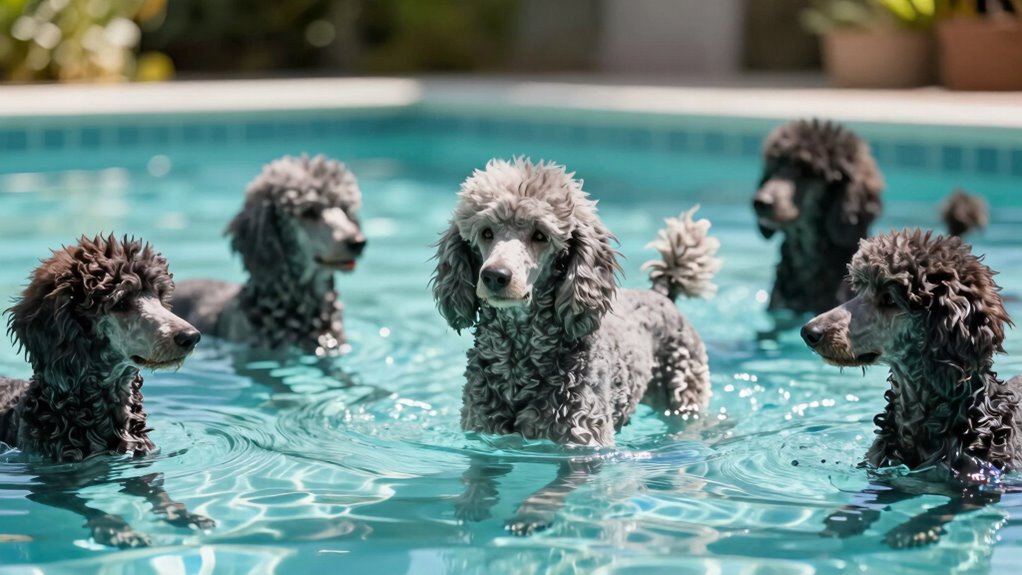
When poodles see other dogs confidently swimming and retrieving toys, they’re far more likely to dip in themselves—behavior we can actively shape through well-timed social exposure.
Social learning plays a powerful role in how our poodles approach water activities. A hesitant pup often finds courage not through force, but through quiet observation and the subtle encouragement of peer interactions.
We’ve noticed that positive experiences grow from shared moments—when a confident dog enters the water, others follow, comfort levels rising with each ripple.
Our pups explore swimming at their own pace, yet social cues speed the journey. Individual responses vary, yes, but consistent, calm interactions make all the difference.
- Social learning mirrors natural canine curiosity
- Confidence builds through peer success in water
- Encouragement from dog-to-dog interactions reduces hesitation
- Comfort levels improve during group water activities
- Positive experience increases willingness to explore swimming
Safety Measures for Pool and Open Water
Whether you’re introducing your poodle to a backyard pool or a lakeside swim, safety always comes first—we take it seriously so fun stays front and center.
We follow clear safety measures because even strong swimmers need protection. We always use a properly fitted life jacket—it boosts buoyancy and gives us peace of mind.
We supervise closely, especially near open water, watching for anxiety or impulsive jumps. We check that pools have easy entry and exit points, like gradual slopes or pet-friendly stairs.
Gradual exposure helps build confidence; we start in shallow water and let our poodle adjust at their own pace. Positive reinforcement—treats, praise, calm voices—makes each step feel safe.
We pay attention to their comfort level, never forcing progress. During water activities, we provide shade and fresh water to prevent overheating.
We limit swim time in hot weather and watch for heavy panting or fatigue. These steps aren’t just caution—they’re care.
When we prioritize safety, our poodle swims with joy, trust, and growing confidence.
Setting Realistic Swimming Goals for Your Poodle
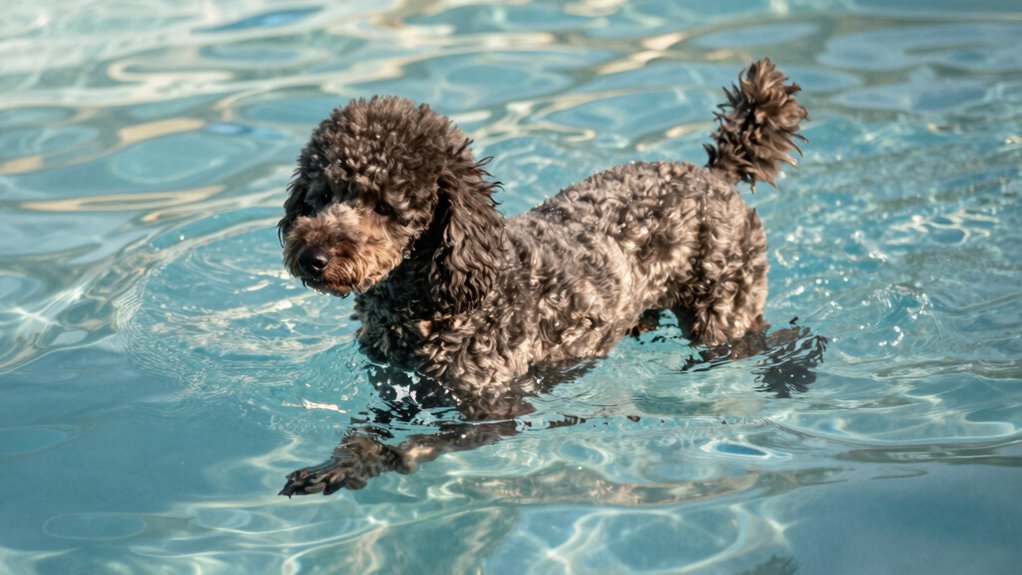
While every poodle has their own rhythm in the water, we can help them thrive by setting clear, realistic swimming goals from the start. It’s understood that setting achievable goals matters—starting with brief sessions in shallow areas, then gradually increasing comfort as skills grow.
We honor their unique comfort levels, never rushing, always observing cues. Our shared mission? Building confidence through patience, consistency, and love.
- Begin with 2–3 minute swims in chest-high water, increasing duration weekly
- Use treats and praise as positive reinforcement after each success
- Focus on shallow areas first to create a safe foundation
- Respect individual pace—some poodles adapt in days, others need weeks
- Turn sessions into fun and engaging moments with play and retrieve games
We transform the swimming experience into something joyful, not forced. Each splash is a step forward.
By integrating play and retrieve games, we make progress natural. With steady guidance and gentle repetition, we’re not just teaching swim—we’re nurturing trust.
Let’s keep it fun and engaging, because when our poodles feel safe, they thrive.
Frequently Asked Questions
Do Poodles Naturally Know How to Swim?
We’ve seen it — poodles don’t always naturally know how to swim, but their water instincts shine with gentle water acclimation. We bond through play, teach swimming lessons, and use safe gear, revealing swimming benefits, health perks, and joyful aquatic activities together.
Do Poodles Like to Play in Water?
We see our poodles love water play, though each has unique poodle water instincts. We nurture poodle water training gently, turning poodle swimming habits into poodle beach fun, poodle pool activities, and poodle swimming games—always ensuring poodle water safety and poodle hydration needs while sharing poodle water enjoyment.
Why Does My Poodle Not Like to Swim?
We’ve seen our poodle hesitate in water—his comfort levels dip due to fear factors like past experiences or water anxiety. We ease his stress with positive reinforcement, gentle training techniques, and patience, honoring his breed characteristics and unique individual preferences shaped by environmental factors we’re learning together.
Which Dog Breed Loves Swimming the Most?
Don’t we all wonder which dog breed loves swimming the most? We’d say Labrador Retrievers, with their strong canine instincts and breed characteristics, thrive in water activities—offering endless aquatic enjoyment, exercise benefits, and a natural edge in swimming competitions, all while reminding us to use proper safety precautions and gentle training techniques.
Conclusion
We’re in this together—think of your poodle like a fledgling sailor, not born on deck but meant to glide. Start shallow: 6 inches of pool edge, life jacket snug with dual buckles and 2.5-inch handle grip. Use fetch with 3-inch floating discs, praise in warm tones. Watch ears flatten? Retreat. Gradual wins build real confidence. Swimming isn’t sprint; it’s rhythm, safety, and trust—stroke by stroke, wave by willing wave.