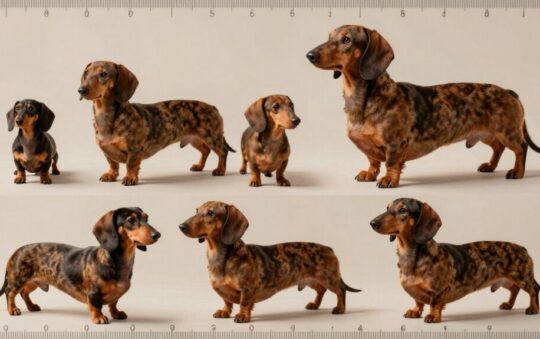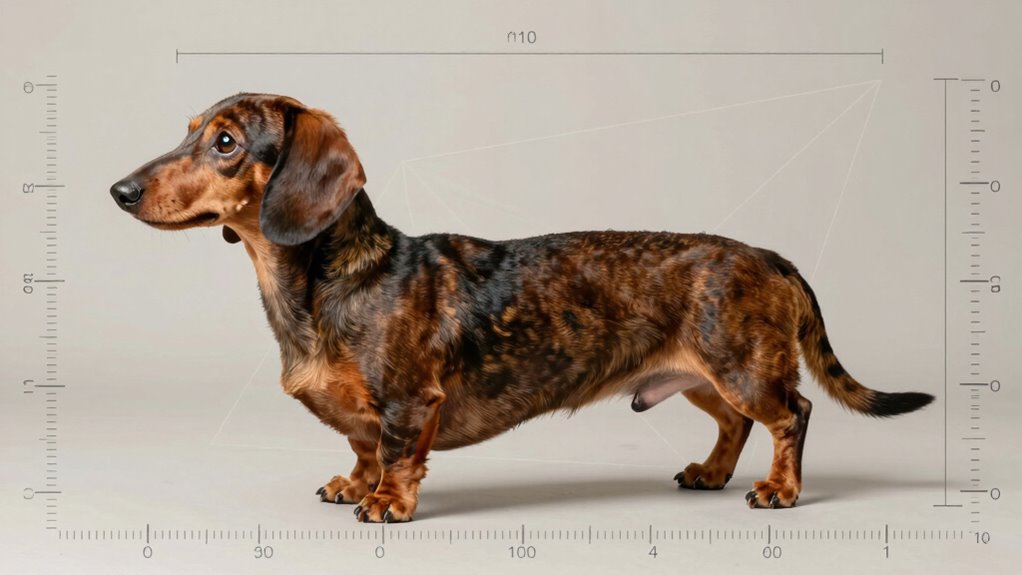
We measure our Mini Dachshunds with purpose—height, body length, and girth aren’t just numbers. At 5 to 6 inches tall and 12 to 14 inches long, they’re compact, but precision matters. A snug chest measurement guarantees harnesses fit safely. These specs guide everything from coats to crates. Getting them right means avoiding discomfort—or worse, health risks down the line. Let’s break down each measurement so we get it exactly right.
Key Takeaways
- Mini Dachshunds typically reach a height of 5 to 6 inches at the shoulder by 8 to 12 months of age.
- Ideal body length ranges from 12 to 14 inches, measured from the base of the neck to the start of the tail.
- The ideal adult weight is under 11 pounds to prevent health issues like IVDD, diabetes, and arthritis.
- Girth, the chest’s widest part behind the front legs, ensures proper fit for harnesses and clothing.
- Accurate measurements support correct sizing for gear, enhancing comfort, mobility, and long-term well-being.
How Tall Is a Mini Dachshund at the Shoulder?
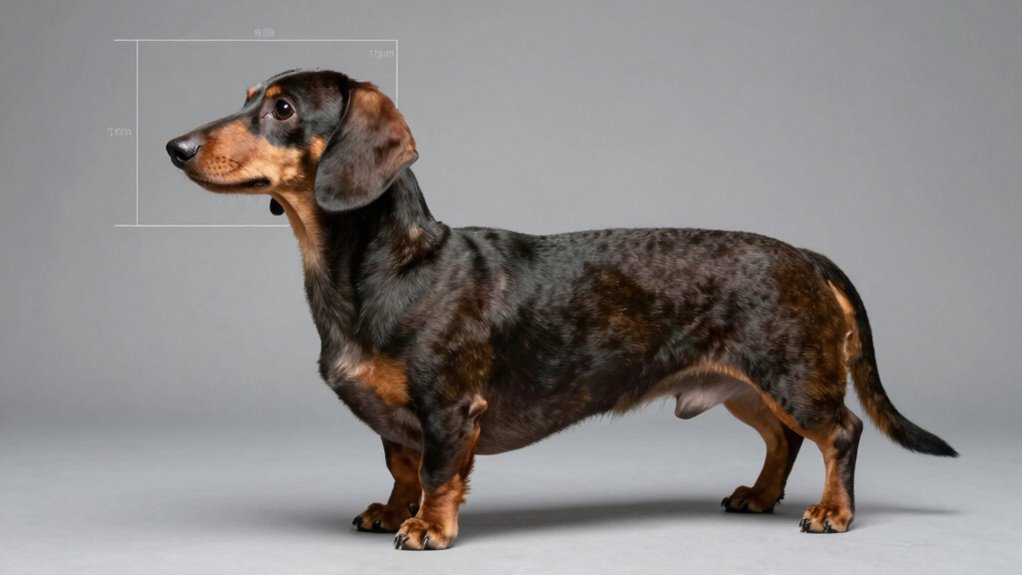
While they may look petite scampering across your living room floor, Miniature Dachshunds are precisely sized according to breed standards—and their shoulder height is a key measure.
We stand together on this: a fully-grown Mini Dachshund’s adult height ranges from 5 to 6 inches at the withers, the top of the shoulder blades. This compact stature is intentional, bred to keep us smaller than Standard Dachshunds, who reach 8 to 9 inches.
We also weigh less—under 11 pounds—to match our shorter frame, making Miniature Dachshund Weight a critical part of the breed standard.
While individual dogs may vary slightly due to genetics, diet, or health, it’s important to be aware that height alone doesn’t define health. Pairing your pup’s height with a healthy weight gives a fuller picture.
We trust you’ll measure at the shoulder, not the head or back, for accuracy.
And remember: consistency matters. Tracking both height and weight over time guarantees your little companion stays within the ideal range. Their unique long back and short legs also mean considering specialized car seats designed specifically for their body structure during travel.
You’ve got this—and so do we.
What Is the Ideal Weight Range for a Mini Dachshund?
How do we determine if our Mini Dachshund is at a healthy weight? It’s not just about the number on the scale—it’s about balance, structure, and how our pup moves through life. The ideal weight range for an adult Miniature Dachshund is under 11 pounds, but individual Miniature Dachshunds vary due to genetics, diet, and activity. A proper body condition score (BCS) gives us more insight than weight alone, showing us muscle tone and fat distribution. Ensuring adequate calcium and phosphorus intake through balanced nutrition supports the skeletal structure necessary for maintaining ideal weight in growing and adult dachshunds.
| Age | Weight (lbs) | Purpose |
|---|---|---|
| 4 months | 6–8 | Supports healthy growth |
| Adult | Maintains ideal weight range | |
| Any time | Varies | BCS better than weight |
| If gaining | Monitor | Prevents unhealthy weight gain |
| Ongoing | Evaluate | Through regular veterinary check-ups |
We watch closely, touch gently, and act wisely. Regular veterinary check-ups help us catch subtle shifts early, especially sudden weight gain. Let’s guide our dachshunds with care—consistent routines, loving attention, and smart choices pave the way for lasting well-being.
How Long Should a Mini Dachshund’s Body Be?
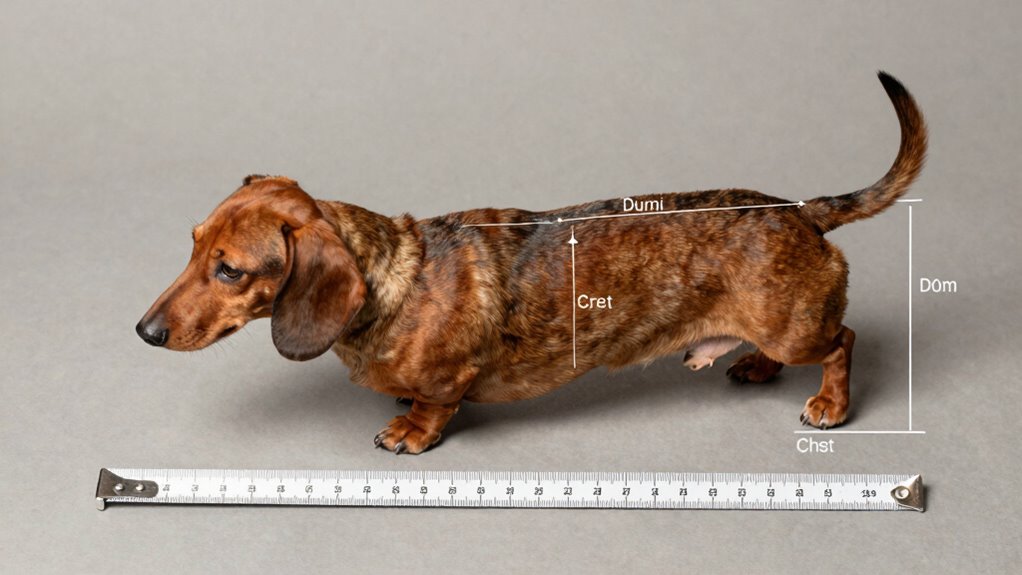
Our Mini Dachshund‘s body length plays a key role in both appearance and health. For Miniature Dachshunds, the ideal body length ranges from 12 to 14 inches, measured from the base of the neck to the start of the tail. This proportion supports their compact body shape and aligns with breed standards.
Most fully grown Mini Dachshunds reach their final height by 8 to 12 months—males averaging 6–8 inches tall, females 5–7 inches. Though genetics, diet, and health can cause slight variations, staying within the average length guarantees better spinal support and mobility.
We also know that maintaining the ideal weight—under 11 pounds—helps protect their long spine and complements their body length. A balanced, proportional build means less strain on joints and a healthier life overall. Proper nutrition through slow feeders and controlled portion sizes can help prevent overeating and support optimal weight management during their growth stages.
When measuring your pup, stay precise: use a soft tape measure along the back while they stand naturally. Getting these numbers right matters—not just for show standards, but for their daily comfort and long-term well-being.
When Does a Mini Dachshund Stop Growing?
Since growth rates vary slightly from dog to dog, we keep a close eye on our Mini Dachshund’s development to know when they’ve reached their full size. Most Miniature Dachshunds stop growing in height by 8 to 12 months, though they may fill out a bit more until their first birthday.
By around 12 months, they typically reach their adult weight of about 7 kg. This final stretch of growth is subtle—less of a surge, more of a gentle settling into their frame. We monitor development closely because genetics and health play key roles in growth patterns. Some pups mature faster; others take a little longer, and that’s perfectly normal.
To support a healthy life, we feed balanced meals, limit high-impact exercise, and track weight trends. Even after the growth phase ends, maintaining an ideal weight is essential for their spine and joints. Regular grooming with essential grooming tools also contributes to overall health monitoring, allowing us to spot any physical changes or concerns early.
When in doubt, we consult veterinarian professionals for assessments. They help confirm proper growth and offer guidance tailored to our dog’s unique needs. Knowing these milestones helps us nurture them best.
How to Measure Your Mini Dachshund Accurately
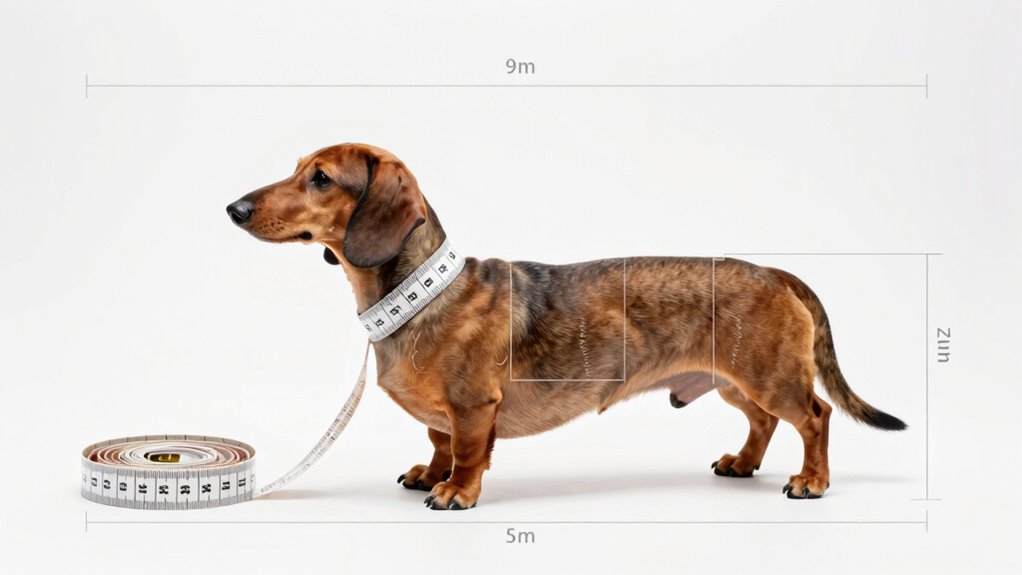
Once our Mini Dachshund has settled into their full size around one year of age, we can shift focus to accurately measuring their frame for proper gear fit.
Getting these numbers right guarantees comfort and safety—especially for harnesses, coats, and carriers. We want to measure with care, using a soft tape and a calm, standing pup. Here’s how we do it best:
- Back length: Measure from the base of the neck (where the collar sits) to the base of the tail—this determines size categories like 12″, 14″, or 15″.
- Girth measurement: Wrap the tape snugly around the chest, just behind the front legs; this is essential for a proper fit in clothing and harnesses.
- Keep our dog relaxed and standing naturally—no tugging or twisting the tape.
- Account for individual quirks—some Mini Dachshunds are stockier or longer, so custom sizing might be needed.
- Compare our numbers to brand-specific charts; don’t guess the size.
- Proper measurements ensure our dachshund’s unique body shape is supported correctly in carriers and other gear, preventing back strain and promoting comfort during travel.
We measure accurately not just for fit, but for our dog’s daily comfort and confidence.
Signs Your Mini Dachshund Is Underweight
While every Mini Dachshund has a unique build, recognizing when your dog falls below a healthy weight is essential for long-term well-being. We, as Dachshund owners, must stay alert to signs of underweight status. A healthy Miniature Dachshund typically weighs under 11 pounds when fully grown. If your pup’s ribs are sharply visible and easily felt with no fat layer, it may be underweight. We recommend using the Body Condition Score (BCS)—a score below 4/9 signals the need for dietary adjustments. Sudden weight loss or failure to gain weight, especially in puppies under 4 months old weighing less than 6–8 pounds, warrants immediate veterinary visit.
| Sign | What to Watch For | Action |
|---|---|---|
| Weight | Monitor growth | |
| Ribs | Easily seen and felt | Consider underweight status |
| BCS | Below 4 out of 9 | Make dietary adjustments |
| Weight change | Sudden weight loss | Schedule veterinary visit |
Risks of Overweight in Mini Dachshunds
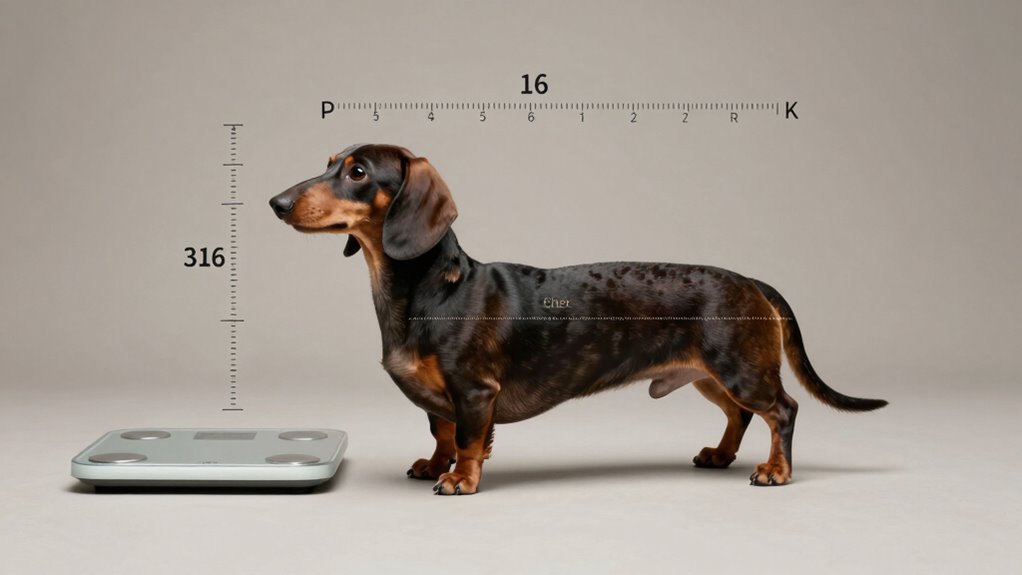
Though small in stature, Mini Dachshunds carrying extra weight face big health risks—we can’t afford to overlook them.
Overweight Miniature Dachshunds, especially those over 11 pounds, are at higher risk for serious health conditions like diabetes, arthritis, and heart disease. Obesity makes it hard to feel their ribs and erases their waistline, clear signs they’ve strayed from their ideal weight.
Worst of all, excess weight sharply increases their chances of intervertebral disc disease (IVDD), a painful, costly condition common in the breed. But we can protect them.
With proper diet, consistent exercise, and regular vet checkups to monitor body condition score (BCS), we keep them lean and strong.
We do this together by focusing on what truly matters:
- Keeping your Mini under 11 pounds
- Watching for loss of waist and rib visibility
- Preventing IVDD through weight control
- Balancing portion sizes with daily exercise
- Following vet-guided plans for safe weight loss
We’ve got this—our dogs depend on us to act early, wisely, and with love.
Comparing Mini, Tweenie, and Standard Dachshund Sizes
When it comes to Dachshund sizes, knowing the difference helps us make smarter choices for their care and comfort. The official size classification hinges on weight and height, with three main categories: Miniature Dachshund, Tweenie Dachshund, and Standard Dachshund.
A true Miniature Dachshund weighs under 11 pounds and stands 5–6 inches tall, with a back length of 12–14 inches. The Standard Dachshund tips the scale at 16–32 pounds and reaches 8–9 inches in height, often with a back exceeding 16 inches.
In between sits the informal but beloved Tweenie Dachshund—weighing 11–16 pounds—bridging the gap when your pup doesn’t quite fit either end.
These precise measurements matter more than you think. Proper girth and back length guarantee well-fitting harnesses, coats, and crates, preventing chafing or restriction.
We measure at the widest part of the chest for girth, and from the base of the neck to the tail for back length. Getting it right means better support, safer walks, and happier snuggles for our long-backed companions.
Frequently Asked Questions
What Are the Measurements of a Mini Dachshund?
We measure our mini dachshunds’ height at 5–6 inches, weight under 11 pounds, and track growth, feeding, and health to support their lifespan. We watch temperament, guarantee proper height, weight, and care, and bond through understanding their unique mini dachshund needs together.
What Are the Three Sizes of Dachshunds?
We’ve seen the truth—you’ve got three sizes in the Dachshund breed: miniature, tweenie, and standard. We understand these sizes shape everything from their temperament traits to exercise needs, grooming requirements, diet recommendations, training tips, health concerns, and how their unique characteristics guide caring for them daily.
How Big Is a Mini Dachshund at 3 Months?
We’re about 4 to 6 pounds and 4 to 6 inches tall at 3 months, showing steady puppy growth. We thrive on proper feeding guidelines, early socialization tips, and love learning training basics—health considerations and weight expectations matter most to us.
How Do I Tell How Big My Dachshund Will Be?
we ponder together how big your dachshund will be, guided by growth patterns, breed standard, and how genetics influence size. we understand nutrition impact, exercise needs, and health concerns matter deeply to you—we honor that love through gentle weight maintenance.
Conclusion
We’ve walked you through the numbers, and now you know: 5 to 6 inches tall, 12 to 14 inches long, girth snug behind the front legs. These aren’t just stats—they’re your toolkit. Isn’t it clearer now how precision protects health? Proper fit prevents pain, especially for our long-backed companions. We measure not to obsess, but to honor their form. Stay sharp with the tape, stay steady with the facts—your Mini thrives when you do.