
It’s true—dachshunds can live peacefully with cats, despite their strong prey drive. We’ve seen it work in homes with as little as 800 square feet. Success isn’t luck. It’s deliberate training, consistent routines, and controlled introductions. Think baby gates at 36 inches, scent-swapped bedding after 24 hours, and leashed first meetings lasting no more than 10 minutes. We’ll show you how to build trust step by step—your pets’ harmony starts with what you do next.
Key Takeaways
- Start early socialization between dachshunds and cats during the puppy’s critical window (12–16 weeks) to build positive associations.
- Use baby gates and leashed introductions for controlled, calm face-to-face meetings in neutral spaces.
- Exchange scents by swapping bedding and toys every 24 hours to foster familiarity and reduce tension.
- Reinforce calm behavior with treats and praise during interactions to shape positive, consistent responses.
- Create separate safe zones with elevated cat perches and dog-free areas to ensure long-term harmony and security.
Understanding Dachshund Behavior Traits

While every dachshund brings a unique personality to the home, understanding their core behavior traits helps us prepare for successful introductions with cats. We see dog behavior shaped by instinct, breed history, and early experience. Our dachshunds are playful, curious, and alert—traits that fuel their interactions with cats.
Yet we must respect their strong prey drive; it can trigger chasing if we don’t guide them. Many are also territorial, guarding spaces or resources, which may spark tension. We manage this by reading body language: stiff postures, intense staring, or sudden lunging signal stress.
Individual temperament varies widely—some are bold, others shy—so one-size-fits-all assumptions fail us. Early socialization, starting by 12 to 16 weeks, reshapes dog behavior dramatically. We expose our pups to calm cats in controlled settings—short sessions, leashed at first, using positive reinforcement. Engaging chew toys during these introductions can help redirect their focus and provide mental stimulation, keeping them calm and occupied during the adjustment period.
Consistent training reinforces calmness, reducing impulsive reactions. We use cues like “sit” or “leave it” to create pause. With patience, we redirect instinct. We shape coexistence. We build trust between species by understanding what drives our dachshund’s actions.
Preparing Your Home for a New Pet
Since your dachshund and cat will need time to adjust, we start by setting up separate safe zones—each at least 6 x 8 feet with a bed, food, water, and litter box (for the cat)—so they can settle into their own spaces without pressure.
We use baby gates to section off areas while still allowing visual access, keeping the dachshund on a leash during early observations to maintain calm control. These gated boundaries let both pets see and hear each other safely.
We alternate their access to shared spaces—like the living room or kitchen—so they grow familiar with each other’s scent trails. We place soft blankets or toys that carry the other animal’s scent into their zones, gently introducing them to the new family member.
We feed them on opposite sides of closed doors at scheduled times, pairing the other’s presence with positive routines. This approach mirrors the strategy used with chew toys, where pairing presence with positive routines helps reduce anxiety and encourages calm behavior during critical adjustment periods. Baby gates give us flexibility—secure enough to prevent sudden chases, open enough to encourage gradual trust.
This setup isn’t just practical—it’s the foundation of peace. We’re building safety, not just space.
Exchanging Scents Before First Meetings

After setting up separate safe zones, we take a quiet but powerful step forward—exchanging scents before the first face-to-face meeting. Exchanging scents helps our pets recognize each other not as threats, but as part of the same home.
We start a few days early, letting familiarity grow in the background while they feel safe in their spaces. Scent is everything to them, and we use it to build calm, confidence, and connection.
Here’s how we make exchanging scents simple and effective:
- Take a piece of bedding from the cat’s bed and place it near the dog’s resting area, and swap a dog toy into the cat’s zone.
- Rotate these items every 24 hours so the scents stay fresh and familiar.
- Use unscented laundry soap on linens—no artificial smells to confuse them, just as you would avoid artificial dyes and fragrances when choosing pet-safe cleaning products for your home.
- Feed them on opposite sides of a closed door, so they associate the other’s scent with good things, like meals and comfort.
We’re not rushing—we’re building trust, one breath at a time.
Using Baby Gates for Controlled Observations
When the time comes to let our dachshund and cat see each other, we use a baby gate to create a safe, structured viewing space. Using baby gates helps us maintain control while fostering trust. We keep our dachshund leashed on one side, allowing the cat to move freely, reducing stress for both. Gradual exposure through baby gates lessens fear and defensive behaviors over time. It’s during these quiet moments they begin building familiarity—without pressure.
Using baby gates isn’t just about safety—it’s about shaping positive experiences. We feed them nearby, play softly, or brush our dog, so they link each other’s presence with comfort. For added security and peace of mind, we ensure our gate includes childproof locking mechanisms that prevent accidental openings during these critical introduction sessions.
| Benefit | How It Helps | Tip |
|---|---|---|
| Safe barrier | Prevents chasing while allowing sight | Use 30-inch tall gate |
| Controlled space | Lets cat retreat, dog stays contained | Install tight-fit model |
| Shared routines | Builds positive associations | Feed pets on opposite sides |
| Behavior shaping | Reinforces calm reactions | Reward quiet attention |
| Reduced stress | Lowers aggression triggers | Keep sessions 10–15 mins |
Conducting the First Face-to-Face Meeting

How do we set the stage for a successful first face-to-face meeting? We start by choosing a neutral space—never the cat’s favorite corner or the dog’s bed—so neither pet feels threatened. This lowers stress and keeps things calm between cats and dogs.
Here’s how we make it work:
- Use a baby gate or screen door to let them see each other safely—close enough for observation, far enough to prevent lunging.
- Keep the dachshund leashed, giving us control while letting the cat move freely, confident it can retreat.
- Keep it short—three to five minutes, several times a day—so neither pet gets overwhelmed.
- Hand out treats when both stay relaxed, linking good behavior with yummy rewards and helping cats and dogs form positive associations. Similar to how mental stimulation through puzzle feeders helps dogs during mealtime, positive reinforcement during these introductions creates a rewarding experience that strengthens the bond between your pets.
We’re not rushing. We’re guiding. Each quiet glance, each calm sniff, builds trust.
We’re laying the foundation where our dog feels secure, our cats stay curious, and harmony grows—piece by piece.
Teaching Calmness With Essential Commands
We build on those calm first meetings by shaping our dachshund’s behavior with precision and patience. Teaching “sit,” “stay,” and “leave it” gives us control during tense moments, helping our dog stay focused, not frantic.
We practice in a quiet space—no distractions, just clear cues and soft tones. We keep sessions short, 5 to 10 minutes, two or three times daily, always ending on a calm note. Using a clicker marks the exact moment of calmness, followed by a treat or quiet praise.
We start 10 feet from the cat, then inch closer—5 feet, then 3—only when our dachshund stays relaxed. Consistency is non-negotiable; daily repetition builds trust. Commands aren’t just obedience—they’re bridges to harmony.
Over weeks, our dog learns stillness isn’t punishment, but peace. And slowly, our pets aren’t just coexisting. They’re sharing space. Napping in sunbeams. Becoming best friends.
We’re not rushing it. We’re growing it. Calm by command, trust by time.
Reinforcing Positive Interactions With Rewards
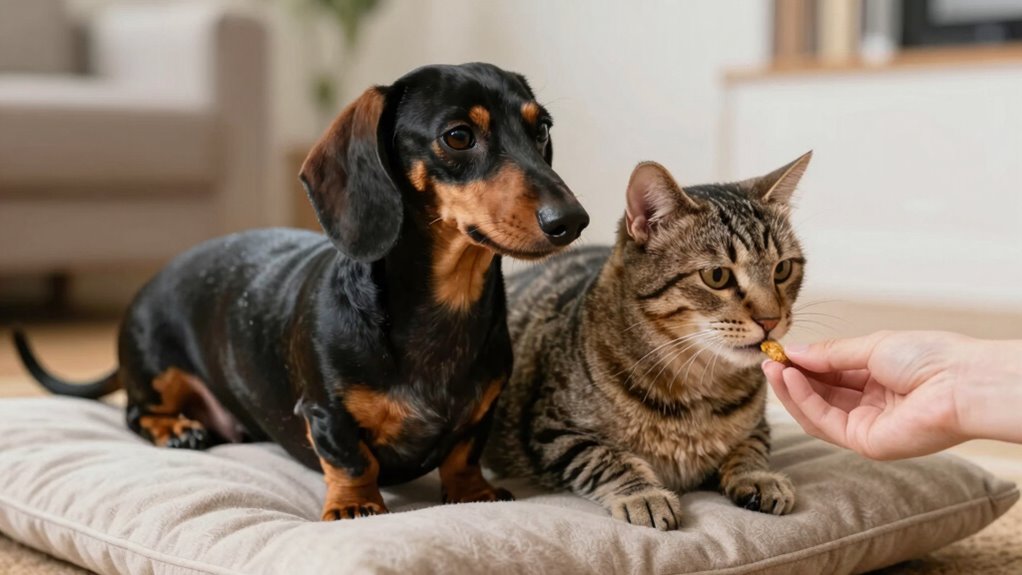
Because every calm glance, quiet step, and soft exhale matters, we reward them immediately—strengthening the behaviors that lead to peace. Reinforcing positive interactions isn’t just kind—it’s strategic. When our dachshund stays relaxed near the cat, we respond with treats, gentle praise, or a quick game of tug. These moments build trust, shaping how they see each other. We’re not suppressing fear or excitement; we’re replacing it with something safer, something shared.
Here’s how we make it real:
- Give a pea-sized treat the *instant* our dog looks at the cat without stiffening.
- Praise in a warm, low tone when they choose to sit or sniff the ground instead of lunging.
- Offer 60 seconds of gentle play only after calm behavior lasts 10 consecutive seconds.
- Repeat sessions 3 times daily, starting with the pets 8 feet apart, gradually closing distance by 1-foot increments.
We stay consistent, because every reward is a quiet promise: *safe choices lead to good things.* Reinforcing positive interactions this way builds a relationship rooted in security—for both of them.
Managing Prey Drive and Territorial Instincts
While dachshunds were bred to chase small game through dense brush, we can guide that instinct into safer channels with steady training and smart setup.
We redirect their prey drive using consistent cues like “leave it” and “watch me,” which help shift their focus before chasing starts. Early socialization matters—we expose them to cats during puppyhood so they learn feline friends aren’t quarry.
When introducing pets, we choose neutral zones, keeping leashes loose and stress low to prevent territorial flare-ups. We manage space thoughtfully: separate feeding areas prevent resource guarding, and we never leave high-value toys or food unattended.
We watch body language—stiff posture or fixed stare means it’s time to intervene. Short, supervised interactions build tolerance. Over time, we shape calm behavior.
We remain patient, firm, and proactive. This isn’t about suppressing instincts but guiding them. With clear boundaries and consistent reinforcement, our dachshunds learn cats are companions, not competition.
We build trust slowly, and that makes all the difference.
Establishing Safe Spaces for Long-Term Harmony

A secure home setup keeps both dachshund and cat calm, building on the progress made in managing instincts during introductions. We create safe spaces so each pet feels secure, reducing stress and preventing setbacks. These areas aren’t just physical zones—they’re emotional anchors that support long-term harmony.
Here’s how we make it work:
- Designate a dog-free room for the cat with food, water, and a litter box—ideally 8–10 sq ft, fully off-limits to the dachshund.
- Install elevated perches or shelves at least 4 feet high, giving the cat safe retreats with clear sightlines.
- Use baby gates on doorways to allow visual and scent contact while maintaining physical separation during early stages.
- Swap bedding or toys every 2–3 days so both pets grow familiar with each other’s smell, building trust gradually.
We maintain the dachshund’s space just as thoughtfully—consistent boundaries prevent territorial tension.
With safe spaces in place, we give both animals the breathing room they need to coexist peacefully, day after day.
Frequently Asked Questions
Can Cats and Dachshunds Get Along?
Yes, we’ve seen cats and dachshunds get along beautifully when we respect their behavioral differences. We bond through patience, love, and understanding—each moment together deepens our trust and nurtures a shared life full of quiet companionship and joy.
How to Introduce a Dachshund to Cats?
we start by keeping them apart, letting them learn each other’s scents first. we use behavioral techniques like positive reinforcement to build trust, always guiding our dachshund calmly so we all feel safe and connected during every introduction.
Is It Possible to Train a Dog to Get Along With Cats?
Yes, we can train our dog to get along with cats using consistent Training Techniques. We use calm commands, treats, and gradual meetups, building trust together. With patience and love, our pets learn to share space peacefully, deepening the bond we nurture in our home.
How Long Does It Take Dogs and Cats to Get Used to Each Other?
We’ll be honest—our “get to know you” phase? Yeah, it’s not a sprint. The adjustment period? Think weeks, not days. We’re talking 6 to 8, sometimes more. But hey, slow wins the trust race, right?
Conclusion
We’ve guided countless dachshunds and cats to peace, not chaos. Success starts with patience, measured steps, and consistent rules. We exchange scents, use baby gates (36-inch height), and enforce calm commands like “sit” and “stay.” Rewards follow every quiet interaction. Prey drives fade when trust grows. Safe spaces—separate crates, cat trees at 48 inches—anchor security. Over time, they settle like two old librarians sharing one quiet room: alert, respectful, at ease.