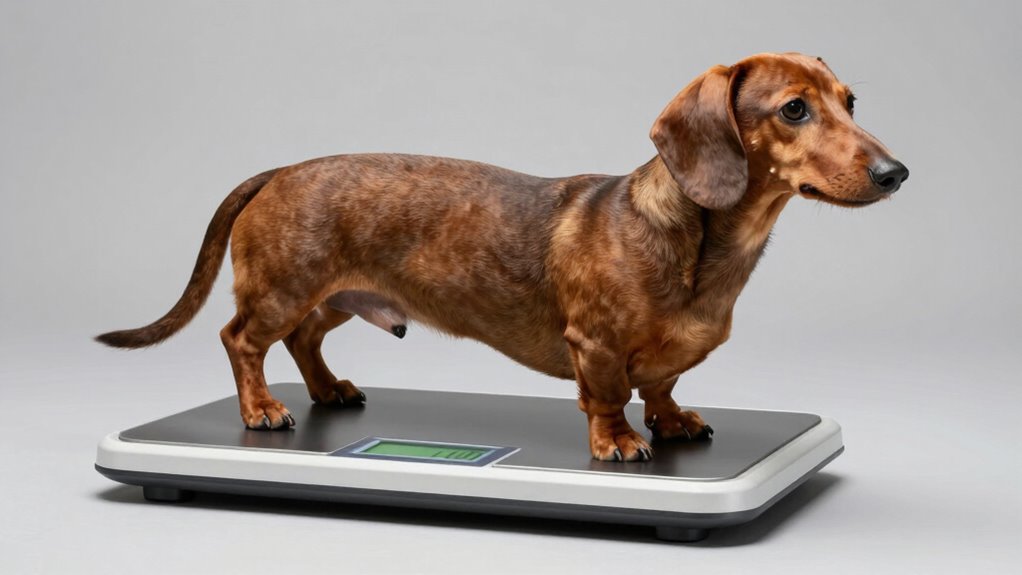
Do all Dachshunds really weigh the same, or is that just a myth? Not quite—we’ve found that Standard Dachshunds typically weigh 16 to 32 pounds, while Miniatures stay under 11 pounds. Weight varies by genetics, diet, and daily activity. But here’s the catch: the scale alone won’t tell you if your pup’s healthy. A Body Condition Score, vet assessments, and proper feeding matter just as much. Stick around—you’ll want to know what comes next for your long-backed companion.
Key Takeaways
- Standard Dachshunds typically weigh between 16 and 32 pounds when fully grown.
- Miniature Dachshunds weigh under 11 pounds, distinguishing them from the standard variety.
- Weight varies based on genetics, diet, activity level, and overall health.
- Dachshunds reach near full size by 8 months and adult weight by 12 months.
- Body Condition Score (BCS) is more reliable than weight alone for assessing healthy size.
Standard vs. Miniature Dachshund Weight Ranges
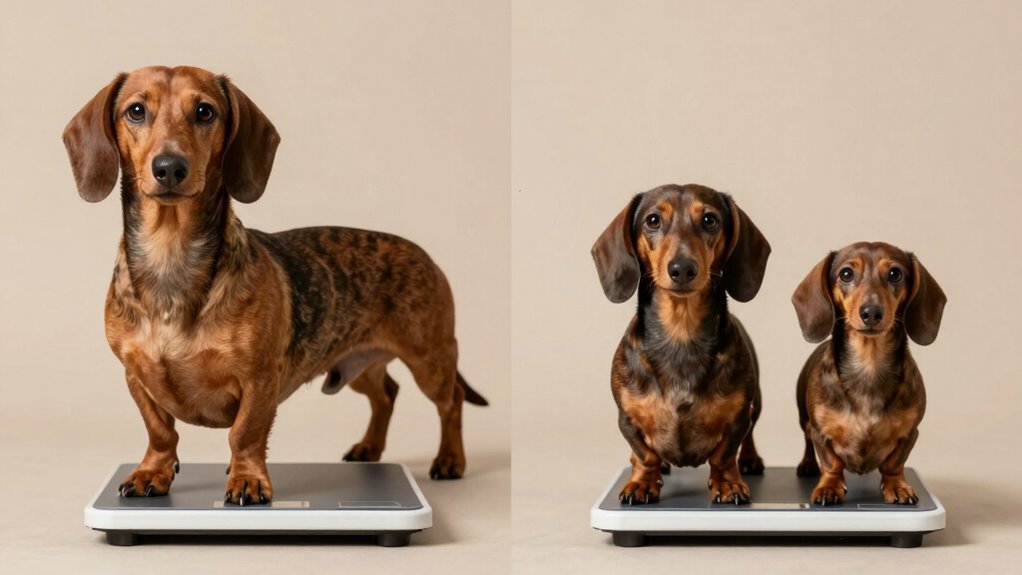
Let’s break down the key differences between Standard and Miniature Dachshund weight ranges—because size matters when it comes to your pup’s health.
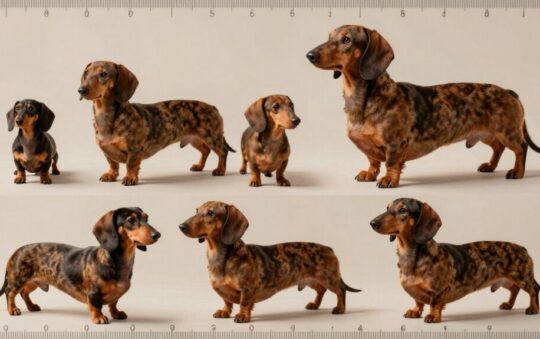
A Standard Dachshund typically weighs 16 to 32 pounds as an adult, while a Miniature should stay under 11 pounds. That’s a big gap. Height plays a role too: Standards stand 8 to 9 inches tall, Miniatures only 5 to 6.
But genetics, diet, and activity all influence your Dachshund’s healthy weight. That’s why we always check the Body Condition Score (BCS)—it’s a better indicator than the scale alone. We keep an eye on ribs, waist, and abdomen to guarantee a lean, fit build.
Weight ranges are guides, not strict rules. Each Dachshund is unique. Monitoring your dog’s BCS helps prevent obesity, which strains joints and impacts long-term health. Proper portion control through appropriate feeding practices can also support maintaining your Dachshund’s ideal weight.
Stay proactive: know your pup’s ideal weight, track changes, and consult your vet. With the right balance, your Standard or Miniature Dachshund can stay strong, agile, and happy for years.
At What Age Do Dachshunds Stop Growing?
At What Age Do Dachshunds Stop Growing?
Here’s a quick reference for growth milestones:
| Age | Weight Range (lbs) | Growth Stage |
|---|---|---|
| 3 months | 5–10 | Rapid growth phase |
| 6 months | 10–22 | Slowing growth rates |
| 8 months | 14–32 | Near full size |
| 12 months | 16–32 (adult Standard Dachshund) | Final maturity, muscle development |
Keep supporting healthy development with balanced nutrition and daily activity—we’ve seen how proper care shapes lifelong well-being. Accurate sizing becomes important as your dachshund reaches full maturity, particularly when selecting items like raincoats for protection against the elements.
How to Tell If Your Dachshund Is at a Healthy Weight
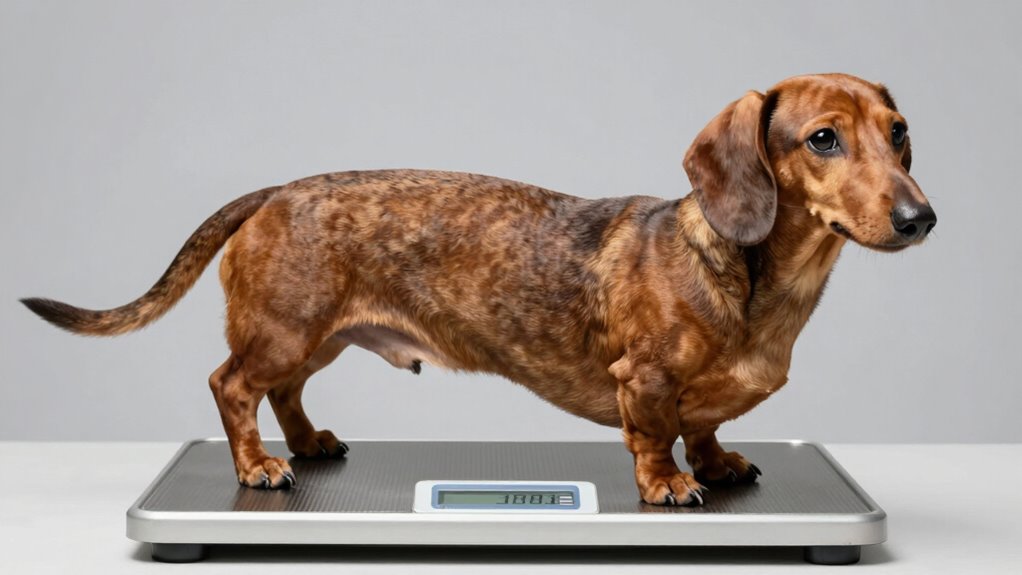
While weight alone gives us a starting point, we need to look at the full picture to determine if our Dachshund is truly at a healthy weight.
We rely on tools like the Body Condition Score (BCS), which assesses body fat, not just the number on the scale. For adult Standard Dachshunds, a healthy weight is 16 to 32 pounds; Miniature Dachshunds should stay under 11 pounds—our Dachshund Weight Chart helps track this.
We check by gently feeling ribs: we should feel them without pressing too hard. If we can’t, our pup may be an overweight Dachshund.
From above, we look for a visible waist—if it’s missing, we adjust diet and activity. These signs directly impact our dog’s general health. A proper leash choice also supports training by preventing our dog from escaping or breaking free during walks, which is especially important when managing weight-related activities like controlled exercise routines.
We never skip regular veterinary check-ups; they catch subtle shifts early. Together, BCS, weight ranges, and hands-on checks keep our Dachshund strong, balanced, and thriving.
We’ve got this.
Common Weight-Related Health Issues in Dachshunds
When our Dachshund carries extra weight, especially beyond the ideal 16–32 pounds for Standards or over 11 pounds for Miniatures, we increase their risk for serious health problems.
Overweight Dachshunds weigh more than their frames are built to handle, and that excess strain worsens common health issues. Obesity sharply raises the risk of diabetes, arthritis, and heart disease. Worst of all, it aggravates intervertebral disc disease (IVDD)—a breed-specific threat where spinal discs can rupture, sometimes leading to paralysis.
We can’t ignore how obesity undermines mobility, promotes joint stress, and worsens conditions like luxating patella. Even sinus infections, common in Dachshunds, become harder to manage when our dog is overweight. Additionally, maintaining a healthy weight supports calcium and phosphorus balance, which is critical for strong bones and spinal health in this breed.
That’s why we must monitor body condition scores regularly—using visual checks and touch to assess fat coverage. Catching weight gain early keeps our Dachshund active and pain-free.
We’re not just managing pounds; we’re protecting quality of life. Staying vigilant helps us prevent preventable suffering.
Feeding Guidelines for Maintaining Ideal Dachshund Weight
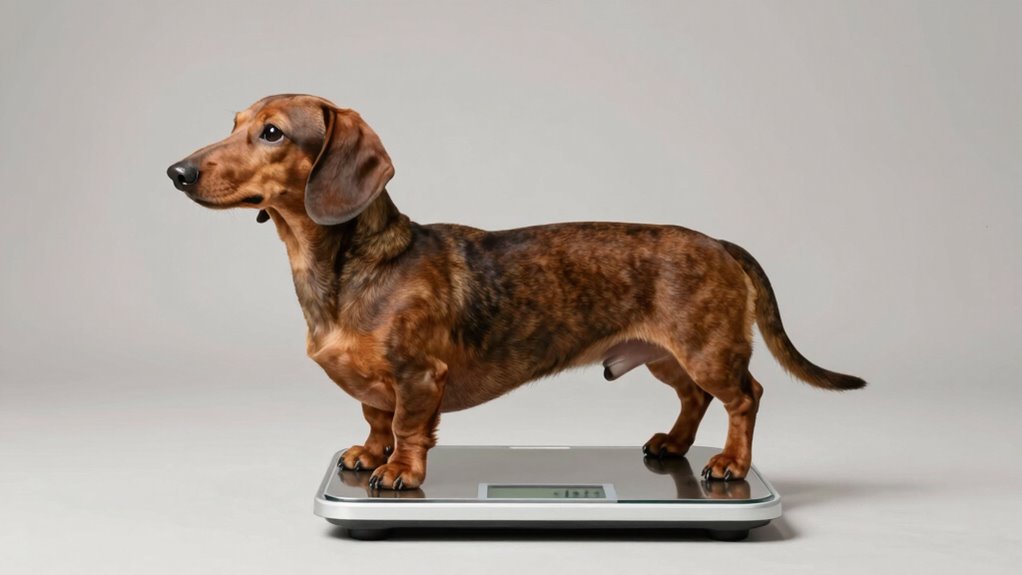
Since keeping our Dachshund at a healthy weight directly supports their spine health and long-term mobility, we stick to clear, science-backed feeding guidelines.
We feed our adult dog’s twice daily, adjusting feeding amounts based on their size: Miniatures under 11 pounds, Standards between 16 and 32. Puppies eat three to four times a day until six months old, then we shift to the adult schedule.
We only choose AAFCO-approved diets—these guarantee complete nutrition and help prevent obesity, a major risk for back problems and other health conditions. We never give table scraps; those empty calories can quickly derail progress.
Instead, we monitor feeding closely, measuring portions daily. Regular veterinary check-ups lets track weight trends and tweak plans early. Incorporating durable chew toys into their routine also supports dental health and reduces stress-related overeating behaviors.
We understand maintaining a healthy weight isn’t just about food—it’s consistency, awareness, and love. By balancing portion control, quality nutrition, and routine assessments, we protect their ideal weight and, most importantly, their joy-filled, wiggly life.
Frequently Asked Questions
What Is a Healthy Weight for a Dachshund?
We understand a healthy weight keeps our dachshund happy, so we track weight management together, follow feeding guidelines, honor growth stages, meet exercise needs, watch for weight fluctuations, respect age factors, reduce obesity risks, and trust vet recommendations—we’ve got this.
Are Dachshunds Highly Intelligent?
Yes, we see our Dachshunds as bright sparks—lightning in small packages—mastering canine problem solving, acing obedience levels, shining in agility performance, and wowing us with learning capabilities woven into their spirited breed characteristics and deep-rooted cognitive abilities.
What Is the Leading Cause of Death in Dachshunds?
it is understood the leading cause of death in dachshunds is spine issues like ivdd, and we watch for breed predispositions, common diseases, obesity risks, and support dachshund health with proper exercise needs, nutrition guidelines, dental care, vaccination importance, and smart lifespan factors.
What Is the Average Size and Weight of a Mini Dachshund?
We’re pint-sized powerhouses—mini dachshunds typically weigh under 11 pounds and stand 5-6 inches tall. We charm with spunky temperaments, need balanced diets, regular exercise, grooming, training, socialization, and check-ups to thrive; our health and longevity depend on dedicated care and love.
Conclusion
We weigh facts, not just dogs. Standard Dachshunds range 16–32 pounds; Miniatures stay under 11. Size isn’t health—body condition is. We see ribs with light pressure, notice a tucked waist, track energy levels. Too heavy? Risks spike: intervertebral disc disease, diabetes, joint strain. Too light? Concern lingers. We measure meals, monitor movement, mind genetics. Balance wins. Together, we aim for strong backs, wagging tails, and vet-confirmed wellness—because healthy looks different on every Dachshund.