
Our friend Lisa’s Shih Tzu had four puppies last spring—right in line with the average. Most Shih Tzus deliver litters of 3 to 6 pups, though some have just one or as many as ten. Litter size isn’t random. It hinges on your dog’s age, health, and genetics. First-time moms often have fewer puppies. Peak fertility lands between ages two and five. You’ll want to know what affects these numbers—especially if you’re planning ahead.
Key Takeaways
- Shih Tzus typically have 3 to 6 puppies per litter, though litters can range from 1 to 10.
- Smaller litters are common in young or older mothers, especially those under 2 or over 5 years old.
- Peak litter size occurs when the mother is between 2 to 5 years of age.
- The mother’s health, nutrition, and genetics significantly influence the number of puppies born.
- Proper prenatal care and a balanced diet rich in protein and DHA support optimal litter size.
Average Litter Size for Shih Tzus

On average, we see Shih Tzu litters include between 3 and 6 puppies, though litter sizes can range from as few as 1 to as many as 10. This average litter size helps us plan for proper care, feeding, and socialization.
Shih Tzus, like other small breeds, typically have fewer puppies than larger dogs—expecting 7 or more is uncommon. We monitor each pregnancy closely because knowing the expected number of puppies helps us spot potential health issues early. For example, a litter much smaller or larger than average might signal underlying concerns.
We prioritize the mother’s well-being, as healthy, well-nourished Shih Tzus are more likely to deliver full-term, strong puppies. Age and genetics play roles, but we focus on what we can control: nutrition, vet care, and monitoring. Proper nutrition during pregnancy supports strong bones and dental health in developing puppies, which are critical for their growth and development.
Understanding the average litter size isn’t just about numbers—it’s about ensuring every pup gets the start they deserve. We prepare for surprises, but we plan for the typical range: 3 to 6. That way, we’re ready, calm, and confident when labor begins.
Factors That Influence Litter Size
While no two litters are exactly alike, it’s understood that several key factors shape how many puppies a Shih Tzu will have. We’re talking typically 3 to 6 puppies in a litter, though numbers can range from 1 to 10.
The health and nutrition of the mother play a central role—well-fed, thriving moms usually support larger, stronger litters. Think balanced diets, proper weight, and vet-approved conditioning. Adequate mineral intake, including calcium and phosphorus, supports the mother’s ability to sustain a healthy pregnancy and larger litter.
Genetics matter just as much; some bloodlines consistently produce more puppies in a litter due to inherited traits. If her parents had big litters, she’s more likely to as well.
We also consider breeding frequency—not in this section, but worth a whisper—too often and the body doesn’t rebound fully.
We look at each dog as an individual, yes, but we lean on patterns: strong lineage, robust care, and biological luck. Together, these shape outcomes.
You’re not just hoping for puppies—you’re stewarding conditions that help them thrive. And that starts long before birth.
How Age Affects Puppy Count
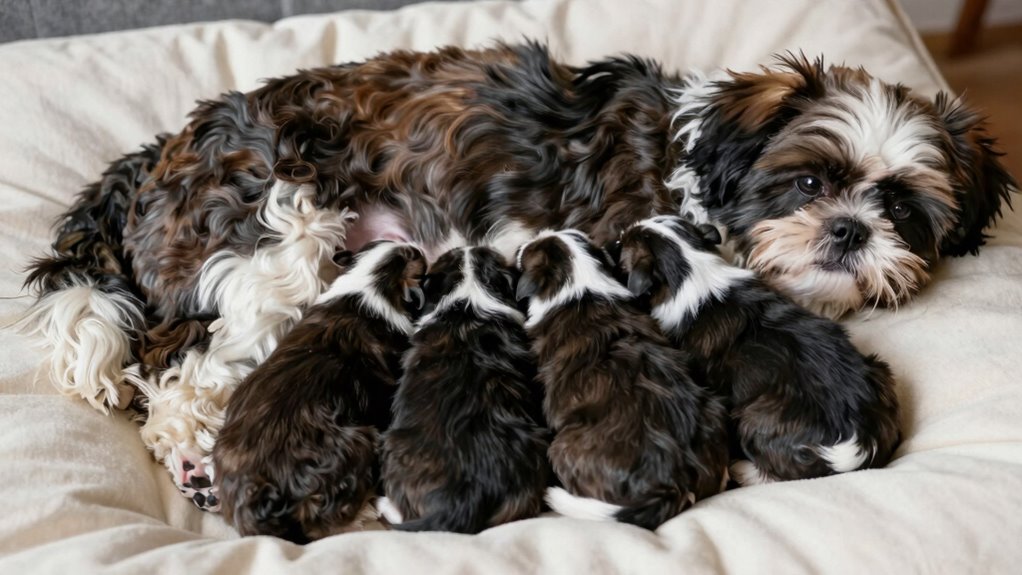
When a Shih Tzu is too young or past her prime, litter size tends to shrink, so we aim to breed between the sweet spot of 2 and 5 years. Age plays a big role in how many puppies she’ll have.
First-time moms, especially under 2, often have smaller litters—just 1 to 3 puppies. Their bodies aren’t fully mature, and that limits litter sizes.
From 2 to 5 years, we see peak fertility. During these years, healthy Shih Tzus regularly have 4 to 6 puppies per litter. Their reproductive systems are strong, cycles are consistent, and their bodies respond well to pregnancy.
But once she’s over 5, we notice a shift. Age begins to affect fertility, and litter sizes often drop—sometimes to just 1 or 2 puppies. We also see higher risks during delivery.
That’s why we time breedings carefully. We want safe deliveries and healthy puppies. Just as portion control is essential for maintaining the health and well-being of growing dogs, proper breeding timing ensures optimal outcomes for both mother and litter.
Bottom line: age shapes outcomes. For best results, we stick to breeding between 2 and 5. It’s when litter sizes are most reliable—and love multiplies the most.
The Role of Health and Nutrition
Because a Shih Tzu‘s body needs to be in peak condition to support a healthy pregnancy, we prioritize her overall health from the start. A well-maintained Shih Tzu Dog stands a better chance of carrying a strong litter, and we understand that health and nutrition go hand in hand.
- We feed a high-quality diet rich in protein, DHA, and folic acid to support fetal development and milk production.
- We schedule regular vet visits throughout her cycle to catch and manage breed-specific issues early.
- We monitor her weight closely—underweight or overweight females often have smaller litters.
- We adjust her nutrition during pregnancy, increasing calories by 30–50% in the last trimester for ideal puppy growth.
- We incorporate medium-chain triglycerides and other nutrient-dense supplements to enhance her overall wellness and support optimal fetal development.
Good nutrition doesn’t just fuel the mother—it shapes the future of her puppies. When we care for her health with consistency, we often see litters of 3 to 6 healthy pups.
We’ve seen it time and again: a thriving Shih Tzu equals a thriving litter.
Genetic Considerations in Litter Size
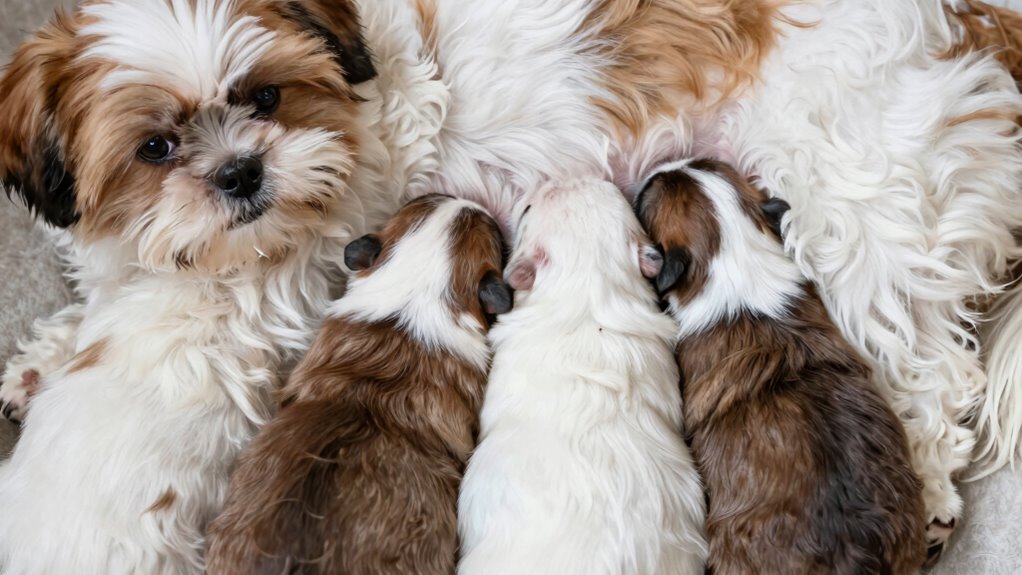
Though genetics aren’t the only factor, they’re one we can’t afford to overlook when predicting how many puppies a Shih Tzu might have. On average, litters range from 3 to 6 puppies, but genetic factors heavily influence this number.
It’s understood that the health of the parents plays a direct role—strong genetic lines tend to produce larger, healthier litters. When both parents come from a history of consistent breeding with minimal hereditary health issues, chances improve for a smooth pregnancy and robust litter size.
We also see that inbreeding or irresponsible pairing often leads to smaller litters and higher risks during birth due to reduced genetic diversity. That’s why we always stress reviewing the lineage of both dogs. Knowing their background helps us anticipate potential challenges and support better outcomes.
Responsible breeding isn’t just about numbers—it’s about honoring the breed’s well-being. By focusing on genetic health, we protect future generations and keep our little companions thriving, one strong litter at a time. Ensuring parent dogs receive balanced nutrition and proper diet supports their overall health and reproductive success, contributing to healthier litters.
Preparing for Your Shih Tzu’s Litter
As we prepare for the arrival of a Shih Tzu litter, setting up a safe and supportive environment becomes our top priority.
Preparing for your Shih Tzu’s litter means focusing on comfort, cleanliness, and quick access to care. It’s understood that the average litter size is typically between 3 and 6 puppies, though litters can range from 1 to 10, so we plan accordingly.
Supporting our dog’s health and safety starts with a well-balanced, nutrient-rich diet to meet her growing needs. We also keep a close eye on signs like weight gain and increased sleep to track her pregnancy journey.
- Create a quiet whelping box (36” x 24” x 12”) with soft, washable bedding
- Stock clean towels, a reliable heating pad (set to 85°F), and a digital thermometer
- Monitor temperature and behavior as labor approaches for early warning signs
- Keep vet contacts and emergency supplies nearby at all times
Every detail we arrange supports the health and safety of mom and her pups. We’re ready, together.
Caring for Newborn Shih Tzu Puppies
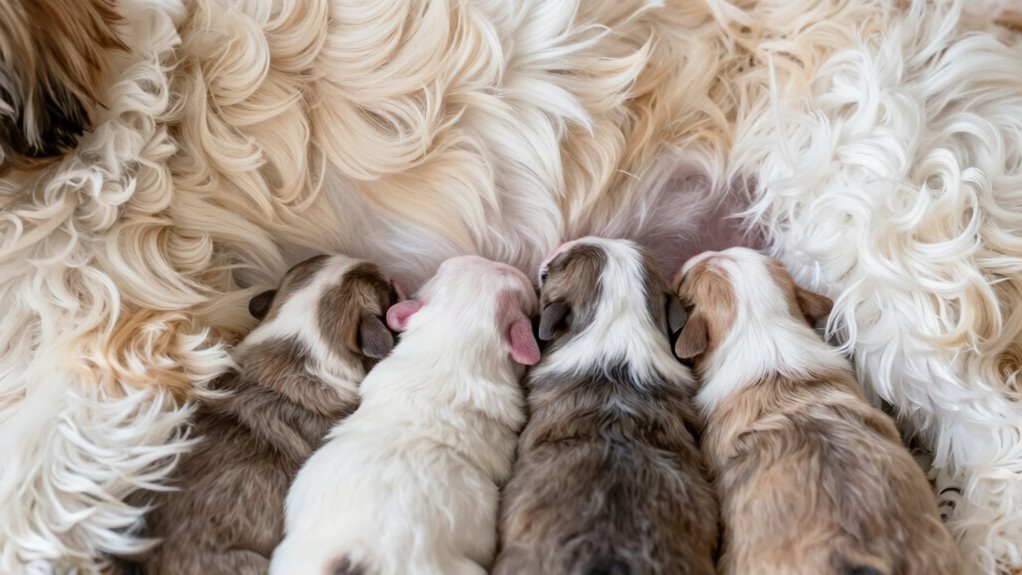
Once the puppies arrive, we focus on keeping them safe, warm, and well-fed during their fragile first weeks.
Newborn puppies can’t regulate their body temperature, so we use a heating pad or a hot water bottle filled with warm water, always wrapped in a soft towel to prevent burns. We keep the whelping box at 85–90°F for the first week, then gradually reduce it to 80°F by week four.
Since newborn puppies rely entirely on their mother’s milk, we make sure she’s nourished and comfortable to provide the best care. If nursing isn’t possible, we feed a commercial puppy milk replacer every 2–3 hours using a bottle, never cow’s milk.
We massage their bellies with a damp cotton ball after each feeding to stimulate urination and defecation. We weigh each pup daily; a healthy gain is 5–10% of body weight per day. Any drop alerts us to potential issues.
With close monitoring, warmth, and proper nutrition, we give every puppy the best care during these vital days.
Frequently Asked Questions
How Long Is a Shih Tzu Pregnant?
It is understood that a Shih Tzu’s pregnancy lasts about 63 to 65 days. During her gestation, we watch for pregnancy signs like nesting and appetite changes. We prepare a cozy space and focus on puppy care, ensuring she feels safe, loved, and supported every step of the way.
What Is the 7 7 7 Rule for Puppies?
we follow the 7-7-7 rule for puppy development stages, watching eyes open at 7 days, starting socialization at 7 weeks, and training at 7 months—it guides our breeding health considerations and helps us choose the ideal puppy age for lifelong well-being.
How Many Eggs Can a Shih Tzu Have?
we can’t give you a set number of eggs a shih tzu releases, but it’s tied to puppy care, breeding practices, and health considerations—each cycle varies, so we watch closely, prioritize her well-being, and support her body with love, care, and vet-guided attention.
Can a Shih Tzu Have 10 Puppies?
Yes, we’ve seen a Shih Tzu have 10 puppies—though it’s rare, we understand it’s possible. We watch closely during canine pregnancy health checks, because in Shih Tzu breeding, a large puppy litter size means extra care, love, and planning for mom and babies.
Conclusion
We’ve walked you through what to expect, and now you’re prepared. Shih Tzu litters average 3 to 6 puppies—like a handful of stars in a small sky. Age, health, nutrition, and genetics all shape litter size. First litters are often smaller, typically 1 to 4. Peak fertility hits between 2 and 5 years. We monitor closely, feed balanced diets, and schedule vet checks. Proper care means stronger puppies and smoother deliveries. You’ve got this.