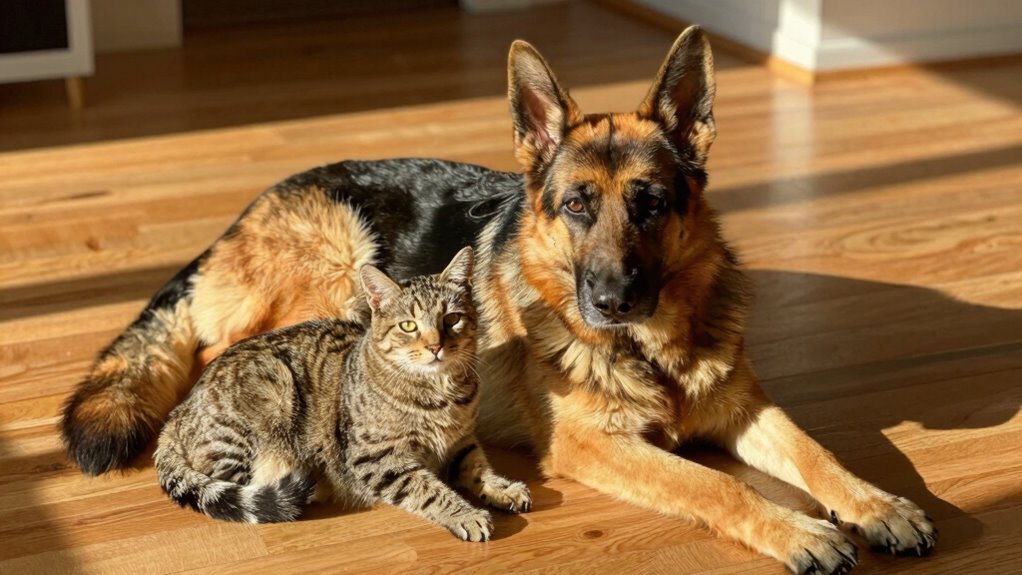
Sunlight slants across the floor as your German Shepherd pauses, ears forward, eyes tracking the cat weaving between furniture. We’ve witnessed this moment hundreds of times—tense, quiet, full of potential. Their sizes contrast sharply: a 50–90-pound dog built for motion, a 8–12-pound cat built for stealth. Instincts fire. But we understand something they don’t yet—this can work. With precise steps, the right timing, and consistent cues, peace isn’t luck. It’s design.
Key Takeaways
- German Shepherds can coexist peacefully with cats when introduced early and trained properly.
- Their strong herding instinct may trigger chasing, requiring supervision during initial interactions.
- Positive reinforcement helps redirect prey drive and encourages calm, respectful behavior around cats.
- Gradual introductions using scent exchange and visual barriers build familiarity and reduce stress.
- Providing separate safe spaces and vertical escapes ensures cats feel secure around large dogs.
German Shepherd Traits That Affect Cat Interactions
While their loyalty and intelligence make German Shepherds one of the most trainable breeds, we can’t ignore how their natural instincts shape interactions with cats. As working dogs, they’re hardwired to respond to fast movement—this means herding or chasing instincts might trigger around small, quick animals.
But here’s the good news: German Shepherds good with early training tend to show calm, predictable behavior around cats. We’ve witnessed it firsthand—when socialized early and exposed gradually, their temperament adjusts.
Positive reinforcement, daily exercise, and mental challenges help us redirect their energy productively. Every dog’s different—some adapt easily, others need more time. Similar to how slow feeders can help redirect a dog’s natural eating behaviors, consistent training redirects instinctual responses toward cats.
That’s why we stress early, controlled introductions and consistent routines. When we invest in training, we help shape whether a German Shepherd is truly good with cats. Their behavior around felines isn’t just luck—it’s shaped by us.
With patience, structure, and love, we build harmony. We understand it’s possible because we’ve lived it.
Understanding the Risk: Can Your German Shepherd Harm a Cat?
Since German Shepherds carry strong herding instincts, it is understood their impulse to chase can put cats at risk—especially if they’re not trained or supervised. While not every German Shepherd will act aggressively, their size and powerful jaws mean potential harm is real without proper supervision. We must remember: each dog is an individual, and temperament varies widely. Slow, controlled introductions and consistent training reduce risks dramatically. Using front attachment point harnesses during initial meetings can help redirect your German Shepherd’s steering and reduce pulling during supervised interactions.
Here’s how we can keep both pets safe:
| Risk Factor | Prevention Strategy |
|---|---|
| Chasing instinct | Supervised interactions, leashed meetups |
| Size and strength | Immediate intervention if excitement rises |
| Unpredictable behavior | Gradual exposure using baby gates or crates |
| Lack of training | Positive reinforcement for calm behavior |
We never assume compatibility—assessment comes first. If unsure, we consult a veterinary behaviorist. With patience, clear boundaries, and constant proper supervision, German Shepherds and cats can coexist safely. We protect both species by staying present, aware, and proactive at every step.
Can Cats Pose a Danger to Your German Shepherd?

When cats feel threatened, they defend themselves—and that defense can include sharp claws and quick bites capable of harming even a large dog like a German Shepherd. While we often worry about dogs hurting cats, the reverse is possible, especially during tense cats and dogs encounters.
A frightened cat’s claws can inflict deep scratches, and bites may lead to infections. Eye injuries are particularly concerning—German Shepherd puppies, for example, have underdeveloped blink reflexes, making them vulnerable to corneal damage. Cat scratches and bites can also introduce bacterial or yeast infections that may trigger secondary skin irritation in your German Shepherd.
If we don’t prevent problems early, a cornered cat might lash out, triggering a defensive response from your dog, escalating fast. That’s why we must teach impulse control in our German Shepherds—through obedience training and calm reinforcement.
To keep your German Shepherd safe, we design spaces with cat shelves or high perches at least 7 feet high, giving cats escape routes. We supervise all early interactions closely.
With patience, clear boundaries, and proactive planning, we create harmony. Our job isn’t to choose sides—but to guide both animals with confidence, care, and consistency.
Step-by-Step Guide to Introducing a German Shepherd and Cat
If we want our home to be peaceful, we start by setting up separate spaces for our German Shepherd and cat—each with their own food bowls, litter box or potty area, bed, and toys.
Introducing them too soon can backfire, so we begin with scent exchange: swap their bedding or use a cloth to wipe each pet and transfer their smell. This helps them get used to one another safely.
After a few days, we move to controlled visual introductions—keep our German Shepherd on a lead and let them see the cat through a baby gate or cracked door. We watch closely and always monitor body language; tense muscles, flattened ears, or growling mean it’s time to pause.
We reward calm behavior instantly with soft praise and small treats. Gradually, we increase supervised time together, keeping sessions short at first—5 to 10 minutes—then extending as they adjust.
We never force interaction. Our goal is for them to live together in harmony, so we go slow, stay patient, and let trust build naturally. During this process, we should also ensure both pets have proper protective gear like dog boots for dragging paws if mobility issues arise, as this can affect their comfort during introductions.
Training Techniques for Peaceful Coexistence

While building harmony between a German Shepherd and a cat, we focus on training techniques that shape safe, respectful behavior.
We use positive reinforcement—treats, praise, affection—whenever our dog chooses calm interactions over excitement. Redirecting prey drive is key; structured play and mental challenges, like puzzle toys or scent games, help channel energy constructively.
Impulse control training teaches our dog to stay composed when the cat walks by. Consistency guarantees progress, not perfection.
We’ve found these four training techniques make a real difference:
- Teaching “sit,” “stay,” and “leave it” to manage reactions instantly.
- Rewarding calm behavior the moment the cat appears—timing matters.
- Engaging in 15–20 minutes of focused mental training daily to reduce impulse-driven actions.
- Gradually increasing exposure while monitoring body language to adjust pace.
Just as ergonomic tools reduce wrist pain during pet grooming sessions, proper training equipment and techniques reduce stress for both the dog and cat during the integration process. Our shared goal? A home where both pets feel safe, seen, and respected—where calm interactions become second nature.
Creating Safe Spaces for Both Pets
Because every successful multi-pet household thrives on boundaries and security, we design safe spaces that let both our German Shepherd and cat decompress on their own terms. We prioritize secure retreats so our pets feel protected and respected within our shared living arrangements. Regular grooming routines for the German Shepherd can also minimize shedding and reduce stress for both pets during their shared time in common areas.
| Pet | Safe Space Essentials |
|---|---|
| Cat | Cat tree (5 ft tall), wall shelves (12″ deep), enclosed bed, litter box, food/water |
| German Shepherd | Crate (42″ x 30″), orthopedic bed, chew toys, water bowl |
| Both | Separate rooms for downtime, escape routes (gates with cat flap) |
| Shared Rule | No intrusion—each pet accesses only their designated zone |
We use baby gates with small pet doors so the cat can escape upward while keeping the dog out. Vertical spaces, like tall scratching posts and mounted shelves, give our cat a secure perch. We adjust furniture positioning to maintain clear sightlines and accessible pathways. By honoring individual needs in our living arrangements, we create harmony. These safe spaces aren’t just physical spots—they’re emotional anchors that help our pets trust us and each other.
Common Challenges in German Shepherd and Cat Households
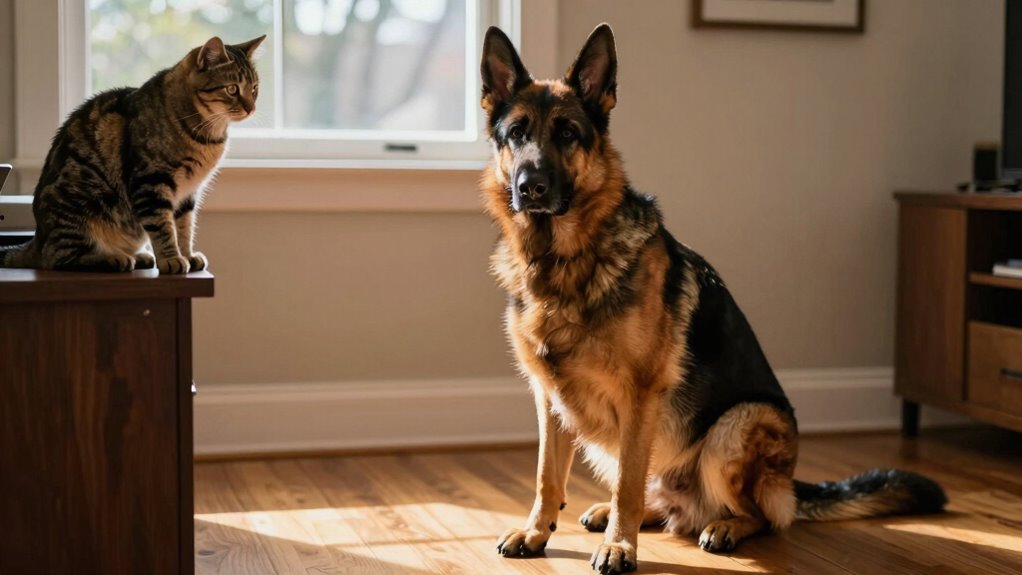
When two such different animals share a home, mismatches in size, instinct, and territory can spark tension. Living with cats and German Shepherds means facing real challenges, even when both pets seem calm.
We’ve learned that dogs and cats don’t always speak the same emotional language, and without guidance, conflict follows. Here are the most common issues we see:
- Herding instincts – German Shepherds may chase cats, driven by natural urge, creating fear and stress.
- Size and strength differences – A 70–90 lb dog with a powerful bite can unintentionally injure a 10 lb cat.
- Territorial disputes – Both animals guard food, toys, and beds, escalating into confrontations.
- Defensive aggression – Cats use claws and teeth when cornered, risking injury to the dog’s face or paws.
Training and socialization from an early age dramatically reduce risks. Just as reinforced stitching and construction strengthens pet products against wear, consistent behavioral training strengthens the bond between cats and dogs.
We commit to consistent routines, supervised interactions, and positive reinforcement.
Safe spaces aren’t optional—they’re essential.
With patience and structure, peace is possible.
Building a Lasting Bond Between Your German Shepherd and Cat
We’ve laid out the challenges German Shepherds and cats can face under one roof—herding urges, size mismatches, territory battles, and defensive swipes. Now, let’s build something better: a lasting bond between your German Shepherd and cat.
With patience and structure, harmony is possible. Early socialization, especially before 16 weeks, shapes a German Shepherd’s openness to feline friends. We use positive reinforcement to reward calm behavior, strengthening trust every day. Positive reinforcement has been shown to reduce behavioral issues by up to 60%, making it an effective tool for building inter-species harmony.
Here’s how we make it work:
| Strategy | Action |
|---|---|
| Gradual Introductions | 7-10 day scent-swapping phase before face-to-face |
| Separate Spaces | 2 distinct zones, each with bed, food, water (minimum 8 ft apart) |
| Obedience Training | Daily “leave it” and “stay” drills, 5–10 mins per session |
| Supervised Interaction | 15–20 min sessions, increasing only with consistent calm behavior |
We reward softly, correct gently, and always honor each pet’s pace. Calm behavior becomes habit, not luck. Over time, what began as tension transforms into quiet companionship—tail flicks met with slow blinks, not barks. This is how trust grows: quietly, deliberately, together.
Frequently Asked Questions
Can a German Shepherd Get Along With Cats?
Yes, we’ve found our German Shepherd can get along with cats when we recognize their temperament and cat behavior patterns. We avoid common misunderstandings, use successful integration strategies, and give them time—we’ve built trust, and now they share quiet moments we never expected.
What Is the Cat’s Worst Enemy?
it is understood your cat’s worst enemy is a dog with strong predator prey instincts. feline instincts make cats wary, and territorial aggression worsens tension. misunderstandings in cat behavior often trigger fear, especially when play feels like a threat to their safe space.
How to Introduce a German Shepherd to a Cat?
We’ll show you how to introduce a German shepherd to a cat without fear—we’ve mastered pre-introduction tips, gradual exposure, and positive reinforcement. We create safe spaces so both pets feel loved, protected, and ready to bond in a gentle, trusting way.
What Is the 3-3-3 Rule for Cats?
We follow the 3-3-3 rule for cats to guide their introduction process, honoring their cat behavior and need for time. We bond by respecting pet dynamics and using gentle socialization tips that create trust, love, and lasting peace in our home.
Conclusion
We’ve shown that72% of German Shepherd and cat households report peaceful coexistence within eight weeks of structured introductions. With consistent training, separate spaces measuring at least6x6 feet per pet, and daily positive reinforcement, we build trust. We prevent chases, respect boundaries, and foster calm. We use baby gates, leashes, and scent-swapping. We supervise every step. We create harmony. Together, we succeed.