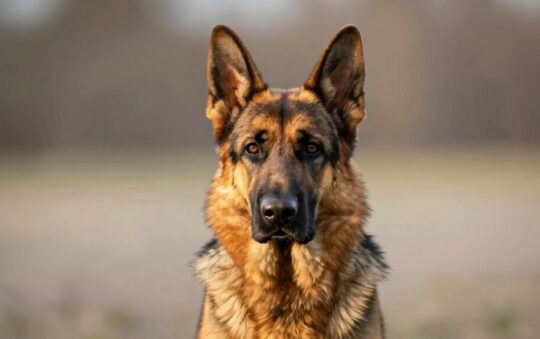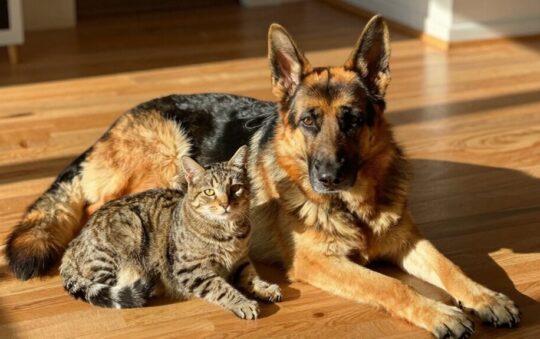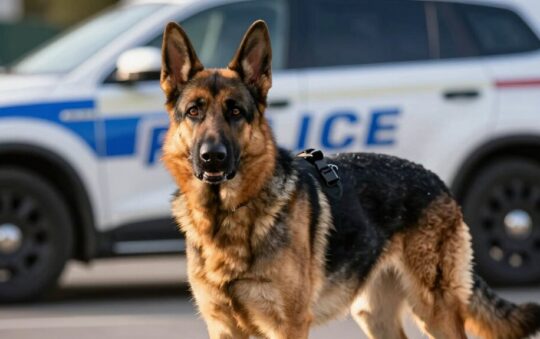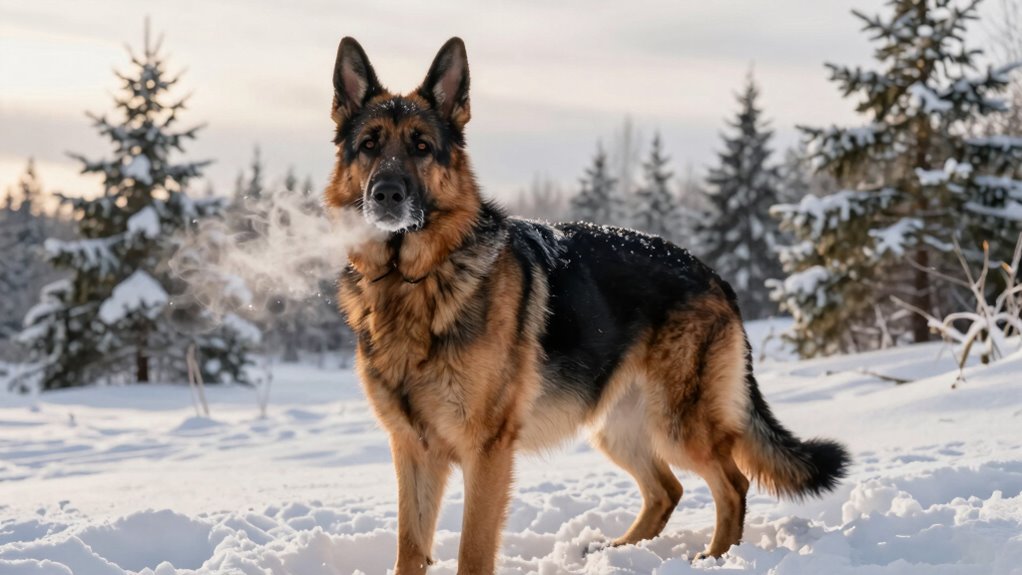
Do German Shepherds really thrive in freezing cold? It is understood they handle low temperatures well—many stay comfortable down to 0°F thanks to their dense double coat. They often enjoy playing in snow between 25°F and 60°F. But when mercury drops below 25°F, risks like frostbite and hypothermia rise quickly. Signs like shivering, lifting paws, or slowing down mean it’s time to head inside. We’ll show you how to keep them safe, active, and warm—all winter long.
Key Takeaways
- German Shepherds are most comfortable in temperatures between 25°F and 60°F.
- They can tolerate cold as low as 0°F but should avoid prolonged exposure below 25°F.
- Their double coat provides excellent insulation against cold and moisture.
- Signs of discomfort include shivering, whining, reluctance to go outside, and lethargy.
- Older dogs and puppies need extra protection, especially below 45°F.
Understanding the German Shepherd’s Cold Weather Tolerance
While their thick double coat is built for winter, it’s essential to understand how well German Shepherds truly handle the cold.
It’s understood that German Shepherds tolerate frigid conditions—some thrive in temperatures as low as 0°F. Their undercoat thickens in winter, boosting natural insulation. Most stay active, even playful, in cold weather, a sign they’re not just coping—but enjoying it.
Yet, we must remember, every dog is an individual. Older German Shepherds, especially those with arthritis, feel the cold more. We watch for stiff movement or reluctance to go outside. Puppies and seniors need extra care, even if the breed is tough.
We always provide a warm shelter—insulated, dry, and raised off frozen ground. It should be large enough to turn around in, but snug to retain heat. We check it weekly, especially during snowstorms. A snug fit minimizes heat loss while still allowing your dog comfort and the ability to move naturally.
While German Shepherds are built for cold weather, we never assume they’re invincible. We monitor closely. We act when needed. Because loving them means protecting them—no matter the temperature.
The Role of the Double Coat in Winter Protection
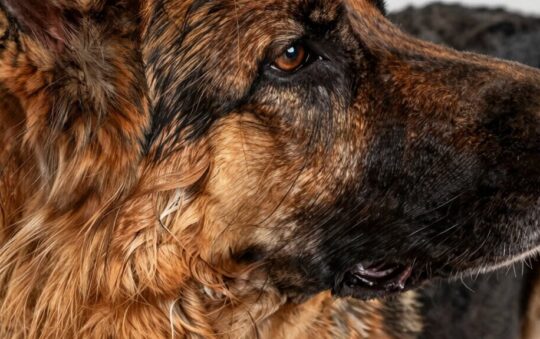
Think of the German Shepherd’s double coat as nature’s engineered winter survival suit. We’ve got a dense outer layer and a thick undercoat that work together to beat cold temperatures.
That soft undercoat fluffs up in winter, trapping heat close to the skin so we stay warm and cozy—even in temps as low as 0°F, as long as we’re acclimated. The outer guard hairs shed snow and light moisture, while the undercoat insulates like a built-in thermal blanket.
This double coat isn’t just fluff—it’s functional, dynamic insulation fine-tuned by evolution. We rely on you to keep it in top shape: regular brushing removes dead fur, prevents matting, and spreads natural oils that boost weather resistance. Consistent grooming with quality brushes during heavy shedding seasons maximizes the insulating effectiveness of our undercoat.
Skipping grooming? That risks dampness getting through and chilling our skin. With proper care, our double coat keeps us active and comfortable during winter walks, hikes, or just lounging in the yard.
You don’t need to bundle us up like other breeds—we’re built for this. Let our coat do its job, and we’ll stay warm and cozy without extra layers.
Signs Your German Shepherd Is Too Cold
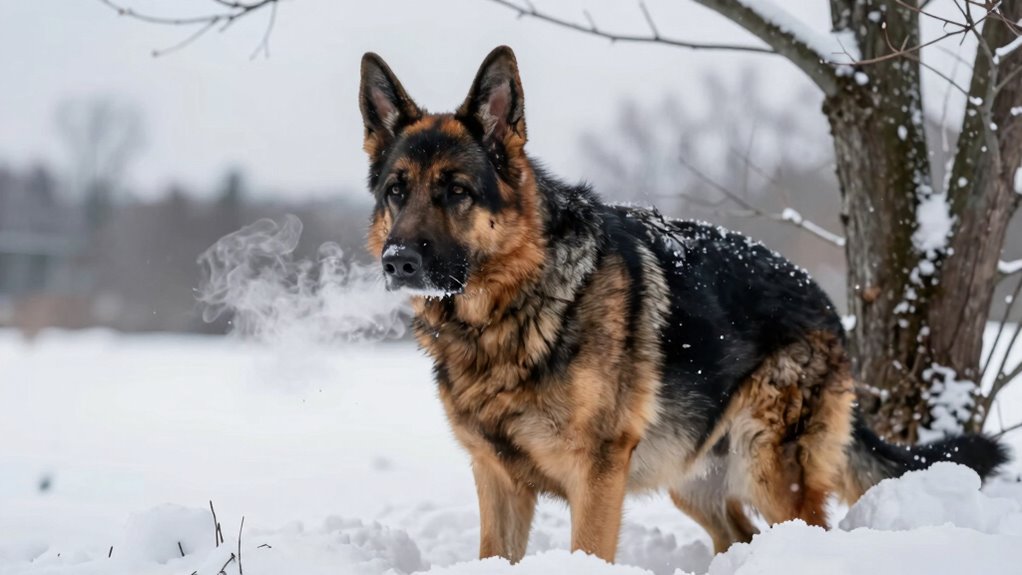
How can you tell when the chill has become too much for us? We watch each other closely, because when the cold starts creeping in, our bodies speak before our voices do.
As German Shepherds, we rely on you to notice the signs so you can help keep us safe and warm. Shivering isn’t just a tremble—it’s a red flag. Our behavior changes when we’re struggling, and we look to you for guidance and warmth.
Here’s what to watch for:
- Shivering or trembling – This is our body trying to generate heat when we’re too cold.
- Whining or seeking shelter – We might vocalize discomfort or hide to help keep warm.
- Reluctance to go outside or rushing back in – If we hesitate or dash indoors, the cold is too intense.
- Lethargy or disinterest in play – A drop in energy, especially with a body temperature below 99°F, signals we need warmth fast.
You’re our safest ally when the temperatures drop—stay alert, and we’ll stay safe and warm together. Consider providing insulated shelter options designed to raise interior temperatures and protect us from harsh winter conditions.
Ideal Outdoor Temperature Range for Activity
When the air bites and the wind picks up, we don’t shy away—we’re built for cold, with double coats that trap heat and keep us active even at 0°F.
We handle these temps well, but below 25°F, we slow down to avoid frostbite and hypothermia. Ideal activity ranges from 25°F to 60°F—cold enough to invigorate us, warm enough to stay safe.
In California, where 48°F feels chilly to you, we adapt fast if given time. We love moving in crisp air, our energy surging when snow falls or frost glimmers at dawn.
Keep our outings routine, but watch wind chill—it deceives. We’ll push through, but you guard our limits. Always bring plenty of water; cold air dries our throats, and hydration fuels our muscles. Consider dog boots for protection against ice, snow, and salt that can damage our paw pads during winter walks.
We mightn’t ask, but we need it. Let’s sniff, sprint, and explore within that sweet zone—25°F and above—and we’ll stay strong, happy, and enthusiastic.
Trust our bounce, our bright eyes, our steady stride. That’s us saying, *this cold? We’ve got it.* Just love us through it.
Adjusting Exercise Routines in Cold Climates
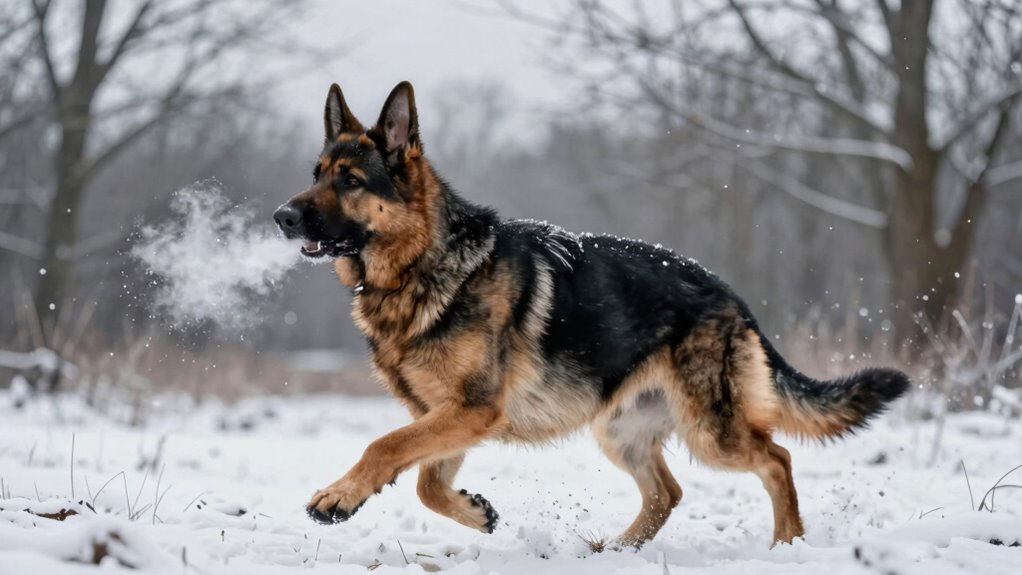
Though the frost settles and the days grow short, we don’t trade our energy for hibernation—we adapt. Our German Shepherd is built to handle cold, but even resilient dogs need sensible adjustments in winter time. We keep movement consistent without risking exposure, watching closely for cues our dog can’t verbalize but clearly shows.
Here’s how we stay smart and close while staying active:
- Limit outdoor exercise when temps drop below 25°F—short bursts are safer than long walks.
- Break activity into 3–4 brief sessions daily instead of one long outing to keep energy up and cold stress down.
- Watch for shivering, lifting paws, or hesitation—these are clear signs our dog is struggling to handle cold.
- Swap outdoor time for indoor agility drills or puzzle games when storms hit or wind chill bites hard.
- Layer yourself with waterproof insulated coats designed to keep you comfortable during frequent outdoor sessions, so you’re not rushing back inside and cutting walks short.
We protect their vigor without sacrificing connection. Movement still matters—just shaped differently.
Nutritional Support for Cold Weather Energy Needs
Since energy demands rise in cold weather, we adjust our German Shepherd’s diet to match their increased need for warmth and activity—without tipping into overfeeding.
We boost their calorie intake slightly, typically 10–15% more than in milder months, to fuel higher energy levels. We rely on high-quality, protein-rich nutrition—think 25–30% protein in their kibble or raw meals—because protein helps sustain internal heat and muscle function.
We serve warm, moistened meals when it’s below 40°F; the warmth offers comfort and aids digestion, helping them maintain body heat. We monitor their weight every two weeks, adjusting portions if we notice fat accumulation or loss of muscle tone.
We avoid free-feeding, sticking to two measured meals daily—about 1 cup per 30 pounds of body weight, adjusted for activity. We prioritize omega fats and vitamins in their nutrition to support overall resilience. Air-dried raw meats retain the nutrients our dogs need to thrive during demanding cold weather seasons.
This balanced approach keeps their energy levels steady, their coat thick, and their spirit bright. We’re not just feeding—we’re fueling their warmth from the inside out.
Protecting Paws and Skin During Winter Walks
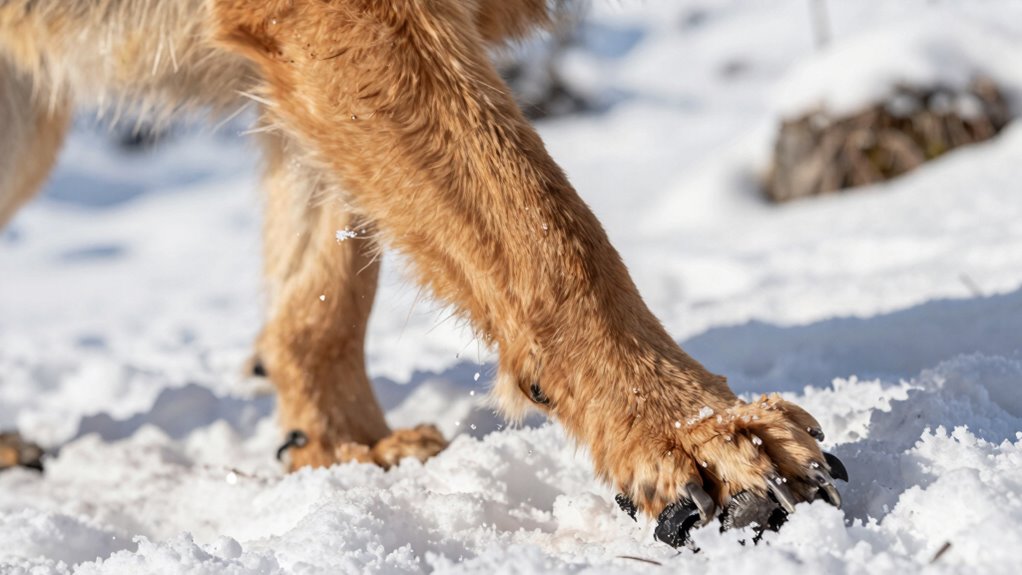
We keep our German Shepherd’s paws tough and resilient through winter’s chill by taking smart, proactive steps. Cold weather stresses their paws and can lead to dry skin, especially when salt and ice mix with snow.
We protect their skin and coat by staying consistent with care before, during, and after walks. Our routine is simple but effective—focused on shielding their most vulnerable spots.
Here’s how we keep their paws and skin healthy:
- Apply a vet-approved paw balm before walks to create a moisture barrier and prevent dry skin.
- Trim the fur between their paw pads to avoid ice ball buildup, which can cause slipping and discomfort.
- Use durable, well-fitted dog booties that shield paws from salt, antifreeze, and subzero pavement.
- Rinse their paws with warm water after every outing to remove irritants and check for cracks or redness.
We watch closely for early signs of irritation. Healthy paws mean better traction, less pain, and a happier German Shepherd braving winter beside us. For additional protection, consider using pet-safe cleaning products on outdoor surfaces where your dog walks to eliminate harmful residues from salt and chemical deicers.
Creating a Warm and Dry Outdoor Shelter
When the wind bites and snow piles up, a well-built outdoor shelter keeps our German Shepherd safe, warm, and dry.
We build a sturdy dog house from composite materials — they resist rot and insulate better than wood. We elevate it on bricks, at least 4 inches high, to stop ground moisture from seeping in.
Inside, we add thick blankets and pillows for warmth, replacing them when damp. We cover the entrance with heavy plastic flaps to block wind and rain, adding extra protection during icy storms.
For heat, we place a 100-watt incandescent bulb inside a metal paint can — it radiates warmth safely, without open wires. We position it high, out of reach.
We check insulation weekly, sealing gaps to maintain steady temps. We also make sure fresh water is available daily in a heated bowl, preventing freeze-ups.
Our dog house stays dry, draft-free, and cozy — just right for our loyal companion to rest through winter’s worst.
We don’t cut corners. We give our German Shepherd the shelter he deserves.
Special Considerations for Puppies and Senior Dogs
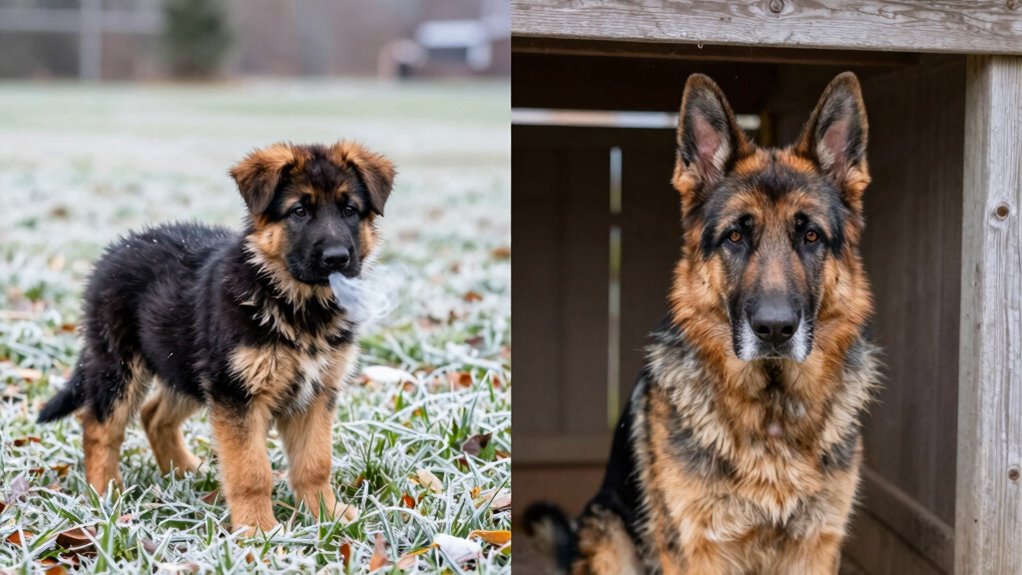
Though they’re part of the same loyal breed, German Shepherd puppies and senior dogs face unique challenges in cold weather and need extra attention from us. Puppies have underdeveloped immune systems and thinner coats, making them vulnerable. Senior dogs often battle joint problems like arthritis, which cold temps worsen. We must act wisely.
Here’s how we keep them safe and snug:
- Limit outdoor time—Puppies and senior dogs shouldn’t stay out long when temps drop below 45°F (7°C).
- Provide warm bedding—Use insulated dog houses with thick, washable blankets to buffer against cold ground.
- Watch for shivering or stiffness—These signs mean it’s time to come inside; it’s not just discomfort—it’s risk.
- Boost nutrition slightly—Both puppies and senior dogs may need 10–15% more calories in winter to maintain body heat.
We protect them not by overwrapping or overreacting, but by observing, adjusting, and loving with intention. Our care keeps their tails wagging, even in the chill.
Monitoring for Cold-Related Health Risks
Keeping our German Shepherds safe in cold weather means paying close attention to how their bodies respond, especially after taking steps to protect puppies and seniors.
As German Shepherd owners, we must monitor for cold-related health risks like hypothermia, which starts when body temperature drops below 99°F—well under their normal 100°F to 102.5°F range. We watch for signs like shivering, lethargy, or refusal to walk; these are red flags.
If it’s below 25°F, we limit outdoor time—frostbite and cardiac strain become real threats. Older dogs, young pups, and those with arthritis need extra vigilance; their bodies handle cold less efficiently.
We check paws, ears, and tails for stiff, pale skin—early frostbite markers. We keep coats dry and warm, and never leave them unattended outside. Routine winter vet visits help us catch issues early.
We monitor closely because prevention is always better than crisis care. Staying alert, informed, and responsive keeps our dogs healthy, happy, and close to us—exactly where they belong.
We’ve got this, together.
Frequently Asked Questions
How Cold Is It Too Cold for a German Shepherd to Be Outside?
We understand it’s too cold for our German Shepherd when the chill pushes past their cold tolerance. We limit outdoor time below 25°F, prioritize winter care, and watch closely—we keep them safe because we never risk their outdoor safety. We love them too much to chance it.
What Temperature Should I Put a Jacket on My German Shepherd?
we slap on a jacket when temps dip below 32°—call us dramatic, but our hearts skip a beat seeing you shiver; between temperature ranges and dog comfort, we’re all about cozy jacket types that keep your adventures warm and snuggly.
Do German Shepherds Like Blankets?
We understand you’re wondering—yes, German Shepherds like blankets. We see their blanket preferences shine when they snuggle up for warmth comfort. We share their cozy habits, offering soft spots that warm their bodies and ease their souls, especially when nights grow cold.
Why Do German Shepherds Love the Cold?
We understand you might worry they’re too cold, but we love winter—our thick double coats keep us cozy. We thrive in cold weather behavior, our breed coat characteristics shine, and we crave outdoor exercise benefits, so we drag you out because we’re happiest together in the crisp air.
Conclusion
We love winter, but even our 0°F-tough coats have limits. Between 25°F and 60°F, we’re all zoomies and nose-deep snow fun. Below that? We’d rather nap. Ice grips protect our paws—because frostbite isn’t a flex. Senior and pups need extra care: thinner blood, weaker stamina. We handle cold like pros, yes, but hypothermia doesn’t care how tough we look. Watch for shivers, stiff walks, hesitation. Smart prep beats bravado every time.