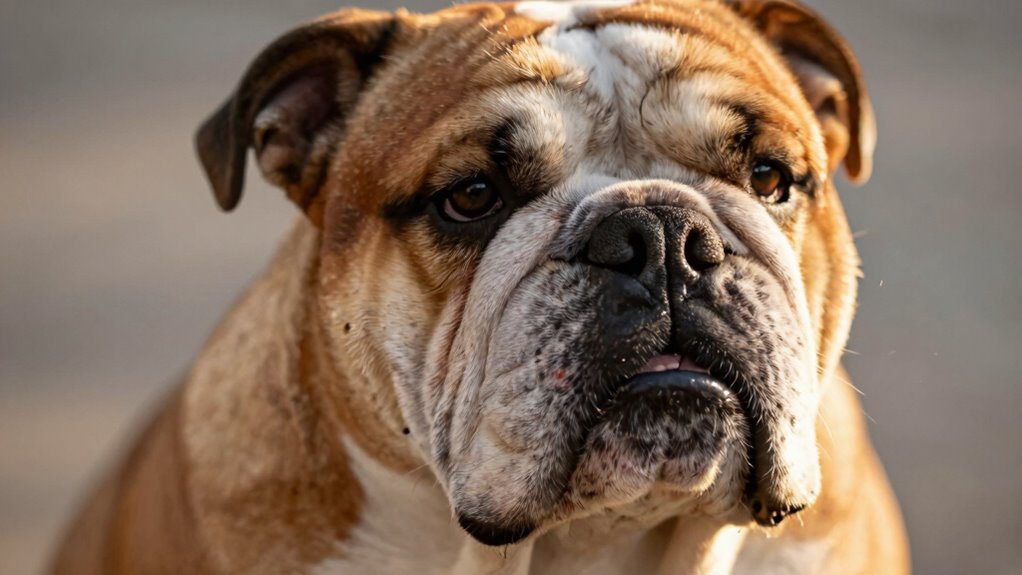
We’re not chasing a myth—we’re facing facts. English Bulldogs aren’t hypoallergenic, and pretending otherwise won’t help anyone. They shed year-round, drool noticeably, and produce dander that sticks to furniture and floats in the air. Allergens come from their saliva, skin flakes, and urine—triggers for sneezing, itchy eyes, and congestion. We’ll break down exactly how much—and what you can actually do about it.
Key Takeaways
- English Bulldogs are not hypoallergenic and produce high levels of allergens through dander, saliva, and shedding.
- Their year-round shedding spreads dander, a major trigger for allergy sufferers in homes.
- Drooling carries allergenic proteins in saliva that can exacerbate allergic reactions.
- Regular grooming, HEPA vacuuming, and cleaning help reduce but not eliminate allergen exposure.
- No dog is truly hypoallergenic; consistent allergen management is essential with English Bulldogs.
Understanding Allergens and English Bulldogs
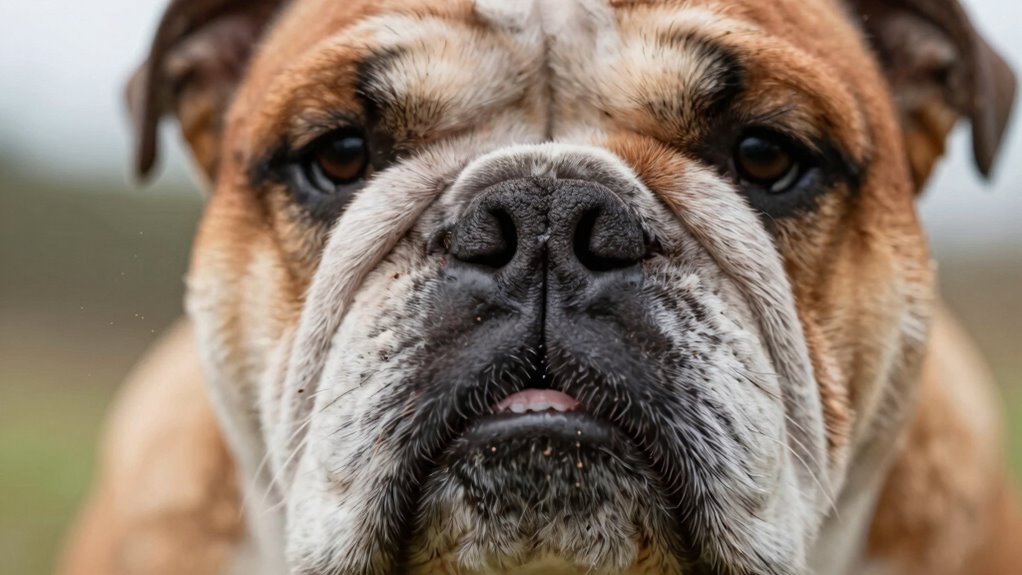
While they may look tough with their wrinkled faces and sturdy builds, English Bulldogs aren’t the best fit if someone in your home struggles with allergies.
We acknowledge the truth: English Bulldogs aren’t hypoallergenic. They produce high levels of allergens through shedding, dander, saliva, and even urine. Despite their short coats, they shed year-round, spreading allergens across furniture, floors, and the air.
These allergens stick around, triggering sneezing, itchy eyes, and skin irritation in sensitive people. You might think less shedding means fewer problems, but that’s not the whole story—no dog is truly hypoallergenic. Over 80% of dogs show signs of dental issues by age three, which highlights how important it is to manage your Bulldog’s health comprehensively, including allergen exposure for household members.
Allergens are always present, even in low-shedding breeds. The only way to manage them is through consistent cleaning: vacuum daily, bathe your Bulldog weekly, and wipe their wrinkles often.
We recognize how much you love these loyal, affectionate dogs, but if allergies are a concern, you’ll need to work hard to keep allergens under control.
We’re here to help you make informed choices—with honesty, care, and clarity.
Common Types of Allergies in Bulldogs
We see it all the time—pet parents surprised when their English Bulldogs start scratching, sneezing, or showing digestive upset, not realizing allergies are often the culprit. The truth is, our bulldogs commonly face three main types: food allergies, environmental allergies, and flea allergies. Each brings its own challenges, from itchy skin to chronic discomfort.
Here’s a quick breakdown:
| Allergy Type | Common Triggers | Typical Effects |
|---|---|---|
| Food allergies | Beef, chicken, dairy | Vomiting, itchy skin, digestive issues |
| Environmental allergies | Pollen, dust mites, mold | Sneezing, watery eyes, allergy dermatitis |
| Flea allergies | Flea saliva | Flea allergy dermatitis, intense itching |
We’ve seen food allergies provoke systemic reactions, while environmental allergies often flare seasonally. Flea allergies, though preventable, frequently lead to severe allergy dermatitis—even one bite can trigger relentless scratching. Managing these means identifying triggers and reducing exposure, often starting with selecting named animal proteins and avoiding common fillers that exacerbate food sensitivities. We work closely with vets to tailor plans because every bulldog’s immune response differs. With consistent care, we can keep our pups more comfortable and their skin healthier.
Signs Your Bulldog May Have Allergies
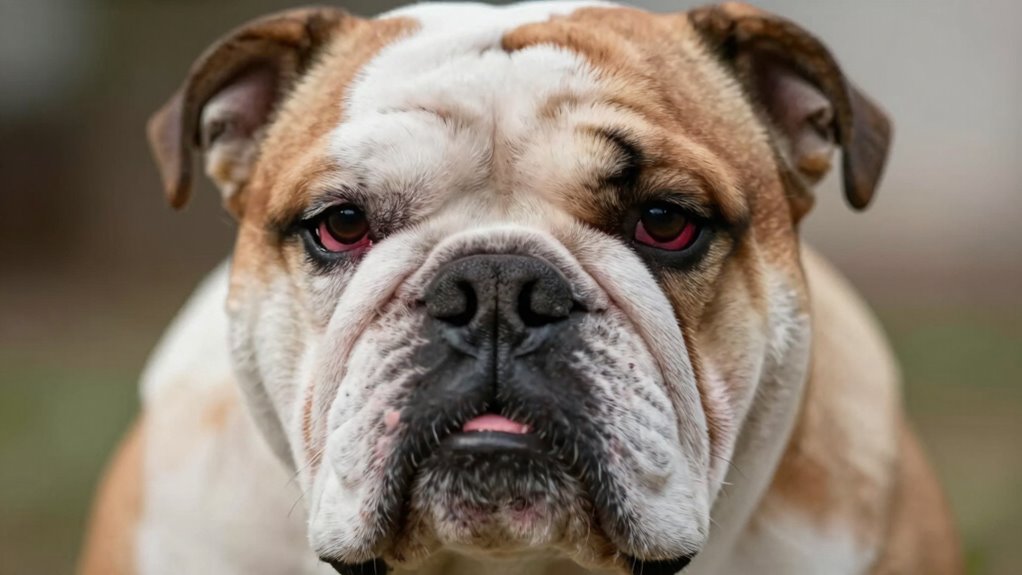
When your English Bulldog starts acting a little off, it’s time to pay attention—because allergies often announce themselves through clear, physical signs.
We’ve seen it: our pups scratching constantly, their skin turning red, hot, and sore. That excessive scratching isn’t just annoying—it’s a red flag.
We might also notice watery eyes, sneezing, or ears they can’t stop pawing at. These symptoms mean their immune system is fighting something, likely an allergy.
Skin rashes often appear along the belly, face, or folds—places we should check daily. Gastro issues like vomiting or diarrhea could also point to a food allergy.
Hair loss and chronic irritation signal the problem’s lasting too long. Left unchecked, these reactions strain their immune system and lead to more serious conditions. Ingredients like omega-3s and turmeric can help support healthy skin and reduce inflammation when allergies flare up.
It’s tough seeing them uncomfortable. But catching signs early—like skin rashes, watery eyes, or excessive scratching—helps us act fast.
We’re their voice, their comfort, and their best defense. Let’s stay close, stay alert, and keep them healthy together.
The Role of Shedding and Drooling in Allergen Spread
Though they’re low on fluff, English Bulldogs shed year-round, spreading fine, pointed hairs that trap allergens in carpets, couches, and bedding.
When we add in their tendency to drool, it’s no surprise that allergens spread fast in our homes. That moisture-rich saliva sticks to floors, blankets, even our hands—carrying proteins that can trigger allergies.
We can’t just blame fur; it’s the combo of shedding and drooling that keeps allergens circulating, even if our dog spends time outdoors.
Regular cleaning isn’t optional—it’s essential to reduce reactions. Here’s what we face daily:
- Shedding releases dander-coated hairs, a primary source of indoor allergens
- Drooling leaves saliva trails on furniture, increasing surface contamination
- Allergens embed deeply in fabrics, surviving vacuuming without HEPA filters
- Weekly cleaning routines cut allergen buildup but require consistency
Using HEPA vacuums can capture over 99% of these particles, making them significantly more effective than standard vacuums at removing the allergens your English Bulldog continuously sheds and spreads throughout your home.
We’re in this together—managing allergies means facing both shedding and drooling head-on, with smart, steady cleaning habits that protect everyone’s breath.
Grooming Practices to Reduce Allergic Reactions
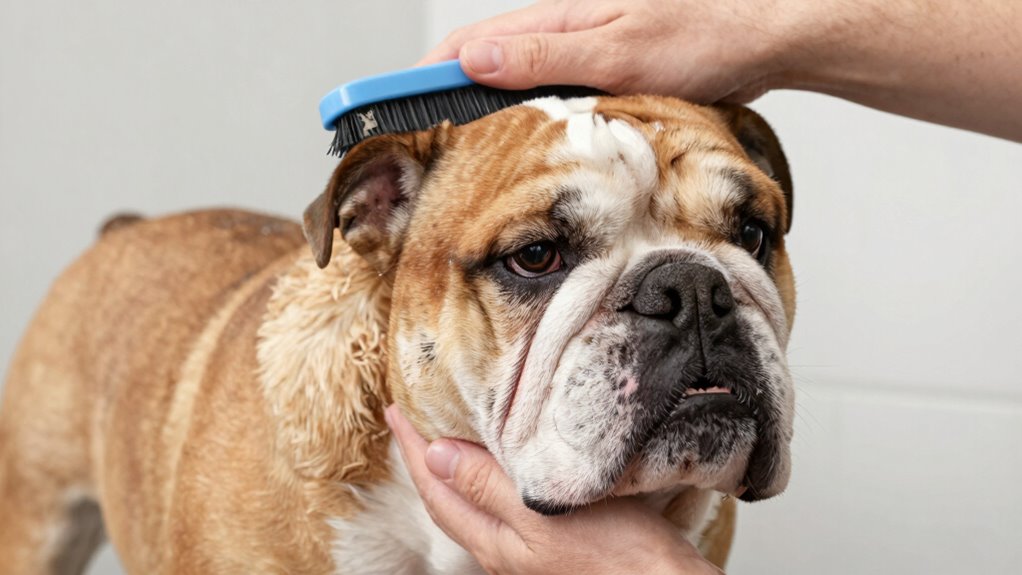
A consistent grooming routine tackles the root sources of allergens right where they start—on the dog. It is understood how much you love your bulldog, and keeping allergens low helps everyone breathe easier. Regular grooming isn’t just about looks—it reduces dander, loose hair, and prevents skin irritations that trigger health issues. We bathe our bulldogs with hypoallergenic shampoo every 3–4 weeks to soothe skin and remove allergens. When selecting a shampoo, prioritize formulas containing oatmeal and aloe vera as these ingredients soothe irritated skin and add moisture while reducing allergen buildup. Daily wrinkle cleaning prevents infections, while weekly brushing cuts down shedding. Pairing grooming with frequent vacuuming using a HEPA filter traps escaped allergens fast.
| Task | Frequency |
|---|---|
| Wrinkle cleaning | Daily |
| Brushing | Weekly |
| Bathing | Every 3–4 weeks |
| Vacuuming | 3–4 times/week |
| Grooming checks | Daily observation |
This rhythm supports your dog’s health and your comfort. While no bulldog is truly hypoallergenic, these steps make a real difference. It has been observed—fewer reactions, clearer air, and more cuddle time without worry.
Managing Environmental Allergens at Home
Since airborne allergens can circulate invisibly through our homes, tackling them head-on with proven strategies makes a measurable difference in daily comfort.
We’ve learned that keeping our space clean by vacuuming daily with a HEPA filter helps trap dander, dust mites, and other triggers linked to allergy dermatitis (FAD).
Creating a peaceful, healthy home isn’t about perfection—it’s about consistent, smart habits that help reduce exposure.
Here’s what works for us:
- Run HEPA air purifiers in main living areas to capture airborne allergens
- Wash our Bulldog’s bedding weekly in hot water (at least 130°F) to kill dust mites
- Designate pet-free zones, especially bedrooms, to give sensitive family members a break
- Clean by vacuuming every day and use hypoallergenic sprays on surfaces we touch often
We limit outdoor time during high-pollen seasons too—yes, even when those puppy eyes beg for play.
These steps don’t eliminate allergens completely, but they help control the load.
When we stay proactive, everyone in the home—including our sweet English Bulldog—breathes easier and feels better.
Food Sensitivities and Dietary Solutions
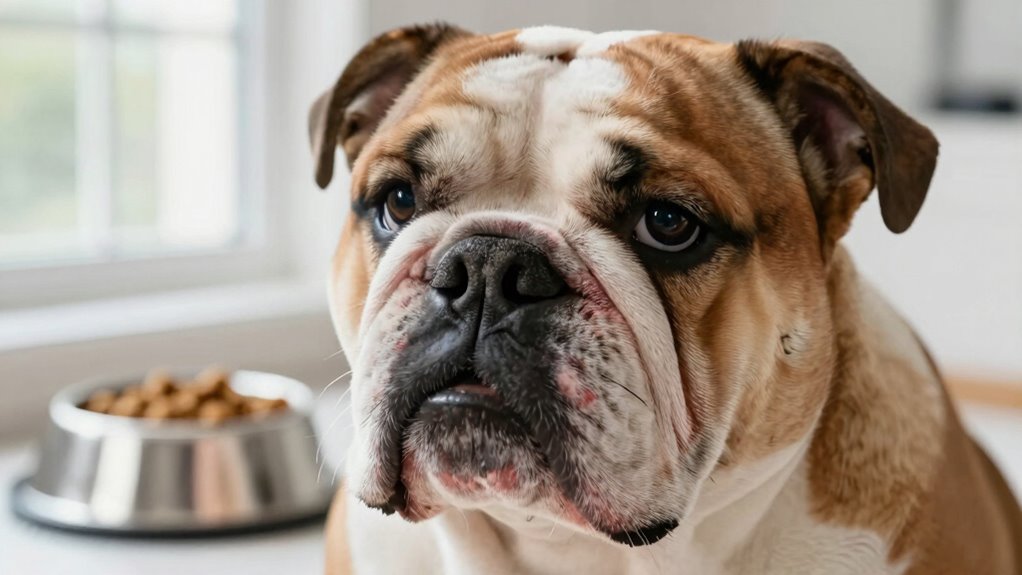
When it comes to food sensitivities in English Bulldogs, we don’t just adjust meals—we build better health from the bowl up.
A food allergy can show up as itchy skin, vomiting, or diarrhea, with common triggers like chicken, beef, dairy, eggs, corn, soy, and wheat. The real detective work starts with an elimination diet—lasting 8 to 12 weeks—where we strip the menu down and slowly add ingredients back to spot the culprit.
During this time, we use novel protein sources, like insect-based dog food, which may support gut health with built-in prebiotics and probiotics. It’s not guesswork; we work with your veterinarian to design a balanced plan that keeps your Bulldog strong and symptom-free.
We avoid allergens without sacrificing nutrition. And we monitor closely—every tweak matters. This isn’t a quick fix; it’s a clear path to better digestion, healthier skin, and more comfort for our beloved pup.
With patience and precision, we turn confusion into clarity—one bowl at a time.
When to Seek Veterinary Support for Allergy Management
We’ve walked through rebuilding meals to tackle food sensitivities, but even with careful diet changes, there are times we need backup from the pros. Knowing when to seek veterinary support makes all the difference in effective allergy management. A proper diagnosis isn’t guesswork—it’s the foundation for lasting relief.
When symptoms persist or escalate, we lean on expert guidance to clarify the path forward.
Here’s when to call your vet:
- Persistent itching, redness, or digestive upset despite dietary changes.
- Failed elimination diets—your vet can pinpoint food allergens and adjust treatment options.
- Suspected environmental allergies, like reactions to pollen or dust, warrant testing and tailored plans.
- Severe symptoms, including swelling, trouble breathing, or raw hot spots, need immediate care.
Regular check-ins guarantee our Bulldogs stay comfortable and healthy.
With consistent veterinary support, we fine-tune allergy management, from accurate diagnosis to sustainable solutions. We’re in this together—every step of the way.
Frequently Asked Questions
What Is the Downside to Bulldogs?
We’ll admit, bulldogs aren’t low-maintenance—we need regular grooming, extra cleaning, and daily wrinkle care. Their health struggles surprise us, and we require moderate exercise. Yet, our stubborn charm, goofy love, and short lifespan make every moment with us deeply cherished, albeit bittersweet.
What to Know Before Getting an English Bulldog?
We’ve learned 72% of bulldogs face health issues by age two, so we’re honest: we need to talk breeding considerations, their low exercise needs, grooming tips, health issues, and sweet temperament traits—we’re in this together, aren’t we?
Do English Bulldogs Shed Badly?
Yes, we see our English Bulldogs shed moderately all year, with shedding frequency picking up during seasonal changes. We manage their short fur types with daily grooming needs, consistent skin care, and quick cleanups to keep our home cozy and our pup healthy.
What Are English Bulldogs Most Allergic To?
We’ll tell you straight—English bulldogs aren’t allergic to just one thing. They’re most allergic to common allergens like chicken, beef, pollen, and dust. We see food allergies spark vomiting, while environmental triggers lead to itchy skin reactions. You’re not alone—these allergy symptoms are tough but manageable with care.
Conclusion
We’ve shown English bulldogs aren’t hypoallergenic, but smart care minimizes risks. Regular grooming—brushing twice weekly, bathing monthly—cuts dander. We vacuum with HEPA filters, wash bedding at 140°F, and ban dogs from bedrooms. We monitor for sneezing, itching, or skin redness. We prioritize air purifiers and wipe paws daily. Remember: *an ounce of prevention beats a pound of cure*. Together, we balance health, comfort, and companionship—no drama, just results.