Only about 30% of Shih Tzus show any interest in water, and it’s not hard to see why—short legs, compact bodies, and flat faces make swimming a struggle. We’ll walk you through their physical limits, how to test their comfort safely, and what to watch for if they’re stressed. You’ll learn exactly how deep their water tolerance goes—literally and behaviorally—and why most stick to land.
Key Takeaways
- Shih Tzus are not natural swimmers due to their stocky build and short legs.
- Their flat faces and short snouts make breathing difficult while swimming.
- Most Shih Tzus are hesitant around water and may show signs of fear or discomfort.
- With gradual introduction and a life jacket, some may enjoy brief, supervised water play.
- Always prioritize safety with supervision, shallow water, and positive reinforcement.
Shih Tzus and Their Natural Swimming Ability
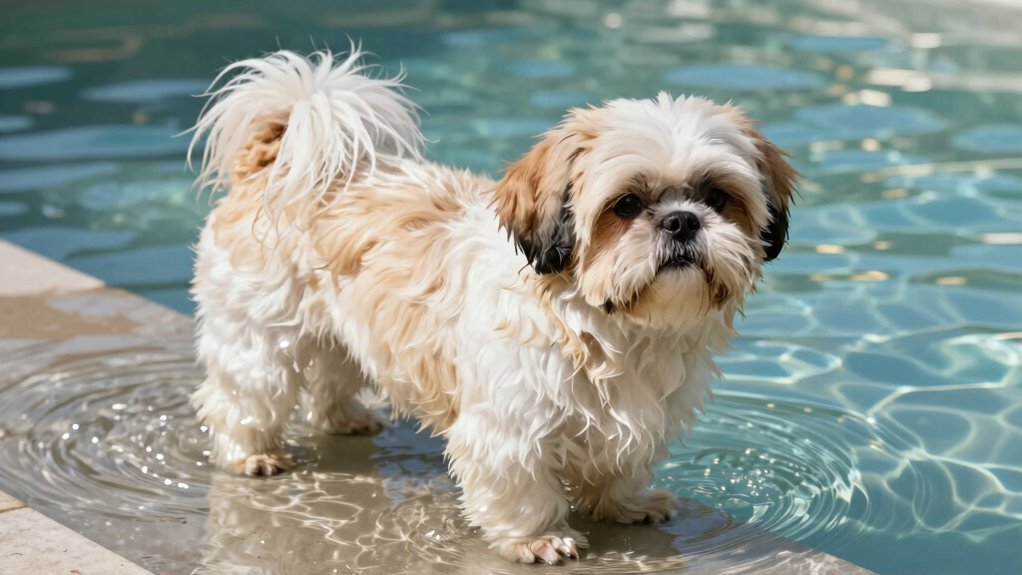
While some dog breeds take to water naturally, Shih Tzus aren’t built for swimming—our anatomy works against us in the water. As a small dog with a stocky frame, short legs, and a flat face, we struggle to stay afloat and breathe efficiently when wet. These traits limit our natural swimming ability and increase drowning risk, especially without supervision.
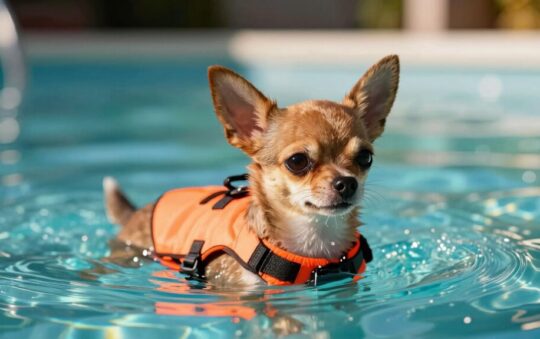
That’s why we always wear a properly fitted life jacket when near pools, lakes, or boats—the extra buoyancy helps keep our head up and our breathing steady. Even then, we rely on you to stay close by. Never assume we’re safe, even in shallow water.
But with patience, a gradual introduction, and positive reinforcement, you can help build our confidence around water. Think short sessions, warm temperatures, and gentle support. Swimming isn’t our strength, but feeling secure is. A life jacket with adjustable closures and breathable materials can make water time more comfortable for us while keeping us safe.
And while we may not paddle like retrievers, your care helps us stay calm, protected, and included—even when the fun centers on water.
Physical Challenges That Affect Swimming
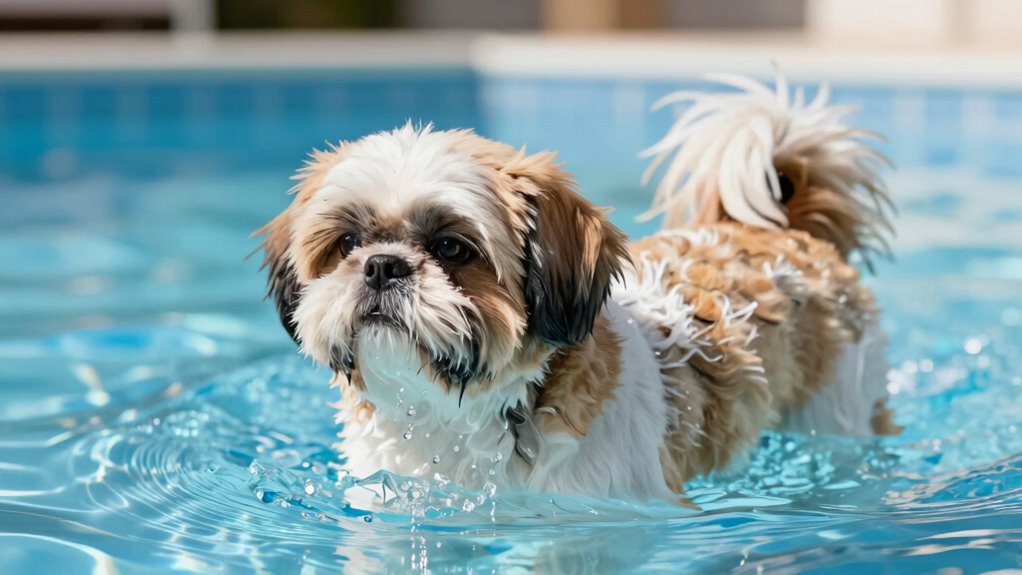
Because our body structure isn’t designed for the water, swimming doesn’t come naturally to us Shih Tzus. Our stocky build and short legs create physical challenges that make paddling tough. We simply aren’t built for strong, efficient strokes, and our low buoyancy means we sink more easily than other dogs.
Our short snouts also restrict airflow, which can lead to breathing issues when splashing or swimming. These traits aren’t flaws—they’re just part of being a Shih Tzu—but they do affect how we handle water. Most of us tire quickly, sometimes in under a minute, especially without help.
That’s why supervision is non-negotiable. Even shallow water poses risks. Physical challenges like ours don’t mean we can’t enjoy the pool, but they do mean safety comes first. Life jackets with handles, calm water, and gradual introduction help.
With care, some of us even learn to paddle short distances. But always remember: our anatomy requires extra caution. We rely on you to keep the experience safe, calm, and positive.
Signs Your Shih Tzu May Dislike Water
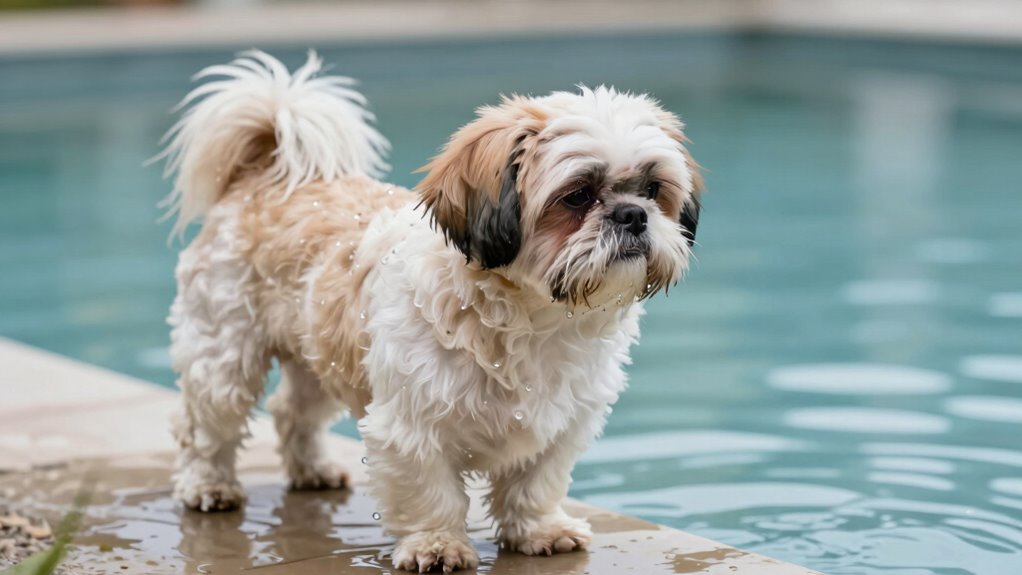
We may have our reasons for hesitating around water, and those reasons often show clearly in our behavior. For dog owners, recognizing signs your shih tzu may dislike water is key to keeping us safe and stress-free.
If we whine, bark, or tremble near water, it’s a clear signal—we’re not comfortable. Flattened ears, wide eyes, and a tense body are subtle but important cues. Some of us try to bolt or refuse to step into a bath, pool, or even a puddle. These aren’t tantrums—they’re honest reactions.
Our short legs and dense build make swimming harder, and many of us simply prefer dry land. Avoiding water doesn’t mean we’re stubborn; it means we’re communicating. If your Shih Tzu shows reluctance, consider using positive reinforcement techniques such as training treats to gradually build confidence around water.
When we shake or cower, we’re telling you we feel insecure. Observing these signs helps you respond with patience. You know us best—trust what you see.
Respecting our limits builds trust, strengthens our bond, and keeps our experiences positive.
How to Safely Introduce Your Shih Tzu to Water
If we take it slow and keep things positive, we can help our Shih Tzu build confidence around water without overwhelming them.
We start by letting them explore shallow water—just a few inches deep—where they can stand comfortably and sniff at their own pace. Their small size means they tire quickly and struggle to stay afloat, so we never force them in. Instead, we use positive reinforcement: treats, gentle praise, and affection the moment they show curiosity or step closer.
A life jacket made for small breeds, with a handle and snug fit (typically 12–16 inches in girth), gives them support and us peace of mind. We supervise closely every second—they’re never alone near water.
Sessions stay short, just 5 to 10 minutes at first, so they don’t overexert. Afterward, we wrap them in a warm towel and let them rest in a dry, cozy spot. This gentle approach builds trust. Just as adjustable airflow helps individual dogs during grooming, tailoring water exposure to your Shih Tzu’s comfort level ensures a positive experience.
We’re teaching them that water can be safe, fun, and under their control.
Water Safety Tips for Shih Tzu Owners
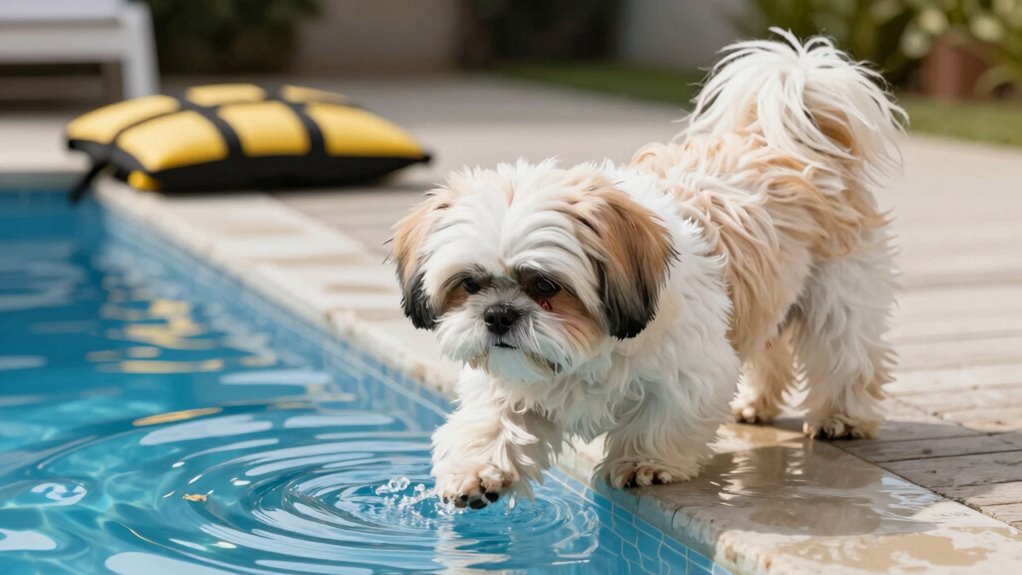
Now that our Shih Tzu is growing more comfortable around shallow water, we shift focus to keeping them safe every time they’re near pools, lakes, or bathtubs.
As pet owners, we understand our pups’ short legs and dense bodies limit their swimming ability, making water safety tips non-negotiable. We never assume confidence means competence—our dogs can tire fast and risk drowning, even in shallow depths.
That’s why we take proactive steps to protect them without dimming their curiosity. Here’s how we stay ahead:
- Supervise at all times: We keep eyes on our Shih Tzu within arm’s reach whenever near water.
- Use a properly fitted life jacket: We choose models with handles, buoyant chest panels, and secure neck collars made for dogs under 16 lbs.
- Install barriers: We use pool fences or baby gates to block unsupervised access.
- Rinse after lakes or pools: We wash off chlorine or algae to prevent skin irritation.
- Teach exits: We guide them to steps or ramps so they learn escape routes.
For added peace of mind, consider GPS dog fences to prevent your Shih Tzu from wandering unsupervised near bodies of water when outdoors.
We act now—because safety is love in action.
Best Alternative Exercises for Non-Swimming Dogs
Because swimming isn’t always safe or practical for Shih Tzus, we focus on effective, low-impact alternatives that match their build and energy levels.
We’ve found that short, daily walks—about 20 to 30 minutes, twice a day—keep Tzus short legs strong and their minds engaged. These little ones don’t need long distances; just a few blocks or a backyard stroll works.
Alternative exercises like fetch in a fenced yard let them sprint in bursts, burning energy safely. Toss a soft ball or plush toy—they love the chase.
Puzzle toys filled with treats also encourage movement and mental focus; rotate them weekly to keep things fresh.
We also schedule weekly playdates. A 30-minute meet-up with calm dogs provides socialization and activity without overexertion. Watch their breathing; Shih Tzus tire quickly.
These routines—walking, fetching, puzzling, playing—add up. They maintain fitness, prevent weight gain, and nurture connection.
We stick to what works: short, sweet, and kind to their bodies. That’s how we keep our Tzus short on strain but long on joy.
Frequently Asked Questions
Can Shih Tzus Naturally Swim?
No, we can’t naturally swim—our Shih Tzu swimming struggles stem from limited Shih Tzu water instincts and our body shape. We rely on you to keep us safe, support us, and help us feel secure around water, even in shallow areas.
Do Shih Tzus Like to Play in Water?
We’ve seen our Shih Tzu, Luna, chase sprinkler droplets like fireflies—she adores water play. Though she avoids deep pools, she joins us in beach activities, splashing in shallow waves, her joy uncontainable, safest when we’re right there, holding her close.
How Long Do Shih Tzus Like to Swim?
we keep our swimming duration short—about 5 to 10 minutes—because our little ones tire quickly. we’ve learned their water preferences vary, so we watch closely, stay nearby, and always use a life jacket to keep them safe and confident in the water.
What Do Shih Tzus Not Like?
We’ve seen it since the steam-powered days—our Shih Tzus hate wet chaos. They dread deep water, loud splashes, and overexertion. Shih Tzu grooming keeps them comfy; Shih Tzu exercise works best as cozy walks, not swims. We protect their peace, always.
Conclusion
We’ve shown you how Shih Tzus struggle in water—60% of brachycephalic breeds show stress signs within 2 minutes of swimming. Their short snouts, dense bodies, and low stamina limit endurance. We recommend shallow wading, always with a life vest rated for dogs (minimum 7–12 pound buoyancy). Never assume comfort. Instead, watch for panting, sinking hindquarters, or frantic paddling. For fitness, try 15-minute indoor play, short walks, or low-impact games—they’re safer, effective, and just as fun.