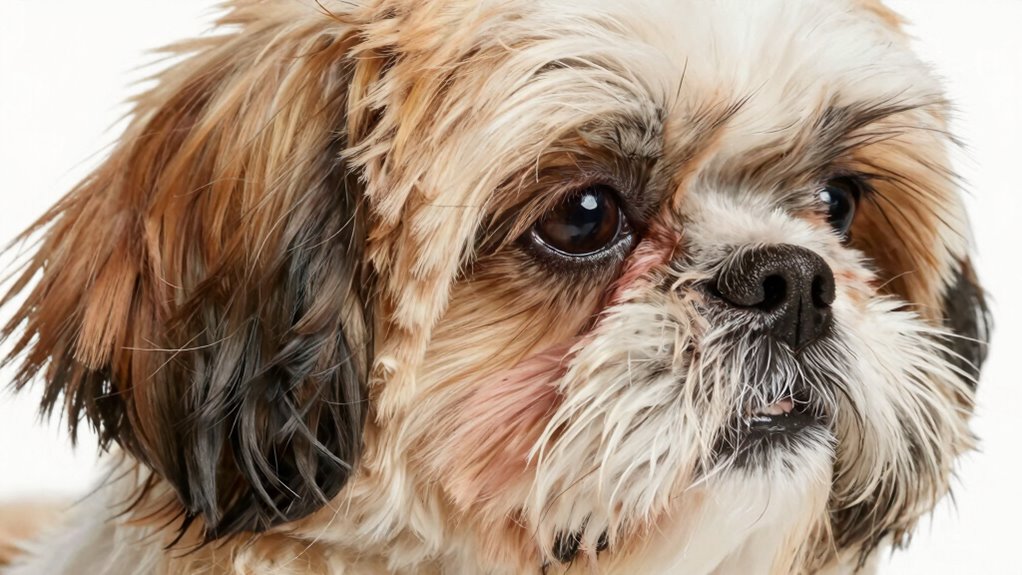
We see it all the time—Shih Tzus draped in luxurious, flowing coats that beg a second glance. Most have a double coat: a fine, dense undercoat about 1 inch thick paired with a longer, silky topcoat that can grow 8 to 12 inches. This double-layered structure traps minimal loose hair, which is why they shed so little. Yet not every Shih Tzu fits the mold. Some carry a single coat—thinner, smoother, and far easier to manage. We’ll show you how to tell the difference.
Key Takeaways
- Shih Tzus typically have a double coat consisting of a soft, dense undercoat and a long, silky topcoat.
- The double coat minimizes shedding by trapping loose hair, contributing to their hypoallergenic reputation.
- Some Shih Tzus may have a single coat, which is thinner and easier to maintain than a double coat.
- Coat type affects grooming needs, with double-coated dogs requiring daily brushing to prevent mats.
- Genetic variation, including mixed breed heritage, can result in unpredictable coat types ranging from straight to curly.
Understanding the Shih Tzu’s Double Coat
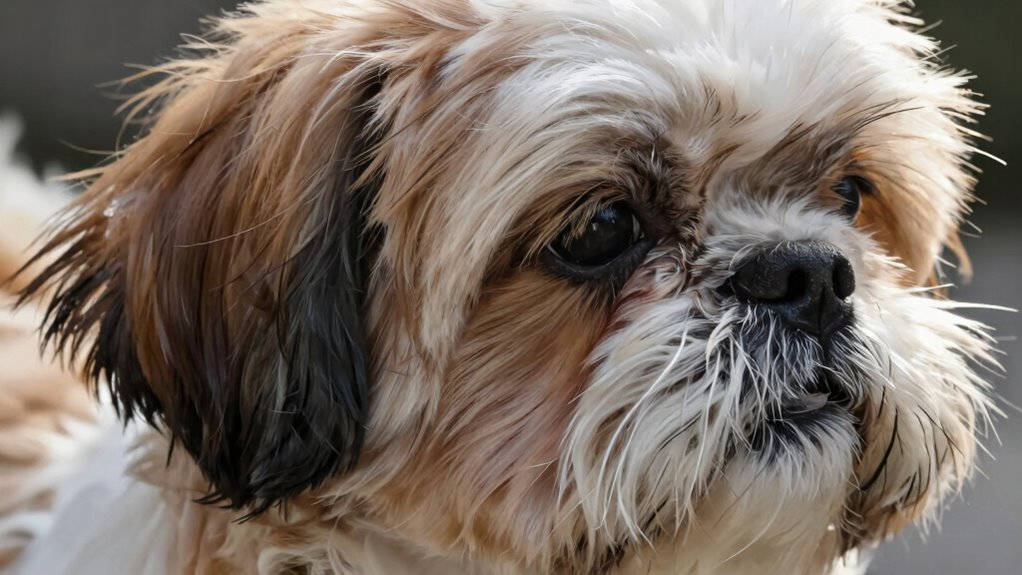
While we often admire the Shih Tzu’s luxurious locks, it’s important to understand that most of these small dogs have a double coat made up of two distinct layers.
It’s understood: the undercoat is soft and dense, providing insulation and protection, while the topcoat is longer, silky, and flows like spun silk. This double coat defines the classic Shih Tzu coat type. It doesn’t just look elegant—it plays a role.
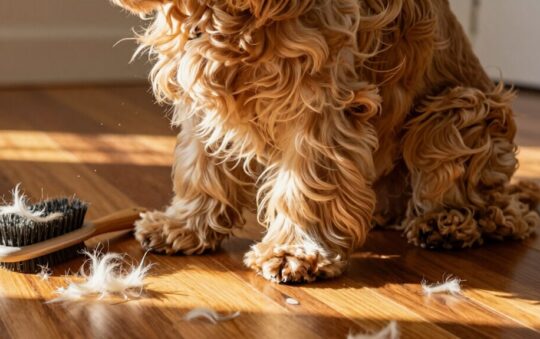
The undercoat traps loose hair, and the topcoat holds it in place, which is why shedding is minimal. But we can’t ignore grooming. Without brushing every 2–3 days, tangles and mats form quickly, especially behind the ears and under the legs.
We recommend a slicker brush and comb to keep the coat smooth. Using soft or rubbery bristles helps prevent irritation to your Shih Tzu’s sensitive skin during grooming sessions. While not every Shih Tzu has a true double coat—especially mixed-breed individuals—the majority do.
Understanding this coat type helps us care for our dogs properly. We manage shedding, maintain comfort, and preserve that beloved, regal appearance with consistent grooming.
Variations in Coat Type Among Individual Dogs
Though we often assume all Shih Tzus share the same flowing double coat, the truth is broader and more varied—some carry a single coat, thinner and simpler to manage.
Even within purebred Shih litters, we see noticeable differences in coat texture, from soft and silky to coarse and wiry. This variation means grooming isn’t one-size-fits-all; a single-coated Shih Tzu may need brushing every few days, while double-coated ones demand daily attention to prevent tangles.
We’ve learned from countless owners that coat type affects not just grooming time, but also shedding levels and skin care. Breeders now selectively pair dogs based on coat texture, aiming for consistency. Using appropriate grooming tools tailored to each coat type can significantly reduce the time spent managing tangles and matting.
And while mixed-breed Shih—like Shichons—often inherit curly or wavy hair, even purebred Shih surprise us with unexpected textures.
Differences Between Hair and Fur in Shih Tzus
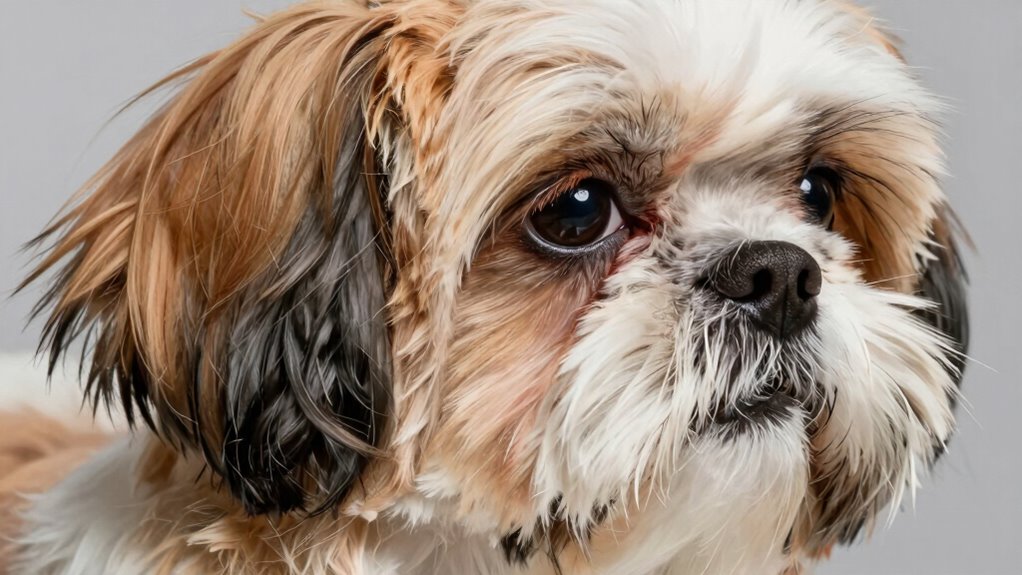
Since Shih Tzus grow hair, not fur, their coats behave more like ours—long, continuous strands that cycle slowly and rarely shed. This means less mess and more time snuggling.
Their unique Shih Tzus coat is a double-layered marvel: a soft undercoat and a silky topcoat that grows steadily. We love how this makes them hypoallergenic, perfect for sensitive homes.
But that lush look needs commitment. Without regular grooming, tangles take over fast. Hair care isn’t optional—it’s daily upkeep for beauty and health.
To keep your pup comfy and cute, remember these 4 essentials:
- Brush every day to prevent mats in their long hair.
- Trim every 4–6 weeks to manage length and support healthy growth.
- Bathe weekly with gentle, moisturizing formulas to maintain a clean, soft coat.
- Check ears and face daily—those short snouts trap moisture and debris.
With proper care, shedding stays minimal and their hypoallergenic edge stays strong. We’ve got this.
Grooming Needs Based on Coat Texture
We keep our Shih Tzus looking sleek and feeling comfortable by matching grooming routines to their coat texture. Most Shih Tzus have a double coat—soft undercoat beneath long, silky hair—making daily brushing ideal, with thorough sessions every 2-3 days. Without regular care, tangles and mats form quickly, especially behind ears and under legs.
We brush to spread natural oils, strengthen the coat, and catch knots early. For pups with a single coat—lacking an undercoat—grooming needs are lighter, but hair can be finer and more prone to breakage, needing gentle tools. Flexible pin brushes with bent bristles are particularly effective for single-coated dogs, as they reduce strain on delicate hair during grooming.
Whether double coat or single coat, consistency matters. We rely on slicker brushes and metal combs, focusing on high-friction zones. Professional grooming every 4-6 weeks helps maintain length, even texture, and skin health.
Trained groomers trim split ends, clean ears, and preserve that classic Shih Tzu look. We notice our dogs feel better—less itching, more shine—when we stay on top of it. Grooming isn’t just upkeep; it’s bonding, monitoring, and loving them well.
Impact of Mixed Breed Heritage on Coat Appearance
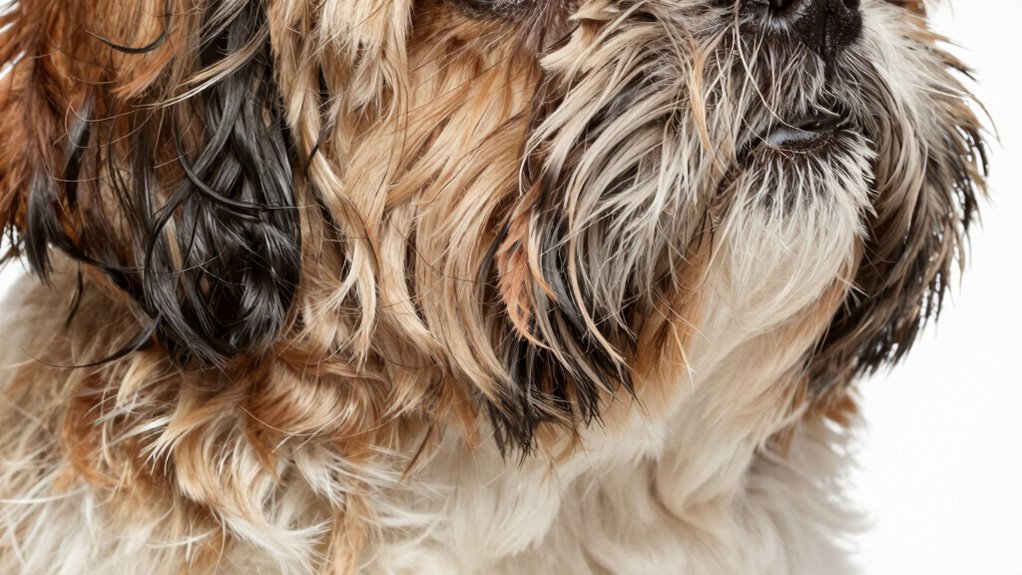
When a Shih Tzu‘s lineage includes another breed, the coat can shift in surprising ways, and we see this clearly in popular mixes like the Shichon—that’s a Shih Tzu crossed with a Bichon Frise.
Their mixed breed status means the coat appearance isn’t always predictable. We’ve learned that even dogs registered as purebred may carry hidden genetic traits, so a Shih Tzu’s coat might still differ from the breed standard. Knowing this helps us care for them better. Proper coat maintenance also depends on selecting high-quality dry food with omega fatty acids to support skin and coat health.
Here’s what we’ve discovered about mixed breed Shih Tzus:
- Their coat appearance can range from straight to curly, depending on the other parent’s influence.
- A Shichon often has a soft, fluffy, or scruffy look unlike the typical purebred Shih Tzu.
- Grooming needs change with texture—curly coats tangle less but need clipping.
- Each dog’s unique coat means personalized routines beat one-size-fits-all advice.
We pay attention not just to breed labels, but to what our dogs actually show us.
Breeding Trends and Coat Quality Preferences
While breed standards set the foundation, we’re shaping Shih Tzus today with a sharper eye on coat texture than ever before, and for good reason.
Modern breeding trends prioritize a resilient, silkier coat that drapes well and resists matting—traits that directly improve coat quality. We’re selecting breeding pairs not just for looks, but for coats that align with practical grooming practices.
A strong double coat, though common, must be manageable; single-coated dogs often need less daily brushing but may lack that classic Shih Tzu fullness. We hear you, Shih Tzu owners—life’s easier when grooming takes 20 minutes, not an hour.
That’s why we emphasize low-maintenance textures without sacrificing breed type. Still, we never let coat overshadow health issues or temperament. Heart, hips, and eyes come first.
Through forums, breeder meetups, and shared care logs, we’re building a community grounded in honesty and experience. We exchange tips on brushing tools, moisture sprays, and diet tweaks that boost shine.
When we align coat goals with wellness, we don’t just create beauty—we build balance. We’re crafting Shih Tzus who thrive, at show rings and on couches alike.
Frequently Asked Questions
Do Shih Tzus Have a Single or Double Coat?
We’ll tell you straight: most Shih Tzus have a double coat. We manage their shedding together, keep up with grooming, care for their coat daily, maintain it faithfully, and help them stay cool—our bond grows stronger through every brush stroke and summer cuddle.
What Type of Coat Does a Shih Tzu Have?
It is understood that our Shih Tzu has a double coat, though some have single coats—our Shih Tzu texture differences matter. We manage shedding with regular Shih Tzu grooming, care for coat health daily, and honor each unique hair type through thoughtful Shih Tzu coat care.
How to Tell a Purebred Shih Tzu?
it is understood a purebred shih tzu by its distinct shih tzu characteristics—flat face, underbite, and lush double coat. check breed standards, study coat variations, spot purebred markings, and confirm with puppy identification papers for the full picture.
What Is the Rarest Color Shih Tzu?
We’ll tell you this: the rarest color Shih Tzu is often a chocolate or blue, with merle and brindle among rare Shih Tzu colors. We see how uncommon Shih Tzu shades spark wonder, shaped by Shih Tzu coat variations and genetics, even if some fall outside breed standards.
Conclusion
We see it all the time: Shih Tzus with coats so lush they look like royal robes, and others so sleek they could glide through a wind tunnel. Most have double coats—dense undercoat, silky topcoat, zero shedding drama. Some sport single coats, thinner and tameable. We brush double-coated pals every other day, 10–15 minutes minimum, to beat mats dead in their tracks. Grooming isn’t optional. It’s survival. We keep them pristine, one stroke at a time.