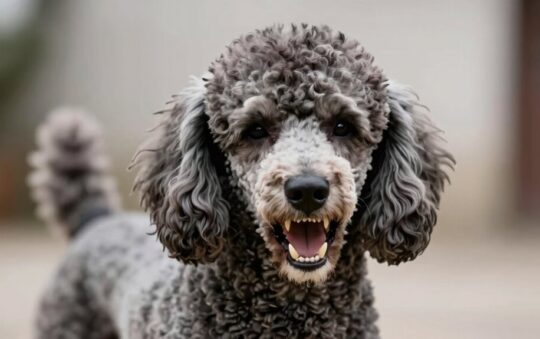
Let’s just say Poodles don’t shed like most dogs—they’re more like stealth operatives, leaving barely a trace of hair behind. Their curly, dense coats trap loose hairs instead of releasing them into your home. Most owners find tumbleweeds of fur under their couches? Not a chance. You’ll see minimal shedding, especially with proper care. But there’s a catch—what you gain in cleanliness, you trade for grooming demands. And that’s where the real story begins.
Key Takeaways
- Poodles shed very little year-round, making them a low-shedding breed ideal for allergy sufferers.
- Their curly hair traps loose strands, reducing visible shedding on furniture and clothing.
- Continuous hair growth similar to humans means regular grooming is essential to manage trapped dead hair.
- Excessive shedding may indicate health issues like allergies, poor diet, or hormonal imbalances.
- Daily brushing and professional grooming every 4–6 weeks help maintain coat health and minimize shedding.
Do Poodles Shed (and How Much)?
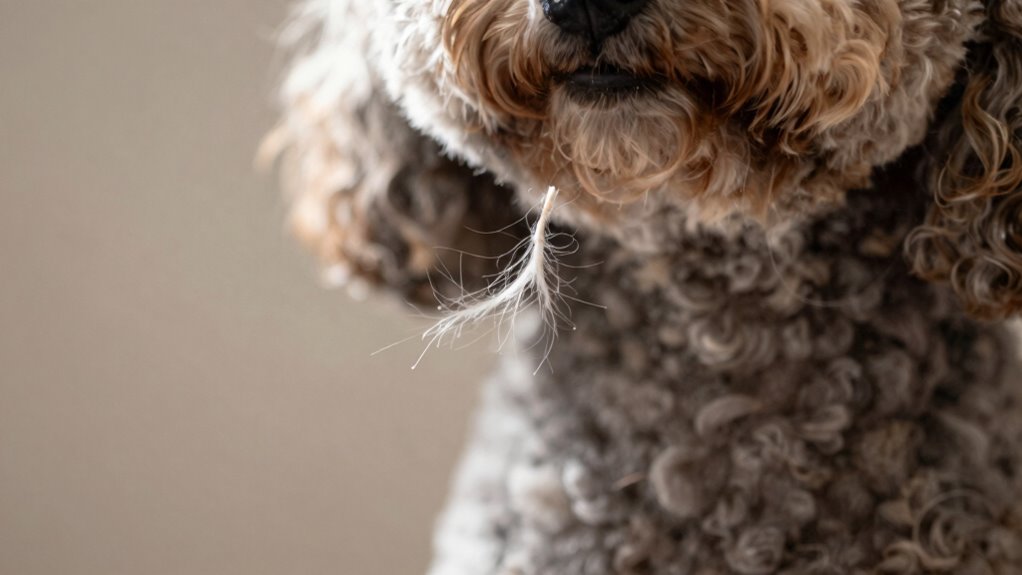
So, do poodles shed—or are they truly the hypoallergenic dream some claim? Yes, they shed—but very little. Unlike most breeds, Poodle shedding is minimal and steady year-round, with no heavy seasonal blowouts.
Their curly hair grows continuously, trapping loose strands instead of releasing them into your home. That means less hair on your couch, fewer vacuum sessions, and easier cleanup.
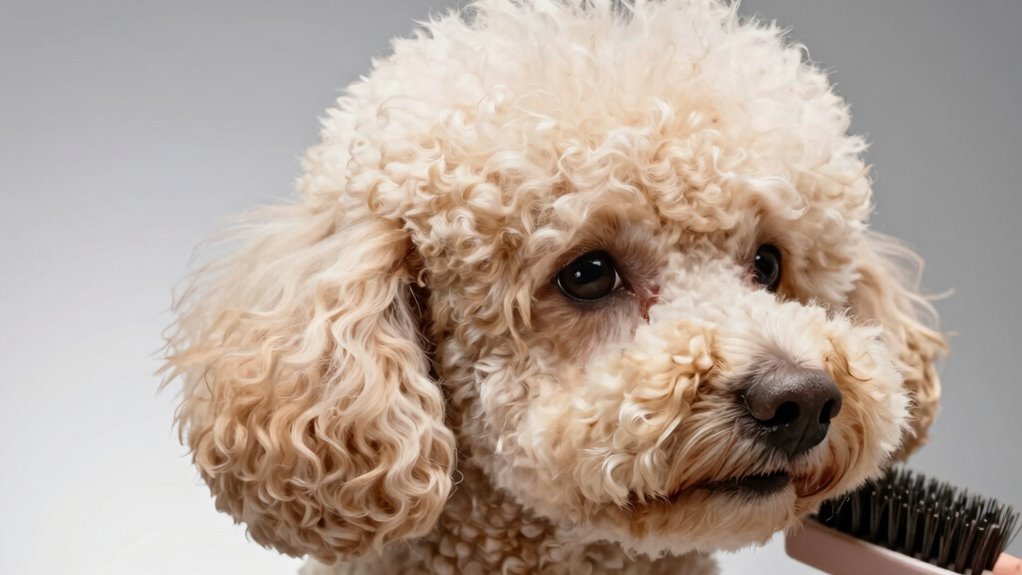
But low shedding doesn’t mean no maintenance. Without proper coat care, trapped hair can mat, leading to skin irritation or worse hair loss. We’ve learned that daily brushing is non-negotiable—it prevents tangles and supports healthy growth. Using specialized grooming tools designed for curly coats maximizes the effectiveness of your brushing routine and reduces mat formation.
Bathing every 4–6 weeks keeps the coat clean and balanced. Grooming tips like consistent trims and using the right tools make a huge difference.
And while Poodles rarely shed much, sudden changes in hair loss could hint at Poodle health issues like allergies or nutritional gaps. That’s why we always say: manage pet wellness holistically—grooming, diet, and vet checks go hand-in-hand.
With daily brushing and smart coat care, we keep our Poodles looking sharp and shedding at bay.
What Causes Shedding in Poodles?
We’ve covered how little Poodles typically shed compared to other breeds, but now let’s look at what actually drives that minimal hair loss.
While Poodles don’t shed much, loose hair often gets trapped in their dense, curly coat instead of falling out. Without regular grooming, that dead hair builds up, leading to mats and unexpected shed.
It’s understood that proper grooming—like brushing every other day and professional trims every 4–6 weeks—keeps their coat healthy and shedding under control.
But if you notice excessive shedding, it might point to health issues like allergies, hormonal imbalances, or skin problems such as dermatitis or infections. Stress, poor diet, and lack of proper hydration also weaken coat strength.
Even aging can subtly change how a Poodle’s hair grows and sheds. Consistent vet check-ups help catch concerns early.
Remember, your Poodle shouldn’t shed like other dogs—if they are, something’s off. Watch for patchiness, redness, or flakiness on the skin, and act fast.
Using soft or rubbery bristles during grooming sessions can help prevent skin irritation while removing loose hair more effectively. With the right care, their hypoallergenic reputation stays intact.
Poodle Hair Type: Fur or Hair?
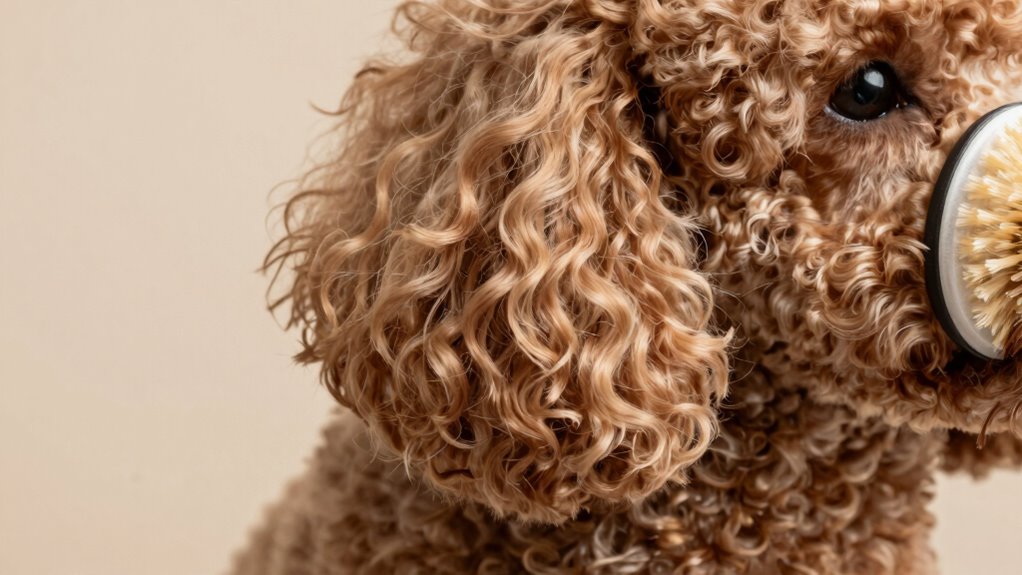
While many dogs have fur that sheds in cycles, Poodles grow hair—single-layered, continuously growing hair—much like humans do. This unique trait gives Poodle hair a low-shedding nature, making them a top choice among hypoallergenic dogs. Their curly coat traps any shed hair close to the skin, so you’ll rarely find it on your couch or clothes—even as seasons change.
But this doesn’t mean they’re maintenance-free; their grooming needs are real and regular.
Here’s what you should know about Poodles coat:
- Poodle hair grows continuously, up to ¾ inch per month, requiring frequent trims.
- The curly coat resists matting only with weekly brushing—skip it, and tangles form fast.
- Unlike double-coated breeds, Poodles coat doesn’t respond dramatically to changing seasons.
- Minimal shed hair means fewer allergens, a key reason they’re labeled hypoallergenic dogs.
Because their continuously growing hair requires consistent care, maintaining your Poodle’s coat through regular grooming helps prevent matting and supports overall skin and coat health, benefits that can be further enhanced with collagen supplements designed to strengthen hair and skin.
We’ll walk you through caring for this special coat—because loving a Poodle means loving the routine, too.
The Poodle Hair Growth Cycle
Because Poodles have a distinct hair growth cycle, they shed far less than most breeds—a trait rooted in biology, not luck.
Our curly hair grows continuously through three phases: anagen (growth), catagen (shift), and telogen (rest). The anagen phase lasts years—much longer than in other breeds—so our coat stays put, growing steadily instead of cycling out en masse. During telogen, minimal shedding occurs because old hairs remain rooted until new growth pushes them out.
We see more shedding during a puppy coat shift, typically between 6–12 months. That’s normal—your Standard Poodle is swapping soft, fluffy puppy coat for dense, adult curly hair. This coat change stabilizes by adulthood, leading to predictable, low shedding.
Even so, aging can bring thinning or slight shedding increases in seniors—just part of the natural hair growth cycle. For aging Poodles experiencing increased shedding or coat changes, peptides can support skin health and coat quality during this transition.
Since our hair grows constantly, regular brushing is key to prevent matting. Shedding doesn’t vanish completely, but with proper care, it stays barely noticeable—another reason we’re such a favored choice for those seeking a low-shed companion.
Coat Types and Grooming Needs
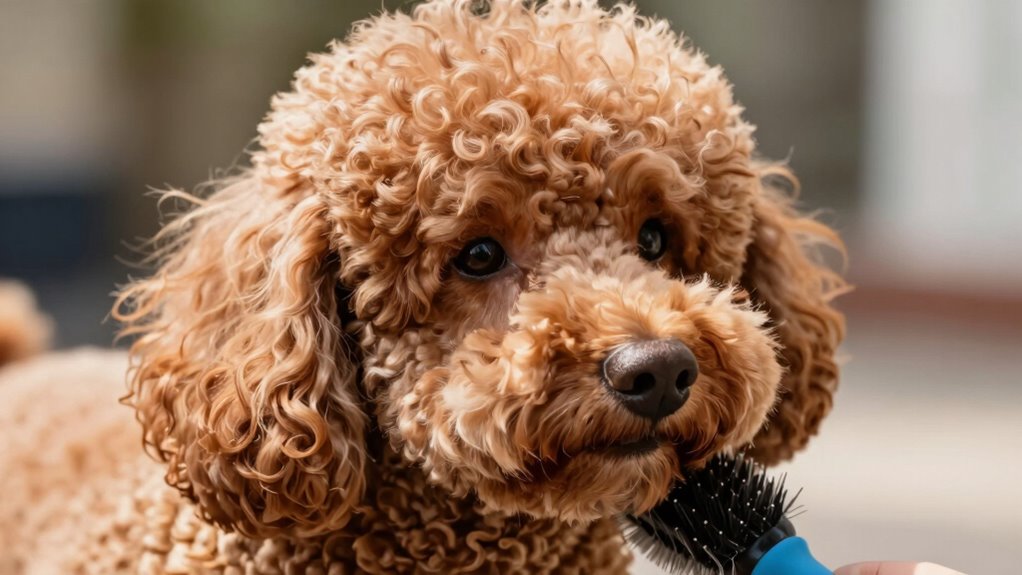
Though our curly coats set us apart, they demand consistent care to stay healthy and tangle-free. As Poodles, we’ve unique coat types—ranging from tight curls to loose waves—that trap loose hair instead of releasing it, which minimizes shedding but increases grooming needs.
Without routine care, mats form close to our Poodles skin, causing discomfort and irritation. To keep us looking and feeling our best, here’s what we rely on:
- Daily brushing with a slicker brush to remove trapped hair and prevent tangles.
- A metal comb for detangling deep layers, especially behind ears and under legs.
- Regular trims every 4–6 weeks with a professional groomer to maintain coat health.
- Gentle shampoos that protect our skin and support our delicate coat structure.
These steps guarantee our single-layered coat stays free of debris and loose hair, reducing household shedding. Quality grooming kits with flexible pin brushes and reliable tools can simplify the grooming process, helping you maintain our coat between professional appointments.
We count on you to stay consistent—your touch makes all the difference in meeting our grooming needs and keeping us comfortable.
How to Manage Poodle Shedding
Our curly coats don’t shed like other breeds, but they still need our help to stay under control. While Poodle coat shedding is minimal, loose hairs can trap in our curls, leading to mats and excess dog shedding if ignored.
Daily brushing is essential—using professional grooming tools like slicker brushes and metal combs—to catch stray hairs and support effective shedding management. We recommend bathing every 4–6 weeks with moisturizing, sensitive-skin shampoos to reduce dander and keep our coat soft.
Even with low seasonal shedding, a consistent grooming routine guarantees we look and feel our best. Internally, a diet rich in high-quality protein and Omega-3 fatty acids strengthens our coat from within, reducing breakage and supporting skin health.
Hydration matters too—always keep fresh water available. Finally, monitor for skin issues or allergies; these can increase shedding and signal underlying concerns.
You know us best, and with your care, our coat stays tangle-free, healthy, and beautifully low-shedding. Together, we’ve got shedding management covered.
Frequently Asked Questions
What Is the Disadvantage of a Poodle?
We find poodle grooming demanding and costly, and their high intelligence means we must invest time in poodle training and poodle exercise. We worry about poodle health issues, manage their sensitive poodle temperament, and budget for poodle costs—all to honor their 12–15-year poodle lifespan together.
Are Poodles Hypoallergenic?
We’ll tell you straight: poodles aren’t time machines, but they’re as close as it gets for allergy sufferers—our poodle fur barely sheds, we manage poodle grooming weekly, and we tailor poodle care to each poodle size, breed, temperament, health, and even poodle allergies with love.
Does a Poodle Shed a Lot?
we don’t shed much, so you won’t find our hair everywhere. our Poodle coat stays tidy with regular Poodle grooming. we thrive with good Poodle maintenance, proper Poodle health care, and love—our behavior, training, lifespan, and coat types all shine when you’re part of our journey.
Which Dog Has the Worst Shedding?
we’ve found golden retrievers top the list for worst shedding among dog breeds. their shedding breeds coat means we battle loose fur daily. for allergies dogs, we prioritize grooming tips, coat types, and hair care—pet maintenance isn’t optional, and shedding solutions keep our homes sane.
Conclusion
We manage Poodle shedding with consistency: brush daily, trim every 4–6 weeks, and stay alert to skin changes. Their curly hair traps loose strands like a net, reducing fallout. Though minimal, slight shedding can occur with age or health shifts. We prioritize grooming because it prevents mats and supports skin health. Think of their coat like a well-tended garden—it thrives with care, not neglect. We stay proactive, not reactive.