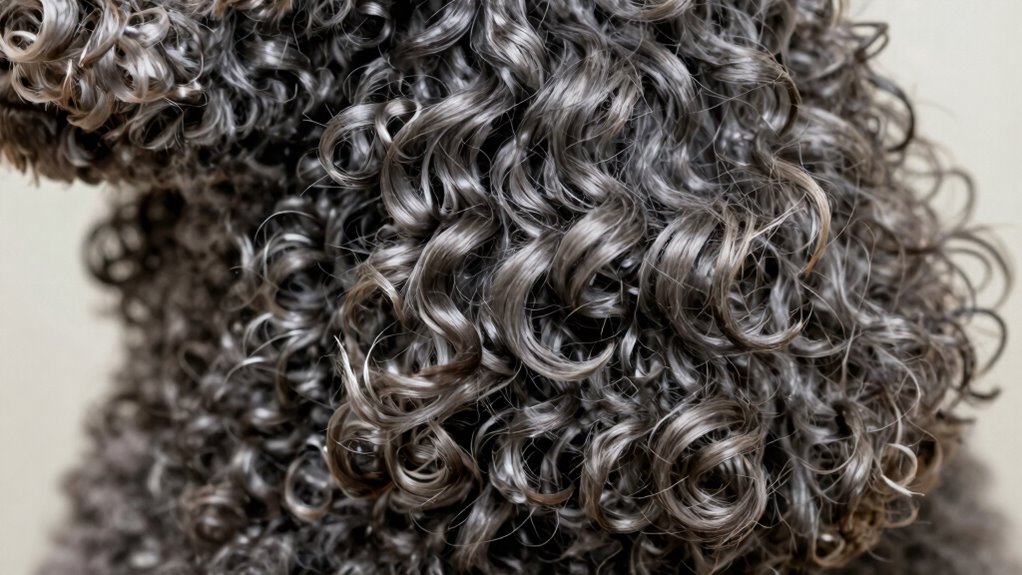
Yes, poodles do shed — just not like most dogs, and that’s where the confusion begins. We once thought all canine coats were the same, but poodles have true hair: single-layer, curly, and continuously growing, much like ours. It emerges from the follicle in a helix shape, 1–3 inches per month, trapping dander and loose strands. That detail? It changes everything — especially for your allergies.
Key Takeaways
- Poodles have hair, not fur, due to their continuous growth cycle and single-layer coat.
- Poodle hair grows like human hair, requiring regular grooming to prevent mats and tangles.
- Their curly, dense coat traps dander, making poodles hypoallergenic compared to fur-shedding breeds.
- Unlike seasonal shedders, poodles shed minimally, with hair growing up to half an inch per month.
- Proper care includes weekly brushing and professional grooming every 4–6 weeks to maintain coat health.
Understanding the Difference Between Hair and Fur
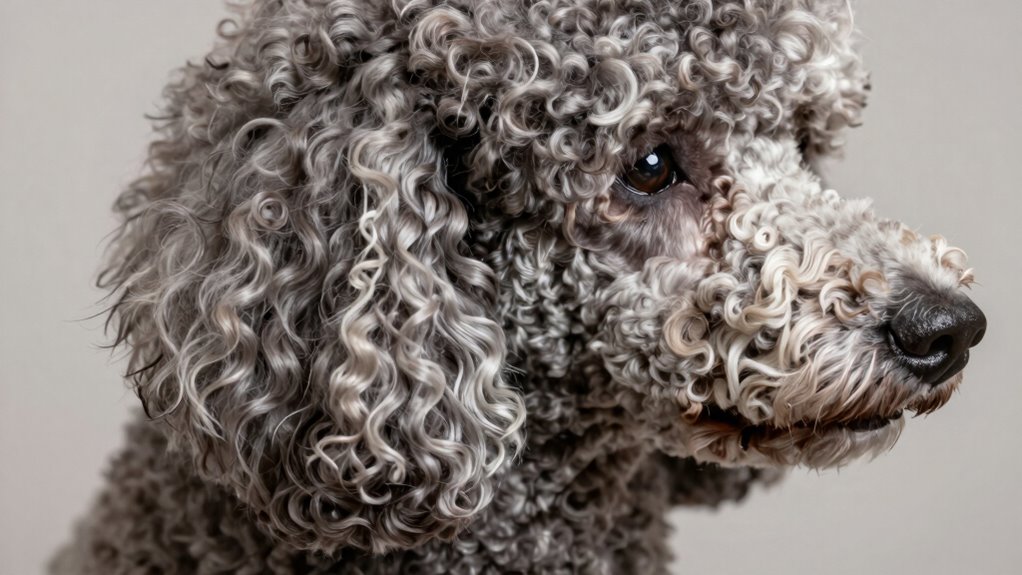
While many dogs have fur that sheds seasonally and traps allergens, poodles grow hair—continuous, low-shedding strands that demand routine care. We see this distinction clearly when comparing poodles to other dog breeds.
Fur usually means a double coat, shed in clumps every few months, but poodle hair grows like ours—up to half an inch per month—with a texture that resists loose shedding. That’s why we need regular brushing, clipping, and professional grooming every 4–6 weeks. Hair care isn’t optional; it prevents mats and keeps their coat healthy.
Unlike wooly fur, poodle hair lacks barbs, so it doesn’t felt easily—this also makes it less useful for yarn spinning. Among dog breeds, poodles stand out because their hair traps dander close to the skin, which is why many consider them hypoallergenic. Using specialized grooming tools designed for their coat type ensures effective mat prevention and maintains the health of their unique hair structure.
It’s not just semantics—structure, growth cycle, and grooming needs define the difference. When we say poodles have hair, we’re talking science, not opinion. Let’s treat it with the care it deserves.
Why Poodles Are Considered to Have Hair
Because their coat grows continuously and lacks the typical double-layer structure of shedding breeds, we classify poodles as having hair, not fur. This distinction matters to you if you value a hypoallergenic companion or dread constant shedding. The poodle’s hair behaves more like human hair—curling, lengthening, and requiring regular grooming to prevent mats. Without routine trimming and brushing, tangles become unmanageable in weeks, not months. Many owners weave or donate clipped poodle hair into yarn, a practice unheard of with fur. While not technically wool, it’s spun and used creatively due to its strength and texture. Because poodles shed minimally, their coats require regular grooming and brushing to maintain skin health and prevent the matting issues that can develop from continuous hair growth. We see this as clarity—not confusion—a gift for sensitive homes.
The Science Behind Poodle Coat Structure
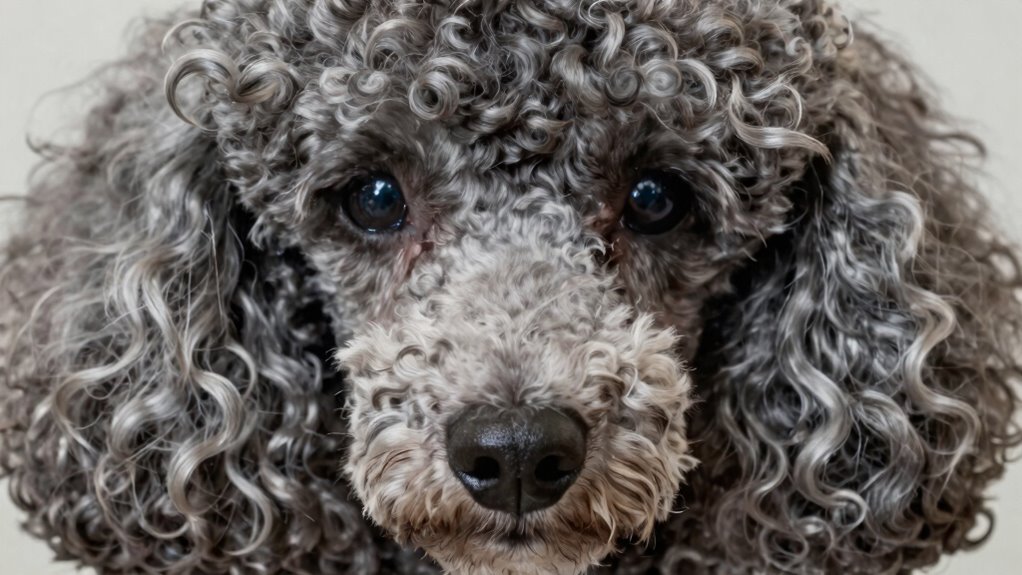
When we examine the poodle’s coat under a microscope, one thing becomes clear: it’s built differently from the start. Poodles have hair, not fur—meaning it grows continuously, like ours, and lacks the seasonal shed cycle of double-coated dogs.
This single-layer, curly structure traps dander and loose hair, which is why we often call them hypoallergenic. Even the Standard Poodle called to mind elegance and function—its coat designed for swimming and endurance.
But this unique texture demands consistent Poodle hair care: tangles form fast, and mats can lock in moisture if we ignore brushing. Unlike double-coated breeds, poodles require daily brushing to prevent knots and matting that can trap moisture and lead to skin issues.
Here’s what you need to know:
- Growth cycle: Hair grows steadily for years, not weeks, so trimming every 4–6 weeks keeps it healthy.
- Texture: Tight curls measure 0.5–1 inch in diameter, catching loose strands before they scatter.
- Shedding rate: Less than 10% of typical fur-shedding breeds—almost invisible to most allergy sufferers.
We’re in this together—caring, grooming, understanding.
Historical Perspectives on Poodle Grooming and Terminology
Though we’ve long debated whether poodles have hair or fur, history shows we’ve been grooming them with purpose for centuries. Since the 1600s, specific poodle grooming styles weren’t just for show—they served function, preserving mobility and warmth during water work.
Their coat isn’t like most dogs’; it’s a single layer, dense and curly, more akin to wool than typical fur. In fact, when the first poodles arrived in New Zealand in the 1950s, the NZ Wool Board analyzed their coat and called it wool, not fur.
Early care guides, like those from 1894, already stressed meticulous grooming to maintain coat health. We’ve never treated poodle coats like ordinary fur—because they’re not. The distinction between hair and fur here isn’t semantics; it’s rooted in texture, growth cycle, and grooming demands.
Cultural views shaped the words we use, yet the facts remain: their hair grows continuously, traps dander, and requires clipping every 4–6 weeks. Regular grooming with soft or gentle bristles helps prevent matting and skin issues, similar to the specialized care required for other breeds with unique coat structures. We groom them differently because, biologically and historically, their coat behaves unlike typical fur.
How Poodle Hair Contributes to Hypoallergenic Qualities
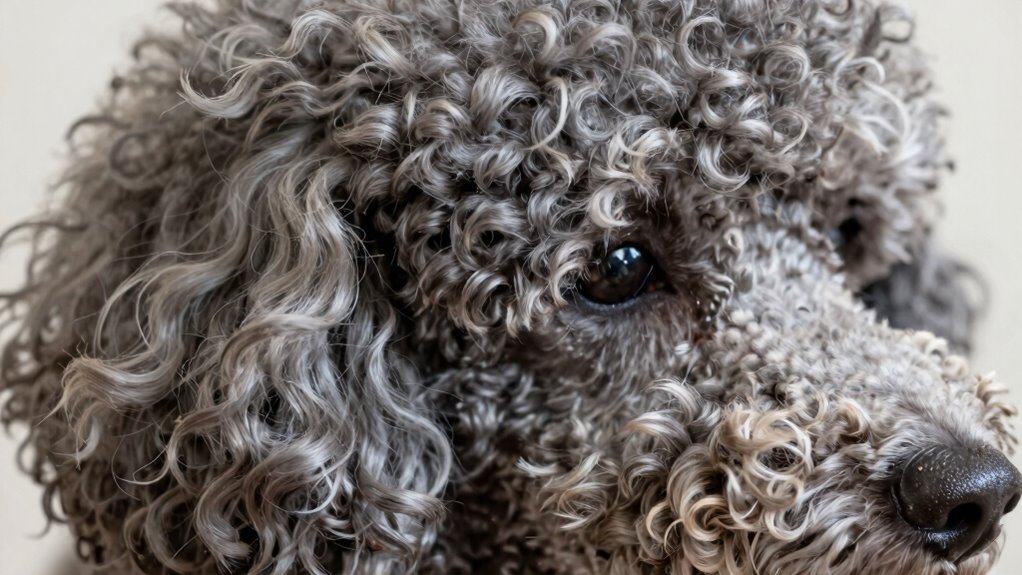
While no dog is truly allergy-proof, we can say with confidence that poodles stand out for their hypoallergenic qualities—all thanks to their hair, not fur.
As poodle owners know, their single-layer coat sheds far less than double-coated breeds, reducing airborne dander. Their unique, moisture-retaining hair produces fewer allergens overall, making life easier for allergy-prone families. That tight curly coat doesn’t just look elegant—it traps loose hair and dander before they escape into your home.
Here’s how our poodles help keep allergies at bay:
- Low shedding: Poodle hair grows continuously, like ours, so it doesn’t scatter allergens the way fur does.
- Curly coat effect: The dense curls physically contain dander, limiting what gets into your air and on your furniture.
- Natural moisture balance: Their hair holds hydration well, minimizing dry, flaky skin—the main source of dog allergens. For poodles prone to itching, homeopathic remedies can support skin health while maintaining their hypoallergenic coat quality.
These hypoallergenic qualities aren’t a myth. They’re science—and thousands of happy poodle owners can tell you: living with fewer sniffles is possible.
Grooming Needs for Poodle Hair Maintenance
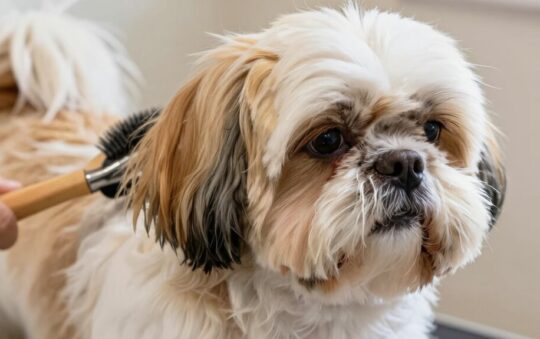
Every three to six weeks, we need to groom our poodles—no exceptions. Their Poodle’s coat grows continuously and won’t shed like fur, so skipping grooming leads to mats and discomfort. Daily brushing is non-negotiable: just 10–15 minutes with the right tools keeps their hair healthy and tangle-free.
| Tool | Use | Frequency |
|---|---|---|
| Slicker brush | Removes tangles and loose hair | Daily |
| Bristle brush | Smooths top layer, adds shine | Every other day |
| Steel comb | Checks for hidden mats near skin | 2–3 times/week |
We bond through grooming—it’s our quiet time, full of trust. Simple cuts like the puppy or lamb cut make home maintenance easy and keep them looking sharp. We stick to the routine because we understand their coat thrives on consistency. With daily brushing and professional grooming every few weeks, we keep their coat clean, soft, and mat-free. We’ve learned that love shows up not just in cuddles, but in combing through tangles with care.
Common Misconceptions About Poodle Coats
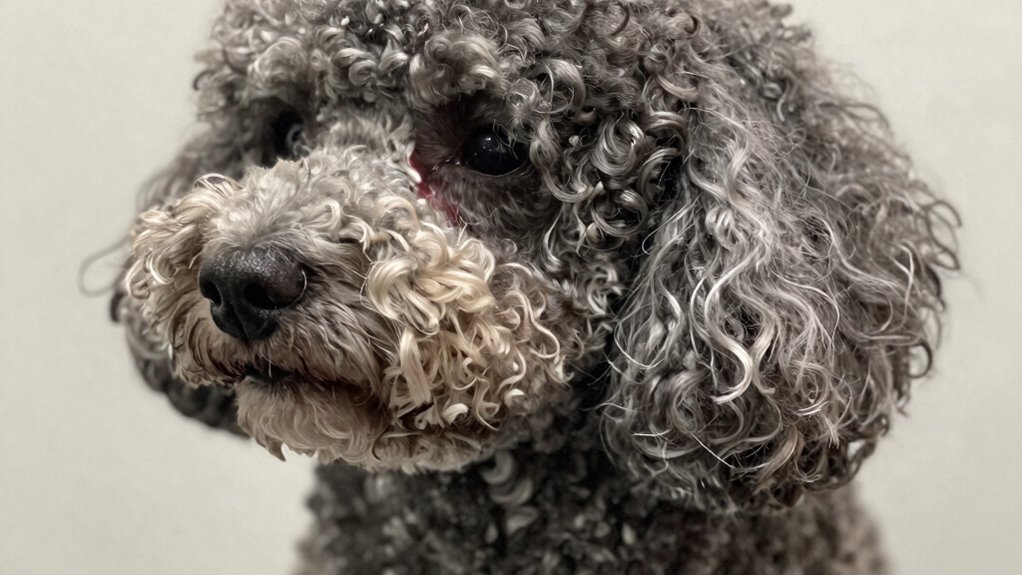
Since many people grow up calling all dog coats “fur,” it’s no surprise we often mislabel what poodles actually have—we’re working with true hair, not fur, and that distinction shapes everything about how we care for them.
Poodle hair grows continuously, like ours, and demands consistent grooming to prevent tangles and mats. This isn’t just semantics—it’s the key to understanding their hypoallergenic reputation and upkeep.
Let’s clear the air together:
- It’s hair, not fur—single-layered, grows 1–2 inches monthly, and lacks seasonal shedding.
- Grooming isn’t optional—without weekly brushing and professional trims every 4–6 weeks, mats form fast.
- Hypoallergenic? Not perfect, but closer—allergies usually stem from dander, not hair, and poodles trap dander in their dense curls.
We get why the mix-up happens, but now you know: their coat behaves more like human hair than a golden retriever’s fur.
Understanding this helps us give them the care they truly need—no guesswork, just love and the right routine.
Color and Texture Changes in Poodle Hair Over Time
As our poodle pups grow, we often notice their coats shifting in ways we don’t expect—colors fading, textures transforming, curls settling in unevenly.
We’ve learned that color changes are common, especially in toy poodles, where a fading gene may shift apricot to cream or white over time.
Poodles can experience dramatic differences between puppy and adult coat colors, sometimes surprising us years later—like an apricot coat softening to beige after 13 years.
These shifts aren’t just visual; they often come with changes in coat texture. We’ve seen white fur take on a cottony feel, while brown areas grow thicker, even scraggly.
Different parts of the body may curl or wave at different rates, creating a patchwork effect as they mature. We pay attention because consistency isn’t guaranteed.
Curls might tighten on the back but loosen along the legs. These transformations are normal.
Understanding them helps us care better. Color changes and coat texture shifts are part of our poodles’ life-long journey—and we’re here for every soft, curly step.
Practical Uses of Poodle Hair in Crafts and Textiles
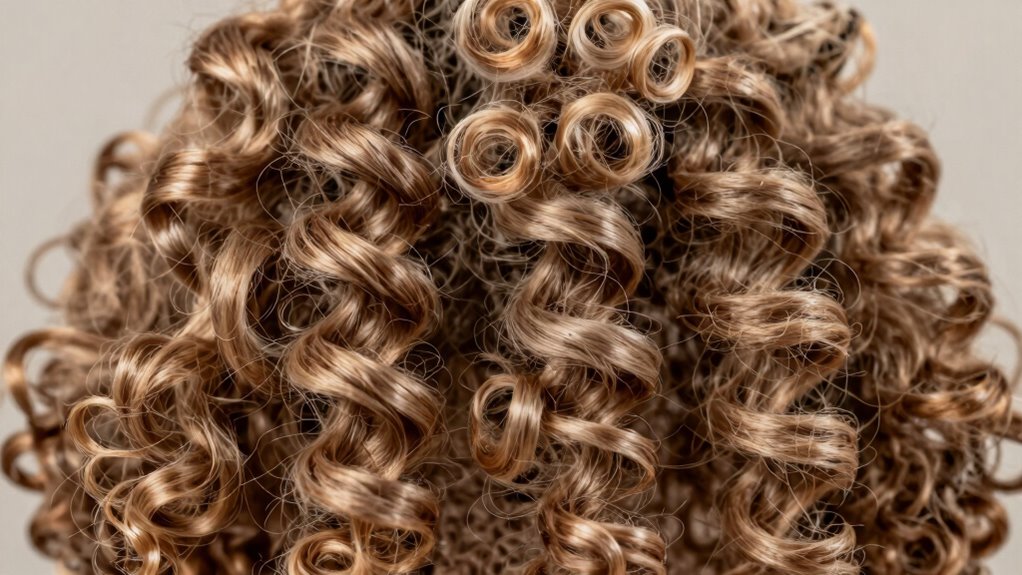
One surprising fact we’ve learned from crafters and fiber artists is that poodle hair isn’t just for grooming—it’s a material with real creative potential.
We’ve seen it turned into soft, textured crafts and even experimental textiles, though it behaves differently than sheep wool. Without barbs, poodle hair resists felting, making it trickier but not impossible to shape into lasting pieces.
Still, its continuous growth allows us to harvest, spin, and use it much like wool, opening doors for personal, handmade projects.
Here’s how we’re getting creative:
- Felted badges — using layered poodle hair and moisture to mold unique accessories.
- Hand-spun yarn — blending poodle hair with wool for strength while keeping that soft, personal touch.
- Woven keepsakes — small textiles like memory blankets, where a pet’s hair becomes part of the fabric.
We’re not claiming it’s a replacement for traditional fibers, but in intimate crafts, poodle hair carries meaning no store-bought textile can match.
And honestly? That’s where its real value lies.
Daily Care Tips to Prevent Matting and Skin Issues
We keep poodle hair spinning in crafts, but we also keep it healthy with daily care. Daily brushing isn’t optional—it’s essential.
We use a slicker brush every day to pull out dead hair and stop tangles before they tighten into mats. Then, we follow with a bristle brush to smooth the curls and reach the dense undercoat. Skipping even a day risks knots, especially behind ears and under legs.
For the proper Poodle coat, we bathe every three weeks with gentle shampoo and tangle-releasing conditioner—never harsh soaps. Moisture keeps curls soft and skin calm.
Regular grooming sessions every 3 to 6 weeks at a pro shop catch what we miss and trim trouble zones. We start young, letting puppies sniff brushes and hear clippers, so grooming becomes touch, trust, and quiet time.
It’s not just upkeep—it’s connection. With this routine, we prevent skin irritation, avoid painful mats, and keep coats springy and clean.
We do this because we understand: a well-cared-for Poodle isn’t just beautiful, they’re comfortable, confident, and part of our daily rhythm.
Frequently Asked Questions
What Is the Difference Between Fur and Hair on a Dog?
We see dog hair as smooth and growing like ours, needing regular grooming, while fur is coarser, sheds more, and demands less styling. We notice shedding differences and coat maintenance needs help us care for our furry family members with love and closeness.
What Is Poodle Fur Called?
Every cloud has a silver lining—we call our poodle fur “hair” for good reason. We share this with you: our coat defies shedding, demands grooming, and comes in textures only love and care can tame. We’re loyal, soft, and uniquely ours.
What Happens if You Never Cut a Poodle’s Hair?
We let our poodle’s hair grow, and it tangles fast—mats form, skin suffers, and movement slows. Without poodle grooming, maintenance, and coat care, life gets tough. We trim regularly because we love them and want them happy, healthy, and free.
Do Some Dog Breeds Have Hair Instead of Fur?
We’ve got the inside scoop: some dog breeds do have hair instead of fur, and it’s not just semantics—it’s a whole different ball game. When we talk about hair vs fur, we’re really diving into how these coats behave, especially when it comes to dog grooming. You see, pups with hair, like us, don’t just shed all willy-nilly; we grow it long, like your own locks, which means we’re in it for the long haul—brushing, trimming, and all. And hey, that’s why we’re often top picks among hypoallergenic breeds. We understand you want that cozy, sneeze-free cuddle, and we’ve got you covered—literally, with every soft, low-shed strand. It’s not just about looks; it’s about living better together.
Conclusion
We’re like gardeners tending a living sculpture—poodle hair grows steadily, up to ¾ inch monthly, curling into dense coils that trap dander. This single-layer coat, 80–90% less shedding than double-furred breeds, behaves more like human hair than fur. We prevent mats with daily brush strokes, 2-inch clipper guards, and quarterly trims. Think of each curl as a tiny filter—woven defense against allergens, shaped by science, not myth. We keep it trimmed, clean, and tangle-free: precision grooming is our promise.