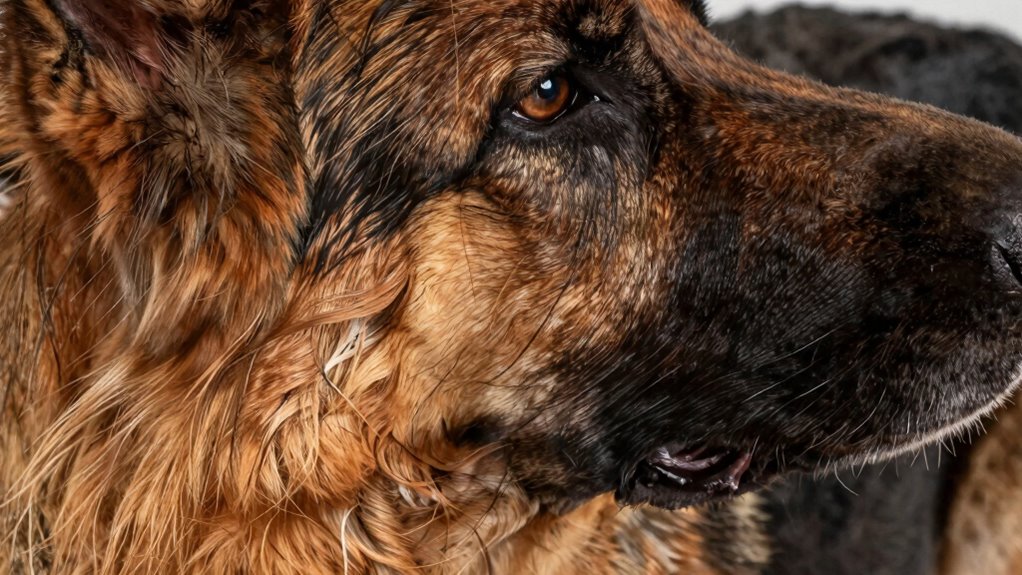
German Shepherds do more than just look impressive—they’re built for function, starting with their double coat. We see it every day: a dense undercoat up to 2 inches thick, paired with outer guard hairs measuring 1 to 1.5 inches. This isn’t just fur; it’s insulation, protection, climate control. We’ll show you how it works, why it matters, and what happens when it’s compromised. The truth might surprise you.
Key Takeaways
- German Shepherds have a double coat consisting of a dense undercoat and coarse guard hairs.
- The undercoat provides insulation by trapping air, keeping them warm in winter and cool in summer.
- Guard hairs repel water and protect against dirt, UV rays, and skin irritations.
- They shed heavily twice a year during seasonal “coat blow” when replacing the undercoat.
- Shaving their coat can cause permanent damage and reduce natural temperature regulation.
Understanding the Double Coat Structure
While it might seem like just fur, the German Shepherd’s double coat is a highly engineered system designed for protection and comfort in varied climates. We perceive it every day: German Shepherds rely on this coat for survival in heat, cold, and everything in between.
Their double coat consists of two distinct layers—the outer coat of long, coarse guard hairs (up to 1.5 inches in length) and a soft, dense undercoat that can be 1 to 1.25 inches thick depending on season. We understand the undercoat does more than fluff—it thermoregulates, trapping warm air in winter and shedding to release heat in summer.
Puppies start with thinner fur, but by 6–12 months, their adult coat emerges, signaling new grooming needs. We’ve learned that skipping brushing leads to matted undercoats and trapped moisture. We recommend weekly de-shedding tools and bi-monthly deep checks. Establishing a regular grooming routine helps minimize shedding and prevents these common issues before they develop.
Understanding this structure isn’t just about appearance—it’s foundational to their health. When we care for both layers, we’re not just grooming; we’re honoring the breed’s biology. This knowledge shapes how we meet their grooming needs—consistently, gently, and with purpose.
The Role of the Outer Coat in Protection
We see it every day—the outer coat of the German Shepherd isn’t just fur, it’s a working shield. This outer coat delivers essential protection, made of long, coarse guard hairs that resist weather and wear.
We rely on it to guard our German Shepherds from rain, snow, and harsh UV rays. These guard hairs naturally repel water and dirt, so debris slides off and the skin stays dry. That means less irritation, fewer infections, and a cleaner dog after outdoor work.
The outer coat isn’t static—its thickness and texture change as German Shepherds mature, adapting to their environment and lifestyle. It allows air to circulate while blocking outside threats, helping regulate body temperature without overheating. This natural insulation is similar to how double-wall designs in protective structures work to retain warmth and maintain comfort.
For us, this layer is non-negotiable: it’s functional, tough, and finely tuned by design. We never shave it—doing so risks permanent damage and weakens protection. Every strand serves a purpose.
We trust this coat because it’s built to last, just like our bond with these loyal dogs.
How the Undercoat Provides Insulation
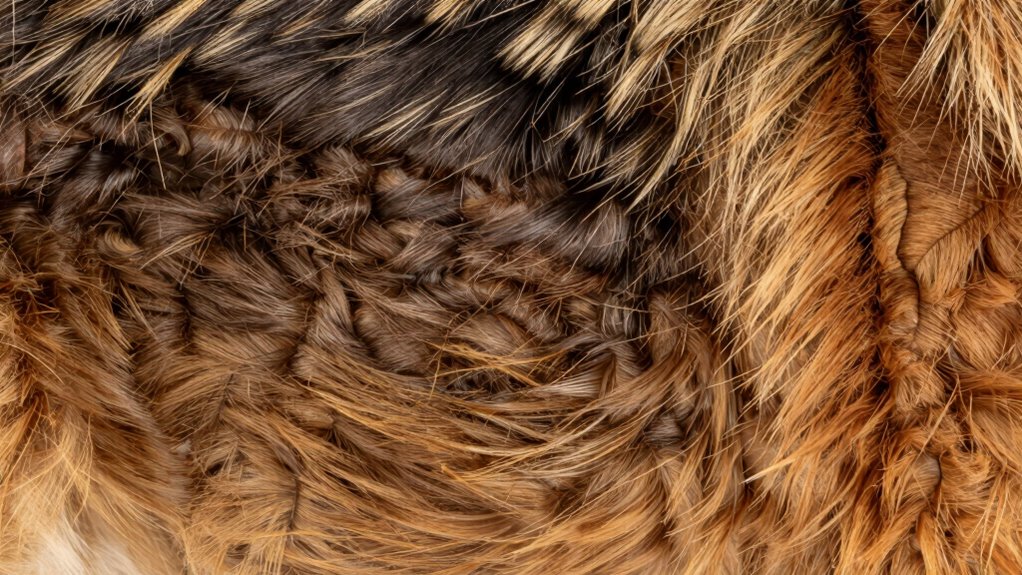
Because it’s hidden beneath the outer guard hairs, the undercoat of a German Shepherd might seem less important—but don’t be fooled. This soft, dense layer is the secret to our pup’s comfort in both snow and sun. Made of fine, fluffy hairs, the undercoat traps air close to the skin, creating natural insulation that regulates body temperature. It keeps heat in during cold weather and allows breathability when it warms up. As our dogs mature, their undercoat adjusts—thickening or thinning based on environment. Without proper grooming, though, the undercoat can mat, reducing its insulation power. Regular brushing removes loose hair and supports airflow, ensuring the coat works as nature intended. A well-maintained undercoat also promotes dental health and endorphin release by keeping your dog comfortable and stress-free during grooming sessions.
| Feature | Function | Grooming Need |
|---|---|---|
| Soft texture | Gentle on skin | Weekly brushing |
| Dense coverage | Maximum insulation | De-shedding tool recommended |
| Air-trapping | Thermal regulation | Prevent matting |
| Seasonal adaptation | Responds to climate changes | Consistent routine essential |
Seasonal Changes and Coat Appearance
When the seasons shift, our German Shepherds don’t just adapt—they transform, and their double coats lead the change.
Seasonal changes trigger a natural cycle we all experience together: heavy shedding in spring and fall, known as “coat blow.” During these times, our dogs shed their thick winter undercoat to stay cool or grow a new one to face cold months ahead.
The double coat—made of coarse guard hairs and a soft, dense undercoat—responds directly to light and temperature shifts, not just weather. You’ll notice clumps of fur on floors, furniture, even in the air. We’re talking real volume: cups, sometimes pounds, coming off weekly.
Regular grooming, 3–4 times per week with a de-shedding tool, keeps shedding under control. It doesn’t stop it—that’s normal and necessary. We embrace it.
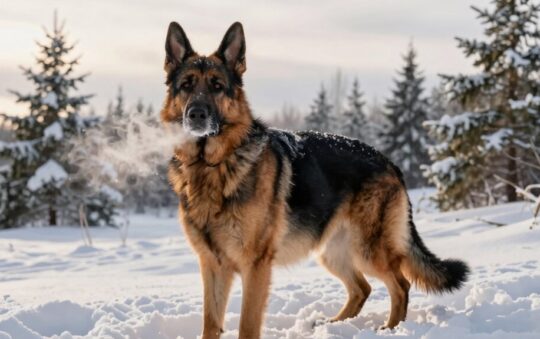
The double coat protects against rain, snow, and sun, doing its job exactly as nature intended. For dogs spending extended time outdoors during winter, insulated dog houses provide essential shelter that complements their natural coat protection. Through seasonal changes, we’re not just managing fur—we’re honoring a working dog’s heritage, one shed at a time.
Differences Between Puppy and Adult Coats
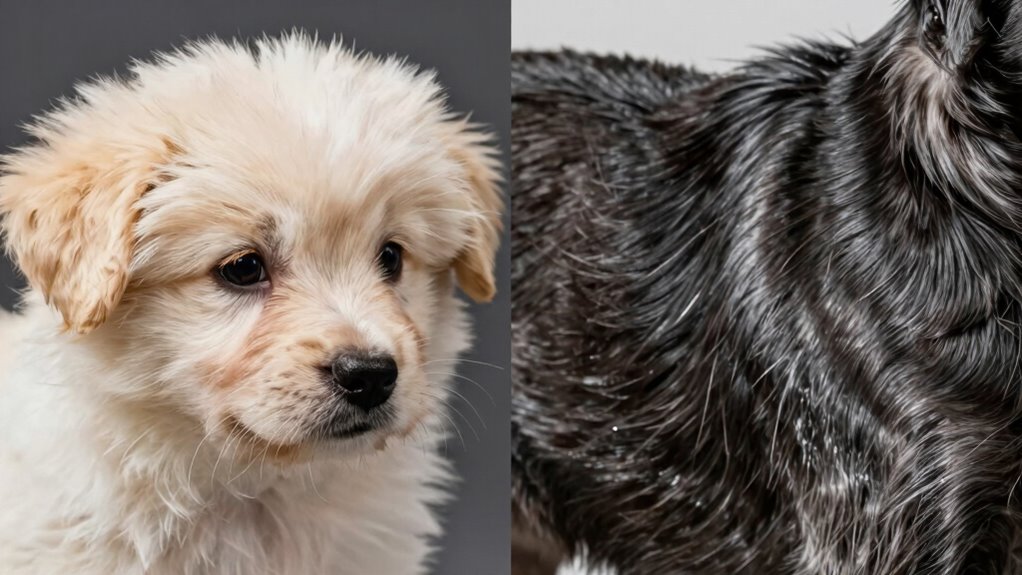
That seasonal shed we just talked about? It’s nothing compared to what happens when your German Shepherd shifts from puppy coat to adult coat.
Around 4 to 6 months, our pups begin “coat blowing”—shedding their soft, fluffy puppy coat to make room for a rugged double coat. We’re talking real transformation: a single-layered, cotton-candy-like fur gives way to a structured, weather-resistant adult coat.
The new outer layer grows long and coarse, while the dense undercoat stays plush and insulating. This double coat takes months to fully mature, but when it does, it defines their silhouette—strong, sleek, and built for purpose. During this transition, daily brushing helps prevent matting and manage the significant shedding that occurs as the new coat develops.
We’ve all felt that bittersweet wave as our fluffballs grow up. Here’s what hits close to home:
- That last glimpse of their angel-soft puppy coat before it fades
- The strange patchiness during the coat change—we call it “ugly duckling” season
- Running fingers through their first true double coat, thick and alive with texture
- Realizing our playful pup now looks like the noble dogs we fell in love with
Shedding Patterns Throughout the Year
Though shedding runs on a steady beat year-round, we hit a drumroll every spring and fall when our German Shepherds release what’s known as “coat blow”—a dramatic, weeks-long shed that transforms their coat for the coming season.
German Shepherds shed their thick winter undercoat in spring, then swap their lighter summer coat in fall. This shift matches their double coat type: a dense undercoat and a coarser outer layer.
Shedding patterns aren’t random—they’re tied to daylight, temperature, and biology. During peak seasons, fur piles up in clumps on furniture and floors. This buildup can necessitate protective measures similar to those needed for other pet-related wear and tear, such as protection against minor injuries from constant friction on flooring. We’re talking cups of loose hair weekly, not just lint.
Even outside high-shed periods, we still see light to moderate shedding daily. Climate plays a role; warmer homes trigger longer shedding seasons. Health and diet matter too—poor nutrition can worsen shedding.
But normal shedding? It’s expected. Knowing these shedding patterns helps us stay ahead. We accept it as part of sharing life with a German Shepherd—loyal, strong, and yes, gloriously fuzzy.
Managing Shedding With Regular Grooming
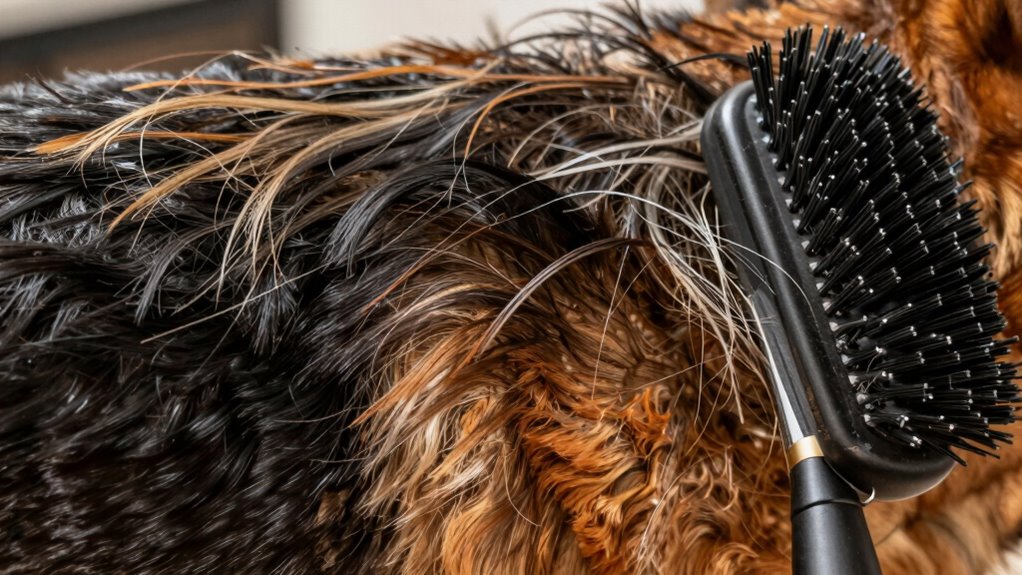
A steady grooming routine is our best defense against relentless shedding. As German Shepherd owners, we understand that frequent brushing isn’t just maintenance—it’s bonding.
Our dog’s double coat needs consistent care to stay healthy and minimize loose fur around the house. We brush 2–3 times weekly, then step it up during spring and fall blowouts. A slicker brush grabs surface hair, while an undercoat rake digs deep to pull out the dense, soft underlayer before it lands on our couch.
We always bathe every 4–6 weeks with de-shedding shampoo, making sure to brush before and after. Using gentle strokes in the natural direction of the fur helps prevent skin irritation while maximizing the effectiveness of our grooming efforts.
We do this because we care. And here’s what it gives us:
- A coat that shines with health, not mats or tangles
- Less vacuuming, fewer fur drifts collecting under furniture
- Calm, happy dogs who relish our touch and attention
- A deeper connection built through daily acts of love
Together, we turn grooming into quiet moments of trust.
Why Shaving Is Not Recommended
When it comes to keeping our German Shepherds cool or managing heavy shedding, we might be tempted to reach for the clippers—but experts agree: shaving isn’t the solution.
Our dogs’ double coat isn’t just thick dog hair; it’s a finely tuned system. The outer guard hairs shield their skin from UV rays, debris, and scratches, while the dense undercoat insulates—keeping them warm in winter and surprisingly cool in summer.
Shaving disrupts this balance, often leading to patchy, incorrect regrowth or no regrowth at all. We’ve seen coats grow back too soft, too sparse, or uneven—compromising protection and appearance.
Plus, without that natural barrier, their skin is vulnerable to sunburn and injuries. Just as certain nutrients like calcium and phosphorus are essential for overall canine health, a healthy coat requires proper maintenance and natural protection. We believe in smart grooming, not shortcuts. Regular brushing removes loose undercoat and prevents matting, supporting healthy dog hair cycles.
Professional groomers consistently recommend routine grooming over shaving—because it preserves the double coat’s function.
We trust the process: brushing, deshedding tools, seasonal care. Together, we keep our German Shepherds comfortable, protected, and looking their best—all without a single clip.
Signs of Abnormal Shedding and Health Concerns
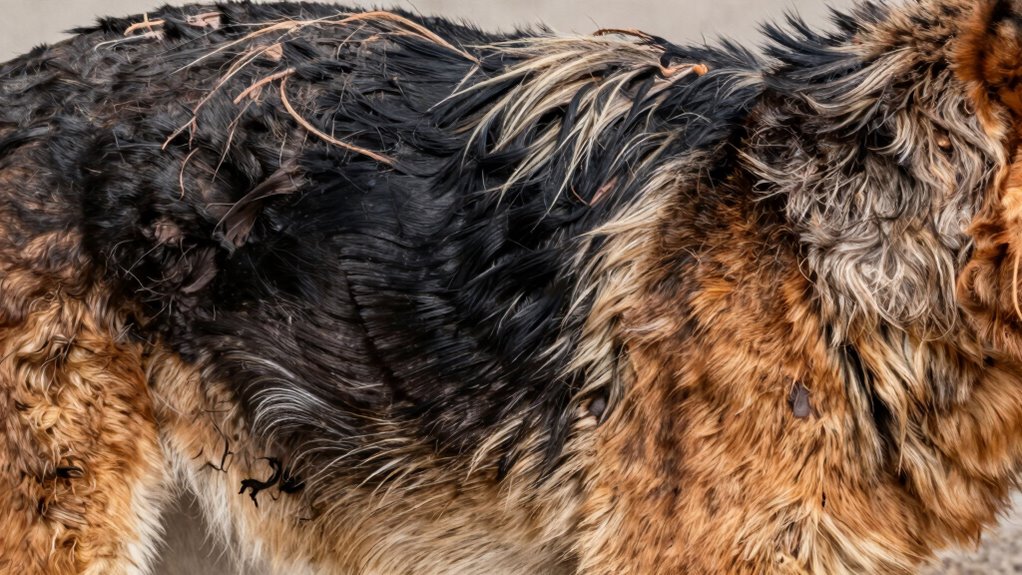
While most German Shepherd owners expect seasonal fur loss, it’s important to pay attention when shedding crosses into abnormal territory—because it can signal deeper health issues.
Abnormal shedding isn’t just about fur on the floor; it’s often a red flag tied to a hidden skin condition or systemic problem. When we observe bald patches, it’s clear it’s time to act—our dog’s coat should never thin dramatically outside of spring and fall.
Excessive scratching or licking isn’t just annoying; it can mean allergies or parasites are tormenting them. Hot spots? Those raw, inflamed sores suggest infection and demand vet care. And if shedding spikes suddenly without seasonal rhythm, we consider dietary gaps or internal imbalances.
Let’s stay close and watch for:
- Bald patches – clumps of fur missing, skin exposed
- Intense scratching – relentless, disrupting sleep and calm
- Hot spots or scabs – red, weeping skin signaling a skin condition
- Sudden fur loss – not seasonal, but widespread, pointing to health issues
We’ve got their back—and early action protects their well-being.
Grooming Tools for Maintaining a Healthy Coat
Three tools make all the difference in keeping our German Shepherd’s double coat in top condition—slicker brush, undercoat rake, and velocity dryer.
These grooming tools work together to manage shedding and support a healthy coat. We use the slicker brush 2–3 times a week to lift surface tangles and loose hair, while the undercoat rake digs deep into the dense underlayer where shedding fur hides.
During spring and fall, we brush daily—our dog’s double coat sheds heavily, and regular attention keeps fur under control. Before and after baths—every 4–6 weeks—we brush thoroughly and follow with a de-shedding shampoo.
Then, we use the velocity dryer: its high-powered air blows out undercoat debris brushes miss. The result? Less shedding around the house and a cleaner, healthier coat.
Every 6–8 weeks, we book a professional groom. They trim, assess skin health, and deep-remove loose fur.
With these steps and tools, we stay ahead of shedding and keep our German Shepherd’s double coat looking strong, shiny, and fully supported.
Frequently Asked Questions
Do All German Shepherds Have a Double Coat?
Yes, we all have a double coat, love. Our outer guard hairs and soft undercoat handle shedding seasons together, shaping our grooming needs. Whether long- or short-haired, these coat types keep us close to you, protected, and ready for every adventure we share.
How Do I Tell if My Dog Is Double Coated?
How can we truly know if our dog’s built for rugged weather? We feel for a soft undercoat beneath the coarse outer layer—classic shedding seasons, smart coat care, and gentle grooming techniques reveal the truth. We’re in this together, decoding their fuzzy secrets.
How Do I Tell if My German Shepherd Is Purebred?
we check if your german shepherd is purebred by doing pedigree analysis, studying breed characteristics, and using genetic testing. we look at papers, traits, and DNA together—you’re not alone in wanting to know where your dog truly comes from. we’ve got you.
At What Age Do German Shepherds Get Their Full Coat?
We see our German Shepherd’s full coat emerge by age two, like spring leaves finally thick on a sapling. By 3, their coat development stages complete, with seasonal shedding patterns peaking—we brush weekly to keep their double coat soft, bonded, and homegrown.
Conclusion
We see it often—owners surprised by the sheer volume of fur shed each season. But this isn’t excess; it’s design. Our German shepherds thrive because of their double coat, not in spite of it. We skip shaving, embrace brushing—two to three times weekly, more during shed—and use slicker brushes and undercoat rakes. We watch for bald patches or redness, sure, but trust the process. Nature engineered this system; we simply maintain it.