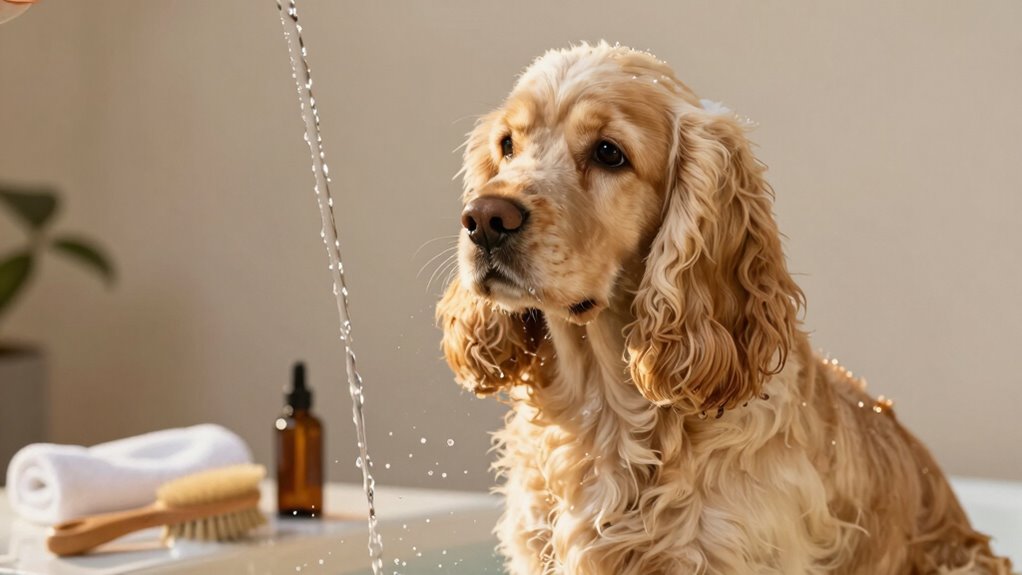
We’ve learned that Cocker Spaniels don’t have to smell—and with the right care, they stay fresh between baths. Their dense, silky coats trap moisture, debris, and odors fast. We bathe ours every 2–4 weeks using a vet-approved medicated shampoo, brush 3–4 times weekly, and dry thoroughly after each wash. But it’s not just about coat care. There are five key hotspots we check weekly—ears, teeth, skin folds, anal glands, and paws—each a potential source of odor if overlooked. One misstep changes everything.
Key Takeaways
- Cocker Spaniels can develop odors due to their dense, moisture-trapping coats, requiring regular grooming to stay fresh.
- Brush their coat 3–4 times weekly and bathe every 2–4 weeks with medicated shampoo to control dirt and odor.
- Clean ears weekly with a vet-approved solution to prevent yeast and bacterial infections that cause foul smells.
- Maintain dental hygiene by brushing teeth 2–3 times weekly and using dental chews to prevent bad breath.
- Address anal gland issues promptly if a fishy odor occurs, and support urinary health with fresh water and regular bathroom breaks.
Understanding the Natural Scent of Cocker Spaniels

While all dogs carry a certain natural aroma, Cocker Spaniels often stand out for their more pronounced scent, largely due to their dense, silky coats and active lifestyles.
We notice this dog smell more because their long fur traps dirt, moisture, and debris. Regular grooming is non-negotiable—brushing three to four times a week and bathing every three weeks helps control odor.
When wet, their coat holds dampness close to the skin, creating a breeding ground for mildew and that musty dog smell if not dried thoroughly. We towel-dry, then follow with a low-heat blow dryer, making sure to reach under the ears and legs.
Diet matters just as much. We switched from chicken-based kibble to lamb or fish-based formulas, and saw a real difference—less greasy skin, fresher breath, and a milder dog smell overall.
Some odor is normal, yes, but if it turns sour, rancid, or fishy, it’s not just grooming. Using the right shampoo with gentle, moisturizing formulas can also help reduce odors while preventing secondary skin issues that might contribute to unpleasant smells. That kind of smell can signal deeper issues. We watch closely, act early, and consult our vet when something feels off.
Battling Ear Infections That Cause Odor
Because their long, floppy ears create a dark, moist environment ideal for bacteria and yeast, we stay on top of ear care to prevent infections that lead to odor.
We check our Cocker’s ears weekly, looking for redness, wax buildup, or debris. We clean them every 7 to 10 days using a vet-approved ear solution—about 10 drops per ear—and gently massage the base before wiping with a soft cloth.
A faint yeasty smell means it’s time to clean; a strong, sour stench signals possible ear infections. We watch for signs like head shaking, ear scratching, or tenderness when touched. For persistent ear infections accompanied by itchy skin, homeopathic remedies like Graphites can help address the underlying inflammation causing both symptoms.
Left unchecked, ear infections can worsen, causing pain and hearing issues. We never use cotton swabs deep inside the canal—just the outer folds. If the smell persists after cleaning, we call our vet.
Prompt treatment with prescribed drops usually clears up most ear infections in 7 to 14 days. Staying consistent keeps their ears healthy, odor-free, and comfortable.
We’ve learned that prevention, not reaction, keeps our best friend feeling their best.
Managing Skin Conditions Linked to Bad Smells
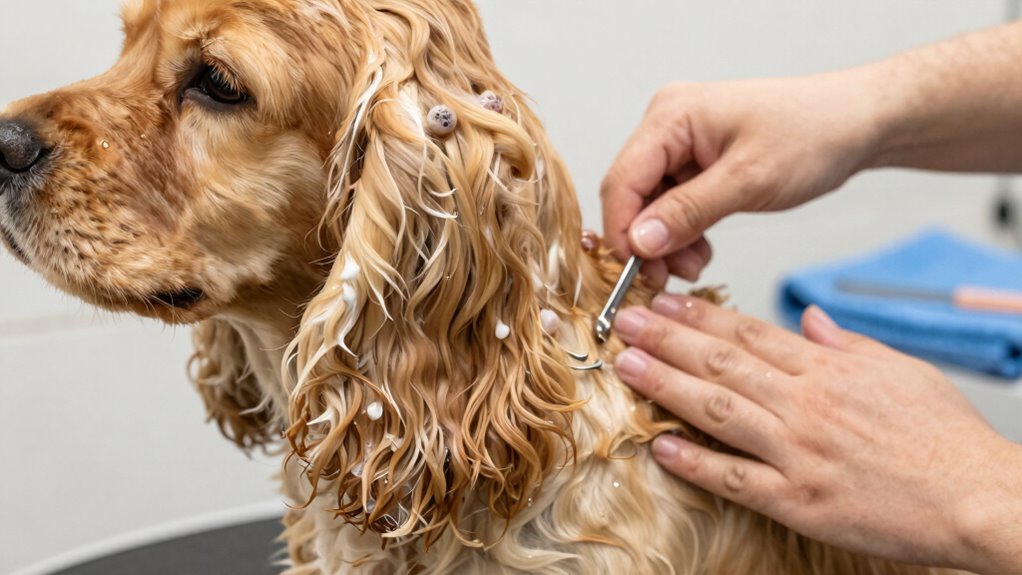
When our Cocker Spaniel starts smelling off, we don’t just reach for the shampoo—we look closer at their skin. Skin issues like seborrhea are common in our breed, causing a musty odor from excess sebum and yeast.
Left unchecked, this leads to greasy coats and flaky patches, especially along the back and ears. Allergies or hormonal imbalances often fuel these flare-ups, making our dog scratch or lick obsessively, which opens the door to bacterial infections and worse smells.
We keep a close eye on hot spots, redness, or thickened skin—early signs that need a vet’s touch. Regular grooming helps: we bathe every 2–4 weeks with a vet-approved medicated shampoo to manage buildup.
We also dry skin folds thoroughly after baths to stop moisture from trapping bacteria. A diet rich in essential vitamins and minerals supports skin health and reduces odor-causing inflammation. Diet matters too—we feed omega-3-rich foods, like fish oil supplements (1,000 mg EPA/DHA daily for a 25 lb dog), to strengthen the skin barrier.
Keeping Your Cocker’s Breath Fresh and Healthy
If your Cocker Spaniel’s breath has taken a turn for the worse, we don’t wait—we act. We brush their teeth at least 2–3 times a week with dog-friendly toothpaste, because consistency prevents plaque and fights odor at the source.
We reach for dental treats and chew toys designed to scrub gums and encourage saliva production, reducing bacteria between brushings. But we also know bad breath isn’t just about hygiene—it can signal deeper issues like gum disease or organ trouble.
That’s why we schedule routine vet check-ups, insisting on dental assessments every visit. We pay close attention to our dog’s diet, too.
We choose food rich in high-quality ingredients and omega-3 fatty acids, which support gum health and may reduce unpleasant mouth odor. For additional dental support, we incorporate natural chews like bully sticks, which can reduce plaque by at least 32% through mechanical scraping action. A balanced, nutrient-dense diet doesn’t just fuel their body—it strengthens their whole system, starting with their mouth.
When we care for their breath, we’re not just chasing freshness. We’re protecting their health, one mindful choice at a time.
Addressing Anal Gland Issues Promptly
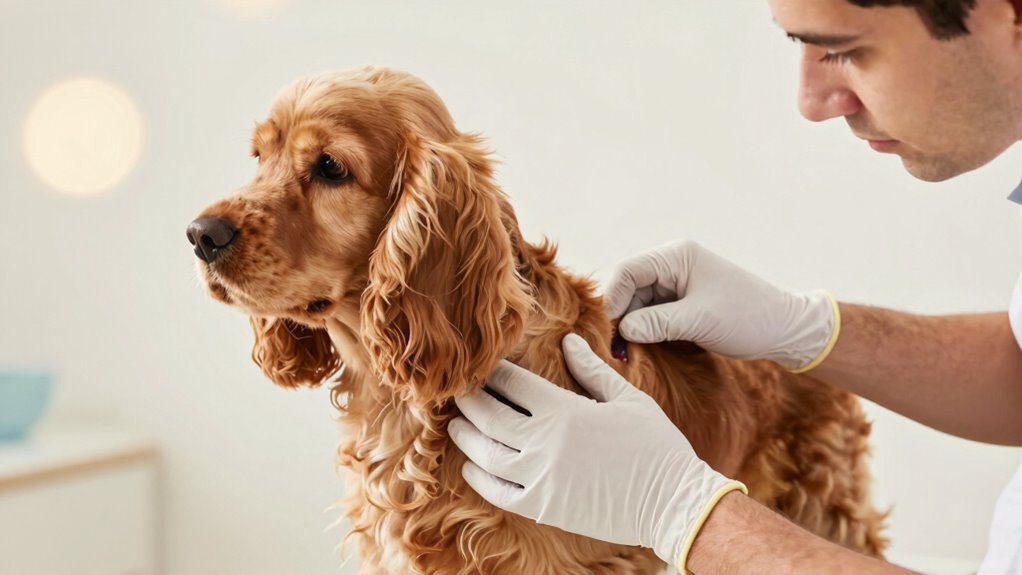
Though we can’t always see it, the source of a lingering fishy smell in our Cocker Spaniel often points to the anal glands. When these small sacs near the rectum don’t empty properly, we’re left dealing with anal gland issues that cause odor—and discomfort for our best friend.
The good news? We can catch this early and keep our pup feeling like himself again.
Here’s what to watch for:
- Scooting – When our Cocker drags their rear across the floor, it’s a telltale sign of blocked glands.
- Excessive licking – If they’re constantly grooming their back end, they’re likely trying to relieve pressure.
- Foul, fishy odor – A stench that won’t quit, even after bathing, points straight to impacted anal glands.
We know bowel movements should naturally express the glands, but when they don’t, a vet can manually express them safely.
Ignoring anal gland issues can lead to infections, so we act fast. A high-fiber diet supports firm stools, helping prevent future flare-ups. Supporting tissue building and repair through proper nutrition also contributes to your Cocker’s overall immune defense and recovery.
When we stay alert and respond promptly, our Cocker stays comfortable and fresh-smelling—just the way we love them.
Reducing Gas-Related Odors Through Diet
We’ve tackled the fishy aftermath of full anal glands, but another common culprit behind our Cocker Spaniel’s less-than-pleasant aroma hides in plain sight—diet-related gas. What we feed them directly impacts how they feel—and smell. Switching to high-quality, easily digestible food reduces gut fermentation and foul gas. We’ve seen real improvements by moving from chicken-based kibble to gentle alternatives like fish or lamb-based formulas. Fillers and artificial additives? We skip those—they only stir up digestive trouble. Instead, we prioritize foods rich in omega-3 fatty acids, which support gut health and reduce inflammation. Small changes make a big difference in their comfort and freshness.
Let’s compare options:
| Protein Source | Fatty Acids (per cup) | Common Gas Reduction? |
|---|---|---|
| Chicken | Low | No |
| Fish | High (Omega-3) | Yes |
| Lamb | Moderate | Yes |
| Grain-heavy mix | Very low | No |
We monitor our pup’s response closely, adjusting as needed. A tailored diet keeps their system smooth and smelling sweet.
Preventing Urinary Tract Infections and Odors

Because a healthy urinary tract means fresher odors and a more comfortable dog, we take prevention seriously. As fellow dog lovers, we understand how worrying it feels when something’s off—especially when urine smells stronger than usual or your pup seems uncomfortable. UTIs aren’t just smelly; they can cause real discomfort. But with a few mindful habits, we can lower the risks together.
- We always keep fresh water available—hydration dilutes urine and flushes bacteria, cutting infection chances.
- We offer frequent bathroom breaks; letting her out every 4–6 hours prevents urine from stagnating in the bladder.
- We feed a balanced diet rich in high-quality protein and essential nutrients to support strong urinary health and reduce odor at the source.
We watch closely for changes—like urgency, whining while peeing, or accidents indoors—because early action saves pain. When in doubt, we call the vet.
Catching a potential UTI fast means quicker relief and fewer smelly surprises. This is how we care, how we protect, and how we stay close to our dogs—body, mind, and scent.
Establishing a Consistent Grooming Routine
A fresh-smelling Cocker Spaniel starts with what we do at home—regular grooming. We prevent odors and health issues by staying on top of brushing, bathing, and ear care. Regular brushing isn’t just about looks—it stops mats and traps loose hair before it clumps. Let’s break it down:
| Task | Frequency | Why It Matters |
|---|---|---|
| Regular brushing | Every 2–3 days | Prevents matting, reduces shedding |
| Bathing | Weekly | Controls natural odor, cleans skin |
| Ear cleaning | 1–2 times/week | Prevents infections that cause smell |
| Full coat trim | Every 6–8 weeks | Keeps coat manageable and hygienic |
We use dog-specific shampoo and always rinse thoroughly—leftover soap irritates skin. When we lift those floppy ears, we’re not just bonding—we’re checking for redness or wax. Weekly baths help, especially if our pup splashes through puddles. This routine keeps them smelling like sunshine, not “dog.” We’re not just cleaning—we’re connecting. And every swipe of the brush builds trust, one stroke at a time.
Frequently Asked Questions
How Do I Stop My Cocker Spaniel From Smelling?
We stop our cocker spaniel from smelling by practicing regular grooming techniques together—weekly baths, ear cleanings, and brushing keep them fresh. We switch to fish-based diets and connect with fellow owners—we’ve got this, one cuddle and care ritual at a time.
How Often Should You Bathe a Cocker Spaniel?
We bathe our Cocker Spaniel weekly—too little, and the smell lingers; too much, and their skin suffers. Bathing frequency strikes a balance we’ve learned to trust through touch, smell, and love. We listen closely, adjusting as life and weather change.
Is a Cocker Spaniel Smelly?
Yes, we find Cocker Spaniels can get smelly, but we combat it with consistent grooming techniques. We bathe weekly, check ears often, and tweak diets when needed, keeping our pups fresh and close to our hearts.
How to Keep a Cocker Spaniel Clean?
We keep our Cocker Spaniel clean with gentle, weekly baths—we call it our little ritual. Our grooming techniques include soft brushing, ear checks, and using skin-safe wipes; it’s our way of staying close, keeping him fresh, and loving every moment together.
Conclusion
We’ve tackled every odor frontier: ears, skin, teeth, glands, gut, and more. Yes, Cocker Spaniels can stink—seriously, overwhelmingly, laundry-room-clearing levels if ignored. But with weekly ear cleanings, bi-weekly medicated baths, daily tooth brushing, and quarterly vet gland checks, they stay fresh. We feed them 100% grain-free kibble, monitor hydration, and dry ears post-bath to 100% humidity. Stick to this, and your spaniel won’t just smell clean—they’ll *stay* museum-of-freshness level pristine.