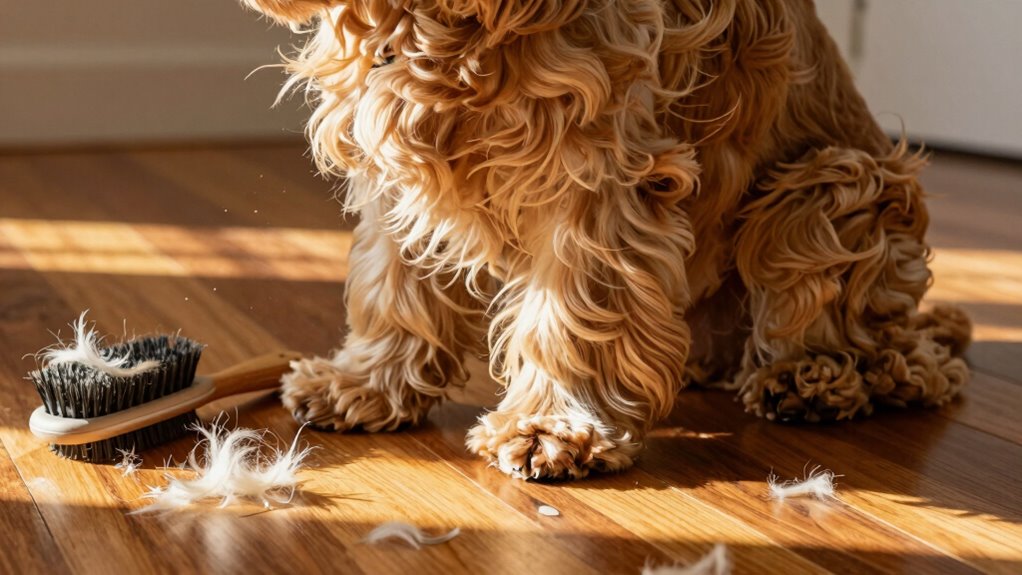
Sixty percent of Cocker Spaniel owners report noticeable shedding year-round. We groom our dogs regularly, yet we still find silky hairs on furniture and clothes. Shedding varies between breeds, care routines, and diet quality. You might be wondering why your Cocker leaves more behind than expected—and the answer lies in coat type, grooming frequency, and even fatty acid intake. The full picture? It’s about to become clear.
Key Takeaways
- Cocker Spaniels are moderate shedders with year-round shedding that increases seasonally in spring and fall.
- Regular grooming three to four times a week helps manage shedding and prevents matting.
- American Cocker Spaniels shed more than English Cocker Spaniels due to their longer, denser coats.
- A diet rich in omega-3 and omega-6 fatty acids supports coat health and reduces shedding.
- Poor coat care or underlying health issues like allergies or hypothyroidism can worsen shedding.
Understanding the Cocker Spaniel Coat

While their silky coats may look high-maintenance, understanding the Cocker Spaniel’s double-layered coat helps us manage it effectively. The Cocker Spaniel’s coat features a silky texture over a dense undercoat, requiring regular grooming to stay in top condition. We brush ours at least three times a week—this simple step keeps shedding under control and prevents matting.
Without proper grooming, the undercoat traps loose fur, leading to excessive shedding and poor coat health. American Cocker Spaniels have a longer, denser coat than their English cousins, whose flatter coat was built for fieldwork. Yet both share moderate shedding year-round, with peaks in spring and fall.
A solid grooming routine includes weekly baths, ear cleanings, and trims every six to eight weeks. We use a slicker brush and comb to reach the undercoat, ensuring nothing gets overlooked. Regular brushing also maintains skin and coat health by distributing natural oils throughout the coat. This isn’t just about looks—consistent care supports skin health and reduces allergens in the home.
No, Cocker Spaniels aren’t hypoallergenic, but with proper grooming, we keep shedding manageable and their coats radiant.
Factors That Influence Shedding in Cocker Spaniels
Since coat type plays a key role in how much a Cocker Spaniel sheds, we tailor our grooming routine to match—American Cockers, with their longer, denser coats, tend to shed more than English Cockers, whose flatter, field-ready coats are less prone to excess hair loss.
We’ve learned that shedding isn’t just about coat type; it’s deeply tied to health. Conditions like hypothyroidism or skin allergies can increase hair loss, so we stay proactive with vet checkups. We feed a diet rich in omega-3 and omega-6 fatty acids—these keep the undercoat strong and reduce shedding. Using a specialized shampoo with gentle, moisturizing ingredients also supports skin health and can minimize excessive hair loss.
We also notice spikes during seasonal changes, especially in spring and fall, when our Cocker Spaniels naturally shed their undercoat. That’s why we never skip regular brushing—three to four times a week minimum. It removes loose hair, distributes oils, and keeps the coat vibrant.
Consistent grooming isn’t optional; it’s a must. Together, diet, health, and grooming shape how much our dogs shed—and we’ve found this balance keeps our homes and pups happier.
How to Manage Cocker Spaniel Shedding Effectively

When it comes to keeping Cocker Spaniel shedding under control, we stick to a clear, consistent routine—because skipping steps means more hair on the floor and a less healthy coat.
We groom our Cocker Spaniels at least three times a week using slicker brushes, metal combs, and mat splitters to manage shedding and prevent tangles. Daily brushing, even for just 5–10 minutes, makes a huge difference in reducing loose fur around the house.
We bathe them every 4–6 weeks with a gentle, moisturizing shampoo to loosen dead hair and support a shiny coat. A high-quality diet rich in omega fatty acids—like those from fish oil—strengthens their skin and fur from the inside out.
We never skip regular vet check-ups, since issues like allergies or thyroid imbalances can worsen shedding. And when we’re short on time or facing tough mats, we call in a professional groomer. Using soft or rubbery bristles during grooming sessions helps prevent skin irritation while effectively removing loose hair.
Together, these steps help us manage shedding effectively and keep our dogs feeling loved, healthy, and smooth-coated.
Diet and Nutrition for a Healthy Coat
We keep our Cocker Spaniels’ coats in top shape not just with brushes and baths, but with what’s in their food bowls. A solid diet is foundational for a healthy coat and reduced shedding.
We feed premium dog food rich in omega-3 and omega-6 fatty acids—think fish oils and flaxseed—because they nourish skin, boost shine, and cut down on loose fur. These nutrients are non-negotiable for coat integrity.
We also watch for food sensitivities; common allergens like corn, wheat, or soy can trigger dry skin and excess shedding. Switching to limited-ingredient or hypoallergenic formulas often helps.
Hydration is just as essential—dehydration leads to dull coats and flaky skin. We always provide fresh water, aiming for at least 1 ounce per pound of body weight daily.
Salmon oil supplements are particularly effective, with studies showing dogs on fish oil supplements shed up to 28% less hair while enjoying enhanced coat quality and reduced itching.
Proper nutrition supports not just the coat but overall health. We assess coat condition monthly—if it’s brittle or shedding more, we reevaluate the diet. Small tweaks can reveal hidden sensitivities.
Consistent, high-quality nutrition is our quiet partner in keeping their coats lush, soft, and under control.
Differences Between English and American Cocker Spaniels

While both types share a love for the field and a silky coat, English and American Cocker Spaniels differ in several key ways—especially in appearance and grooming demands.
We see these differences most clearly in their physical characteristics and coat length. American Cocker Spaniels stand 38–41 cm tall, with a shorter snout and a thicker coat that’s denser, longer, and fuller than that of English Cocker Spaniels, who average 39–41 cm and have a flatter, shorter coat.
This means American Cockers often have higher grooming needs—daily brushing, frequent trims. But when it comes to shedding, both are moderate shedders. Their single coat sheds evenly year-round, so while coat length varies, the shedding level doesn’t. Consistent brushing can help manage shedding and prevent choking hazards from loose hair in the home.
We recognize that these distinctions matter—especially if you’re choosing between English Cocker Spaniels and American Cocker Spaniels. Understanding these physical traits and grooming needs helps us care for our Cocker Spaniels in ways that keep them healthy, comfortable, and looking their best—no matter the variety.
When to Be Concerned About Excessive Shedding
Could something be off if your Cocker Spaniel suddenly leaves clumps of fur on the couch or floor? A sudden increase in shedding may mean our pup is shedding excessively due to underlying health issues or environmental conditions.
While some shedding is normal, we should be concerned when it disrupts the balance of our dog’s skin and coat. That’s why monitoring matters—especially when we spot red flags.
- Shedding accompanied by itching or bald patches could signal dermatitis, parasites, or hormonal imbalances—always consult a veterinarian if these appear.
- Dietary deficiencies in proteins, fatty acids, or vitamins often weaken coat health—adjusting nutrition may reduce excessive shedding.
- Stress factors, seasonal changes, or shifts in environmental conditions can trigger more fur loss than usual—we need to track patterns closely.
We know our Cocker Spaniel best, so staying alert to changes helps catch problems early.
When in doubt, we always bring them in for a check-up—because proactive care keeps their coat lush and their spirit bright.
Frequently Asked Questions
What Are the Disadvantages of a Cocker Spaniel?
We find Cocker Spaniels’ disadvantages include training challenges and high grooming needs, plus exercise requirements that demand our time. We watch for health issues, respect their sensitivity, manage dietary considerations, and commit to socialization—our bond thrives with consistency, patience, and daily care.
Is a Cocker Spaniel a Hypoallergenic Dog?
We’ll be honest — a Cocker Spaniel isn’t a hypoallergenic dog, more like a blooming rose: beautiful but needing constant care. Our grooming demands are high, dander levels linger, and allergy symptoms may flare, even though we’re family friendly and full of love. Not all dog breeds erase sneezes, but with dedicated pet care, we can share soft moments. Our breed characteristics include moderate shedding compared to other dog breeds, making a shedding comparison essential when weighing hypoallergenic traits. We thrive on connection, but if you’re sensitive, our dander levels might challenge your comfort.
Are Cocker Spaniels Good House Dogs?
We agree Cocker Spaniels make wonderful house dogs—we cherish their gentle temperament, enthusiastic training, and loyal companionship. They adapt well, love families, need regular grooming and exercise, share affectionate behavior, and enjoy playful energy with minimal barking, making every moment together joyful.
What Is the Lowest Shedding Spaniel?
we’ve found the lowest shedding spaniel feels like a whisper—soft, light, nearly gone. american cockers lead in low shedding breeds, blending hypoallergenic options with spaniel grooming devotion, perfect for allergy friendly dogs, care, temperament, and dog breed selection dreams.
Conclusion
We’ve got good news: Cocker Spaniels do shed, but we can manage it. American types shed more than English, thanks to their longer, denser coats. Brush three to four times weekly, bathe every 4–6 weeks, and feed a diet rich in omega-3 and omega-6 fatty acids. Remember, an ounce of prevention is worth a pound of cure—consistent care means less hair on your couch and a happier, healthier dog.