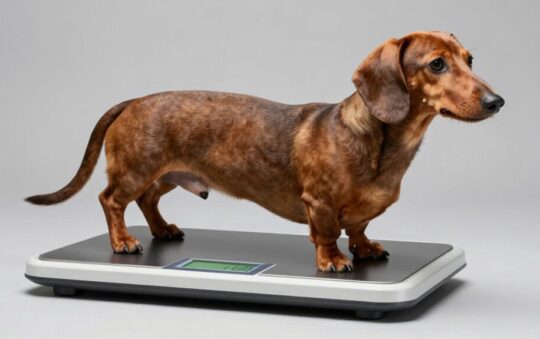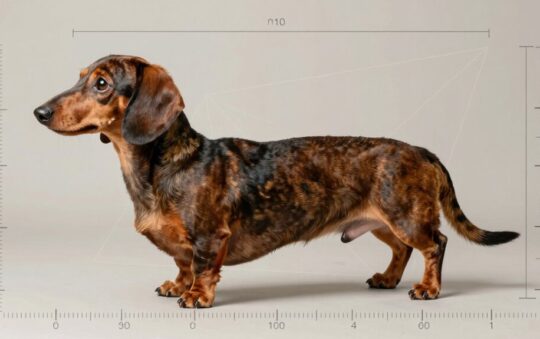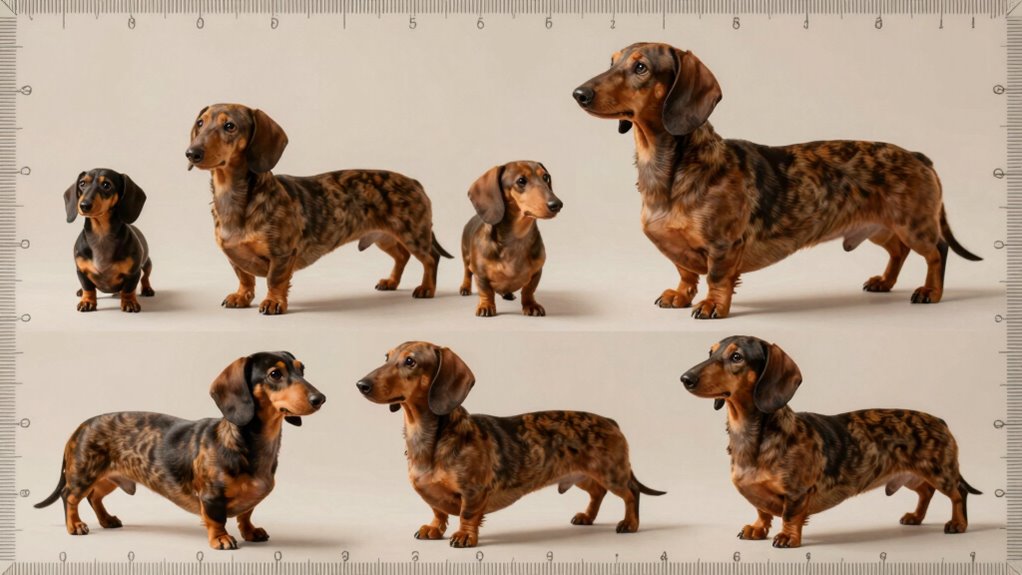
We’ve all seen Dachshunds that barely tip the scale at 8 pounds and others that push 32. That range isn’t random—it’s shaped by genetics, age, diet, exercise, metabolism, spay/neuter status, and health. These factors interact in real time, every day. Get one wrong, and your dog’s weight shifts. Get all seven right, and you’ve got a healthy, balanced Dachshund built to thrive. The details? They matter more than you think.
Key Takeaways
- Genetics play a key role in determining whether a Dachshund reaches Miniature (under 11 lbs) or Standard (16–32 lbs) adult size.
- Most Dachshunds reach full size by eight months, with Standards nearing 12–25 lbs and Miniatures 6–8 lbs by four to six months.
- Proper diet with controlled portions and high-quality nutrients helps prevent obesity and supports healthy growth.
- Regular, low-impact exercise like short daily walks maintains ideal weight and protects the spine from injury.
- Spaying or neutering can reduce metabolism, requiring dietary adjustments to avoid weight gain.
Genetics and Breed Lineage

While we can’t control the genes a Dachshund inherits, we can predict and understand how they shape size and structure. Genetics are central to your dog’s development—determining whether they’ll settle into the compact frame of a Miniature Dachshund, under 11 pounds, or grow into the heftier build of a Standard Dachshund, weighing 16 to 32 pounds.
We rely on breed lineage to guide these predictions. Puppies from larger parents often reach greater adult sizes; those from smaller lines tend to stay petite. Even within the same litter, genetic variation means siblings may differ in size.
We check parental weight and structure before breeding to help forecast outcomes. This insight lets us set realistic expectations. You’re not just guessing—you’re informed. Understanding your Dachshund’s background helps you honor their natural size. Supporting your Dachshund’s healthy growth through proper nutrition and joint support supplements can help them develop according to their genetic potential.
Whether you’re raising a Miniature or Standard Dachshund, genetics pave the path. We can’t change DNA, but we can work with it—supporting healthy growth, managing weight, and celebrating the dog they’re meant to be.
Age and Growth Stage
As your Dachshund grows, we can track key milestones to understand when they’ll reach their full size. Most Dachshund puppies hit their adult height and healthy weight by eight months of age, though some subtle filling out may continue.
By six months, an adult Standard Dachshund typically weighs 12 to 25 pounds and stands 8 to 9 inches tall. Miniature puppies usually weigh 6–8 pounds by four months—a helpful benchmark for healthy weight.
Growth rates slow noticeably after eight months, but individual dogs vary. We realize you want the best, so we remind you: weight gain isn’t uniform, and genetics play a role.
Dachshund owners should monitor age-related changes closely. While your Dachshund puppy may seem small now, steady growth is normal. Still, every pup is different. Understanding weight capacities and measurements can help you select appropriate products like car seats as your dog grows.
We recommend regular vet check-ins to assess development. These visits help confirm your dog is on track, ensuring a smooth changeover to adulthood.
We’re here to help you support your companion with confidence—because we care as much as you do.
Diet and Caloric Intake

Because your Dachshund’s long body and short legs create unique health demands, we focus on a diet that fuels energy needs without adding excess weight.
We understand a healthy Dachshund thrives on a balanced diet rich in digestible, nutrient-rich ingredients. Proper caloric intake is key—too much, and obesity becomes a risk; too little, and energy drops.
We practice portion control, splitting meals into two or three smaller feedings daily to aid digestion and support weight management. We avoid table scraps—high in fat and salt—because they sabotage progress. Instead, we use high-quality, calorie-dense treats, counting them toward the daily total.
Every Dachshund is different, so we consult our veterinarian to tailor food choices and portions. A consistent routine keeps caloric intake steady.
We prioritize whole proteins, fiber, and essential fats. Some owners find that raw meat diets offer improved digestibility and nutrient absorption, which can support weight management goals. This isn’t just about food—it’s about building lifelong health. Through mindful feeding, we help our Dachshund stay lean, strong, and joyful.
Activity Level and Exercise Routine
When it comes to keeping our Dachshunds healthy and strong, we prioritize regular, spine-smart exercise that matches their unique body structure. Our activity level directly supports weight management and helps prevent obesity-related issues like joint stress and intervertebral disc disease (IVDD).
We understand a healthy Dachshund thrives on consistent, balanced exercise—think two to three short walks daily, each lasting 15–20 minutes, plus gentle play. We avoid high jumps, steep stairs, or long runs; instead, we choose flat surfaces and low-impact movement.
Regular exercise isn’t just about burning calories—it’s about building stamina, muscle tone, and spinal stability. For standard pups weighing 12 to 25 pounds at six months, an exercise routine tailored to their growth stage sets the foundation for lifelong health. A proper feeding strategy, including the use of slow feeders to prevent overeating, can work alongside exercise to support healthy weight management.
We stick to moderate sessions over intense bursts, protecting their long backs while keeping them lean. A balanced exercise plan, combined with smart feeding, keeps our Dachshund’s body condition score at the ideal 4–5.
We stay consistent, we stay mindful, and we give our pups the active life they need—safely, every single day.
Metabolism and Individual Variations

While no two Dachshunds are exactly alike, we recognize that metabolism and individual differences play a major role in how each dog maintains weight and builds muscle.
Even within the Dachshund breed, metabolism varies—some dogs burn calories quickly, others store them more easily. That’s why we rely on the Body Condition Score (BCS), a hands-on assessment of body shape and fat cover, to guide us toward each dog’s ideal weight.
Scales alone can’t capture individual variations. Genetics, health, diet, and daily exercise all shape how a Dachshund grows and maintains weight.
Puppies, for instance, grow at different rates—some shoot up fast, others steadily. Regular vet check-ins help track these shifts.
We adjust food portions and activity based on BCS, not just numbers. Monitoring metabolism means catching changes early.
Daily exercise remains key: walks, play, mental engagement. Together, these habits support long-term health. Just as grooming tools help manage a dog’s coat health, consistent exercise routines help manage a dog’s overall metabolic wellness.
There’s no universal number—only what’s right for your dog. We’re in this together, watching, learning, and adapting.
Neutering or Spaying Effects
Spaying or neutering your Dachshund is a common and responsible step, often done to support long-term health and behavior. But we should talk about something just as important: how it affects their weight. After neutering or spaying, hormonal shifts can slow metabolism and boost appetite, raising the risk of obesity. That’s why we monitor changes closely—especially in Dachshunds, whose body condition score (BCS) can decline fast without intervention. A healthy weight isn’t just about looks; it’s about mobility, joint health, and preventing diabetes.
We’ve got your back with these key actions:
| Action | Why It Matters |
|---|---|
| Adjust daily calories | Reduces risk of post-spaying/neutering weight gain |
| Increase light exercise | Supports metabolism and muscle tone |
| Track BCS monthly | Catches weight changes early |
| Use portion control | Prevents overfeeding |
| Monitor weight trends | Keeps long-term health on track |
Stay close to your vet, and let’s keep your Dachshund lean and lively together.
Health Conditions and Medical Factors
Because dachshunds are prone to specific health issues, we keep a close eye on how medical conditions influence weight and overall wellness.
Intervertebral disc disease (IVDD) is a leading concern—it limits mobility, often causing reduced activity that can shift Dachshund weight toward obesity. We watch for sudden weight loss too, as it may signal underlying health conditions like metabolic diseases or organ issues.
Obesity complicates things further, increasing risks for arthritis and diabetes, which in turn affect your dog’s quality of life. Regular veterinary evaluations help us catch these problems early.
We track changes in appetite, energy, and body condition closely—small shifts matter. Metabolic diseases can quietly disrupt weight management, making consistent checkups non-negotiable.
We don’t ignore even modest weight changes; they’re clues. Addressing health conditions promptly supports not just ideal Dachshund weight but long-term well-being.
We work with vets to tailor diet, exercise, and treatment plans. Together, we protect mobility, comfort, and joy.
Your dachshund’s best quality of life starts with proactive, informed care.
Frequently Asked Questions
What Is an Unhealthy Weight for a Dachshund?
it is understood an unhealthy weight for a dachshund shows in dachshund obesity signs like a bcs over 6, and we manage it with weight management, healthy diet, exercise routines, vet recommendations, and attention to growth stages, breed standards, and serious health risks.
What Are the Three Sizes of Dachshunds?
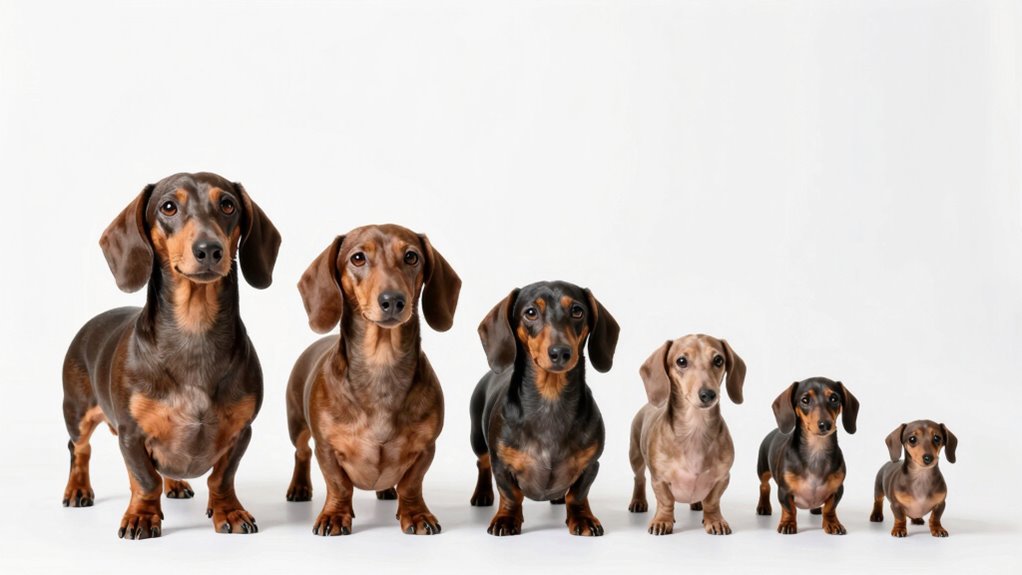
we’ve got three dachshund sizes: miniature dachshund features charm in under 11 pounds, standard dachshund traits pack more heft, and rabbit—well, toy dachshund differences? they’re not toys, just tiny. we navigate dachshund size variations, growth patterns, health concerns, and choosing dachshund size together—intimately.
How Much Weight Fluctuation Is Normal for Dogs?
we see 1–5% weight fluctuations as normal, tied to growth stages, age factors, and seasonal changes. we watch for breed differences while managing weight with a healthy diet, exercise routines, and awareness of medical conditions that could disrupt balance.
How Much Should a Miniature Dachshund Weigh at 4 Months?
We think our puppy, Luna, hit 7 pounds at 4 months—right in the sweet spot for miniature dachshund weight milestones. We follow feeding guidelines, track puppy growth, and never skip vet check ups to avoid health concerns and support healthy weight management.
Conclusion
We’ve shown that Dachshund size isn’t random—it’s shaped by seven clear factors. Genetics sets the blueprint: standard (16–32 lbs) or miniature (under 11 lbs). Age, diet (500–700 kcal/day for adults), exercise (30+ minutes daily), and neutering (metabolism drops 20–30%) all influence weight. Individual metabolism varies. Health issues like hypothyroidism can add 10%+ body weight. Track these, and we keep our dogs healthy, predictable, and thriving.