
Our neighbor’s Cocker Spaniel, Max, needed surgery at two years old due to a luxating patella—one of five common health issues in the breed. These dogs often face ear infections, hip dysplasia, eye disorders, and skin problems, too. We’ll walk you through each, with clear signs to watch for, average onset ages, and what vets typically recommend. You’ll want to know what comes next.
Key Takeaways
- Cocker Spaniels’ long ears trap moisture, leading to frequent yeast, bacterial, or mite infections requiring regular cleaning.
- Hip dysplasia, a genetic joint issue, causes limping and instability, preventable through responsible breeding and early detection.
- Luxating patella occurs when the kneecap dislocates, causing lameness or skipping gait, manageable with weight control and therapy.
- Hereditary eye conditions like cataracts and PRA cause cloudiness and night blindness, detectable through routine eye exams.
- Skin infections from allergies and trapped moisture often result in itching, redness, and pyoderma needing prompt veterinary care.
Ear Problems
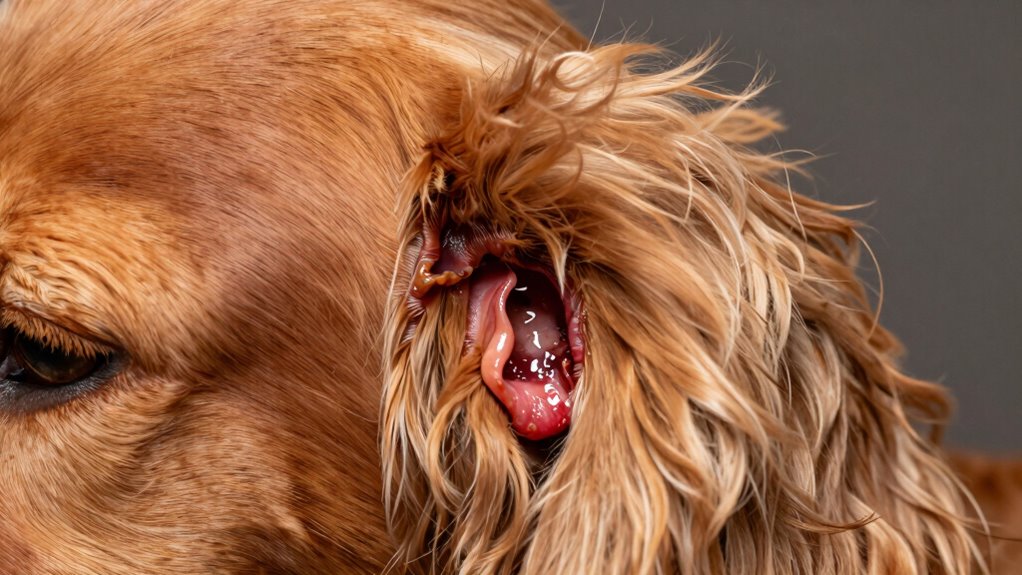
While their long, silky ears give Cocker Spaniels their signature look, it’s important to recognize that these same ears create a warm, moist environment perfect for trapping dirt and encouraging infections.
It’s understood that Cocker Spaniels are especially prone to ear problems—yeast and bacterial infections top the list, but ear mites creep in too. Left unchecked, trapped moisture sets the stage for discomfort and pain.
That’s why regular ear cleaning every 1–2 weeks is non-negotiable. Look closely: redness, discharge, or a sour odor are red flags. If your pup starts head shaking more than usual, we urge prompt veterinary consultation.
We’ve seen how quickly mild irritation turns into chronic issues. Prevention is simple: lift the ear flap, inspect the outer canal, use a vet-approved cleaner, and gently wipe. We recommend cotton balls—never Q-tips. Using a gentle shampoo with oatmeal and aloe vera as part of your regular grooming routine can also help reduce ear infections by soothing irritated skin.
Stay consistent, stay observant. Catching ear issues early means less pain for them and fewer vet visits for us. We’re in this together, keeping our Cockers happy, healthy, and head-shake free—one clean ear at a time.
Hip Dysplasia
Hip dysplasia strikes at the foundation of your Cocker Spaniel’s movement—the hip joint. This genetic condition causes joint instability, leading to pain and reduced mobility over time.
Though smaller breeds like ours aren’t the most prone, Cocker Spaniels can still develop hip dysplasia, making responsible breeding and health testing vital. Catching symptoms early—like limping or hesitation to rise—can preserve your pup’s quality of life.
We rely on veterinary check-ups and X-rays for early detection, giving us a real fighting chance. While there’s no cure, we manage it together with diet, gentle exercise, and physical therapy to keep those little legs moving smoothly. Supporting joint health with glucosamine and chondroitin in your dog’s diet can help cushion joints and reduce discomfort associated with hip dysplasia.
Here’s what we do to protect our pups:
- Choose breeders who practice responsible breeding with proven health testing
- Watch closely for early symptoms like stiffness or pain after play
- Schedule regular veterinary check-ups for early detection
- Use physical therapy to support joint health and maintain quality of life
Luxating Patella

We keep a close eye on our Cocker Spaniel’s joints, and just as we manage hip dysplasia with vigilance and care, we also watch for another common orthopedic issue—luxating patella.
This condition, common in Cocker Spaniels, occurs when the kneecap dislocates from its groove, causing discomfort and mobility issues. It stems from a genetic predisposition, often due to shallow joint development.
When the patella dislocates, symptoms like limping, skipping steps, or holding up a hind leg become noticeable. Severity varies—some cases resolve on their own, while others need surgery.
We rely on proven management strategies: physical therapy strengthens supporting muscles, controlled exercise maintains joint function, and weight management reduces strain. Keeping our Spaniels at a healthy weight is essential—each extra pound increases pressure on fragile joints. Just as portion control helps prevent obesity in dogs, maintaining optimal weight is crucial for joint health.
We stay proactive because early detection shapes better outcomes. Regular vet checks, attentive observation, and consistent care keep our dogs moving smoothly. We don’t wait for symptoms to worsen.
With love, knowledge, and action, we protect their joy in every step.
Hereditary Eye Disorders
When our Cocker Spaniels start squinting more than usual or stumble in low light, it’s time to look closer—hereditary eye disorders like cataracts and progressive retinal atrophy (PRA) are common in the breed.
These conditions can steal their sight quietly, but we can stay ahead with vigilance and care.
Here’s what we watch for together:
- Early signs like night blindness, bumping into furniture, or hesitation on stairs—subtle vision changes that hint at trouble.
- Cataracts, which show as cloudy spots on the lens and may appear young, sometimes by age 3.
- Progressive retinal atrophy, caused by abnormal retinal cell development, slowly leading to total blindness.
- Proactive steps: regular eye examinations, health testing, and choosing responsible breeders who screen for hereditary disorders.
We can’t change genetics, but we can honor our dogs with action. Supporting bone and dental health through proper nutrition, including dicalcium phosphate in balanced diets, contributes to overall wellness during their golden years. Annual checks, DNA tests, and certified screenings give our spaniels brighter futures.
Skin Infections

Cocker Spaniels often face skin infections that stem from their predisposition to allergies, moisture-trapping coats, and warm, folded skin areas where bacteria and yeast thrive.
It’s understood that these chronic issues well—itchy skin, inflammation, and excessive scratching are common red flags. Left unchecked, this often leads to pyoderma: red, pus-filled sores needing veterinary treatment, usually antibiotics.
We’ve seen how allergies trigger flare-ups, making daily grooming essential. Brushing, weekly baths with vet-approved shampoos, and drying skin folds disrupt the cycle. Regular brushing also supports skin and coat health by distributing natural oils, which can help reduce irritation and prevent secondary infections.
And don’t forget the ears—those long, floppy flaps trap moisture, raising risks for both ear infections and surrounding skin infections. We check ours every other day, cleaning gently with vet-recommended solutions.
Early signs like redness or head-shaking? We act fast. Prompt care prevents deep infections and systemic spread.
We track our dogs’ skin seasonally—spring and fall often bring peak allergy activity. With consistency in grooming and swift veterinary treatment when needed, we keep our Cocker Spaniels comfortable, healthy, and close to us—right where they belong.
Frequently Asked Questions
Do Cocker Spaniels Have a Lot of Health Issues?
Yeah, we’ll admit it—Cocker Spaniels do face quite a few health issues. We see it in their genetic predispositions, from ear infections to eye disorders. But with smart preventative care, regular vet checkups, and attention to grooming needs, we’re keeping them happy, healthy, and by our side longer.
What Is the Leading Cause of Death in Cocker Spaniels?
Cancer’s our biggest worry—it hits like a storm out of nowhere. We face cancer risks, heart disease, and genetic disorders, all tangled with age related illnesses. We stay close, watching for eye problems, ear infections, skin allergies, joint issues, dental health, obesity management, knowing love and care guide us through.
What Is the Average Life Expectancy of a Cocker Spaniel?
It is understood the Cocker spaniel lifespan averages 13–16 years, and we see how genetics impact longevity, diet influence, and exercise and lifespan shape their journey. We honor breed specific traits, share senior care tips, and recognize lifespan expectations variations and average lifespan factors, knowing health screenings importance helps us cherish each moment together.
What Are the Downsides of Cocker Spaniels?
we’ll be honest with you—cockers can be stubborn, bark a lot, and struggle with separation anxiety. they need consistent training, daily exercise, and tons of grooming. their floppy ears trap infections, their eyes may weaken over time, and without careful weight management, they’ll pack on pounds. we socialize them early to help them thrive.
Conclusion
We watch for ear infections, hip dysplasia, luxating patellas, hereditary cataracts, and skin flare-ups—because loving a Cocker Spaniel means preventing problems before they start. Ironically, their cheerful bounce and silky ears hide vulnerabilities: shallow ear canals, a 12–15% hip dysplasia rate, patellas that slip at 7–10 pounds of pressure, and allergy-prone skin. We check, clean, scan, and test—not out of fear, but focus. Proactive care turns risk into routine. We’ve got this.