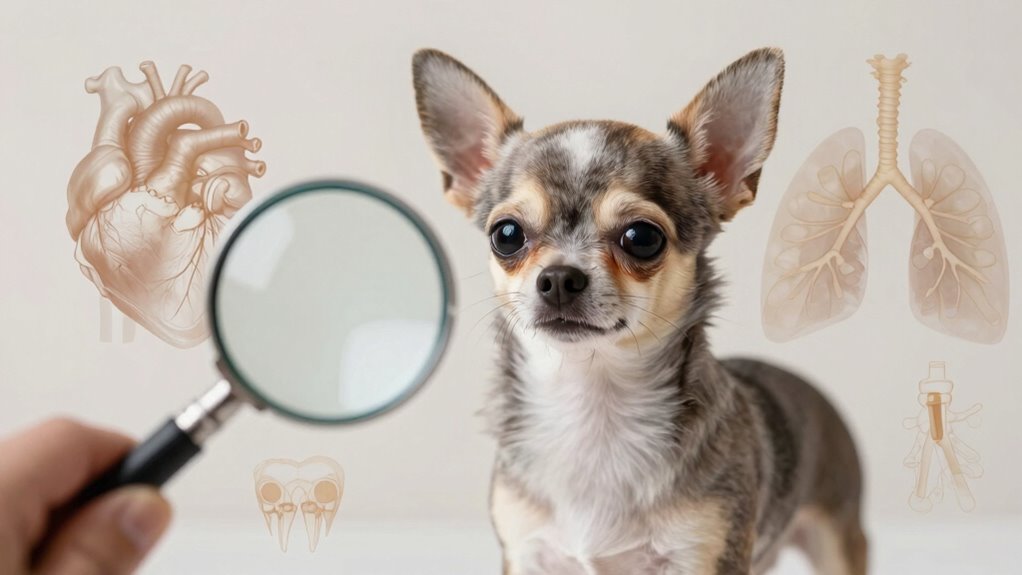
We see it all the time: tiny bodies, big personalities, and unique health needs. Chihuahuas weigh just 3 to 6 pounds, making them vulnerable to injuries and specific medical conditions. We’re talking dislocating kneecaps, shaky episodes from low blood sugar, and breathing troubles due to narrow windpipes. Dental disease starts as early as age two. Some face heart murmurs, weak hips, or fluid on the brain. Yet, with proactive care, most live 12 to 20 years. The real question is—how do we catch these issues before they escalate?
Key Takeaways
- Luxating patella causes kneecap dislocation, leading to limping and joint pain, especially in small breeds like Chihuahuas.
- Collapsing trachea results in a honking cough due to weakened airway cartilage, often worsened by excitement or pulling on collars.
- Hypoglycemia is common in puppies and tiny adults, causing weakness or seizures without frequent, balanced meals.
- Periodontal disease is prevalent due to crowded teeth, requiring daily brushing and cleanings to prevent pain and tooth loss.
- Hydrocephalus involves fluid buildup in the brain, detectable by domed skull or neurological signs like seizures and poor coordination.
Luxating Patella
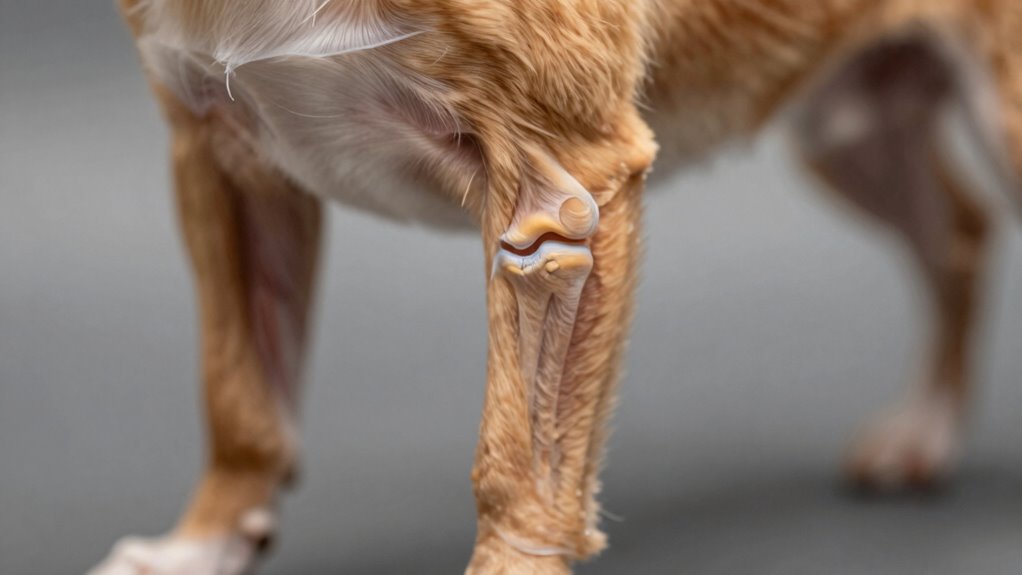
When it comes to mobility issues in Chihuahuas, luxating patella is one we can’t afford to overlook—it’s a hereditary condition where the kneecap slips out of place, a problem especially common in small breeds due to shallow knee grooves and slight leg alignment issues.
Our dogs’ small size makes them more vulnerable, and we need to stay alert. We’ll notice signs like limping, skipping steps, or hesitation to jump. Pain usually only flares when the kneecap dislocates.
During vet exams, we check joint looseness; X-rays reveal severity, plus any arthritis or bone changes. Managing luxating patella starts with keeping our Chihuahua at a healthy weight—every extra pound stresses those fragile knees.
We use joint supplements like glucosamine to support cartilage. In mild cases, that’s enough. For grade 3 or 4 luxations, surgery often becomes necessary to deepen the groove or realign tendons. Additionally, hydrolyzed collagen can complement these joint supplements by supporting healthy cartilage and enhancing overall joint flexibility beyond what glucosamine alone provides.
We stay proactive because early action leads to smoother walks, fewer vet visits, and a longer, more active life together. We’ve got this—knowledge, care, and love go a long way.
Hypoglycemia
We keep a close eye on our Chihuahua’s energy levels, and for good reason—hypoglycemia, or low blood sugar, hits small dogs hard, especially puppies and toy-sized adults. Hypoglycemia is one of the most critical Chihuahua Health Issues to watch for.
Signs like lethargy, drowsiness, weakness, disorientation, or even seizures mean trouble. If we spot these, we act fast—because hypoglycemia can turn serious without immediate veterinary attention. It’s not just about a quick sugar fix; recurring episodes may point to deeper health problems.
We prevent crashes with frequent small meals—every 3 to 4 hours for puppies, up to 4 times daily for tiny adults. High-quality food, rich in protein and complex carbs, keeps levels steady. Feeding our Chihuahua whole, natural foods rather than processed kibble can support better nutrient absorption and more stable blood sugar throughout the day.
We also monitor behavior closely, especially during stressful times or growth spurts. While home checks aren’t substitutes for vet visits, knowing the signs helps us protect our pup. Staying alert and proactive makes all the difference in managing low blood sugar and keeping our Chihuahua thriving.
Collapsing Trachea
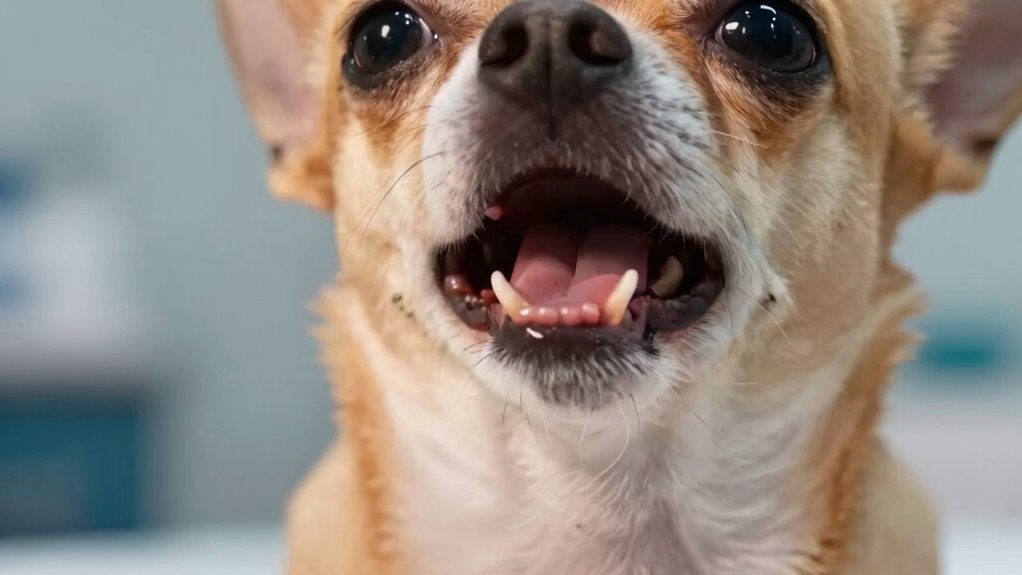
Though it’s small, a Chihuahua’s trachea can face big problems—collapsing trachea is one of the most common respiratory issues we see in the breed.
We recognize a collapsed trachea when the windpipe’s cartilage rings weaken, narrowing the airway. You’ll likely hear it first: a harsh “honking” cough, especially during excitement or exercise. Breathing issues follow, sometimes with labored inhalations or even blue gums from oxygen loss. It’s scary, yes—but manageable.
Diagnosis hinges on physical exams and X-rays to assess the degree of collapse. From there, we turn to treatments: cough suppressants, anti-inflammatories, and sometimes bronchodilators. Using harnesses instead of collars is particularly important for managing airway pressure and preventing further tracheal damage in affected dogs.
Equally important? Lifestyle tweaks—keeping your pup calm, using harnesses instead of collars, avoiding smoke or dust. Regular veterinary check-ups are non-negotiable. They let us catch early signs, adjust meds, and track progress.
We’ve seen dogs live well for years with proper care. Stay alert, stay consistent, and remember—we’re in this together. With attention and prompt action, your Chihuahua can still enjoy a full, cozy life by your side.
Periodontal Disease
Bad breath might seem like a small thing, but in Chihuahuas, it’s often the first red flag of a much bigger issue—periodontal disease.
We’ve seen it too often: tiny mouths with crowded teeth create the perfect trap for plaque buildup, leading to painful dental issues. Left unchecked, this inflammation can progress, making chewing hard or even unbearable.
We care deeply about keeping your pup comfortable and healthy, which is why prevention matters. Regular brushing at home and professional cleanings aren’t luxuries—they’re necessities. While dental chews can help supplement your brushing routine by reducing plaque buildup, they should never replace consistent oral care.
Here’s what we want you to remember:
- Small jaws mean less space, increasing plaque buildup and gum disease risk.
- Early periodontal disease leads to costly treatments—ManyPets reports average claims over $820.
- Daily brushing and vet cleanings greatly reduce dental issues and protect overall health.
We’re right here with you—every step of the way, guarding those tiny smiles.
Heart Disease
When it comes to heart health, Chihuahuas face a tough challenge—chronic valve disease is common in the breed and can silently progress if left unchecked. It’s worrying, but catching heart disease early makes all the difference. That’s why regular veterinary checkups are non-negotiable. During these visits, vets listen for heart murmurs and abnormal rhythms, often the first signs of trouble.
If something off is detected, diagnostic imaging like X-rays or echocardiograms helps us see the heart’s size, shape, and function. Early symptoms—like mild coughing, tiring easily, or heavy breathing after play—might seem small, but they’re clues that can’t be ignored. Supporting your Chihuahua’s overall vitality through peptide supplements may help enhance tissue repair and immune function alongside traditional cardiac management.
Here’s what proactive care looks like:
| Symptom or Sign | Detected By | Action Step |
|---|---|---|
| Heart murmurs | Physical exam | Schedule imaging |
| Labored breathing | Owner observation | Call vet promptly |
| Fatigue after activity | Daily routines | Limit exercise, seek evaluation |
| Abnormal rhythm | Regular veterinary checkups | Begin tailored treatment plan |
With early detection and consistent management—including meds and diet—we help keep their tiny hearts beating strong.
Eye Problems
Because their eyes are large and round, Chihuahuas face a higher risk of eye problems than many other breeds. We keep a close watch, because even small irritations can escalate quickly. Conditions like dry eye, glaucoma, and cataracts are common, but with regular veterinary check-ups, we catch them early.
We clean our Chihuahua’s facial area regularly to prevent buildup that could lead to infection or irritation. If we notice squinting, redness, or discharge, we don’t wait—we call the vet. Early action protects their vision and comfort.
- A single pet insurance claim for eye-related issues averages over $260, making prevention a smart, caring choice
- Dry eye isn’t just uncomfortable—it reduces tear production by up to 60%, increasing infection risk
- Regular veterinary check-ups every six months help spot subtle changes before they become serious
We’re in this together, protecting those sweet, wide eyes with love, vigilance, and smart care.
Obesity
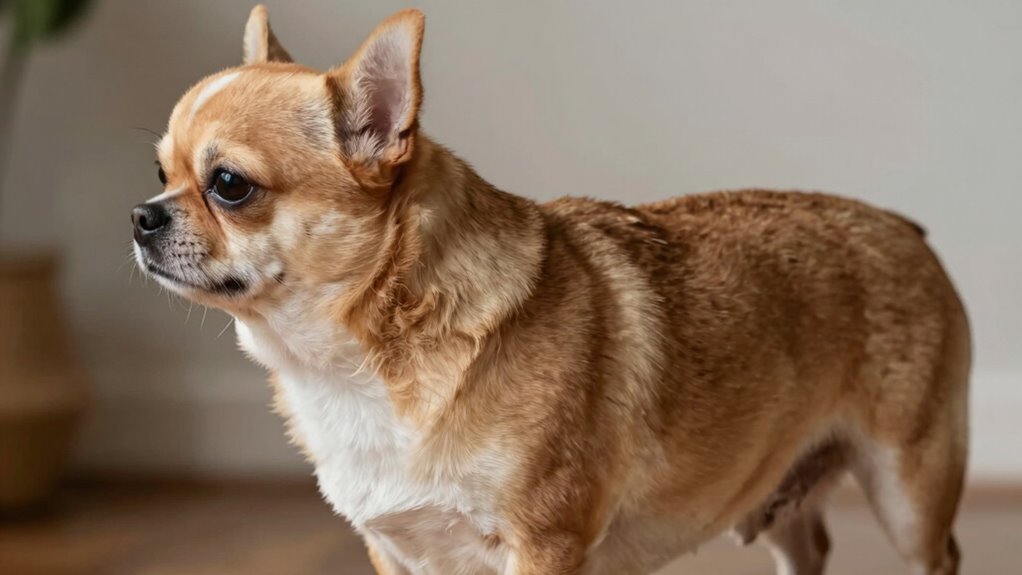
While their tiny frames make Chihuahuas irresistibly portable, it’s exactly that petite size—rarely exceeding six pounds—that demands strict attention to weight.
It’s clear how easy it’s to overfeed them; their food portions are small, but temptation runs big. Obesity creeps in fast and brings serious problems: joint stress, diabetes, and heart issues that shorten their lives. A healthy weight isn’t just ideal—it’s essential.
We keep our Chihuahuas at their best by measuring meals, skipping table scraps, and staying consistent. Daily walks and 15–20 minutes of playtime help maintain a healthy weight and keep their metabolism active.
Pure-bred Chihuahuas should never exceed six pounds—any more increases health risks and strains their heart. We also see proof beyond health: the average ManyPets claim for obesity-related care tops $240. That’s money and stress we’d rather avoid.
We’ve got the power to prevent this. With careful feeding, regular exercise, and vet check-ins, we keep our little ones light on their feet, happy, and healthy for years.
Hydrocephalus
Though we can’t always see it coming, hydrocephalus is a serious concern in Chihuahuas—one we need to recognize early. This condition, more common in small breeds, involves cerebrospinal fluid buildup due to an open molera, the soft spot on the skull.
Pressure on the brain can cause an enlarged head, seizures, or poor coordination. We can’t fix hydrocephalus completely, but with early detection and care, most pups live full, happy lives. Regular vet visits are non-negotiable, especially because symptoms can be subtle at first.
We’re in this together, and staying alert makes all the difference.
- An open molera isn’t rare, but sudden changes in behavior or walking mean it’s time to call the vet
- Hydrocephalus often shows up by six months—early detection improves outcomes dramatically
- Frequent, gentle check-ins on your Chihuahua’s head shape and movement help catch issues before they escalate
We’ve got the power to protect them when we act fast. Let’s keep our tiny warriors safe, one vet visit at a time.
Legg-Calve-Perthes Disease
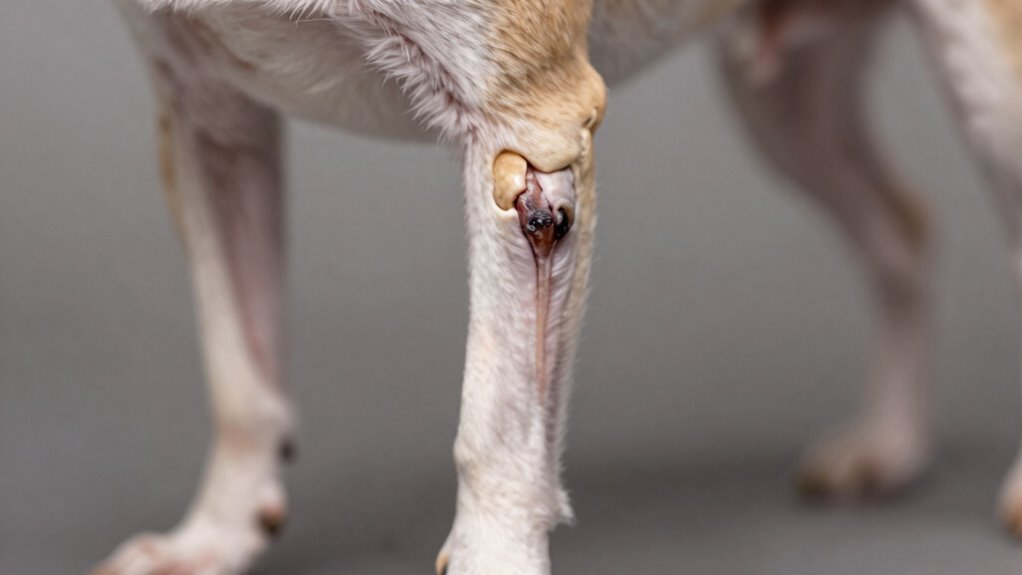
Legg-Calve-Perthes Disease hits close to home for many of us with Chihuahuas, especially as our pups hit the 4- to 6-month mark—right around the time we’re celebrating their first milestones.
This condition causes the femoral head to degenerate due to poor blood supply, leading to pain and mobility issues. We observe limping, reluctance to jump, or a bunny-hopping gait. Muscle atrophy in the thigh often follows. Small breeds like ours are most at risk.
We catch it early with X-rays showing clear changes in the hip joint. Left untreated, pain worsens and movement becomes harder. We fix this with surgery—femoral head ostectomy is standard. Recovery takes weeks, but most Chihuahuas regain near-normal function.
We watch closely during those early months. We act fast if limping lasts more than a few days. We protect their joints by limiting strenuous play.
We understand Legg-Calve-Perthes Disease isn’t curable, but we manage it well. With prompt care, our pups live fully. We stay alert, informed, and proactive—for their comfort and mobility.
Reproductive Issues
Because their tiny frames come with unique biological challenges, we keep a close eye on reproductive health in our Chihuahuas. Reproductive issues like pyometra—a life-threatening uterine infection—can escalate fast, especially in unspayed females. Males may face cryptorchidism, where one or both testicles don’t descend by six months, increasing cancer risk.
Complications during birth are common due to narrow birth canals, often leading to emergency c-sections. Hormonal imbalances also affect both sexes, altering behavior and skin health. These aren’t rare flukes—they’re real health problems we must predict.
We’ve learned that prevention and vigilance go hand in hand:
- Spaying or neutering isn’t just about population control—it drastically reduces risks of pyometra and testicular cancer.
- Tracking heat cycles and behavioral shifts helps us spot early signs of hormonal trouble.
- Scheduling regular veterinary check-ups every six months guarantees timely interventions.
We protect our little ones best when we act before crisis strikes. With consistent care, we help them live longer, fuller lives—on their own tiny, mighty terms.
Frequently Asked Questions
What Is the Most Common Disease in Chihuahuas?
We’ll tell you straight—heart disease is the most common illness in our Chihuahuas. We manage it closely, watch obesity risk factors, and never skip dental disease prevention. Together, we keep our tiny hearts beating strong.
What Is the Life Expectancy for Chihuahuas?
We’ve seen Chihuahuas live 14–16 years—nearly two decades! That’s amazing, right? Our Chihuahua lifespan thrives with love, routine vet visits, and smart choices. Let’s boost factors affecting longevity together through a healthy lifestyle tips routine we can stick to—because they’re family.
What Is the Leading Cause of Death for Chihuahuas?
It is understood heart disease is the leading cause of death for Chihuahuas, often affecting them more than dental problems or patellar luxation. We watch for coughing or fatigue, stay close, and go to the vet regularly—we don’t wait, because we want our tiny hearts to beat longer.
At What Age Do Chihuahuas Start Having Health Issues?
We start seeing health issues in our Chihuahuas as early as 3 to 5 years old. We watch for early symptoms together, commit to preventive care, and honor their breed genetics with love and closeness you can trust.
Conclusion
We’ve walked through the risks: knees that slip, tracheas that collapse, hearts that weaken. Hypoglycemia strikes fast—blood sugar below 60 mg/dL can be dangerous. Teeth matter—daily brushing prevents periodontal pockets over 3 mm. Small bodies mean every pound counts. We monitor, measure, act. These aren’t just facts—they’re tools. Watch closely. Prevent fiercely. Care deeply. Their next breath, step, heartbeat—depends on what we do now.