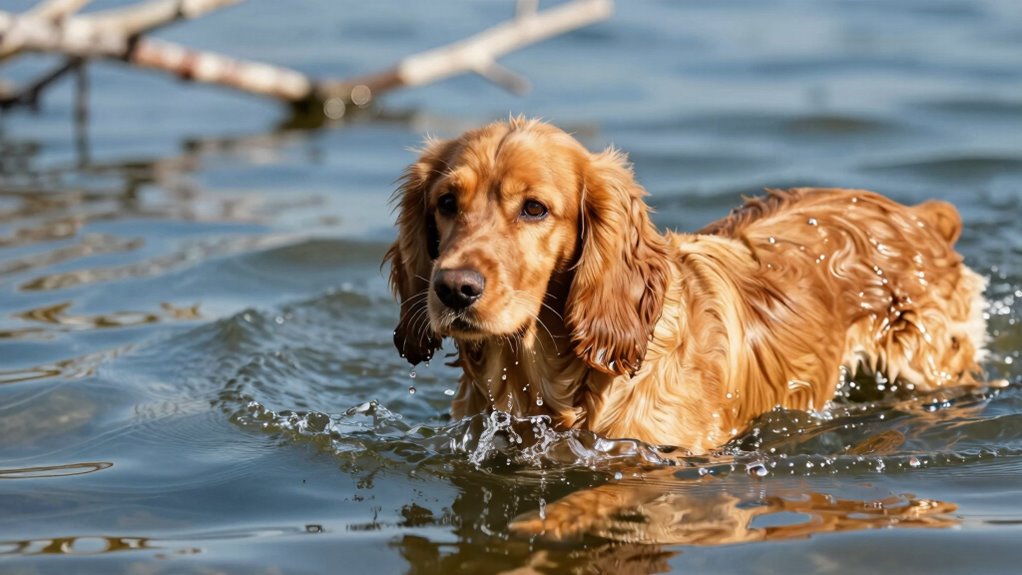
We take our Cocker Spaniels to the water because they’re built to love it—webbed toes, water-resistant coats, and an instinct to retrieve. But we don’t just toss them in. Puppies wait until six months, joints settled, always wearing a properly fitted life jacket with a handle. First dips are in under 6 inches of still, clean water. We watch for trembling, heavy panting, or hesitation. Short sessions, no exceptions. And we’ve learned the hard way: calm matters more than confidence.
Key Takeaways
- Cocker Spaniels have a natural affinity for water but should not swim until at least six months old for safety.
- Always use a properly fitted dog life jacket and a long leash to ensure control and buoyancy during swimming.
- Start in shallow, calm, clean water and limit sessions to 3–5 minutes to build confidence without causing fatigue.
- Avoid saltwater to prevent dehydration and stomach upset; rinse your dog thoroughly after swimming in any water.
- Watch for signs of distress like labored breathing or whining, and end sessions early to keep water play positive.
Understanding Your Cocker Spaniel’s Natural Instincts
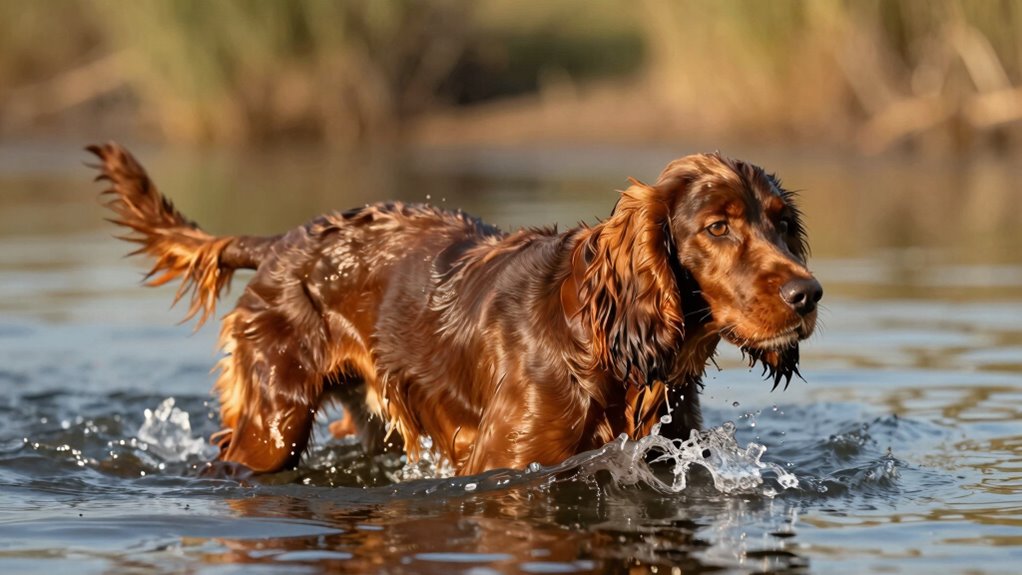
While their history as hunting dogs gives Cocker Spaniels a natural instinct for water, we still need to guide them safely into swimming. It’s understood that this breed thrives when we honor their natural instincts while keeping them secure.
As descendants of gun dogs, every Cocker Spaniel carries an innate drive to retrieve from water—dense, water-resistant coats help, but don’t replace supervision. We start shallow: just a few inches of water in a controlled space, letting them explore at their pace. We watch for hesitation, encouraging gently.
Their enthusiasm can outpace caution, so we never assume readiness just because they leap toward a lake. Swimming builds strength and confidence, but risks like fatigue or cold exposure exist—especially in saltwater. After swimming, we always rinse their coat post-swim with lukewarm water to prevent irritation and remove salt or chlorine that can trigger skin sensitivity.
We stay close, arms ready, because even strong swimmers need us. Together, we balance instinct with safety—honoring who they’re while protecting what matters most.
Assessing Age and Readiness for Water Activities
We start evaluating our Cocker Spaniel’s readiness for water by looking at age—most pups aren’t ready until they’re at least six months old. A 4-month-old might seem enthusiastic, but their joints and stamina aren’t fully developed. The site uses this benchmark because it aligns with vet recommendations: waiting until 6 months reduces injury risk and supports healthy growth.
We watch for signs of comfort—curiosity, relaxed posture, steady breathing—before going beyond paddling in shallow edges. Each pup is different; some 7-month-old Cockers jump in with joy, while others need more time. We never force, we invite. We consider health, energy level, and prior exposure. Just as calcium and phosphorus balance is essential for developing puppies in their overall growth and bone health, proper physical development is critical before introducing water activities.
Gradual steps build confidence: first damp paws, then ankle-deep water, then brief supported swims. We keep sessions short—3 to 5 minutes at first—so it’s fun, not exhausting.
Essential Safety Gear for Swimming Puppies
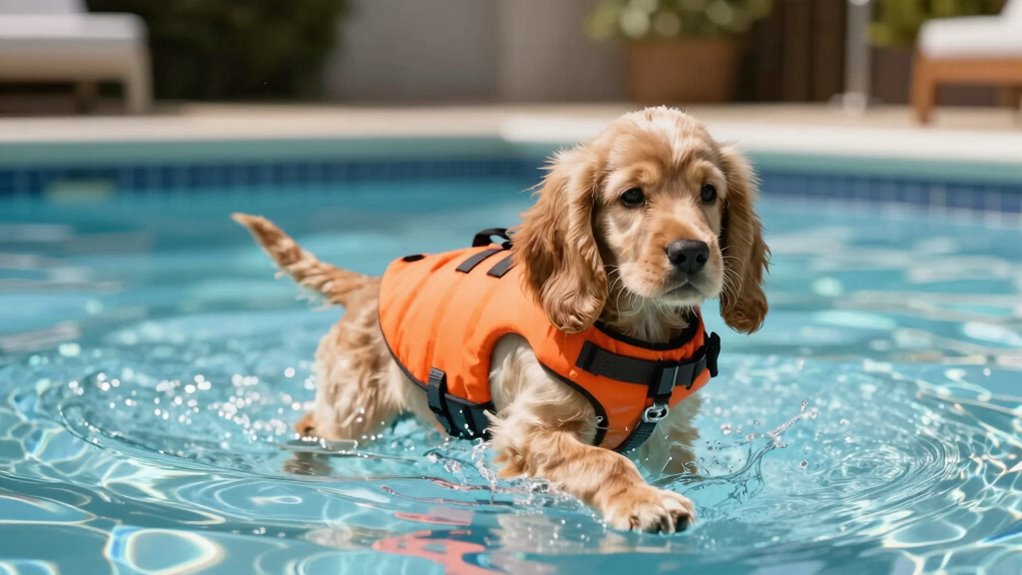
One reliable way to keep our swimming puppy safe is equipping them with the right gear from the start. A properly fitted dog life jacket with a handle adds buoyancy and makes lifting them easy—we never assume our Cocker Spaniel puppy is a natural swimmer.
Choose one with adjustable straps and bright colors for visibility. Pair it with a long, 6-foot nylon leash and a halter-style collar to maintain gentle control in the water. These tools support puppy safety without restricting movement. For nighttime swimming sessions, ensure your gear includes reflective strips that maintain brightness and enhance visibility in low-light conditions.
Always keep swimming toys nearby to encourage confidence, but stay close—puppies tire fast and can drift. We monitor constantly; even shallow water demands full attention.
After sea swims, we rinse our pup thoroughly with fresh water to protect dog hydration and prevent salt buildup on their skin. Avoid assuming breed or age means readiness—each puppy adapts differently.
With the right gear, close watch, and love, we make every splash safer. Let’s keep those tails wagging, together.
Choosing the Right Swimming Environment
When introducing your Cocker Spaniel to swimming, starting in the right environment makes all the difference. We choose calm, clean, and shallow water zones—just 6 to 12 inches deep—so our pup can stand comfortably while building confidence.
We avoid the sea; saltwater isn’t safe, and if ingested, it can cause dehydration or stomach upset. Instead, we stick to freshwater alternatives like lakes with gentle entry points or quiet ponds known for clean, clear water.
We always test water quality ahead of time, steering clear of algae or runoff. For backyard fun, we follow strict pool safety tips: we install secure fencing, use a ramp for easy exits, and never allow unsupervised access. Raised floors and proper drainage systems help prevent puddles and standing water that can harbor bacteria.
We keep a long leash nearby for control in new areas and fit our pup with a life jacket—even in shallow water zones—because safety never takes a day off. Together, we make sure every splash happens in a space that’s calm, safe, and welcoming.
Supervision Tips for Safe Beach Outings
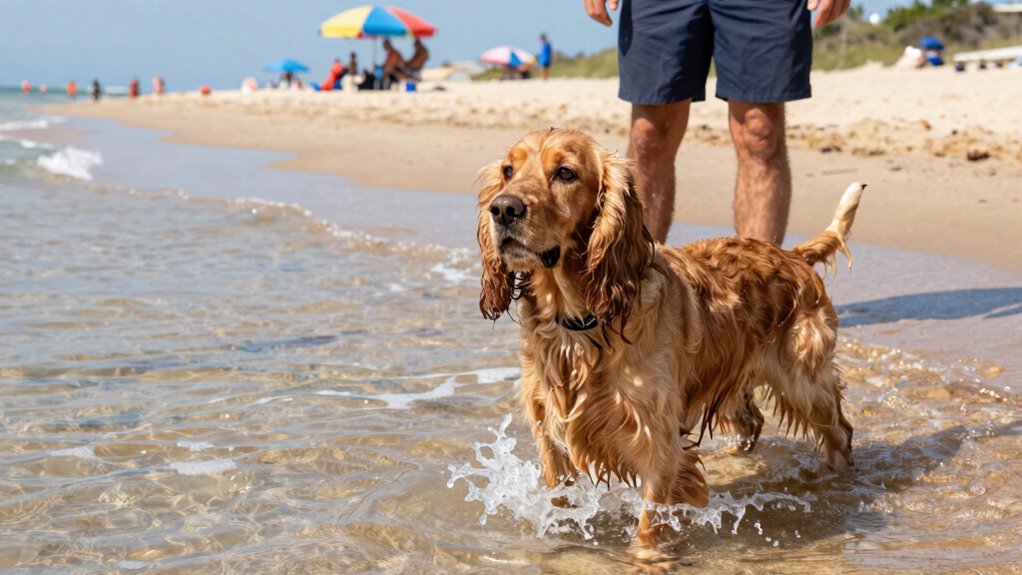
While the tide rolls in and excitement builds, keeping our Cocker Spaniel safe at the beach starts with vigilant supervision—never letting them out of our sight, even for a moment.
We stay close during water play, watching for fatigue or drifting too far, since strong currents can pull them quickly. Using a 10-foot nylon leash clipped to a well-fitted halter gives them freedom while maintaining control.
A bright red or orange life jacket with a handle offers extra security, especially for新手 swimmers. We teach and reinforce swimming commands like “come” and “stay” using treats and praise, so they respond even mid-play.
Monitoring water quality matters—avoid cloudy or foamy surf, and skip swimming after heavy rain. For extended beach sessions, consider upgrading to a 20-foot leash to allow greater exploration while you maintain supervision from a slightly increased distance.
Beach etiquette means cleaning up instantly and respecting space, keeping our pup away from wildlife and crowded zones.
After fun in the waves, we rinse them thoroughly with fresh water to remove salt and protect their coat.
Staying alert, prepared, and kind guarantees every beach outing stays joyful, safe, and full of wagging tails.
Risks Associated With Saltwater Exposure
If your Cocker Spaniel loves splashing in the waves as much as ours does, we need to talk about what that saltwater exposure means for their health.
Saltwater toxicity is real—we’ve seen it. When they gulp seawater while playing, the high salt content can trigger vomiting, diarrhea, and even dangerous electrolyte imbalances.
We always keep an eye out for early dehydration symptoms: dry gums, excessive panting, lethargy. Left unchecked, it escalates fast.
And it’s not just what they ingest—prolonged exposure leads to skin irritation, especially in sensitive pups. We’ve noticed flaky patches and itchy spots after long salt sessions. Some dogs react worse than others, so we monitor ours closely.
Prevention? We limit saltwater play to 20–30 minutes, offer fresh water constantly, and never let them drink from the sea.
The truth is, fun in the surf comes with risks we can’t ignore. But with awareness and quick action, we keep our spaniels safe, happy, and ready for the next wave—without paying the price later.
Post-Swim Care for Coat and Skin Health
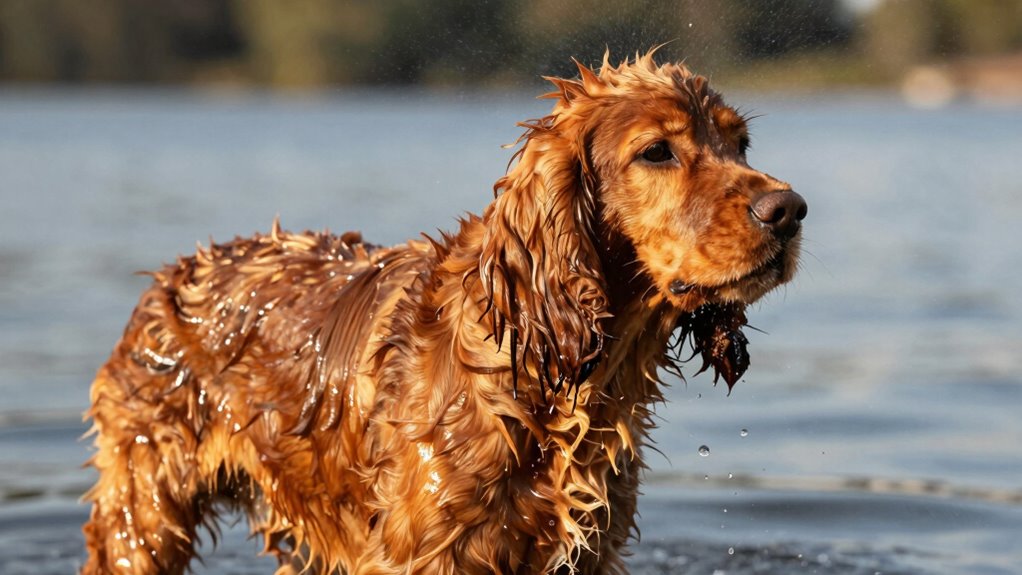
We keep our Cocker Spaniel safe in the waves, but the work doesn’t stop when we leave the water. Post swim grooming is essential to protect their delicate skin and luxurious coat. Let’s care for them together—gently, thoroughly, and with love.
| Step | Purpose | Our Routine |
|---|---|---|
| Rinse immediately | Remove salt, sand, and debris | Use lukewarm fresh water, head to tail |
| Check coat | Prevent matting | Finger-comb through dense fur, especially behind ears and legs |
| Wash | Deep clean & skin hydration | Use dog-safe, moisturizing shampoo; focus on skin folds |
| Towel dry | Prevent dampness | Blot—don’t rub—then air-dry away from drafts |
| Inspect | Catch early issues | Look for redness, odor, or irritation in ears, paws, and belly |
We never skip coat maintenance—this breed’s thick, silky fur traps moisture and hides tangles. Consistent post swim grooming means fewer vet visits and more joyful splashing together. Skin hydration keeps their coat shiny and itch-free. Let’s make every dip in the sea followed by tender, mindful care.
Recognizing Signs of Fatigue and Distress
When our Cocker Spaniel starts to lag behind in the water or their strokes become uneven, it’s time to act. We watch closely for fatigue signs like slowed movement, struggling to stay afloat, or sudden stops. Their breathing may turn rapid or labored—clear red flags.
We keep swimming duration short, especially for younger pups, since their stamina builds slowly.
Distress signals include whining, excessive barking, or attempting to climb onto us or nearby floats. These aren’t cute quirks—they’re pleas for help. Even strong swimmers can panic if overwhelmed.
We always plan exits: a long leash, shallow ramp, or reachable edge lets us pull them out fast. We never wait until they’re fully spent. Early intervention keeps joy in the water, not fear.
Training Your Puppy to Be Comfortable in Water
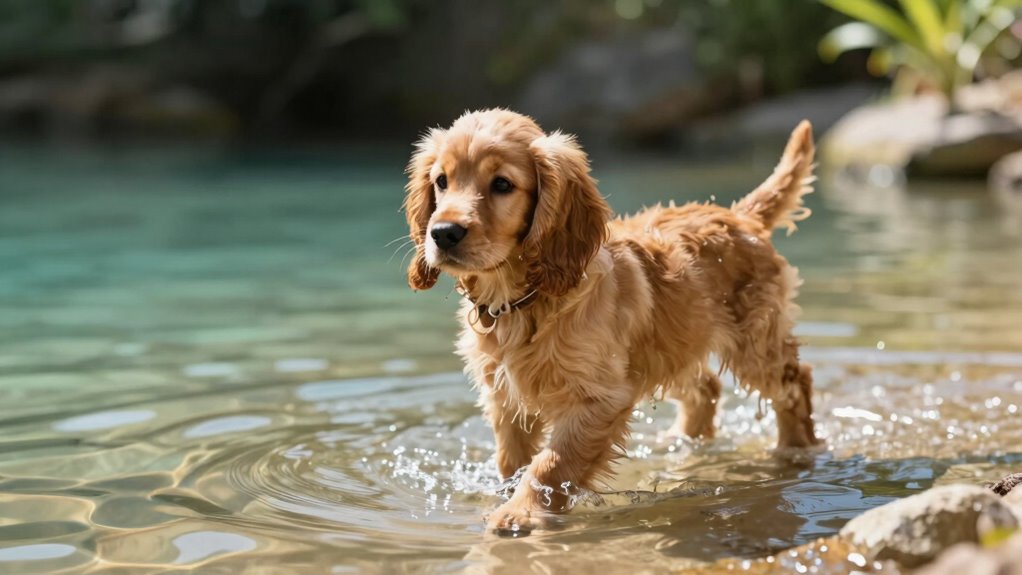
Though water may seem inviting, diving straight into deep areas can overwhelm a young Cocker Spaniel—so we start small, right at the edge. Together, we use gentle water introduction techniques, letting our puppy sniff and step into shallow water, ideally 2–4 inches deep. At 4–6 months old, their coordination supports safe entry. We cheer, treat, and crouch nearby, turning each splash into celebration—because positive reinforcement methods shape lasting trust. A snug life jacket with a handle gives security and helps us guide them. We never rush; calm repetition builds swimming confidence building over days, not hours.
| Stage | Depth | Tool |
|---|---|---|
| 1 | 2–4 in | Treat rewards |
| 2 | 6–12 in | Life jacket |
| 3 | Waist-level | Leash guide |
| 4 | Swimming | Praise & play |
We stay close, watch for hesitation, and always provide a clear exit. Water time becomes bond time—safe, joyful, and ours.
Learning From Other Owners’ Experiences
Because every puppy takes to water differently, tapping into real-world insights from fellow Cocker Spaniel owners sharpens our approach and keeps safety front of mind.
We’ve learned that gradual introductions—at 8 to 12 weeks old—work best for puppy swim techniques. Many of us use a long 10-foot leash with a soft halter for control, especially near lakes or pools.
We watch our pups closely; even confident swimmers can tire quickly. Saltwater worries us—it can cause stomach upset or dry, itchy skin. That’s why we rinse our puppies thoroughly with fresh water post-swim, focusing on paws, belly, and ears.
The water play benefits? Stronger muscles, better confidence, and joyful bonding.
Sharing stories online helps us refine our owner safety tips: no offshore swimming, avoid strong currents, and never leave pups unattended.
We’ve learned that even natural swimmers need supervision. Our collective wisdom—from timing to technique—guides us, keeps our Cockers safe, and turns every splash into a shared win.
Frequently Asked Questions
Are Cocker Spaniels Good at Swimming?
we’re great swimmers, love splashing with natural Cocker Spaniel swimming techniques. we thrive in water, but you’ve got to watch us—our Cocker Spaniel water safety and swimming benefits mean bonding, joy, and health when we play together safely.
What Not to Do With a Cocker Spaniel?
we don’t drown our dreams of perfect paddles by ignoring *Cocker Spaniel safety*—skip supervision, assume swimming prowess, or skip rinsing; remember, *swimming precautions* aren’t suggestions, they’re sacred, and *avoiding water hazards*? yeah, that’s non-negotiable love, not laziness.
How Long Can Cocker Spaniels Swim?
we can swim for 15 minutes to an hour, but we watch our endurance closely—rest breaks keep us safe. let’s train us gently in water training, and always prioritize swimming safety so we stay happy, healthy, and close to you.
What Dog Breed Is the Best Swimmer?
We’ve seen the best swimming breeds like Labradors and Newfoundlands thrill in water, so we share swimming techniques and water safety tips to deepen our bond—because nothing beats watching our dogs splash, confident and free, where trust and joy meet every stroke.
Conclusion
We trust your Cocker Spaniel’s swim journey starts safely and joyfully. Remember: *slow and steady wins the race*. We introduce water at six months, use life jackets (ASTM-compliant, snug but not tight), stick to shallow, calm areas (under 18 inches deep), and limit sessions to 5–10 minutes at first. We watch closely for head bobbing or lagging—a sign to exit. We dry ears, rinse coat, and bond through trust. We’ve got this.