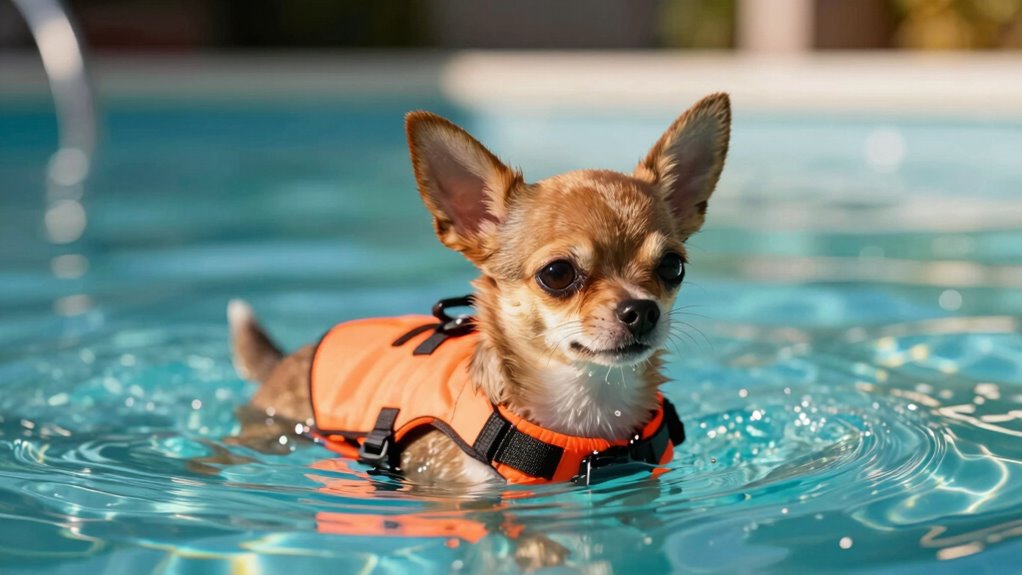
Chihuahuas are born with a paddling reflex, but their tiny bodies—averaging 2 to 6 pounds—and large heads make swimming a real challenge. They can stay afloat briefly, yes, but they tire fast—often in under five minutes. Without support, they risk sinking or panicking. We’ll show you how to keep your Chi safe, build their confidence, and decide if swimming fits your dog’s life—and yours.
Key Takeaways
- Chihuahuas have a natural swimming reflex but struggle due to their body proportions and low stamina.
- Their small size and low body fat increase drowning and hypothermia risks in cool or deep water.
- Swimming offers low-impact exercise that supports joint health and mental stimulation for Chihuahuas.
- Always use a properly fitted life jacket and supervise closely to ensure safety in water.
- Introduce water gradually using shallow pools and positive reinforcement to build confidence safely.
Can Chihuahuas Swim Naturally?
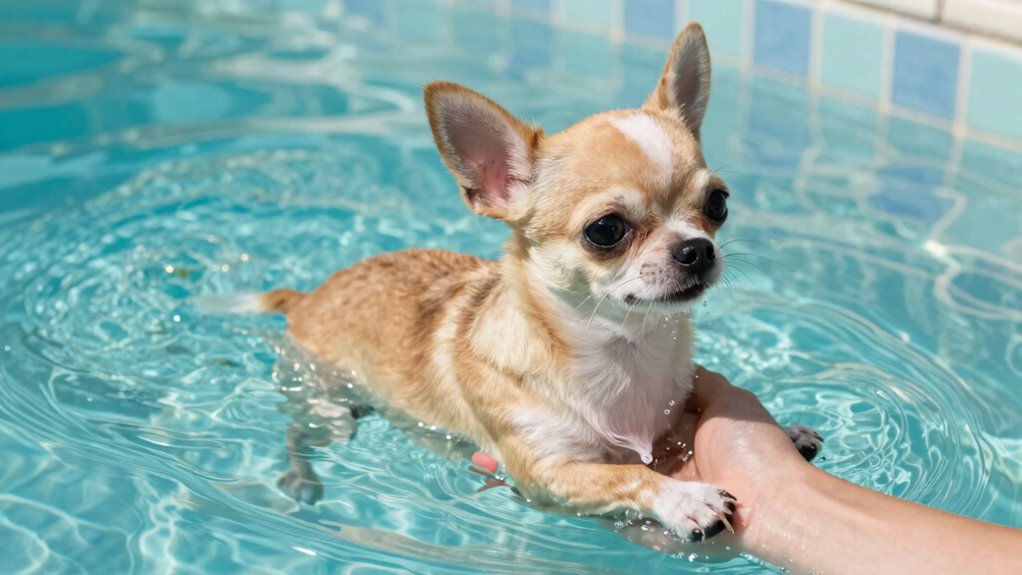
Can all dogs naturally take to water like fish? Not quite, especially when it comes to Chihuahuas. While they do have an instinctual swimming reflex—we’ve seen them paddle when in water—that doesn’t mean they’re built for it.
Can Chihuahuas swim? Technically, yes, but their small body creates real challenges. Their large heads, in proportion to their frame, throw off balance, making it hard to keep their heads above water. They tire fast—we’re talking minutes, not hours—due to low stamina and that tiny, lightweight build. You must supervise closely.
And never ignore water temperature; cold water drains their energy even faster, raising shock risks. Honestly, most Chihuahuas don’t take to swimming naturally—they’re hesitant, even fearful. If you introduce them to water, do it slowly, in warm, calm conditions. Much like how chew toys reduce behavioral issues in dogs, proper water introduction can minimize anxiety and fear responses in Chihuahuas.
Always use life jackets. They aren’t optional; they’re essential, offering buoyancy and peace of mind. We protect them not because they fail, but because we care.
Are Chihuahuas Good Swimmers?
Why do some dogs paddle with ease while others struggle to stay afloat? When it comes to Chihuahuas, the answer lies in their tiny frames and unique build.
We must be honest: Chihuahuas aren’t good swimmers. As a small dog breed, they weigh just 2–6 pounds, with short legs that limit effective paddling. Their large heads, relative to body size, often tip them forward in water, making coordination tough.
Though they possess a natural reflex to swim, it’s weak and fades fast. Most tire within minutes, increasing drowning risks. Low body fat also means they lose heat quickly—hypothermia can set in after just 5–10 minutes in cool water. A life vest designed for dogs can provide essential buoyancy and thermal protection for small breeds in aquatic environments.
While a few Chihuahuas may splash happily in shallow water, most avoid it instinctively. We can’t assume they’ll adapt. If we let them near water, we must supervise closely, use life vests, and keep sessions brief.
Our love for them means respecting their limits—knowing when to keep our small dog safe on dry land.
Benefits of Swimming for Chihuahuas
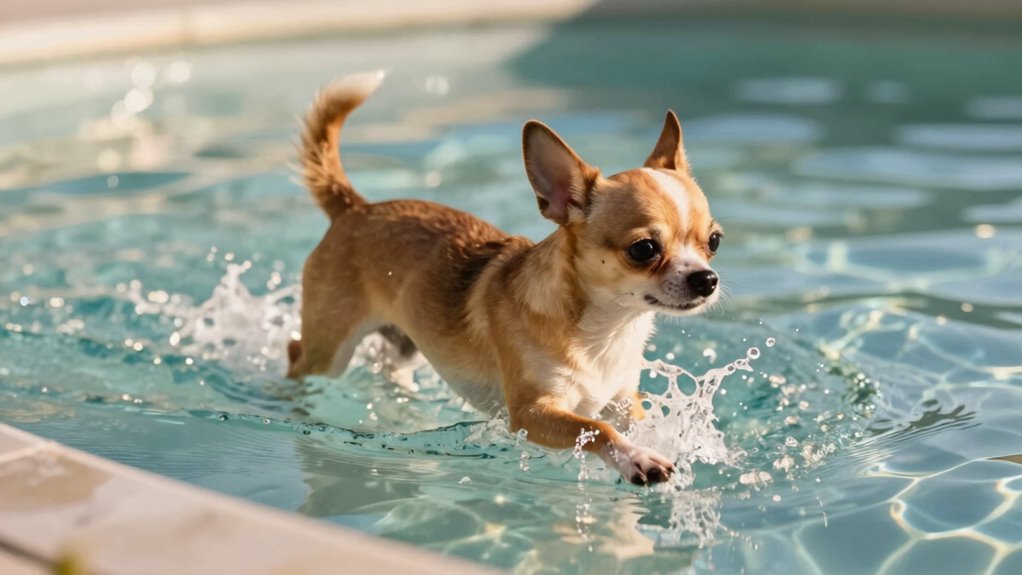
Exercise, done right, transforms both body and mind—and for Chihuahuas, swimming delivers where other activities fall short.
It’s understood that Chihuahuas can swim, and when we make swimming sessions part of their routine, we boost Chihuahua health in powerful ways. Swimming engages muscles across the body, supports heart function, and burns calories efficiently—key for preventing obesity, a common issue in small dogs.
It’s low-impact, so it’s gentle on aging or sensitive joints, making it ideal for senior Chihuahuas or those with mobility concerns. Unlike high-impact play or long walks, swimming lets them move freely without strain. For dogs experiencing joint discomfort, swimming combined with collagen supplementation can provide comprehensive support for overall mobility and comfort.
Beyond physical gains, we see real emotional shifts—confidence grows, anxiety eases, and mental alertness improves. Every splash builds trust between us, turning swimming sessions into moments of connection.
Regular time in the water strengthens not just their bodies, but our bond. For small dogs with big spirits, swimming isn’t just fun—it’s functional, therapeutic, and deeply enriching.
We’re not just keeping them active; we’re enhancing their whole quality of life.
Risks and Safety Concerns in Water
While swimming offers big rewards, we can’t overlook the risks—especially for a tiny dog like the Chihuahua. Chihuahuas face real safety concerns in water due to their small size and physiology. They’re prone to water intoxication, so we always monitor how much they ingest during swimming—just a few tablespoons can be dangerous.
Their low body weight means even mild currents or waves can overwhelm them, increasing drowning risk. Cold water drains their body heat fast; we keep swimming sessions under 10 minutes in temps below 75°F to prevent hypothermia.
Chlorinated pool water isn’t safe to drink in volume, so we rinse our Chihuahuas thoroughly after each swim. Natural water poses other threats—blue-green algae, snakes, or strong tides—so we scout locations ahead.
Just as slow feeders help prevent choking in other small dog breeds, water safety measures are equally critical for Chihuahuas to avoid aspiration and other water-related hazards. Safety isn’t just cautious; it’s part of loving them well. We treat every dip in the water as a moment that needs our full attention, because with Chihuahuas, even small risks can have big consequences.
Teaching Your Chihuahua to Swim Safely
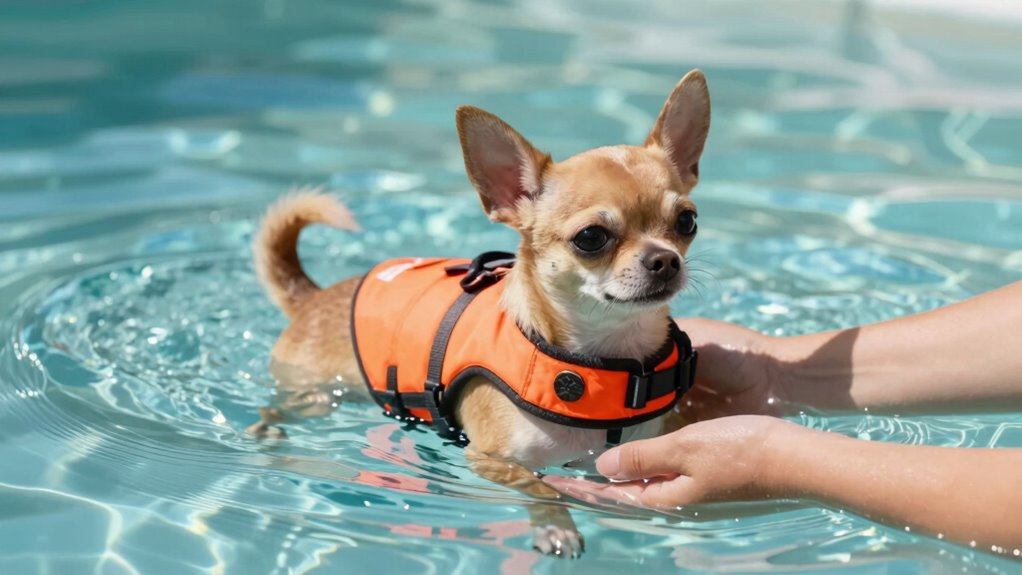
When introducing our Chihuahua to swimming, we start in shallow water—just a few inches deep—so their feet can touch the bottom and they feel secure. We praise and treat them generously for every small step, turning swimming into a joyful, safe experience. Chihuahuas tire quickly, so we keep sessions under 5–10 minutes at first. Every time, we use a snug-fitting life jacket with a handle—non-negotiable for safety and confidence. Just as reflective features enhance safety during evening dog walks, visibility considerations matter in water environments too.
| Key Step | Why It Matters |
|---|---|
| Start in 2–3 inches of water | Builds trust, lowers fear |
| Use a life jacket | Guarantees buoyancy and quick retrieval |
| Limit time to 5–10 minutes | Prevents fatigue in small bodies |
| Practice exits daily | Teaches independence and safety |
We gradually increase depth only when our Chi paddles confidently. We stay close, hands ready—but not intrusive. With patience, most Chihuahuas learn to swim safely. We make every splash count—because their safety shapes their joy.
Choosing the Right Life Jacket for Your Chi
Because our Chihuahua’s safety depends on smart gear choices, we pick a life jacket built for small bodies and big confidence.
We look for durable nylon—it survives splashes, sun, and constant use. Our ideal life jacket offers evenly distributed foam panels that provide reliable buoyancy, so our Chi stays afloat without tipping.
We never skip visibility: bright orange, neon yellow, or electric blue makes spotting our pup instant, even in choppy water.
Adjustable straps across the neck and belly guarantee a secure, comfy fit—we can snug them down without pinching or restricting movement.
We always choose a jacket with a sturdy handle, so we can lift our dog easily, and a D-ring for leash attachment.
We test the fit: we tug gently—it shouldn’t shift or slip.
We avoid bulky designs; ours is streamlined, lightweight, and moves with our Chi.
Every detail matters—stitching, zipper strength, foam density.
We trust only the life jackets that pass our real-world checks.
We understand: the right gear means peace of mind, not just in pools, but everywhere water calls.
Swimming in Pools, Seas, and Natural Waters
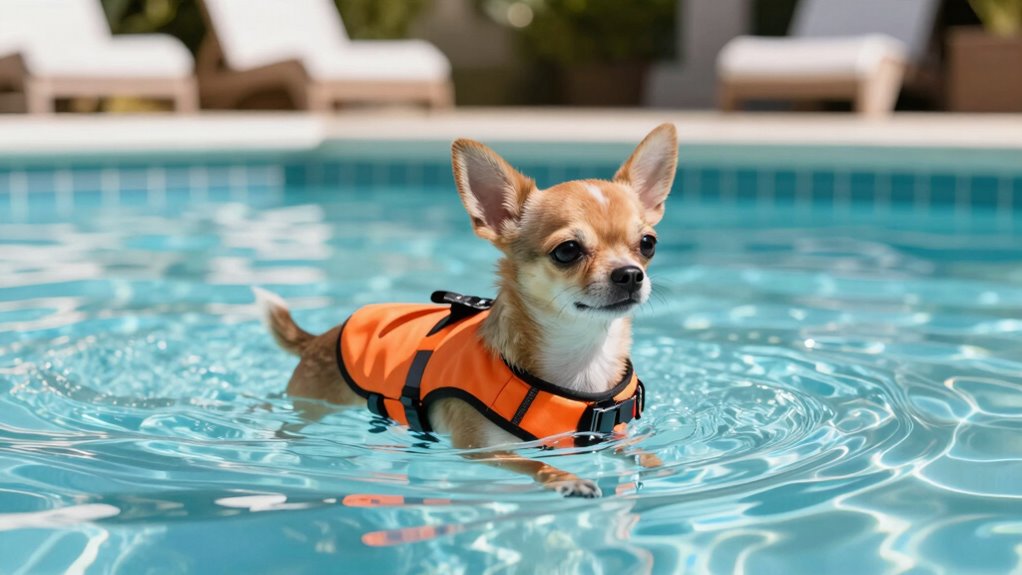
Where should we take our Chihuahua to swim—pool, sea, or lake?
Swimming in pools can be safe if we keep chlorine tablets out of reach and rinse our Chi afterward. But we must always remember: oceans and natural water come with hidden dangers. Their tiny bodies struggle in strong currents, and saltwater or blue-green algae can make them seriously ill. That’s why we never skip supervision—every second counts when they’re in or near water.
We also never swim without life jackets. They’re not optional; they’re essential, keeping our little ones afloat and reducing fatigue.
Here’s what we do to stay safe:
- For swimming in pools: Rinse your Chihuahua post-swim and secure chemical storage.
- At the sea: Avoid it—waves and saltwater aren’t worth the risk of dehydration or seizures.
- In natural water like lakes: Check for harmful algae and bacteria reports before entering.
We keep playtime close, calm, and controlled. With life jackets on and our eyes locked on them, we make every dip worry-free. Safety isn’t luck—it’s our promise.
Positive Experiences From Chihuahua Owners
Though small in stature, Chihuahuas can become confident swimmers with the right introduction, and many owners have seen firsthand how positive experiences in water deepen trust and improve health. We’ve watched our timid little pups transform through gentle, consistent positive reinforcement—offering treats, soft words, and patience during early swimming sessions.
Starting in shallow setups like 6-inch-deep kiddie pools lets them explore safely, building comfort one splash at a time. We never skip life jackets; their snug fit and chin support keep our Chis buoyant and secure. Over time, their paddling grows stronger, their confidence higher.
For older dogs, these sessions offer joint-friendly movement, easing stiffness without strain. And each dip, leap, and playful kick strengthens the bond we share—creating memories etched in wagging tails and wet-nosed grins.
In online forums, we trade tips: always supervise, limit sessions to 5–10 minutes at first, and rinse off chlorine after. With care, love, and the right gear, even the most hesitant Chihuahua can learn to enjoy the water—and we get to share in their joy.
Frequently Asked Questions
Do Chihuahuas Know How to Swim?
We realize our tiny paws aren’t built for long swims, but we do have breed swimming instincts that let us paddle. With gentle water introduction techniques, we can enjoy Chihuahua swimming abilities safely—always watch us close, keep sessions short, and respect our limits to guarantee swimming safety tips protect our little hearts.
What Not to Do With a Chihuahua?
We never force our Chihuahua into water—doing so tempts fate, like Icarus flying too close to the sun. We avoid swimming hazards, prioritize Chihuahua safety, prevent water anxiety, always use dog life jackets, and never skip rinsing after pool dips.
How to Teach a Chihuahua to Swim?
We teach our Chihuahuas to swim by starting small, using shallow water for safe water acclimation. We practice gradual exposure, always ensuring swimming safety. We celebrate every try with treats and toys—you’re doing amazing with positive reinforcement!
Do Chihuahuas Pick One Person?
Yes, we often pick one person, showing deep Chihuahua loyalty and bonding behavior. Our little hearts crave connection, and we naturally develop strong owner preferences. You’ll notice our devotion in every nuzzle, stare, and step—we’re fiercely attached, shaped by instinct and personality traits that thrive on intimacy and closeness.
Conclusion
We’ve shown you how Chihuahuas approach water like pups on a tightrope—balance is everything. Small bodies, big heads, and instinct don’t equal natural swimmers. But with a properly fitted life jacket—measuring 12–18 inches in girth—and 5–10 minute sessions in shallow, warm water, they can stay safe. We supervise, we limit time, we avoid pools or waves. Swimming isn’t a sprint; it’s a slow wade into confidence, one splash at a time.