
Shih Tzus rank 128th out of 138 breeds in obedience command intelligence, according to Stanley Coren’s studies, meaning they typically need 80–100 repetitions to learn a new command. They obey only 25% of the time, on average. But that statistic doesn’t show their full capabilities. Their smarts lie in subtler forms—emotional awareness, independent problem-solving, and environmental tracking. We see them watch routines closely, anticipate departures, and manipulate situations with precise barks. There’s more happening behind those wide eyes than most expect.
Key Takeaways
- Shih Tzus rank low in obedience intelligence but excel in emotional and adaptive smarts.
- They understand commands but often choose not to obey due to independent thinking.
- Shih Tzus show problem-solving skills through toy manipulation and strategic treat access.
- They display high emotional intelligence by responding to human moods and social cues.
- Positive reinforcement training works best, using short, engaging sessions with consistent rewards.
How Shih Tzus Rank in Traditional Intelligence Tests
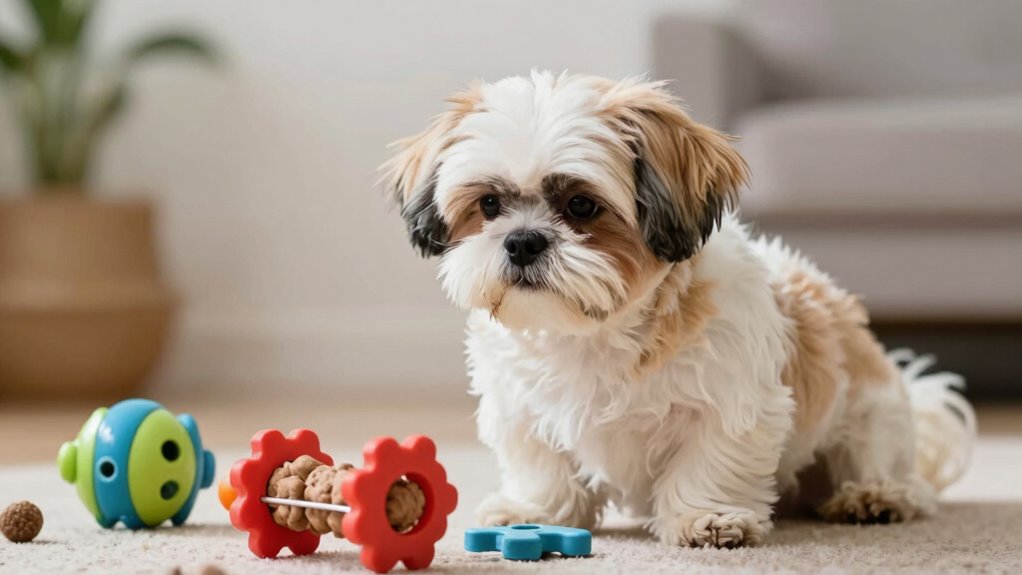
While Shih Tzus mightn’t top the charts in traditional obedience rankings, we shouldn’t mistake their position for a lack of intelligence. According to the American Kennel Club (AKC), Shih Tzu dogs rank near the bottom in standardized tests measuring command response and working obedience.
These evaluations focus on how quickly a dog learns a new command and obeys it on the first try—criteria that don’t always capture the full picture. It’s understood that Shih Tzus often understand commands but may choose not to comply, not from confusion, but from disinterest or independence.
That doesn’t mean they aren’t intelligent dogs. In fact, they consistently show curiosity, adaptability, and problem-solving in home environments. Their performance reflects a different kind of smarts—one rooted in social awareness and subtle learning. Like how chew toys promote mental exercise, Shih Tzus benefit from activities that engage their natural intelligence rather than forced obedience.
We’ve seen them master tricks, respond to tones, and navigate household routines with ease. Traditional tests measure compliance more than cognition. So when we look beyond rankings, we see that Shih Tzus aren’t lacking in intelligence—they express it differently.
The Unique Intelligence of the Shih Tzu Breed
Because we recognize Shih Tzus thrive on connection and context, we see their intelligence emerge not in blind obedience but in attentive engagement. Among dog breeds, they may rank lower on traditional obedience scales, but their sharp curiosity and observational skills reveal a different kind of smarts.
They notice subtle changes—like a treat bag rustling or a leash appearing—and respond with purpose. They learn quickly when motivation is visible, linking actions to rewards with keen awareness. You can Train A Shih using positive reinforcement; they respond best to praise, treats, and affection, not force.
Their cleverness shows in quiet strategies—gentle nudges, selective attention, or staged “accidents” to win your focus. This isn’t defiance; it’s problem-solving. They read moods, adjust behaviors, and often manipulate situations with calm precision. Consistent training paired with ergonomic grooming tools can further strengthen the bond between owner and dog, making collaborative learning sessions more comfortable and rewarding for both.
Train A Shih consistently, and you’ll see their comprehension deepen. Short, playful sessions of 5–10 minutes work best, two to three times daily. We don’t just train them—we collaborate. In this bond, their unique intelligence shines, proving that smarts aren’t just about speed, but sensitivity.
What Makes Shih Tzus Stand Out Behaviorally

When it comes to behavior, Shih Tzus stand out not for blind obedience but for their emotionally intelligent, purpose-driven actions.
We notice how they follow us from room to room, mirroring cats in their attachment, driven by a genuine need for closeness. Their playful demeanor—sometimes cheeky, sometimes sweet—adds charm while revealing sharp awareness of our routines.
They use keen observational skills to track when meals happen, who picks up the leash, and who’s most likely to share a treat. We’ve all seen that look: quiet, focused, waiting until the moment gives them an advantage.
They don’t just react—they assess. If a command means effort without reward, they weigh it. This isn’t stubbornness; it’s decision-making. We mistake their independence for dullness, but their choices are calculated.
They learn tricks quickly when motivated, proving curiosity fuels their mind. They read our moods, adjust their energy, and offer comfort without being asked. For picky eaters, simple motivators like bacon flavoring can make training rewards more enticing and drive engagement during learning sessions.
Their intelligence shows in subtle glances, timely nudges, and perfectly timed antics. We bond deeper because they feel, not just follow.
They’re not loud geniuses—they’re quiet, clever companions who think in whispers.
Training Tips That Work for Smart Shih Tzus
A few key strategies make all the difference in releasing a Shih Tzu’s natural intelligence during training. We’ve found that consistent training tips paired with positive reinforcement create joyful, effective sessions. Keep commands gentle but firm—never shout. Let’s build trust, not fear.
| Training Tip | Method | Frequency |
|---|---|---|
| Treat rewards | Small, soft treats | After each success |
| Session length | 5–10 minutes | 2–3 times daily |
| Location variation | Living room, yard, hallway | Rotate daily |
| Learning games | Puzzle toys, hide-and-seek | 3–4 times weekly |
We use positive reinforcement every single time—your dog remembers patterns quickly. Short sessions prevent boredom and sharpen focus. Practice daily because repetition cements learning. Mix commands like “sit,” “stay,” and “come” to keep things fresh. Include interactive toys to challenge their mind. We train in different rooms to boost adaptability. Using slow feeders during mealtime can also provide mental stimulation that complements your training sessions. Your Shih Tzu thrives on attention—make praise warm, immediate, and sincere. With these training tips, we shape confident, responsive companions. Trust the process. They’re smarter than they look.
The Role of Motivation in Obedience and Learning
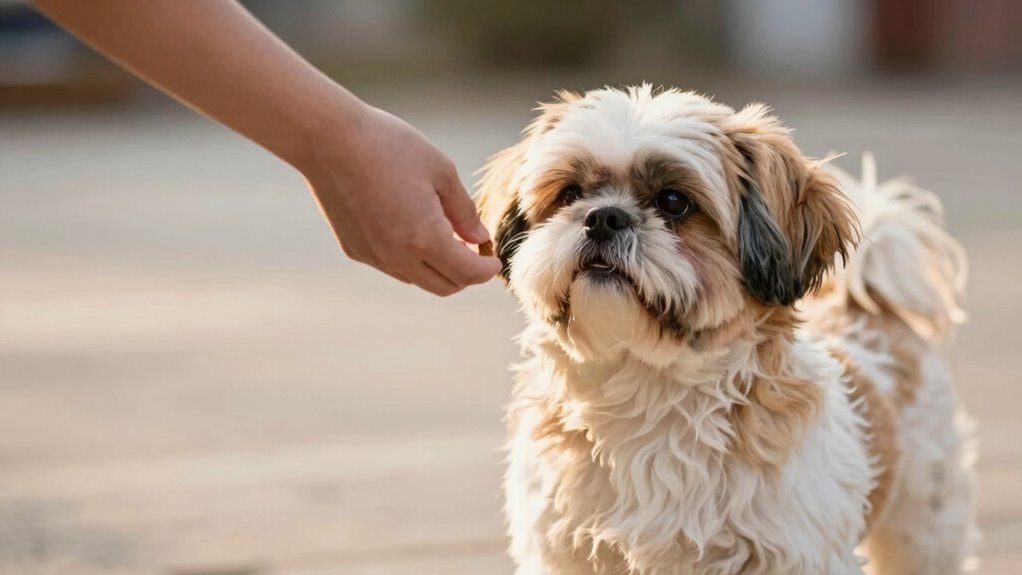
- Shih Tzus obey best when rewards are present and predictable.
- They ignore commands when motivation is unclear or missing.
- Their learning thrives on consistent positive reinforcement.
- Obedience improves dramatically with visible, immediate treats.
- Low motivation can mimic low intelligence, but it’s not the truth.
- Just as chewing stimulates saliva production in dogs during natural behaviors, motivation triggers mental engagement in Shih Tzus during training sessions.
We channel their natural calculations, turning motivation into a tool.
That’s how we build trust—and real obedience.
How Shih Tzus Use Problem-Solving in Daily Life
Though they’re small in size—typically weighing 9 to 16 pounds—Shih Tzus consistently show sharp problem-solving instincts in everyday scenarios. We see it when they nudge a toy under the couch and then push it sideways until it rolls out. They use their problem-solving skills to access treats, often pushing, pawing, or flipping puzzle toys just right.
We’ve watched them pause at closed doors, then turn and lead us to the handle—clearly aware of cause and effect. Their curiosity drives them to explore new situations, whether it’s a rearranged living room or a new walking route. They adapt quickly, sniffing, observing, adjusting.
When blocked, they find alternate paths—squeezing under chairs or circling furniture. They recognize patterns too: your morning yawn means breakfast’s coming, and your grab for keys means playtime. We don’t just guess—they show us, daily, that they’re thinking.
These aren’t random acts. They’re small, deliberate decisions rooted in practical intelligence. Their problem-solving skills aren’t loud or flashy. They’re quiet, consistent, and surprisingly effective.
And they thrive when we give them chances to explore new situations.
Social Awareness and Emotional Intelligence in Shih Tzus

When it comes to reading the room, Shih Tzus don’t just follow—they understand. We see their social awareness in the way they lean in when you’re sad, or nuzzle your hand without prompting. Their emotional intelligence isn’t flashy, but it’s deep, quiet, and constant.
We’ve all felt it—that moment when they shift the mood just by being present. It’s not chance. It’s connection. And it’s built on their acute sense of household dynamics and emotions.
Here’s what their behavior tells us:
- They track your facial expressions and tone shifts with precision.
- They follow you room to room, not out of habit—out of bond.
- They adjust their behavior when you’re stressed, often going quiet or cuddling closer.
- They use soft whines or gentle paws to communicate needs, showing emotional intelligence.
- They learn who gives treats, who hugs, and who needs space—exercising social awareness daily.
They’re not just pets. They’re empathetic companions, tuned into our lives in ways words can’t always capture.
The Curious Nature of Shih Tzus and Environmental Engagement
We’ve seen how deeply Shih Tzus connect with us emotionally, picking up on subtle shifts in mood and household energy. Now let’s explore their curious nature and how they engage with the world around them. These little explorers don’t just follow us from room to room—they’re observing, sniffing, and processing. Their lack of pack mentality means they think independently, often pausing to inspect new objects without fear.
Unlike breeds wired to chase or retreat, Shih Tzus engage with novel stimuli calmly, showing a measured interest in changes to their environment. This independent curiosity helps them learn quickly, especially when motivated by attention or treats.
| Behavior | What It Reveals |
|---|---|
| Sniffing corners after furniture moves | Actively processes spatial changes |
| Approaching unfamiliar sounds slowly | Curious nature overrides fear |
| Following you + scanning surroundings | Engages with both people and environment |
They’re not loud or bold, but their quiet observation speaks volumes. You’ll notice them sitting slightly apart, watching—always learning. Their intelligence thrives on interaction, routine shifts, and gentle encouragement.
Why Reward Systems Reveal Hidden Smarts
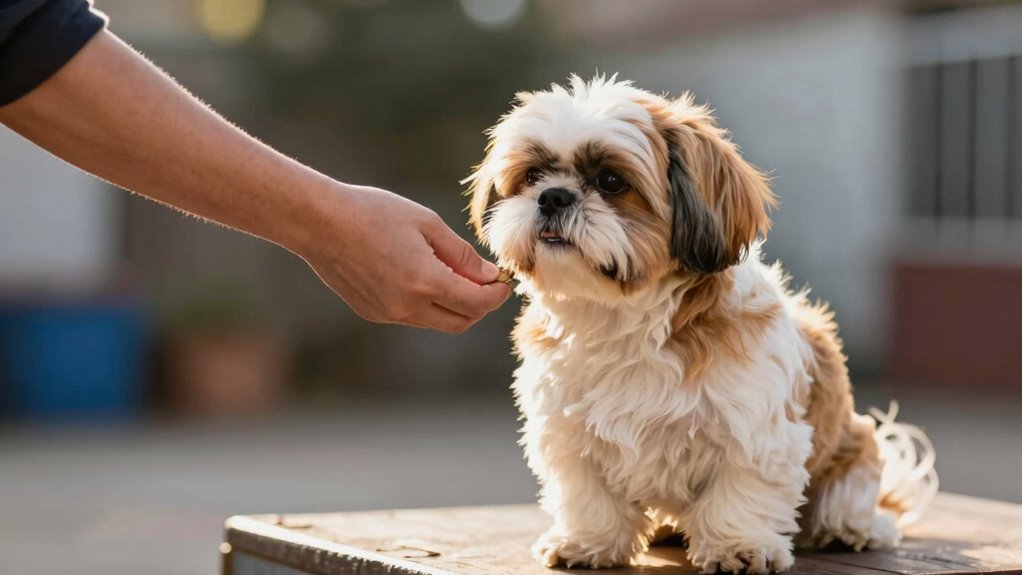
Because they’re so attuned to what gets them treats, praise, or attention, Shih Tzus often act based on clear cause-and-effect thinking. Their responses aren’t random—they reflect deliberate choices shaped by reward systems.
What looks like stubbornness is often intelligence disguised as strategy. These small dogs observe, remember, and adapt to patterns in our behavior, revealing smarts that go beyond obedience.
We’ve seen how their engagement shifts when rewards are visible—proof they weigh effort against payoff. This isn’t defiance; it’s decision-making. Their quiet glances, subtle nudges, and targeted appeals show they understand leverage.
Reward systems don’t just train them—they expose their cognitive depth. Consider:
- They track which family member gives treats most often.
- They modify behavior when rewards change type or frequency.
- They wait longer for higher-value rewards.
- They use facial expressions more when being watched.
- They ignore commands when no reward is visible.
Their intelligence thrives on connection, consistency, and consequence.
Understanding Disobedience as a Sign of Independent Thinking
That quiet stare, the deliberate pause before obeying—these aren’t signs of confusion or dullness. We see disobedience not as defiance, but as proof of independent thinking.
Our Shih Tzus weigh commands against rewards, choosing actions that benefit them most. They’re not ignoring us; they’re evaluating—does sitting earn a treat? Is the person giving orders the one who usually follows through?
Their choices reflect strategy, not stubbornness. We’ve all noticed how they nudge the soft-hearted family member for snacks, ignoring firmer voices. That’s cleverness in motion—observation, memory, and manipulation of human behavior for gain.
This independent thinking reveals emotional intelligence and adaptability. They understand cause and effect: sit = treat, ignore = no reward.
We might call it selective hearing, but it’s really selective engagement. By reframing disobedience as decision-making, we honor their smarts.
These small dogs, just 9–16 pounds, pack sharp minds. They read us closely, respond selectively, and shape outcomes. That’s not laziness—that’s logic.
Frequently Asked Questions
Where Do Shih Tzus Rank in Intelligence?
we’re ranked low in dog intelligence during breed comparison, but don’t let that fool you—we learn fast, read your moods, and know exactly how to get what we want from you.
What Is the Downside of Shih Tzu?
We understand the downsides you’re facing—health concerns like breathing issues and big grooming needs that tie up your time. We realize it’s tough when your cozy moments get disrupted by vet visits or daily fur maintenance, but we’re in this together.
Do Shih Tzus Pick One Person?
Oh, do we ever pick one person—like we’re not the most loyal companions on the planet! We watch, we wait, we choose you, and our personality traits? Pure devotion, darling, wrapped in fluff and following you like gravity.
Do Shih Tzus Like Cuddling?
We love cuddling with you—our affectionate behavior and cuddling preferences make us thrive on close contact. We seek your warmth, melt into your arms, and adore lap naps, sharing quiet moments that deepen our bond and keep our hearts full.
Conclusion
We see their smarts in quiet glances, not just quick sits.
We value their curiosity, their watchful pauses, their nudges when we sigh.
Shih Tzus solve puzzles, read moods, remember routines—day after day, treat after treat.
They thrive on clarity, consistency, five-minute training bursts, and chicken, not commands.
Their intelligence lives in connection, not compliance.
We understand: they’re not stubborn—they’re selective, aware, deeply tuned.
We embrace that.