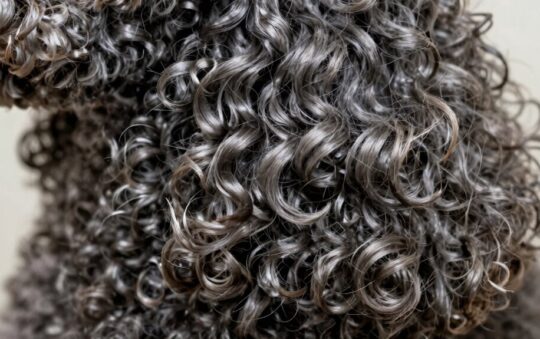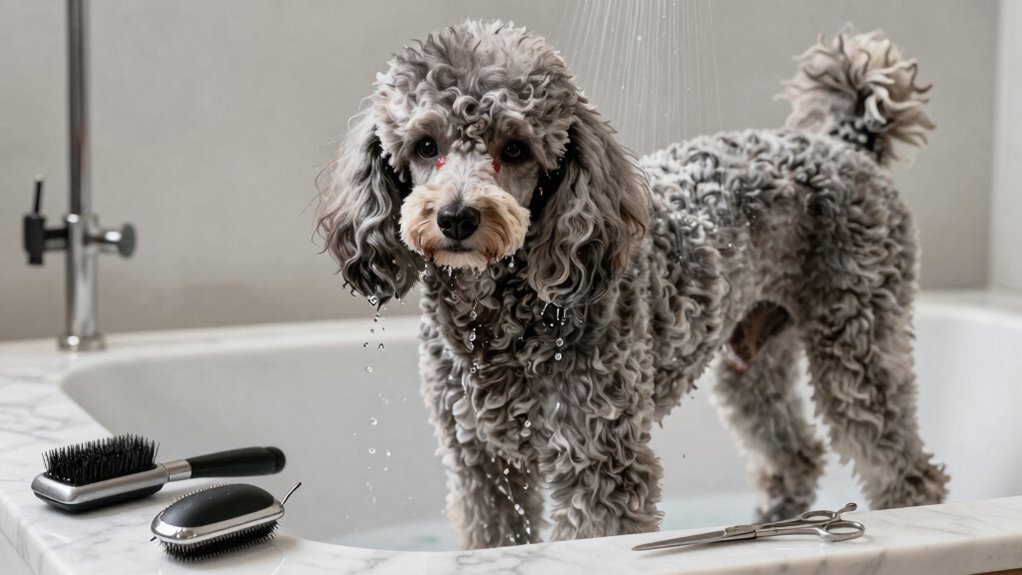
We brush, we clip, we bathe—poodles demand it every 6 to 8 weeks. Their dense, non-shedding curls trap debris and form tangles fast, requiring professional tools and skill. A full groom takes 2–3 hours. Coat length stays at 1–2 inches for ease, yet skin checks, ear cleanings, and nail trims add up. That clock never stops ticking. And yet, for all this effort, another breed might ask even more.
Key Takeaways
- Poodles require professional grooming every 6–8 weeks to prevent painful matting and skin issues.
- Their dense, non-shedding curls trap dead hair, demanding consistent brushing and maintenance.
- Grooming costs for poodles can exceed $1,000 annually, among the highest for dog breeds.
- While high-maintenance, some breeds like Afghan Hounds and Komondors require even more intensive daily care.
- Professional expertise is crucial for poodles to maintain coat health, hygiene, and breed-standard appearance.
Poodles: The Epitome of High-Maintenance Coats
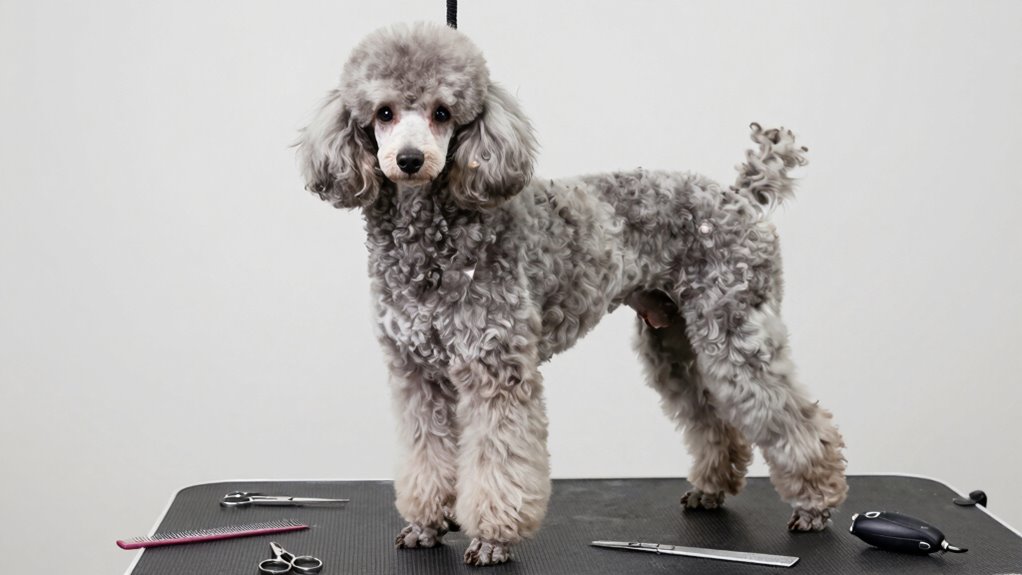
While their elegant curls and hypoallergenic coats make poodles a popular choice, we can’t ignore the commitment their grooming demands require. Poodles require professional grooming every 6–8 weeks without fail. Their dense, non-shedding curls trap dead hair, leading to mats and skin irritation if neglected.
We understand—those signature looks, like the Continental or English saddle cut, aren’t just for show; they’re born from necessity, not whimsy. Poodles require precise trimming around the face, feet, and tail to stay comfortable and clean. Skipping sessions means tangles take root, often forcing a full shave—no one wants that.
Most owners spend $75–$120 per session, adding up to over $1,000 a year. That’s a real investment. Even at home, we must brush them 2–3 times weekly with a slicker brush and comb to catch hidden mats. To avoid skin irritation during grooming, using soft or rubbery bristles prevents damage to sensitive areas beneath the coat. Moisture, dirt, and oils cling close to the skin, so regular baths with pH-balanced shampoo are essential.
We won’t sugarcoat it: this level of care isn’t optional. Poodles require consistency, skill, and time. But stay on track, and their coat stays healthy, soft, and stunning.
Doodles: Inheriting the Poodle Grooming Challenge
We see it all the time—families fall in love with the friendly face of a Labradoodle or Goldendoodle, drawn to their playful energy and clever eyes, only to later realize the coat they’ve inherited isn’t just cute, it’s high-maintenance.
That soft, curly fur? It’s often pure poodle puppy legacy, dense and prone to tangles without weekly brushing. It’s understood—what looks like a low-shedding dream can become a grooming marathon. Coats can range from wavy to tightly curled, and the curlier it is, the more effort it takes.
We recommend brushing every 2–3 days, 15–20 minutes each session, with a slicker brush and comb. Skipping just one week risks mats near ears, underarms, and behind legs. Many of us end up visiting professional groomers every 6–8 weeks—expect trims, clipping, and bathing to keep things manageable. Using the right brush reduces tangles and makes grooming less frustrating for both you and your doodle.
While some Doodles inherit smoother, easier coats from their Labrador or Golden Retriever side, most carry the poodle’s grooming demands. We’re honest with ourselves: if we love the doodle look, we’ve got to commit to the care.
That coat isn’t just fashion—it’s health, comfort, and connection.
Afghan Hounds: Elegance That Demands Diligence
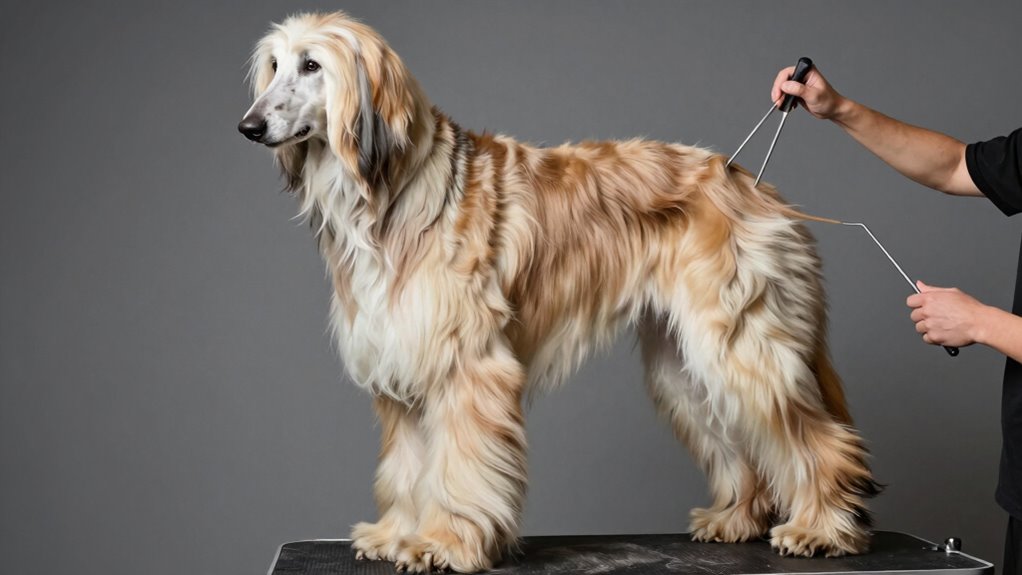
Because their striking beauty comes with serious responsibility, we treat Afghan Hound grooming as non-negotiable—this isn’t just upkeep, it’s essential care. Their long, silken coats tangle easily, so we brush daily and bathe weekly to prevent painful matting. Compared to standard poodles, whose curls demand clipping, Afghan Hounds need smooth, uninterrupted care to preserve their elegance. Without it, skin issues arise fast. Regular grooming also helps detect signs of skin irritation early, such as redness, unusual odor, or patchy fur that may indicate underlying allergies or infections.
We rely on routine: detangle in sections, rinse thoroughly, dry gently. Professional grooming every 4–6 weeks keeps things in check—think trims around paws and sanitary areas, never a full cut.
Here’s how we maintain theirs versus how we care for standard poodles:
| Task | Afghan Hound | Standard Poodle |
|---|---|---|
| Brushing Frequency | Daily (30+ minutes) | Every other day (20 min) |
| Bathing | Weekly | Every 3 weeks |
| Professional Care | Every 4–6 weeks | Every 4–6 weeks |
We know you want what’s best. This level of diligence? It’s the price of their grace—and we gladly pay it.
Irish Wolfhounds: Size and Coat Combine for Grooming Difficulty
When it comes to grooming, the Irish Wolfhound‘s sheer size and coarse, double-layered coat mean we can’t afford shortcuts. We’re talking about a dog that stands up to 35 inches tall and weighs 120 pounds or more—this isn’t just big, it’s monumental.
Their wiry, thick coat traps dirt and tangles easily, so we need consistent brushing—at least once a week—to keep mats at bay. During shedding seasons, we step it up to two or three times weekly. Unlike a golden retriever, whose coat sheds heavily but is smoother, the Wolfhound’s texture demands hand-stripping or clipping every few months.
Grooming one of these gentle giants is physically taxing; lifting legs, reaching underbellies, tackling dust-laden feet—all require strength and patience. Even simple brushing can take 30–40 minutes. Most of us benefit from professional help, not because we can’t do it, but because their coat complexity and size make it time-consuming.
We stay ahead of issues with routine care, protecting both coat health and comfort. For managing their undercoat effectively, undercoat rakes designed with rounded tips can help prevent skin irritation while removing loose fur. For us, love means showing up—brush in hand—rain or shine.
Newfoundlands: Managing a Massive Double Coat
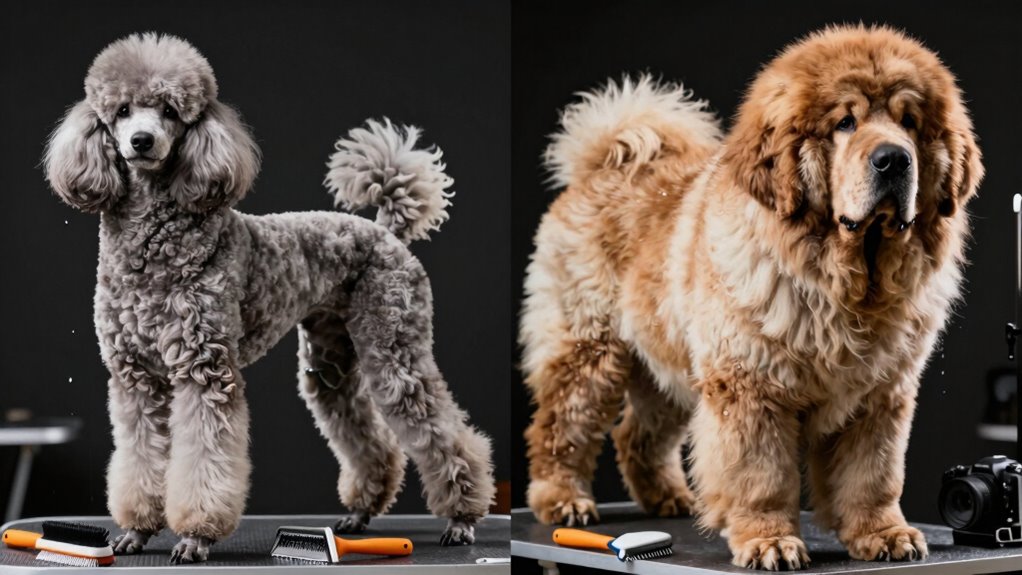
One grooming session on a Newfoundland can take up to an hour, and for good reason—these gentle giants carry a dense, double-layered coat that spans 4 to 6 inches in length, with a soft undercoat up to 2 inches thick.
We brush them weekly, often more, to prevent mats and remove trapped dirt. Their size means we strain our backs, lift heavy limbs, and spend extra time on thick rump and tail fur. Without routine care, tangles form fast—especially behind ears and under legs.
We check skin closely; early detection helps us catch parasites or irritation before they spread. Moisture and mud cling to their coats, so post-swim or rain drying is non-negotiable.
We rely on a professional groomer every 6 to 8 weeks for full cleanings, nail trims, and de-shedding baths. They’ve the tools, space, and strength we lack. A professional groomer guarantees the undercoat lifts without cutting too close. Using an undercoat rake during these sessions targets the dense undercoat shedding that’s essential for maintaining coat health and reducing loose fur around the home.
We partner with them—it’s practical, it’s smart, and it keeps our Newfies comfortable, healthy, and looking like the majestic dogs they are.
Komondors: The Unique Challenge of Corded Fur
Though their coat forms naturally, we still have to stay on top of it—Komondors develop dense, rope-like cords that can reach up to 9 inches in length and take years to fully form. We can’t treat them like other breeds, not even owning a poodle prepares us for this level of commitment. These cords trap dirt and moisture, so we must separate them regularly to prevent matting and skin issues. Unlike owning a poodle, where clipping is predictable, Komondors demand a lifelong grooming rhythm that’s both delicate and demanding.
| Care Aspect | Komondor | Owning a Poodle |
|---|---|---|
| Grooming Frequency | Weekly separation | Every 4–6 weeks |
| Coat Type | Corded, 9-inch strands | Curly, hypoallergenic |
| Grooming Expertise | High (specialized skills) | Moderate to high |
We rely on experienced groomers who understand cord maintenance, because skipping even one session risks damaging the coat. This isn’t just about looks—it’s about health. We accept that loving a Komondor means committing to time, patience, and consistency.
The Health Benefits of Regular Grooming Beyond Appearance
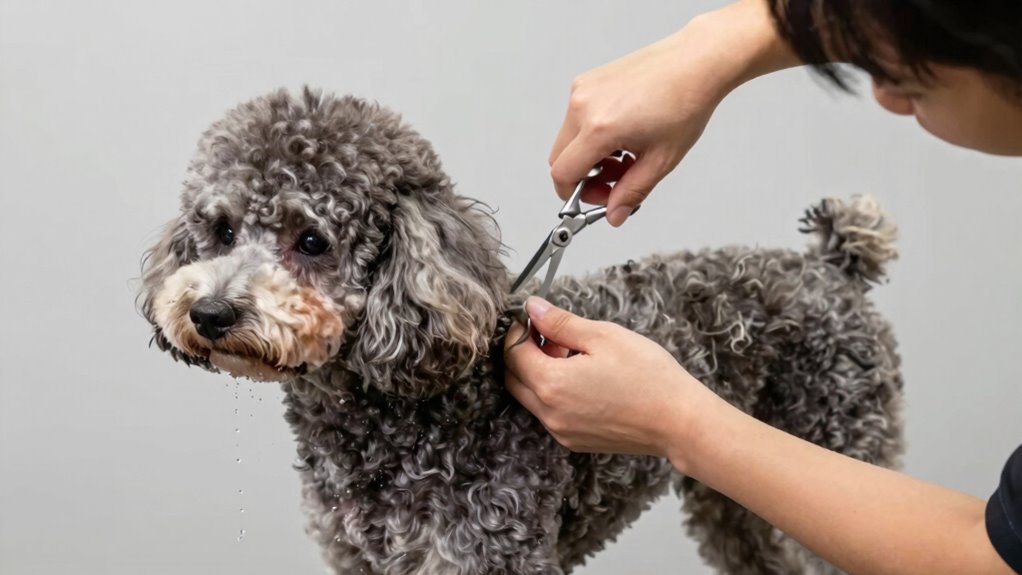
We keep our poodles looking sharp every 4–6 weeks, but it’s not just about appearances—those grooming sessions do real work beneath the surface.
We prevent matting that traps moisture, dirt, and bacteria, which can lead to skin irritations or infections. That’s why we brush down to the skin, checking for redness, lumps, or parasites. Catching issues early gives the dog a better chance at fast recovery.
We clean their ears thoroughly, removing wax and debris—especially crucial for poodles with floppy ears prone to trapping moisture. This routine slashes the risk of painful ear infections.
We also stimulate blood flow to the skin, which supports healthier hair growth and leaves the coat vibrant.
And while we’re at it, we’re not just maintaining fur—we’re building trust. The calm touch, the steady routine, gives the dog mental comfort and strengthens our bond.
It’s care that goes beyond clipping and combing. Every session is a quiet promise: we’re watching, we’re here, and we’re keeping them well from skin to soul.
Why Professional Expertise Makes a Difference in Breed Care
Because poodle coats grow continuously and mat easily, skipping professional grooming every 6–8 weeks puts skin health at risk and compromises the integrity of their dense, curly fur.
It’s understood that it seems like a lot of time to commit, but those regular visits do more than keep your pup looking sharp—they prevent painful tangles and hot spots underneath.
The truth is, poodle grooming isn’t just about trimming hair. It’s about precision: shaping the face, feet, and tail to match breed standards or your preferred style, like the classic show cut or low-maintenance puppy cut.
These details take skill, practice, and the right tools—things most of us don’t have at home. We’ve seen well-meaning owners try DIY cuts that end in uneven patches or stress for the dog.
Professional groomers know how to handle dense curls without pulling, spot early skin issues, and maintain hygiene in sensitive areas.
Letting an expert handle it means fewer mistakes, less frustration, and a healthier coat.
When we invest in professional care, we’re not just saving time—we’re giving our poodles the consistent, expert attention they actually need.
Frequently Asked Questions
What Is the Hardest Dog Breed to Groom?
We’ll admit it—poodles are the hardest breed to groom, and we rely on precise grooming techniques to keep their curls neat. We bond through every trim, knowing we’re preventing mats and keeping our pup feeling loved, healthy, and beautiful.
Why Do Groomers Charge More for Poodles?
We charge more for poodles because, let’s be real, their curls are a full-time job—Grooming Costs spike when we’re fighting mats, not fur. You love their fluff; we live for it. Time, skill, and sanity? Yeah, that’s baked into the price.
Which Dog Breeds Require the Least Grooming?
We love sharing that low maintenance breeds like Beagles, Boxers, Dachshunds, Bulldogs, Chihuahuas, and Greyhounds make life easier for you—we keep grooming simple, so you two can enjoy more cuddles and less hassle together.
What Are the Negatives of a Poodle?
We face grooming challenges with poodles—they need cuts every six weeks, daily brushing, and costly upkeep. Their curls mat fast, and without attention, they’re uncomfortable. We also worry about their anxiety and energy, which complicate care.
Conclusion
We’ve walked you through coats that demand time, tools, and tenderness—every 6 to 8 weeks for poodles, daily brushing for Newfoundlands, meticulous detangling for Afghan hounds. These aren’t burdens; they’re acts of care. Grooming is the quiet heartbeat of health, a lifeline against pain. Like tuning a prized instrument, it keeps them in harmony. Trust pros, stay consistent, and you’ll see: love grows in the comb’s path.