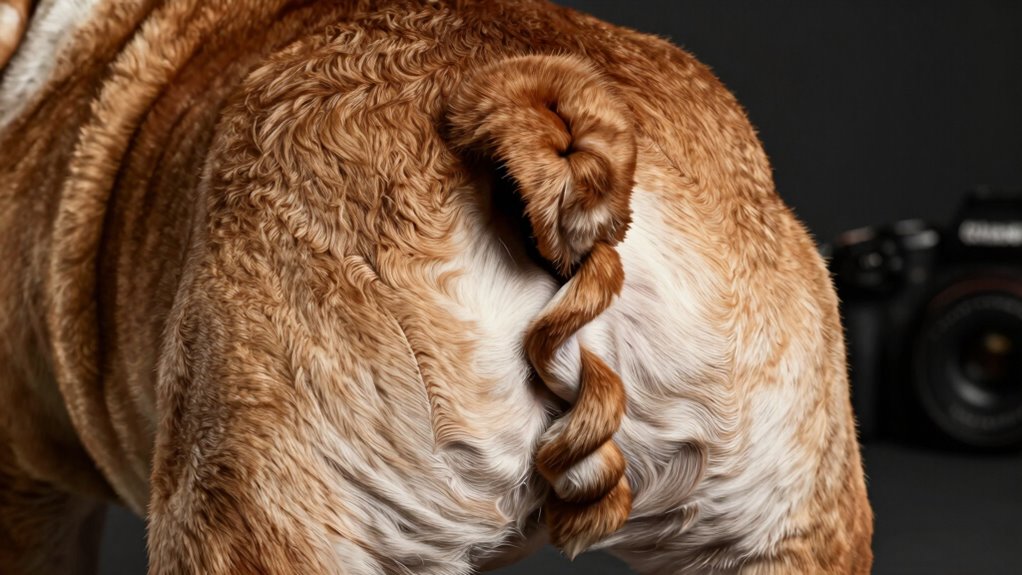
A tail tells a tale, and in English Bulldogs, it starts with a short, sturdy stem—typically 5 to 6 inches—often slightly crooked or screwed. We see natural tails at birth, not docked ones. But why do some Bulldogs still sport cropped stubs? The answer winds through history, health, and human choice, touching breed standards and animal welfare. Let’s uncover what shapes a Bulldog’s tail—and why it matters.
Key Takeaways
- English Bulldogs are born with natural tails, typically short and straight or slightly curled.
- Their tails range from 5 to 6 inches long and should not be tightly curled or kinked.
- Tail docking is a human intervention, not a natural trait, performed historically for health or tradition.
- Modern breeding aims to produce dogs with functional natural tails, reducing the need for docking.
- Docking is now banned or restricted in many countries, with growing emphasis on natural tail integrity.
The Natural Tail Characteristics of English Bulldogs
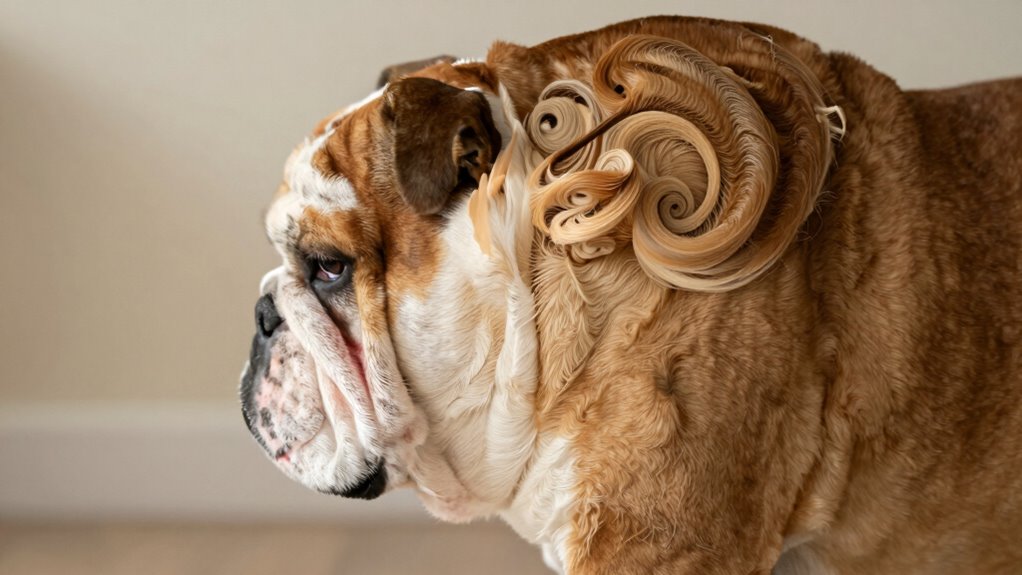
Let’s talk about the English Bulldog’s tail—a defining feature that’s short, strong, and steeped in breed tradition. We see it in every English Bulldog: a compact tail, ideally 5 to 6 inches long, with a slight crook or screw. It’s thick at the base, tapering to a fine tip—never curved or tightly curled. This isn’t just about looks; it’s about structure, health, and breed authenticity.
English Bulldogs are born with these natural tails—no docking needed. Whether straight or screwed, the tail must align with breed standards. Some have inverted tails that tuck into the skin, yes, but those demand gentle, regular cleaning to avoid irritation or infection. Given their sensitive skin, special attention to tail care is particularly important for maintaining comfort and health.
We trust the breed’s blueprint: a solid, low-set tail that complements the dog’s balanced build. Long tails? Rare—and when present, still thick, still unmistakably Bulldog.
For us, tail talk isn’t trivia. It’s care. It’s pride. It’s honoring what makes English Bulldogs, well, *Bulldogs*. We pay attention. We keep them clean. We love them fully—wrinkles, rolls, and that sturdy little tail.
Understanding the History of Tail Docking in Bulldogs
While today’s English Bulldogs carry their natural tails with pride, one can’t ignore the past that shaped their form. The bulldog’s history runs deep, and tail docking once played a practical role in its survival. A long road has been walked—from function to ethics—and it shows in how individuals care for their bulldogs now.
Here’s what’s understood:
- Bulldog ancestors were used in bull baiting, where docking prevented painful injuries.
- The original Olde English Bulldogge often had tails docked short—about 1–2 inches—to reduce infection risks.
- David Leavitt’s 1970s breeding project revived the Olde English Bulldogge, aiming for healthier, straighter tails.
- Selective breeding has since produced bulldogs with naturally straight, strong tails, making docking less common.
- Modern slow feeders and improved portion control methods support better digestion in bulldogs, allowing breeders to focus on structural health rather than surgical modifications.
There is now a priority on health over tradition, guided by compassion and science. Our bulldogs thrive with intact tails, a sign of progress.
You’re not just caring for a pet—you’re honoring a legacy, reshaped with care.
Why Some Breeders Choose to Dock Bulldog Tails
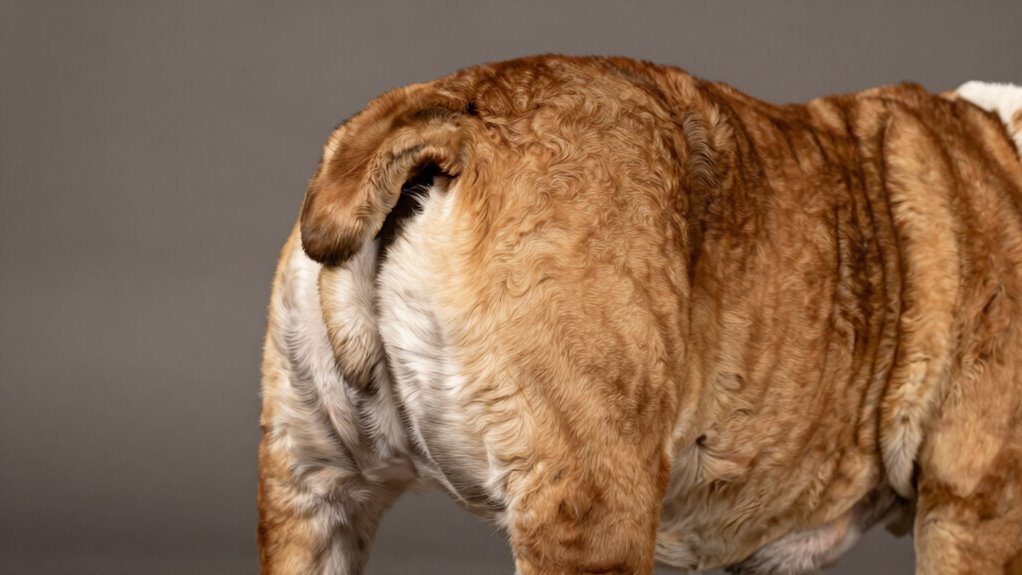
Though tradition still sways some breeders, it is understood today that tail docking in Bulldogs isn’t routine—it’s a deliberate choice made under specific circumstances. We, as responsible breeders, weigh history, function, and well-being before acting. Additionally, since chew toys and mental stimulation help manage stress and behavioral issues in dogs, breeders should ensure puppies have proper enrichment opportunities regardless of tail status.
| Reason | Purpose | Context |
|---|---|---|
| Injury prevention | Protects active dogs in rugged settings | Rooted in bull baiting and farm work |
| Health management | Reduces complications from kinked or tight tails | Avoids deep fold infections |
| Breed standards | Meets show requirements in some regions | Short tails once favored for aesthetics |
| Legal compliance | Follows local laws allowing docking | Varies by country; some ban, some permit |
| Medical necessity | Addresses severe congenital issues | Only when vets recommend |
We breeders respect each dog’s natural form, but safety and standards still guide a few. Today, most of us opt for natural tails unless risks arise. We’re shifting toward choices that honor both heritage and health—carefully, thoughtfully, together.
Health Risks Associated With Kinked and Inverted Tails
Kinked and inverted tails may look distinctive, but they carry real health risks we can’t ignore. We’ve seen how these tail types can lead to serious health issues if left unchecked. While some dogs live comfortably, others face pain, infections, or chronic discomfort.
We want you to know what to watch for—and how to act. Here’s what we’ve learned:
- Kinked tails can compress vertebrae, limiting mobility and increasing risk of spinal damage over time.
- Inverted tails create deep skin folds that trap moisture, feces, and bacteria—prime spots for infections.
- Without daily cleaning, inverted pockets can develop abscesses or require surgical intervention.
- Not all cases are severe, but undetected problems often escalate, turning minor care into major health issues.
- Regular monitoring and bacterial contamination prevention through proper hygiene can significantly reduce the risk of serious complications in dogs with tail fold issues.
We check our puppies early, track tail formation closely, and intervene when needed. Awareness is half the battle.
With proper hygiene and vet oversight, most concerns stay manageable. We stay vigilant—not fearful—because loving a Bulldog means protecting their comfort from the first wrinkle to the tip of their tail.
The Role of Selective Breeding in Tail Development
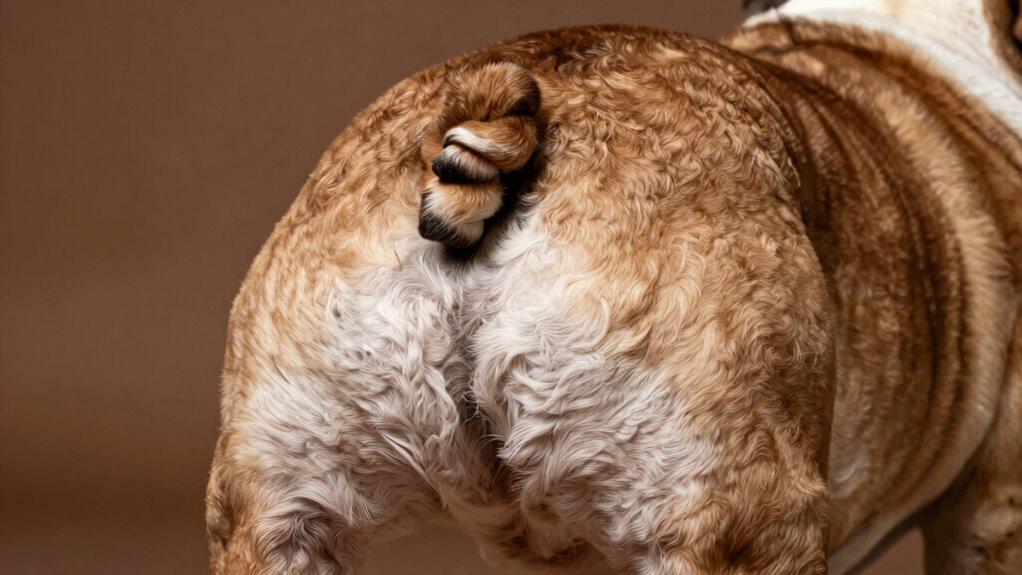
Because we shape the future of the breed with every litter, we prioritize tail health through intentional, ethical breeding. Selective breeding has become our most powerful tool in ensuring English Bulldogs are born with functional, natural tails.
We’ve shifted away from extreme kinks—historically docked—by consistently pairing dogs with straight, “pump handle” tails as defined by the breed standard. Today, most of our puppies arrive with tails measuring 1.5 to 3 inches, tightly set and low on the rump, curving gently downward.
Selective breeding isn’t just about looks; it’s about wellness. We track lineage, assess tail conformation, and exclude dogs with severe kinks from breeding programs. This careful approach reduces the need for docking, aligning with modern animal welfare standards. Proper breeding practices that prioritize joint health and structure ensure that our dogs maintain optimal physical function throughout their lives.
We don’t breed for extremes—we breed for balance, structure, and long-term health. Each breeding decision reinforces our commitment to a healthier bulldog. Through selective breeding, we’re not just preserving the breed—we’re improving it, one thoughtful pairing at a time.
You can trust that every puppy reflects our promise: integrity, health, and respect for nature.
Ethical Debates Surrounding Cosmetic Tail Docking
We no longer dock tails to meet outdated appearance standards. The ethical debates around cosmetic tail docking have reshaped how we approach our beloved Bulldogs. We now recognize the unnecessary pain it causes and choose compassion over tradition.
These ethical debates aren’t just theoretical—they’re guiding real, meaningful change in breeding and care.
- Cosmetic docking offers no functional benefit; Bulldogs don’t need shortened tails for strength, speed, or temperament.
- Puppies feel pain during the procedure, often performed at 2–5 days old without anesthesia.
- In the UK, tail docking is illegal for cosmetic reasons, classified as mutilation—only allowed for medical or working breed exceptions.
- Natural tails don’t hinder communication or health; Bulldogs express themselves fully with their full, expressive tails.
We’re shifting toward breed standards that honor integrity, not aesthetics.
Together, we’re raising Bulldogs who are whole, healthy, and true to who they’re meant to be—no cuts, no compromises.
Medical Reasons for Tail Docking in Bulldogs
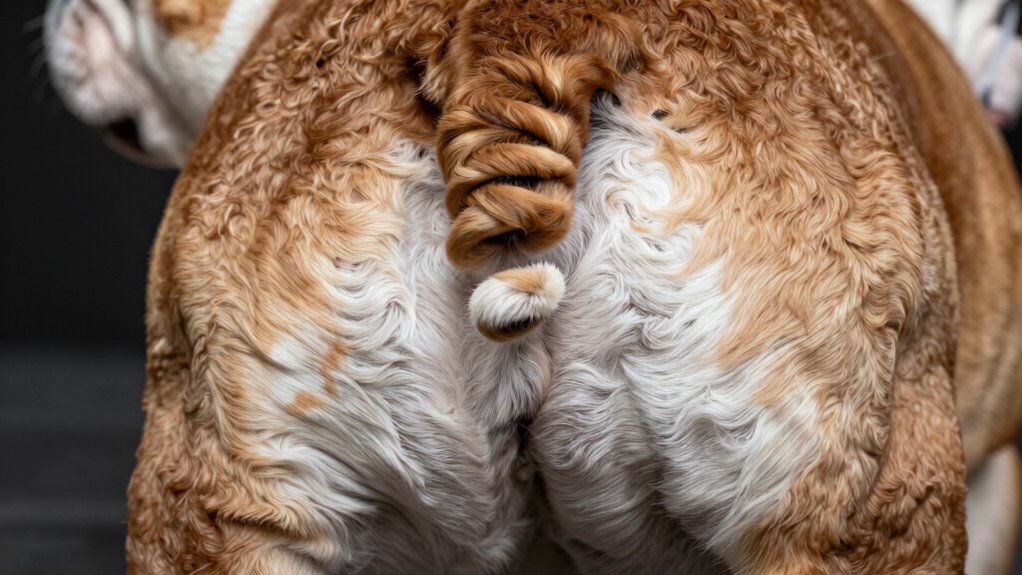
While not all English Bulldogs need surgical intervention, we do sometimes dock tails when medical concerns arise—specifically when a kinked or tightly curled tail creates a cleft that traps moisture, feces, or bacteria. These deep folds, often under 1 cm in width, become breeding grounds for bacteria if left untreated. We perform tail docking only for clear medical reasons, never for appearance. Our goal is your pup’s lifelong comfort and health.
You trust us to make tough calls—so here’s what matters:
| Suffering | We See | We Prevent |
|---|---|---|
| Chronic infections | Red, inflamed skin | Painful abscesses |
| Foul odor | Discharge in tail pocket | Surgery later in life |
| Licking until raw | Visible discomfort | Antibiotic dependence |
| Mobility issues | Hunched walking | Inability to sit |
| Lower quality of life | Frequent vet visits | Lifelong irritation |
We monitor each puppy’s tail conformation from day one. When anatomy risks health, we act—because love means protecting them from preventable pain. You’re not just getting a dog; you’re gaining a healthy, happy companion, and that starts with responsible choices rooted in medical reasons.
Tail Communication and Its Importance in Dog Behavior
A dog’s tail is more than just an appendage—it’s a signal flag, constantly broadcasting how they feel. We rely on tail communication to truly understand our Bulldogs, reading every twitch and position like a shared language. When we pay attention, we strengthen our bond and respond with care.
- A wagging tail often means excitement or friendliness, especially when sweeping side to side at mid-height.
- A tucked or lowered tail signals fear or submission, telling us our dog feels unsure or anxious.
- High, stiff tail holds can suggest alertness or dominance, part of how dogs signal intentions.
- Bulldogs with natural tails—typically 4–6 inches long and slightly curved—express a fuller range of emotions than docked ones.
Tail communication shapes how our dogs interact with us and other animals. We see it in park greetings, home routines, and quiet moments.
Legal Status of Tail Docking Around the World
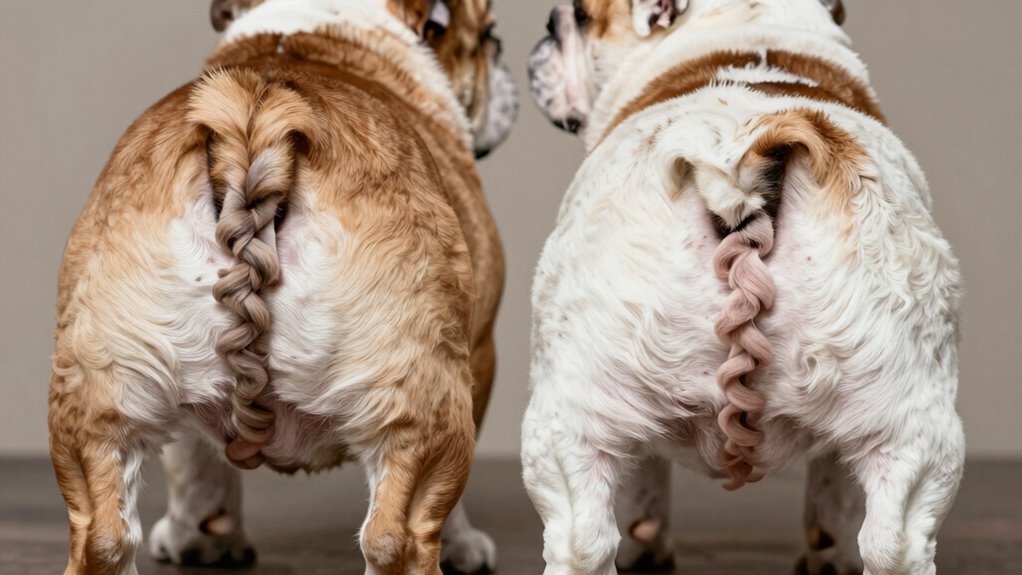
Though attitudes vary across borders, the global trend is clear: tail docking is increasingly seen as unnecessary and ethically questionable.
We see it in how laws shift—countries like the UK and Australia ban cosmetic tail docking outright, allowing exceptions only for medical needs or working dogs. In New Zealand, routine tail docking has been illegal for years, reflecting stronger public support for natural canine forms.
The American Veterinary Medical Association opposes tail docking for aesthetic reasons, emphasizing that dogs thrive without surgical alteration. Here in the U.S., regulations differ by state—some allow the practice with few limits, while others move toward stricter oversight.
Across Europe, many nations prohibit it entirely. We’re witnessing a collective push, led by vets and animal welfare groups, to end tail docking as tradition gives way to science.
These changes aren’t arbitrary; they’re rooted in understanding pain, behavior, and a dog’s right to bodily integrity. As awareness grows, we choose empathy over custom, backing policies that honor dogs’ natural lives.
Caring for Your Bulldog’s Natural Tail
We keep our Bulldogs healthy by paying close attention to their unique anatomy, starting with their tails. Caring for your bulldog’s natural tail means understanding the English Bulldog’s typical short, corkscrew shape—often 5–6 inches long with a thick base and slight crook.
These tails, especially inverted ones, can trap dirt and moisture, making proactive hygiene essential. Here’s how we stay on top of it:
- Inspect weekly for redness, swelling, or foul odor, especially under the tail fold
- Clean gently with a damp cloth or vet-approved wipe to remove debris from skin pockets
- Dry thoroughly after cleaning to prevent bacterial growth in moist crevices
- Consult your vet if you notice kinking, discomfort, or recurrent infections
We’ve learned that consistency protects against deeper issues. The English Bulldog’s tail isn’t just a physical trait—it’s a focal point for wellness.
Frequently Asked Questions
Do English Bulldogs Get Their Tails Docked?
we don’t dock our english bulldogs’ tails—they’re born with natural tail length, and we cherish every curve. docking’s unnecessary, so we keep them whole, healthy, and true to who they are, because love means accepting them exactly as they come.
Why Do They Cut English Bulldog Tails?
We don’t cut tails for looks—love them as they are. Could harming Tail Health truly be care? We protect, not alter, honoring each wag as nature intended, especially when love means leaving well enough alone.
Do English Bulldogs Have Tails When They Are Born?
We’ve got tails when we’re born, yes—natural ones, not docked. Our tail length varies, from short stubs to 5-6 inches with a sweet crook. Some of us even sport cute corkscrews or need extra care if they curl inward.
Does Tail Cropping Hurt Dogs?
Yes, we understand it hurts—sharply slicing through skin and nerves isn’t gentle. We worry about tail health, infections, pain. Can’t we honor their bodies as they are? Let’s choose kindness over tradition, together.
Conclusion
We see the truth clearly: English Bulldogs are born with natural tails, not docked. We value function over form, health over habit, history over harm. We breed for tails 5 to 6 inches long, slightly crooked or screwed, not kinked or inverted. We reject unnecessary docking, support proper care, and uphold laws that protect dogs. We choose comfort. We choose ethics. We choose science. We choose the tail they’re born with.