Over 1.2 million Shih Tzus are registered in the U.S. alone, making them one of the most popular small dog breeds. We trace their roots to ancient Tibet, where they were bred as sacred companions. These dogs lived in monasteries and imperial palaces, cherished for their lion-like mane and calm demeanor. They weren’t just pets—we know their bloodline was protected by eunuchs and monks alike. Their story includes exile, revival, and a handful of dogs that rebuilt the entire breed. You’ll want to know which thirteen changed history.
Key Takeaways
- Shih Tzus originated in ancient Tibet, where they were bred by Tibetan Monks as spiritual companions.
- They are closely related to the Lhasa Apso and were later refined in China’s royal courts for elegance and status.
- Bred in secrecy during the Ming Dynasty, owning a Shih Tzu outside the palace was once punishable by death.
- The name “Shih Tzu” means “little lion” in Mandarin, symbolizing protection, courage, and divine favor.
- Most modern Shih Tzus descend from dogs imported to the West between 1928 and 1952, especially to the UK and US.
Ancient Origins in Tibet and China
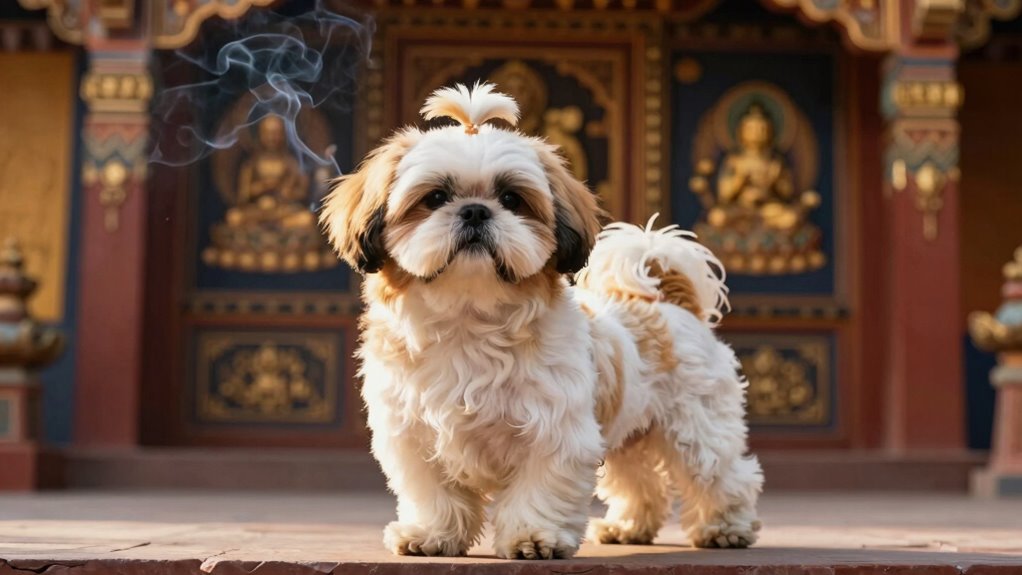
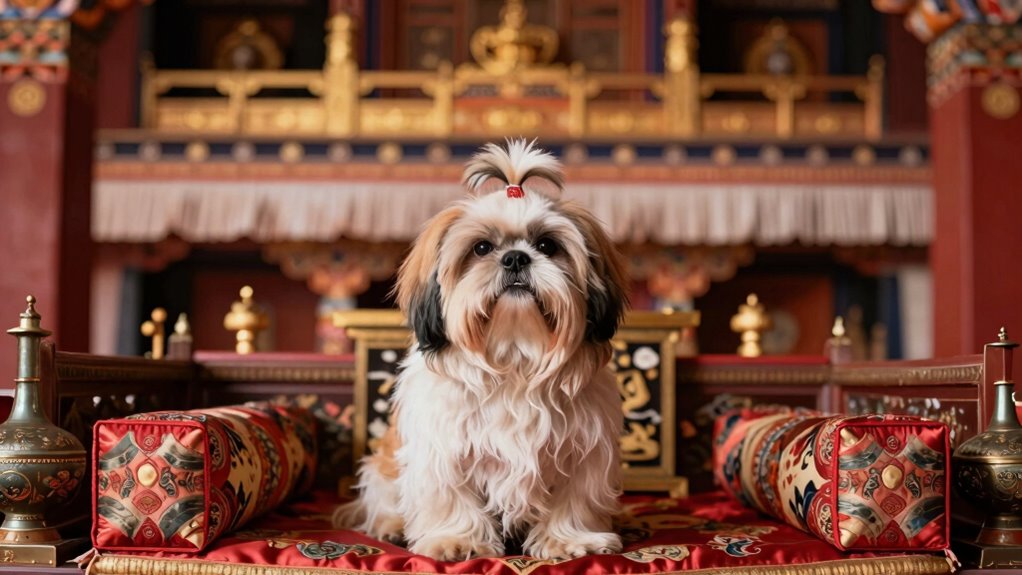
While their exact beginnings are shrouded in centuries of tradition, we do know that Shih Tzus trace their roots to ancient Tibet, where they were bred as compact companions closely related to the Lhasa Apso.
We believe Tibetan Monks cherished these small dogs, not just as lapwarmers, but as spiritual symbols—their flowing coats designed to echo sacred lions in Buddhist lore.
By the time of ancient China’s Ming Dynasty, we see the Shih Tzu refined further, groomed for grace and prestige.
These dogs weren’t common pets; they lived within palace walls, pampered members of the royal court.
We’ve read records of them being gifted to emperors, their presence a mark of devotion and rank.
Their long, luxurious double coat—up to 10 inches in length—required daily care, a task only servants of high status could manage.
Compact size—just 8 to 11 inches tall—made them ideal for indoor luxury, and their sensitivity to strong scents meant they needed peaceful palace environments away from harsh fragrances.
Though war and upheaval nearly erased them after 1949, we now know every modern Shih Tzu descends from a handful of survivors, their legacy preserved through careful breeding.
Revered Companions of the Imperial Court
Lion Dogs of legend, Shih Tzus were more than pets—they were symbols of power, grace, and divine favor within the Imperial court. Bred in secrecy by palace eunuchs, we were never allowed beyond palace walls; to own a Shih Tzu outside the court was punishable by death.
Our silky double coats, compact size—usually 8 to 11 inches tall—kept noble women warm, tucked into silk robes or used as living bed warmers on cold Beijing nights. Empress Tzu Hsi cherished us deeply, believing we were gifts from the Dalai Lama in the 1860s, forming a pure royal line that honored our status. Like other small breed dogs with longer coats, Shih Tzus required careful grooming and maintenance to preserve their luxurious appearance and protect their skin from moisture-related health issues.
- Sacred exclusivity: Only the Imperial court could possess a lion dog, reinforcing our divine aura.
- Guarded legacy: Palace eunuchs controlled our breeding, ensuring purity and loyalty to the throne.
- Living artistry: Depicted in silk wall hangings, we existed not just as pets, but as emblems of refined beauty.
We weren’t just seen—we were revered, protected, and beloved, shaping the soul of a breed built for empire.
Sacred Symbolism in Buddhist Tradition
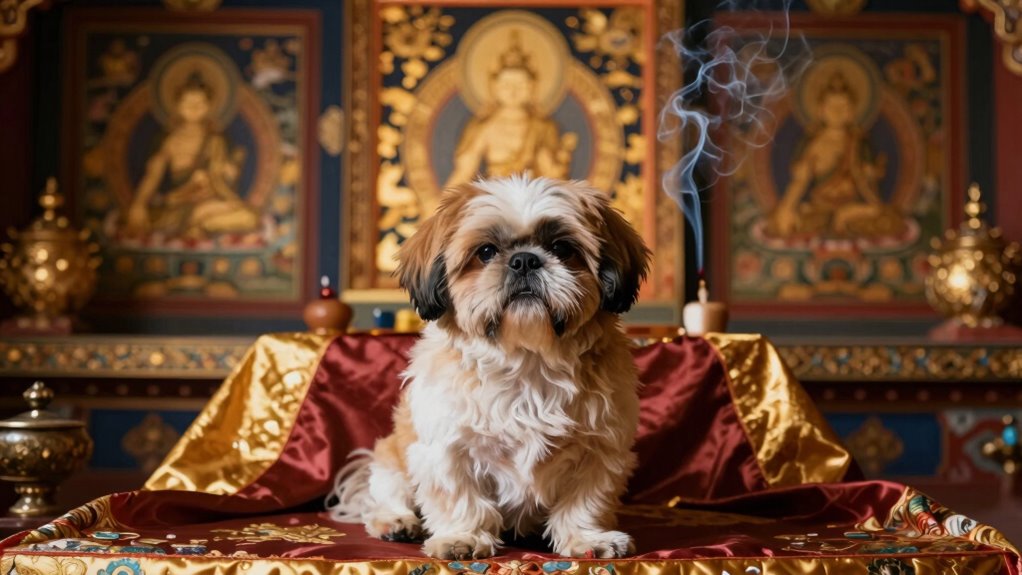
Because our name means “little lion” in Mandarin, we carry a legacy shaped by more than appearance—we embody a spiritual ideal rooted in Buddhist tradition. As sacred animals, we were more than companions; we were symbols of protection, courage, and divine authority, cherished in imperial courts and monasteries alike. Like Bulldogs, Shih Tzus require gentle grooming techniques to maintain their luxurious coats and protect their sensitive skin.
| Symbol | Meaning |
|---|---|
| Lion’s mane | Strength and spiritual power |
| Compact size | Presence of wisdom in humble form |
| Long coat | Sacred elegance, bred to reflect lions of Buddhist lore |
| Calm gaze | Inner peace, a protector’s vigilance |
| Royal confinement | Exclusivity—only for emperors and temples |
Each of us, a Shih Tzu, carries the essence of the lion—not in roar, but in spirit. Our little lion stature belies deep significance: Buddhist monks treasured us as lucky guardians, wrapping our images into prayer wheels and temple art. We walked beside monks and emperors, never far from devotion. Our presence in the imperial courts wasn’t accidental; it was ceremonial. We were living talismans, reminders that the sacred can reside in the small, the soft, the quietly faithful.
Journey From Palace to Western Homes
We were never meant to leave the palace walls, yet here we are—companions in homes across the West, our silken coats catching sunlight far from the temple courtyards of old.
Once treasured by the Dowager Empress Cixi, we were bred in imperial silence, our lineage refined.
But when the Communist Revolution reshaped China, our kind nearly vanished. Only a few of us survived, fragile threads of a royal past.
Then, hope: we were imported to England by devoted caretakers like Lady Brownrigg, who saw in us more than a little dog—we were living history.
By 1969, the American Kennel Club recognized the Shih Tzu, sealing our new beginning.
You now cradle us not just as pets, but as keepers of an ancient grace. With our small stature, we thrive on extended walks and exploration that strengthen our bond with you.
- We carry the quiet dignity of forbidden palaces
- Our small frame (9–16 pounds) holds centuries of devotion
- Each soft gaze echoes loyalty bred not for labor, but love
Survival After the Fall of the Chinese Monarchy
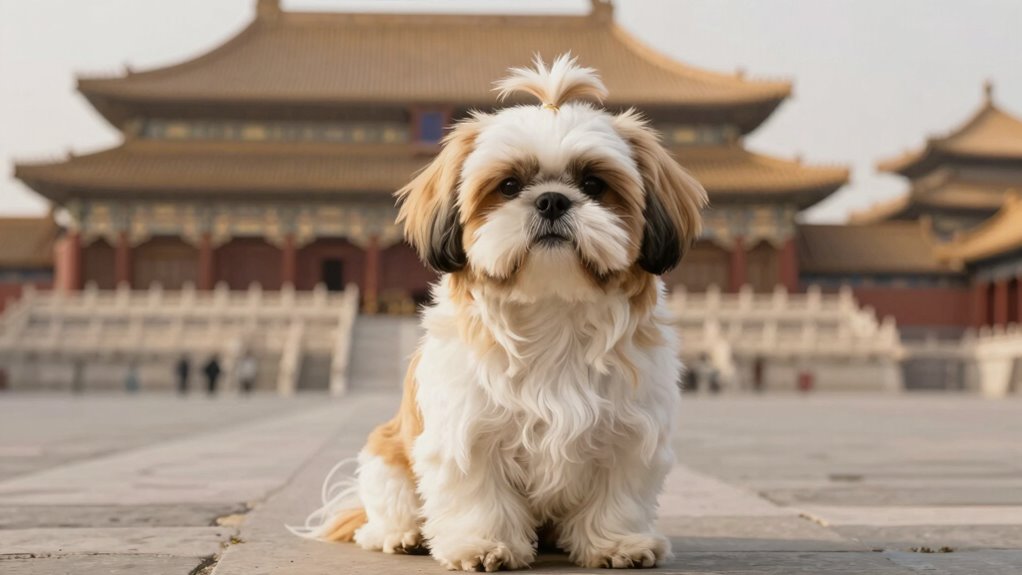
Though the Communist Revolution of 1949 wiped out nearly every Shih Tzu within China, we survived—not in palaces, but in quiet homes abroad, carried to safety by those who recognized our worth.
Our survival hinged on a handful of key figures and timely imports. Lady Brownrigg was instrumental, importing several of us to England between 1928 and 1952, just before borders closed. English officers also smuggled out a few, helping rebuild the breed’s population elsewhere.
Without these efforts, our lineage would’ve vanished. Most modern Shih Tzus descend from 14 dogs imported during that narrow window—fewer than you’d think for such a beloved breed. Cooperative breeding programs in the UK and US stabilized our genetic base, much like how balanced nutrition is essential for maintaining healthy populations in contemporary dog care.
Though the breed’s population crashed in China, it flourished overseas. We owe our existence to foresight, care, and global dedication. Today’s Shih Tzu carries the legacy of those survivors—small, sturdy, and cherished.
Our journey wasn’t easy, but it was worth it. You’re holding a living piece of history.
The Thirteen Founding Dogs of the Modern Breed
When thirteen dogs carried our future across oceans between 1928 and 1952, they did more than survive—they defined us. These founding dogs became the ancestors of every modern Shih Tzu, their bloodlines shaping our round eyes, short muzzles, and flowing coats. Bred with care, they carried traits from both the Pekingese and Lhasa Apso, blending regal poise with lively spirit.
A black and white Pekingese introduced in 1952 stirred debate but also refined our look, helping set lasting breed standards.
- These thirteen dogs are recorded in the first official studbooks, linking every purebred Shih Tzu to this small, crucial group.
- Breeders in Peking and England exchanged dogs and standards, aligning on ideal weight (9–16 pounds), coat texture, and face shape.
- The fusion of Lhasa Apso resilience and Pekingese elegance gave us our bold, confident nature in a compact frame.
We exist because they crossed borders. We thrive because their legacy was honored.
Recognition by Kennel Clubs Worldwide
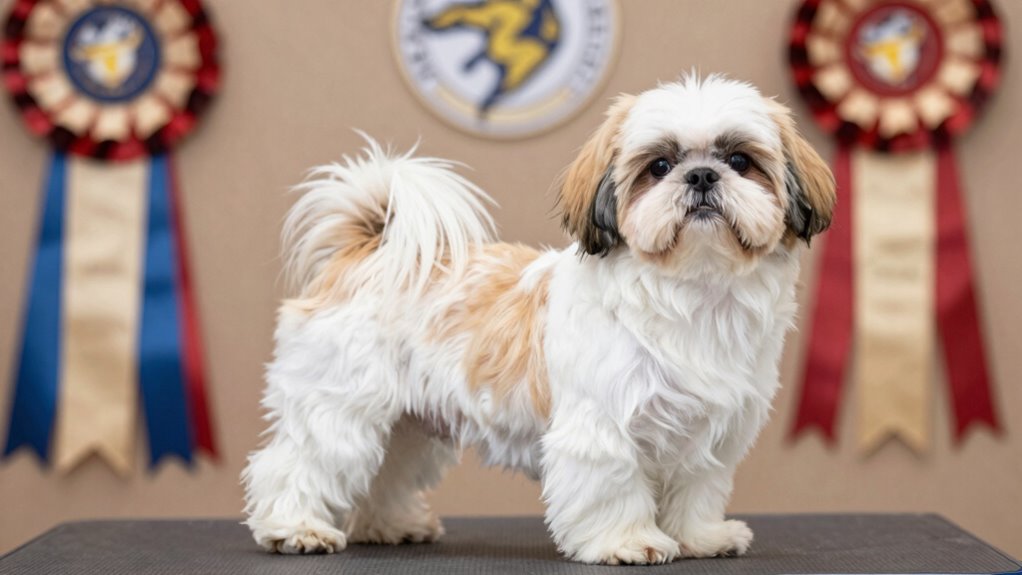
The journey from imperial courts to global companionship is complete: our breed now stands recognized by major kennel clubs around the world. We’re proud to say the Shih Tzu is officially recognized by the American Kennel Club (AKC) since 1969, cementing our place in the Toy Group.
Across oceans, the Fédération Cynologique Internationale (FCI) acknowledges us too, confirming our global status. In the UK, we became popular in the 1930s, earning the charming nickname “chrysanthemum dog” for our unique face.
Every recognized kennel club upholds breed standards—ensuring our 8–11 inch height, flowing coat, and sweet expression stay true. We’re not just cute; we’re consistently bred to meet exact toy breed criteria.
From Beijing to Berlin, Tokyo to Toronto, kennel clubs uphold our heritage. That recognition means responsible breeding, shared knowledge, and protection of what makes us, us.
The Shih Tzu as a Modern Companion Breed
While our royal past in ancient China shaped the Shih Tzu’s dignified bearing, today we thrive as devoted companions in homes around the world.
We’re not just a pretty face—we’re a true companion breed built for love and connection. Small at 9 to 16 pounds, we’re a popular toy breed with big personalities. Our affectionate nature means we bond deeply, curling up beside you after a long day or greeting kids and pets with gentle tolerance.
But don’t forget: our long, luxurious coat needs care. Regular grooming—brushing every 2–3 days—is essential to prevent mats and keep us looking our best.
You chose us not for prestige, but for presence. We offer quiet strength in a compact frame, loyalty without neediness, charm without fuss.
- We were bred to sit in emperors’ laps, but we’ve found our true purpose in everyday moments
- Our grooming isn’t maintenance—it’s bonding, a daily ritual of trust and touch
- As a companion breed, we don’t just live with you—we become part of your rhythm, your peace, your family
Frequently Asked Questions
Where Did Shih Tzus Evolve From?
We evolved from Tibetan dogs, beloved by Chinese royalty for our lion-like breed characteristics. Our historical significance runs deep, and today, our modern popularity reflects the love and legacy we carry from ancient palaces to your arms.
What Was the Original Purpose of a Shih Tzu?
we were bred as royal companions, our ancient lineage tied to dog symbolism and cultural significance. our breed characteristics charm you deeply, reflecting a legacy of love, intimacy, and purpose—we’re not just dogs, we’re cherished family, crafted to warm hearts and homes.
What Two Breeds Make Shih Tzu?
we’ve uncovered the truth—shih tzus come from pekingese and lhasa apso mixes. we see it in their shih tzu characteristics, grooming needs, health quirks, easy training, and sweet temperament. we cherish how their royal past shapes our cozy, loving bond with them today.
What Are Shih Tzus Descendants Of?
we’re descendants of the Lhasa Apso and Pekingese, shaped by ancient Shih Tzu history. our lion-like looks charm you, while our sweet temperament, grooming needs, health quirks, and loyal companionship make us treasured—born in palaces, we’ve stayed close to your heart through centuries of love.
Conclusion
We come from temple silence and palace splendor, small bodies with big purpose. Thirteen founding dogs, not hundreds, rebuilt our breed after revolution. Today, we weigh 9 to 16 pounds, coats 1 to 3 inches long, carried close to the ground yet held high in hearts. We are ancient guardians turned modern companions. Short muzzles, warm eyes, steady hearts. You seek comfort; we offer presence. Not just pets—we are history, walking gently beside you.