
Cats dart, dogs dash—yet peace is possible with the right approach. We manage introductions by starting with separate rooms, ideally 10–12 feet apart, and swap bedding every 48 hours to acclimate scents. We use baby gates to allow supervised sightlines without direct contact. Our method prioritizes safety, structure, and incremental trust. What we do next determines whether they coexist or clash.
Key Takeaways
- Gradually introduce scents using a shared cloth to familiarize pets with each other safely.
- Use baby gates or cat flaps to create secure, dog-free zones for cats.
- Keep initial interactions short, supervised, and on-leash to ensure safety and control.
- Reward calm behavior with treats and soft praise to reinforce positive associations.
- Maintain consistent routines and boundaries to build trust and prevent conflicts.
Understanding Cocker Spaniel Temperament and Cat Behavior

When we take the time to understand both the natural instincts of Cocker Spaniels and the behavioral cues of cats, we set the foundation for a peaceful household.
We acknowledge that Cocker Spaniel temperament is inherently affectionate and social—they thrive on closeness and companionship, often seeking out connection with people and pets alike. Yet we also honor their hunting roots, which influence how we approach introducing Cocker Spaniel to a home with cats.
We watch cat behavior closely: flattened ears, puffed fur, or a stiff tail mean fear or defensiveness. Hissing, swatting, or hiding signal the need for space. We respond with patience, not pressure.
We understand not every cat welcomes a dog, just as not every Cocker Spaniel adjusts quickly. Success lies in reading both species honestly—their signals, rhythms, boundaries.
We create calm entry points, use leashes, keep interactions brief at first. We never force proximity. Over days, then weeks, we build trust.
We manage environments so both pets feel safe. Cocker Spaniels with sensitive skin may also benefit from a calm, stress-free household, as anxiety can trigger skin flare-ups and itching. And in that balance, we grow our family—intentionally, gently, together.
Recognizing Prey Drive in Cocker Spaniels
We recognize that even the most affectionate Cocker Spaniel carries instincts shaped by generations of flushing game from dense brush and chasing fast-moving birds.
That hunting legacy means prey drive is real—and it can spark suddenly when a cat darts across the room.
But with awareness and action, we can keep both pets safe and calm. We monitor interactions closely, especially at first, watching for intense focus, stiff posture, or sudden lunging—signs the prey drive is kicking in.
Early socialization makes a critical difference: puppies exposed to cats in safe, controlled settings learn calm responses.
Every dog’s prey drive varies, so we observe carefully and respond with patience. Just as slow feeders help French Bulldogs with mental stimulation and behavioral control, structured environments help Cocker Spaniels manage their hunting instincts.
To help you connect deeply with your pets’ needs, remember these truths:
- A split-second chase can leave lasting fear in a cat.
- Your dog’s stare isn’t love—it may be fixation.
- Unchecked prey drive erodes trust in both animals.
- Your calm control builds security for them both.
We’ve seen harmony grow from vigilance, training, and love.
Setting Up Safe Zones for Cats and Dogs
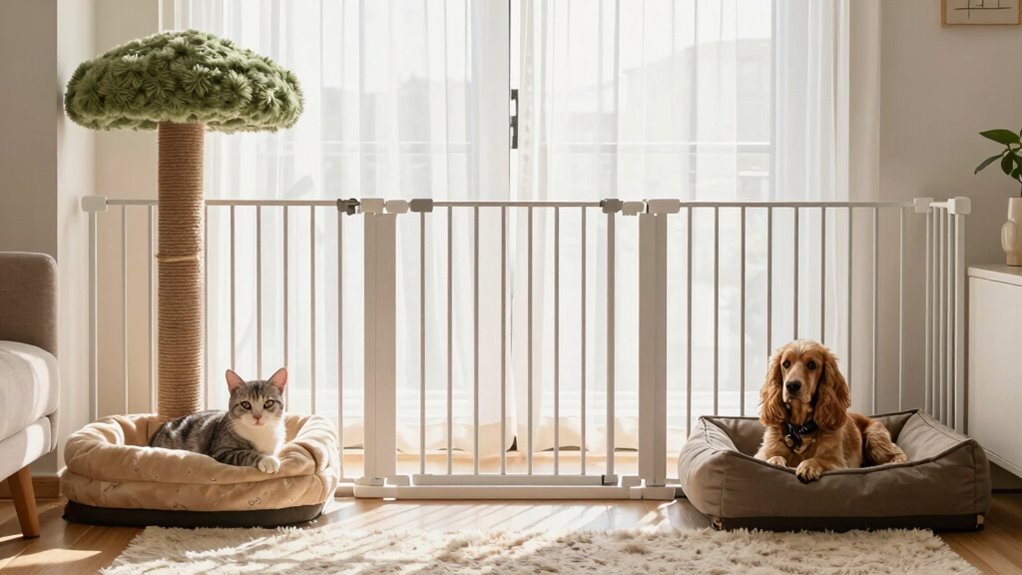
While every home setup differs, one rule holds true: safety and structure pave the way for peace between Cocker Spaniels and cats.
We create safe zones for each pet so they can claim their own space and reduce stress from the start. We designate quiet corners or separate rooms—like a bedroom or enclosed porch—where each animal has their own food and water bowls, toys, and cozy bedding.
For our cat, we install a cat flap or baby gate 30 inches high, allowing quick escape to a dog-free zone. This vertical or gated space, ideally 24 inches wide, lets our feline friend relax above or away from our spaniel’s playful bursts.
We guarantee both pets access essentials without confrontation. These consistent boundaries help them feel secure. Chewing releases endorphins, which can help reduce anxiety in dogs when they have appropriate outlets in their designated spaces.
We monitor interactions daily, watching body language closely. Over time, we adjust safe zones as trust builds.
With patience and clear design, we lay the foundation for calm, lasting harmony in our home.
Creating Separate Spaces to Reduce Stress
Cocker Spaniels bring energy and charm, and cats often prefer calm and control—balancing those needs starts with space.
We create separate spaces to reduce stress and build trust from the beginning. These personal zones aren’t just physical—they’re emotional sanctuaries where each pet feels safe, seen, and secure. By designating clear areas, we set the stage for lasting positive interactions.
Here’s how we make it work:
- We set up dedicated rooms or corners, each with their own bed, food bowl, water, and toys—no sharing, no tension.
- We use baby gates (36-inch height) or cat flaps (6 x 6 inches) to let cats escape quickly while keeping dogs gently contained.
- We place cat zones high—like 4-foot shelves or window perches—where they can observe without feeling trapped.
- We check daily, adjusting layouts so both pets access their spaces easily, without confrontation.
We stick to this routine because consistency builds confidence. Creating non-slip surfaces and secure perches in cat zones can reduce anxiety by up to 55%, similar to how pet safety features minimize stress during other activities.
These separate spaces aren’t about keeping them apart—they’re about bringing them together, peacefully, over time.
Swapping Scents to Build Familiarity

Since scent drives how animals truly experience the world, we use it to quietly lay the foundation for peace between our Cocker Spaniel and cat. Scent swapping helps us reduce anxiety by letting each pet meet the other through smell—safely, gradually, and without fear. We take a soft cloth or blanket, rub it gently on one pet, then let the other sniff it over several days. This builds positive associations with the unfamiliar scent, making the other feel less like a threat and more like family. By understanding how scent drives animal behavior, we can leverage this natural communication method to create lasting bonds between species that might otherwise view each other with suspicion.
We repeat this process multiple times, watching for calm behavior before moving forward.
| Action | Purpose |
|---|---|
| Rub cloth on pet’s fur | Captures natural scent |
| Place cloth near other pet | Encourages curiosity |
| Rotate scents every 2–3 days | Strengthens familiarity |
| Monitor for stress signs | Helps us reduce anxiety |
We stay patient, consistent, and quiet. Our steady rhythm makes all the difference. Through scent swapping, we’re not just introducing pets—we’re growing trust, one breath at a time.
Conducting Visual Introductions With Barriers
How do we let our pets see each other for the first time without risking a chase or a swipe? We start by conducting visual introductions using a sturdy baby gate or mesh barrier, keeping our Cocker Spaniel and cat safely apart.
These supervised sessions begin at just 5–10 minutes, letting both animals adjust at their own pace. We watch their body language closely—hissing or swatting in the cat, intense staring or whining in the dog—and respond calmly.
We reinforce quiet, relaxed behavior with treats and soft praise, building positive associations each time they see one another without fear or excitement. We clear the space of toys, food, or loud noises so they focus only on each other.
We create safety, one glance at a time:
- We protect their peace with secure barriers.
- We honor their pace with short, daily meetings.
- We reward calm hearts with gentle words and snacks.
- We trust quiet moments to weave a bond.
Managing Supervised First Meetings

Once we’ve built trust through visual barriers, we move to supervised first meetings with clear rules and tight control.
We keep our Cocker Spaniel on a six-foot leash—loose enough for movement, short enough for safety—while letting the cat roam freely. This balance lets both pets explore at their pace.
These early supervised interactions last just five to ten minutes, happening twice daily in a quiet, familiar room. We watch body language like a hawk: flattened ears, stiff tails, or crouched postures mean it’s time to gently redirect or end the session. Calm sniffs or relaxed blinking? That’s progress.
We use positive reinforcement the moment we see quiet curiosity—soft treats, hushed praise, gentle pats. We never force contact. Trust grows slowly, in layers.
Over days, we extend time by two-minute increments only when both pets stay settled. Consistency is key. Short, predictable meetings build confidence.
We’re not rushing. We’re guiding. And every small step together strengthens their bond in the safest, kindest way.
Encouraging Calm Interactions With Positive Reinforcement
We set the stage with short, structured meetings, and now we shape those moments into lasting harmony through positive reinforcement.
With Cocker Spaniels, whose enthusiasm can overwhelm, we redirect energy into calm interactions using treats, praise, and quiet reassurance.
Every soft gaze, relaxed posture, or quiet approach from your dog or cat is a win—reward it instantly.
Over time, these rewarded moments build trust, turning tension into tenderness.
You’re not just training pets; you’re nurturing a bond. Here’s how we make it feel like home:
- We celebrate small wins—five seconds of calm nearness, then ten, then more.
- We use high-value treats, like chicken slivers, during peaceful coexistence.
- We speak in hushed, warm tones to soothe nerves and deepen connection.
- We stay consistent—same rules, same rewards, every single day.
Positive reinforcement isn’t magic—it’s commitment.
And with patience, your Cocker Spaniels and cats don’t just coexist. They choose each other.
Addressing Chasing and Redirecting Focus
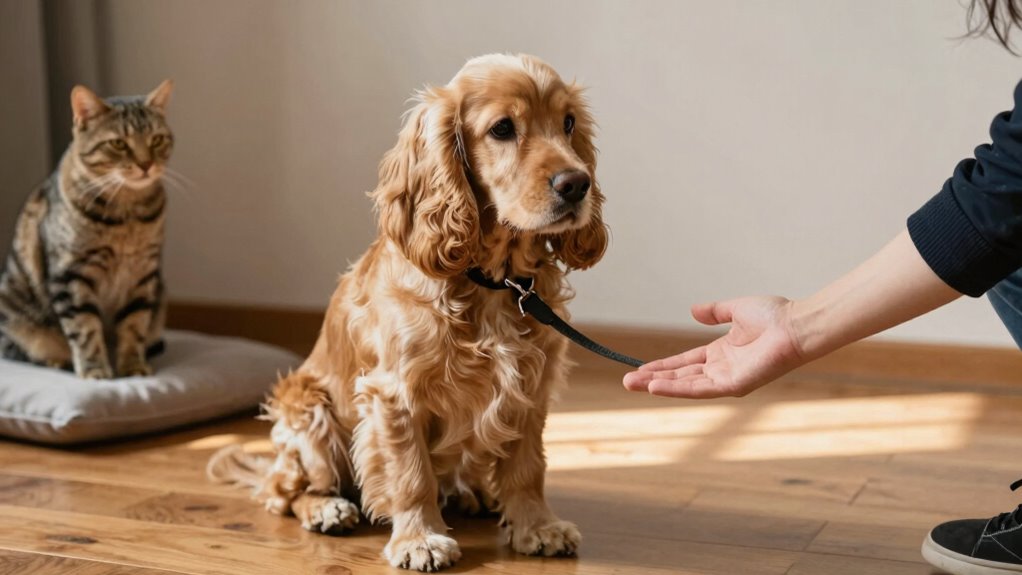
When your Cocker Spaniel locks eyes on the cat and tenses with focus, that moment demands immediate action—because unchecked, that stare often leads to a burst of chasing.
It’s understood that their hunting roots fuel strong chasing behaviors, so we must step in early. The second we see staring, whining, or stiffening, we redirect focus firmly but calmly. A favorite toy, a sharp “leave it,” or a recall command breaks the spell.
We train “leave it” and “come” daily, using treats and praise—positive reinforcement that builds trust and obedience. Every time they obey, we reward instantly.
We stay present during interactions, because even trained dogs can slip when overexcited. Redirecting focus isn’t punishment—it’s guidance. We keep sessions short, consistent, and clear.
We use high-value treats like small pieces of chicken or cheese, about ¼-inch cubes, delivered within one second of good choices. With practice, our Cocker learns calmness wins more than chasing ever will.
We shape behavior step by step, and slowly, that intense stare fades into curiosity, not pursuit.
Maintaining Long-Term Harmony With Routine and Boundaries
Though harmony doesn’t happen by accident, it can become the daily norm with deliberate structure and consistent boundaries. We build trust through routine—feeding, play, and walks at the same times each day—so both our Cocker Spaniel and cat feel secure.
Clear boundaries matter: separate food bowls, designated resting spots, and safe zones prevent tension and resource guarding. We reinforce positive behavior with quick treats and soft praise when they stay calm near each other.
Training stays consistent—commands like “leave it” and “stay” manage instinctive chasing and keep peace intact.
We’ve found that these small, daily choices create lasting connection. When we honor each animal’s needs with love and clarity, they learn to do the same for each other.
- A steady routine makes our home feel safe and predictable.
- Respecting boundaries builds trust and prevents anxiety.
- Celebrating positive behavior strengthens their bond.
- Our patience today grows their peace tomorrow.
Frequently Asked Questions
Can Cocker Spaniels Get Along With Cats?
Yes, we’ve found Cocker spaniels can get along with cats when we honor their temperament traits and learn cat behavior understanding. We share safe playtime tips, use patience, and build trust—bonding grows deeper when we guide them with love and consistency every step of the way.
How to Introduce a Cocker Spaniel to a Cat?
We start introducing pets safely, using gradual exposure so everyone feels secure. We create mutual space with barriers, swap scents, and supervise closely, rewarding calm moments. We’re patient together—this builds trust, softens fears, and helps our hearts sync in harmony.
How Long Does It Take for a Dog to Get Used to a Cat?
We’re like gardeners tending fragile blooms—dog behavior adjustments take days to months. We watch for cat stress signals, honor the gradual integration process, and grow trust together, hand in paw, heart to heart, moment by quiet moment.
What Is the Best Companion Dog for a Cocker Spaniel?
We believe the best companion dog for a Cocker Spaniel is one that matches their friendly Cocker Spaniel traits. We love Ideal playmate breeds like Cavalier King Charles Spaniels or Beagles because we understand dog personality compatibility means everything to us.
Conclusion
We’ve set the rules, swapped the socks (literally—scented blankets work), and dodged the zoomies. No, your Cocker Spaniel won’t write poetry with the cat tomorrow. But with 10-minute supervised sessions, a 6-foot leash, and consistent “leave it” commands, peace isn’t fantasy. Safe zones? Non-negotiable. Treat rewards? Dime-sized, not fistfuls. Boundaries hold. Progress tracks. Coexistence isn’t magic—it’s management, measured in inches, then milestones.