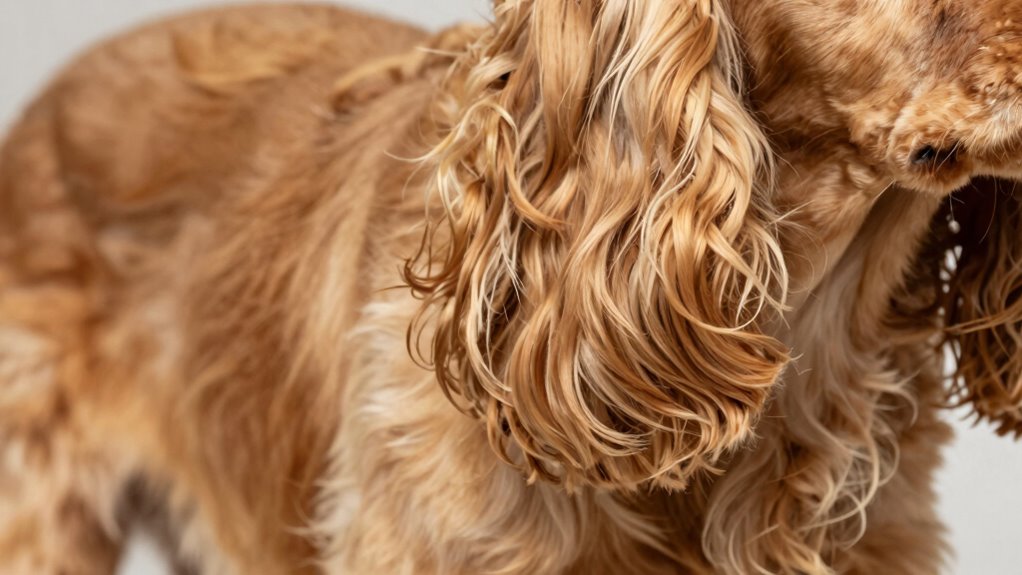
Think of a Cocker Spaniel’s coat as a flowing silk curtain, not a woolly blanket. We see it often: their glossy, feathered locks shimmer in the light, soft to the touch and built to grow like human hair. They shed less than typical fur-covered breeds, thanks to their single-layer hair structure—measuring up to 4–6 inches long—paired with a fine, dense undercoat. So why do some coat types leave less fluff on your couch? That’s where the real story begins.
Key Takeaways
- Cocker Spaniels have hair, not fur, which grows continuously and sheds less.
- Their double coat consists of a soft undercoat and a silky topcoat.
- Hair sheds lightly year-round, with less visible shedding than fur.
- Regular grooming reduces shedding and prevents matting in their long hair.
- American Cocker Spaniels have thicker, longer hair than English Cocker Spaniels.
Understanding the Cocker Spaniel Coat Type
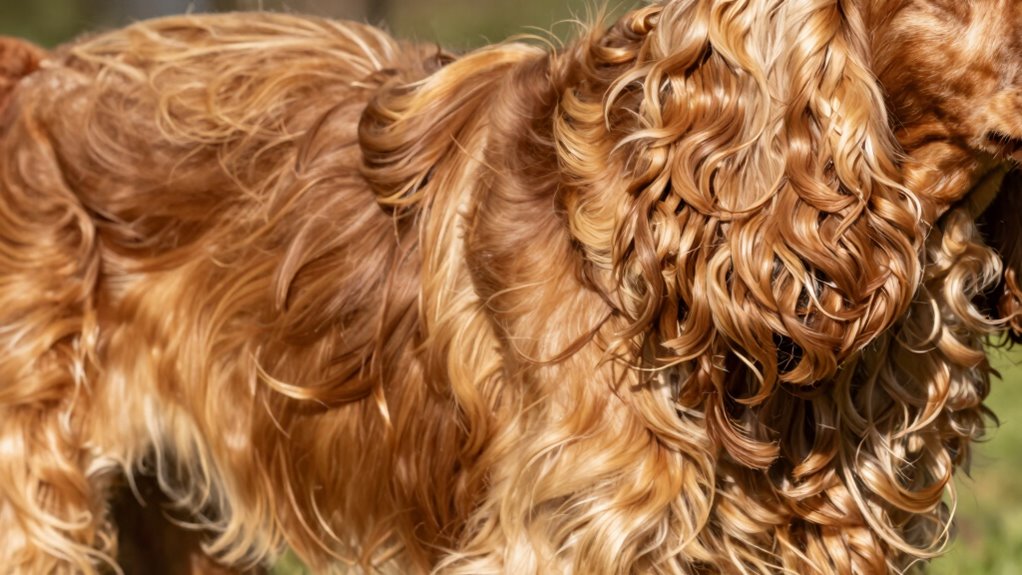
Let’s talk about texture, length, and layering—three key traits that define the Cocker Spaniel coat. Our Cocker Spaniels coat is made of hair rather than fur, which grows continuously and sheds less, making it more allergy-friendly.
It’s a double coat: a soft, dense undercoat lies beneath a longer, silky topcoat that repels water. This structure means beautiful waves and volume—but also real grooming needs. Without weekly care, tangles form fast, especially behind ears and under legs.
We manage moderate shedding most of the year, though expect increased shedding in spring and fall. American Cocker Spaniel hair tends to be thicker and longer than the English, raising grooming demands.
Daily brushing with proper grooming tools—like slicker brushes and metal combs—keeps mats at bay. Trimming every 6–8 weeks maintains shape and comfort. Using the right shampoo for sensitive skin during baths also prevents tangles and reduces irritation from harsh detergents.
We can’t skip brushing, even when life gets busy. That silky topcoat traps debris and hides knots. Commitment to care means health, comfort, and that signature Cocker glow.
We’ve got this—together.
Hair vs. Fur: What’s the Difference for Cocker Spaniels?
What if the secret to fewer vacuum sessions and more cuddle time lies in the biology of your Cocker Spaniel’s coat? It’s clear that it’s not just fluff—it’s hair, not fur.
Cocker Spaniels grow hair, which elongates continuously and sheds far less than fur. That means less dander floating around, making these pups a gentler choice for sensitive homes—though not fully hypoallergenic.
Their silky coat has two layers: a dense undercoat and a soft outer layer, both prone to tangles. Without regular grooming, mats form fast—especially behind ears and under legs. We’re talking weekly brushing, minimum.
Fur sheds seasonally and abundantly; hair sheds lightly, all year. So while maintenance feels higher, the trade-off is lower shedding. Grooming isn’t just about looks—it controls dander, reduces allergens, and keeps the coat healthy.
For Spaniels, proper care means combing every few days, clipping every 6–8 weeks, and bathing monthly. We accept the grooming demands because we value time with our dogs more than a no-maintenance myth.
Investing in essential grooming tools like slicker brushes and steel combs makes the regular maintenance routine more manageable and reduces stress for both you and your Spaniel.
With Cocker Spaniels, love means showing up with a brush in hand.
How Coat Type Affects Shedding in Cocker Spaniels
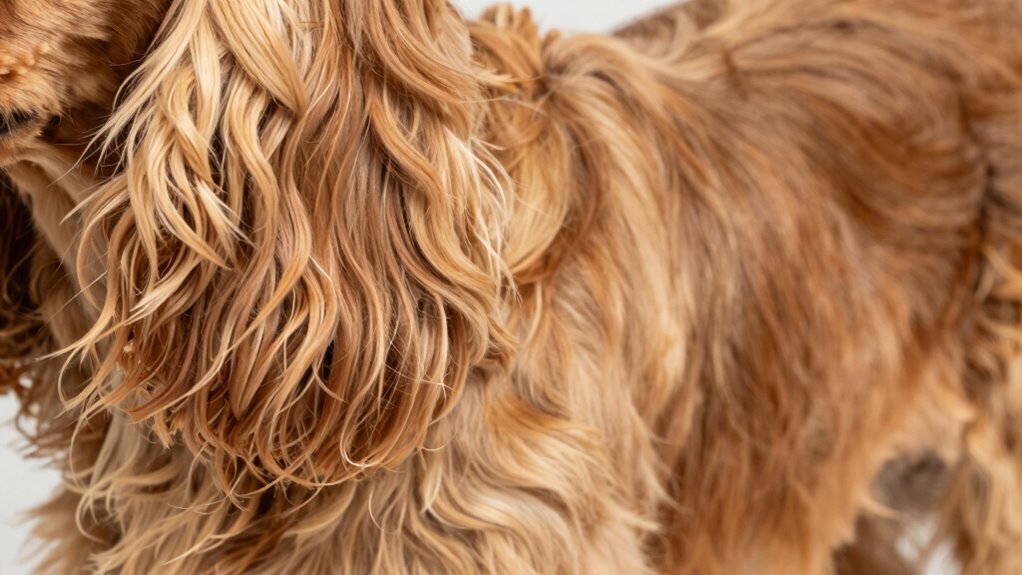
While their flowing coats may suggest otherwise, Cocker Spaniels shed less than many breeds—thanks to their hair, not fur. Their coat type creates moderate shedding, not constant fur loss. These dogs have a double coat: a soft, dense undercoat and a silky topcoat, both influencing shedding in Cocker. American Cocker Spaniels usually shed a bit more due to longer, thicker hair. Still, no Cocker is truly hypoallergenic, though their shedding tendencies are manageable.
Shedding happens year-round, peaking in spring and fall. How much your individual dog sheds depends on grooming practices, diet, and health issues. Using specialized grooming tools designed for your dog’s coat type can significantly reduce loose hair and matting concerns.
| Factor | Impact on Shedding |
|---|---|
| Coat Type (double coat) | Traps loose hair, reduces visible shedding |
| American Cocker Spaniels | Slightly more shedding than English |
| Grooming Practices | Regular brushing cuts shedding by up to 50% |
We see moderate shedding as part of life with our beloved dogs—predictable, manageable, and far from overwhelming. Your individual dog’s needs will guide how often you groom.
Grooming Tips for Maintaining a Healthy Cocker Spaniel Coat
Because their hair grows continuously and tangles easily, we need to stay on top of grooming to keep our Cocker Spaniel’s coat healthy and mat-free. Regular grooming isn’t just about looks—it’s essential for coat maintenance and overall coat health.
We brush ours at least once a week, increasing frequency during peak shedding seasons to manage loose hair. Using deshedding tools weekly helps reduce shedding and keeps the coat shiny.
We bathe them every 4 to 6 weeks with a gentle dog shampoo that supports skin and coat health. Moisturizing formulas work best for their long, silky hair.
Professional groomer visits every 6 to 8 weeks keep their coat trimmed and tangle-free, especially for show-style cuts.
Don’t skip ear cleaning—we do it weekly. Their long, floppy ears trap moisture, raising infection risks that can impact skin and coat health.
Investing in high-quality grooming tools with comfortable handles and self-cleaning features makes the grooming process faster and more enjoyable for both you and your Cocker Spaniel. Proper grooming includes ear care, brushing, bathing, and trims. With consistent care, our Cocker Spaniel stays comfortable, clean, and radiant.
Factors That Influence Hair Loss in Cocker Spaniels
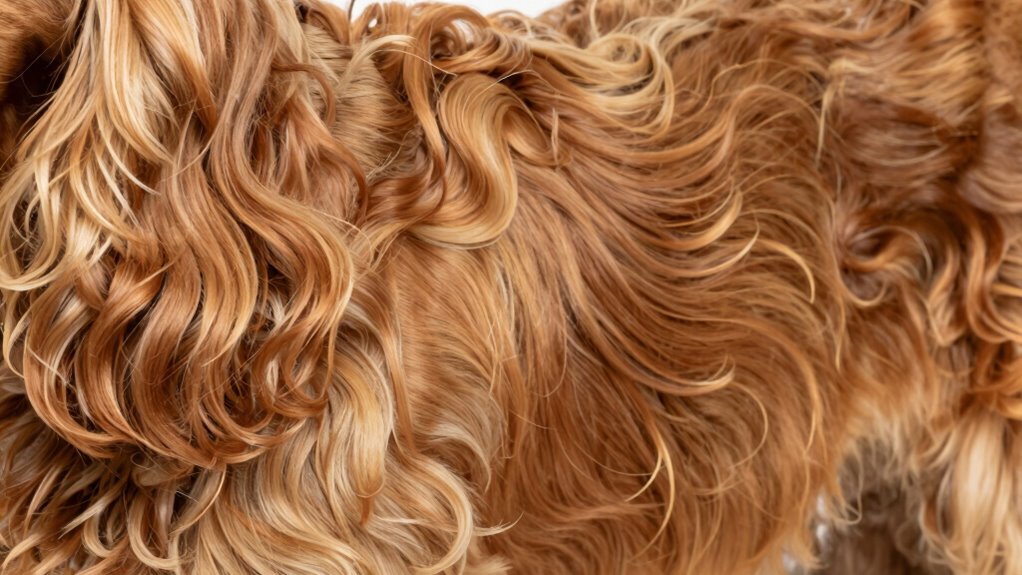
Though Cocker Spaniels have hair that grows continuously and sheds far less than furry breeds, we still see hair loss when underlying issues arise. We must look beyond brushing—common culprits include allergies, which trigger skin irritation and lead to scratching, then hair loss.
External parasites like fleas and ticks worsen this, causing inflammation and increased shedding. We also watch for hormonal imbalances, such as hypothyroidism or changes post-spaying/neutering—these disrupt normal hair growth cycles.
Nutritional deficiencies directly impact coat health; without a balanced diet rich in omega-3s, vitamins, and quality protein, even Cocker Spaniels’ lush coats thin. A lack of zinc or essential fatty acids? That shows fast. Regular chewing of natural treats like dental chews can support overall health, but nutritional intake through diet remains the foundation for strong coat quality.
We prevent excess shedding by addressing root causes: vet-guided allergy management, parasite control, blood work for hormone levels, and feeding a species-appropriate balanced diet. Together, these protect coat health.
We keep our Cocker Spaniels thriving—not just groomed—by treating the whole dog.
Frequently Asked Questions
Does a Cocker Spaniel Have Fur or Hair?
we have hair, not fur—soft, silky texture that tangles easily, so we rely on your help with grooming, shedding, and care. our maintenance keeps us healthy, reduces allergies, and lets our colors, styles, and breeds shine through every cuddle and tail wag in our 12-15 year lifespan.
Are Cocker Spaniels Hypoallergenic?
we’re not hypoallergenic, and if you’re sensitive, our dander and shedding might trigger dog allergies symptoms. though we’re not non shedding dogs, regular Cocker grooming tips and pet allergy solutions help manage Cocker Spaniel allergies and support our overall Cocker Spaniel care and health.
How Can I Tell if My Dog Has Hair or Fur?
we check our dog’s coat together—you feel the silky texture, notice minimal shedding, and see how it tangles. our grooming routine grows with seasonal changes, easing allergenic reactions. we learn: hair means higher maintenance, unique texture differences, and closer pet care that reflects breed characteristics and health implications.
What Kind of Coat Does a Cocker Spaniel Have?
We see our Cocker Spaniel’s silky coat shimmer in the light, a blend of textures you feel deeply—our grooming keeps shedding light, maintenance tied to health, color, weight, lifespan, and fewer allergies; we honor each coat type with care, ensuring softness you trust against your touch always.
Conclusion
We’ve shown you that Cocker Spaniels have hair, not fur—longer, silkier, and slower to shed, like a dancer’s ribbon unfurling with grace. Their double coat needs weekly brushing, trimmings every six to eight weeks, and ear checks twice weekly. We insist: consistent grooming prevents mats, reduces dander, and keeps their coat flowing smoothly. You’ll see less shedding on clothes and furniture. With proper care, their coat stays healthy, hypoallergenic-friendly, and ready to shine.