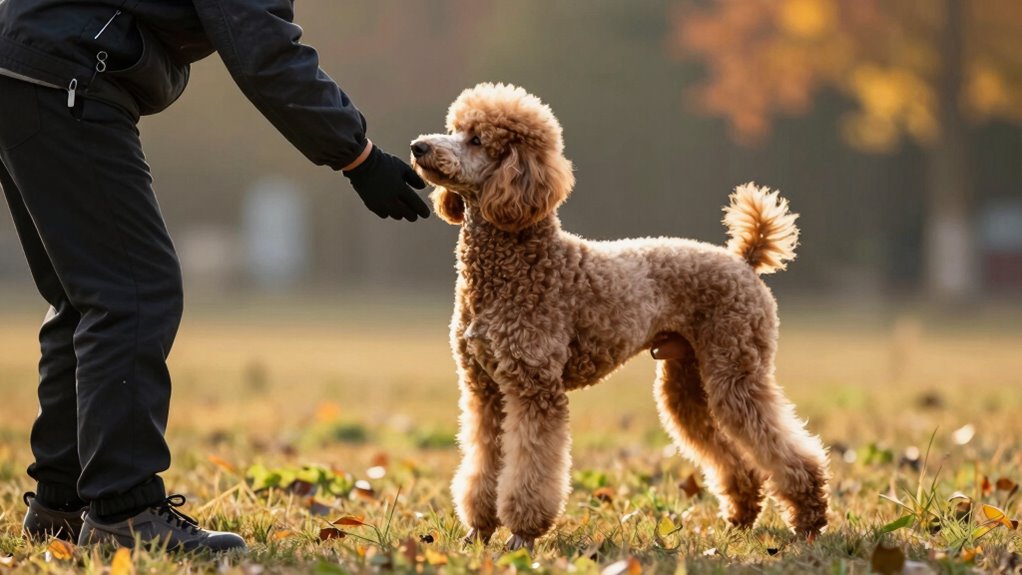
You might think poodles are too elegant to be effective protectors, but we’ve seen them excel with the right training. We rely on short, daily sessions—10 to 15 minutes, twice a day—to build sharp focus. Properly timed rewards, clear cues, and consistent routines shape reliable behavior. We start with basic obedience, then layer in real-world challenges. What we do next determines how well they respond when it truly matters.
Key Takeaways
- Poodles develop protective instincts naturally, but early training helps them distinguish real threats from everyday stimuli.
- Use positive reinforcement to build confidence and encourage calm, controlled responses in various situations.
- Establish clear leadership through consistent commands and defined boundaries to foster trust and reliability.
- Socialize poodles early and gradually to ensure balanced reactions toward strangers and new environments.
- Practice situational training like doorbell drills and surprise recalls to reinforce obedience and protective awareness.
Recognizing Natural Protective Instincts in Poodles
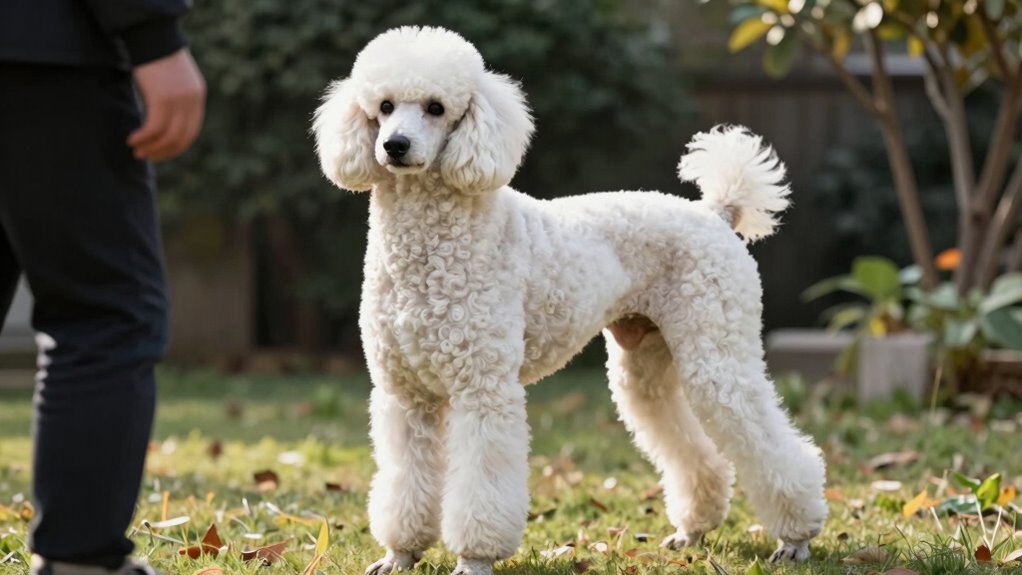
While they’re often admired for their elegant coats and intelligent eyes, we can’t overlook the fact that poodles bring more than just charm to the household—they come equipped with natural protective instincts that emerge as they mature.
Recognizing natural protective instincts starts with observing subtle shifts in behavior. Poodles are known for their alertness, especially as they age and grow more attuned to your routines. You might notice your poodle pausing mid-play, turning ears toward a sound, or positioning themselves between you and an unfamiliar person.
They often bark in a distinct, sharper tone when sensing unusual activity—this isn’t random noise, but communication. Training your poodle shouldn’t suppress this instinct but guide it. Effective training includes consistent socialization from an early age: expose them to at least 10 different people, environments, and sounds by 16 weeks. Using proper equipment like harnesses with reflective trim for safety can help manage your poodle during socialization outings and ensure visibility during training sessions.
This helps them distinguish real threats from everyday moments. Socialization doesn’t eliminate protection—it refines it. When we perceive these cues, we build a clearer path for responsive, balanced behavior.
We’re not creating guard dogs; we’re nurturing alert, thoughtful companions who watch over us with quiet confidence.
Building Confidence Through Positive Reinforcement
When we reward our poodles for calm, focused behavior, we’re not just teaching obedience—we’re shaping confidence. Positive reinforcement is the most effective way to train a poodle because they thrive on encouragement. Using treats, praise, or play, we reinforce actions like “stay” or “alert,” building confidence while guiding protective behaviors.
Consistency matters—short, daily sessions strengthen trust and focus. We make sure every experience adds to their sense of security. Socializing poodles early and often, with positive exposure to new people, pets, and environments, helps them distinguish real threats from routine moments. This adaptability is key. One-ingredient treats, such as freeze-dried chicken or dehydrated beef liver, are particularly effective during training sessions because they’re easy to break into small pieces and maintain your poodle’s focus without the distraction of complex flavors.
Obedience training isn’t about control—it’s about connection. Poodles thrive when they know what to expect and feel proud of their responses. With every “good job,” we’re not only shaping good manners—we’re nurturing courage, awareness, and loyalty.
Building confidence through positive reinforcement creates a steady, alert companion. And that’s the heart of training: raising a poodle who feels safe, valued, and ready to protect.
Establishing Clear Leadership and Boundaries
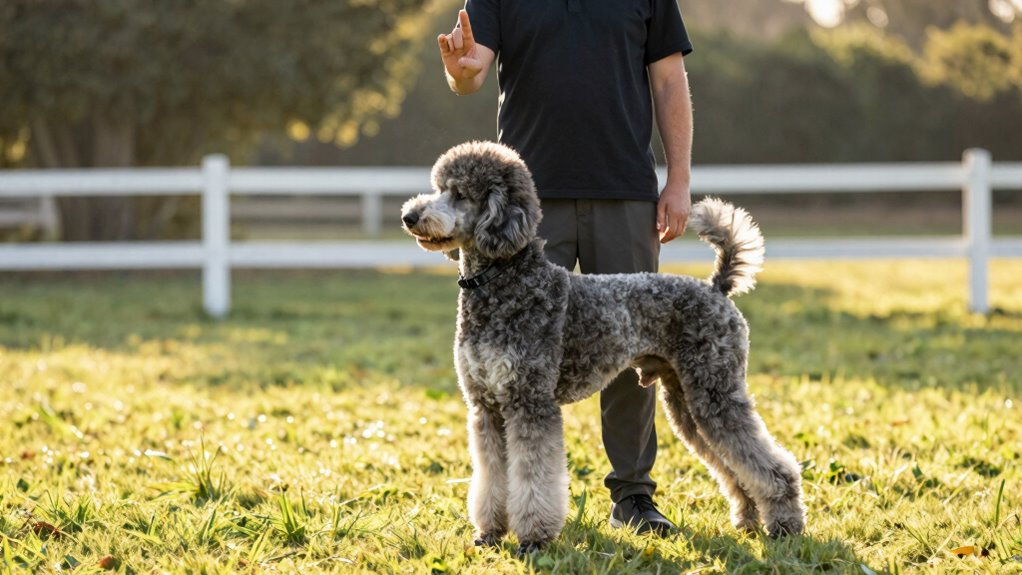
If we want our poodles to act as reliable protective companions, we must first establish ourselves as calm, consistent leaders. Establishing clear leadership isn’t about dominance—it’s about guiding with quiet confidence.
Poodles thrive when boundaries are defined: feeding times, off-limits rooms, and rules around furniture. We set these limits early and reinforce them daily. Clear commands like “sit,” “stay,” and “place” anchor our training sessions, shaping behavior and sharpening their focus.
Consistency builds trust and respect—two qualities essential to revealing their protective instincts. We practice these commands in short, structured segments—10 to 15 minutes, two to three times daily—keeping each session precise and purposeful. Much like how adjustable height flexibility helps groomers work with dogs at comfortable positions, consistent training at appropriate intervals allows poodles to absorb commands without fatigue.
While socializing poodles is important, it follows only after foundational leadership is solid. Without boundaries, even well-socialized poodles lack direction. We don’t suppress their alertness—we guide it.
With steady leadership and firm yet gentle correction, we shape their natural vigilance into reliable protection. They watch because we lead. They guard because they trust.
Socializing for Balanced Reactions to Strangers
Since our poodles must be both alert and level-headed around strangers, we start socializing them early—ideally between 8 and 16 weeks of age—when they’re most receptive to new experiences.
This early socialization builds confidence and shapes balanced reactions, ensuring they greet visitors with curiosity, not fear. We use positive reinforcement—small treats and soft praise—to reward calm, appropriate behavior whenever they meet new people.
Over time, they learn that strangers aren’t threats, which helps us guide their protective instincts wisely. Just as raw feeding diets require careful planning and tracking to maintain nutritional balance, protective training demands consistent, deliberate effort to ensure our poodles develop well-rounded temperaments.
To make this real for you, picture these moments:
- Our poodle, leash in hand, meets a friendly neighbor wearing a hat—new but non-threatening—and earns a treat for sitting politely.
- At a quiet park, they watch a calm, well-trained dog greet passersby, modeling confident, appropriate behavior.
- In a parking lot, we expose them gradually to people of different ages and clothing, reinforcing quiet focus with gentle rewards.
We stay consistent, loving, and firm—because confidence grows best with care.
Teaching Alertness Without Aggression
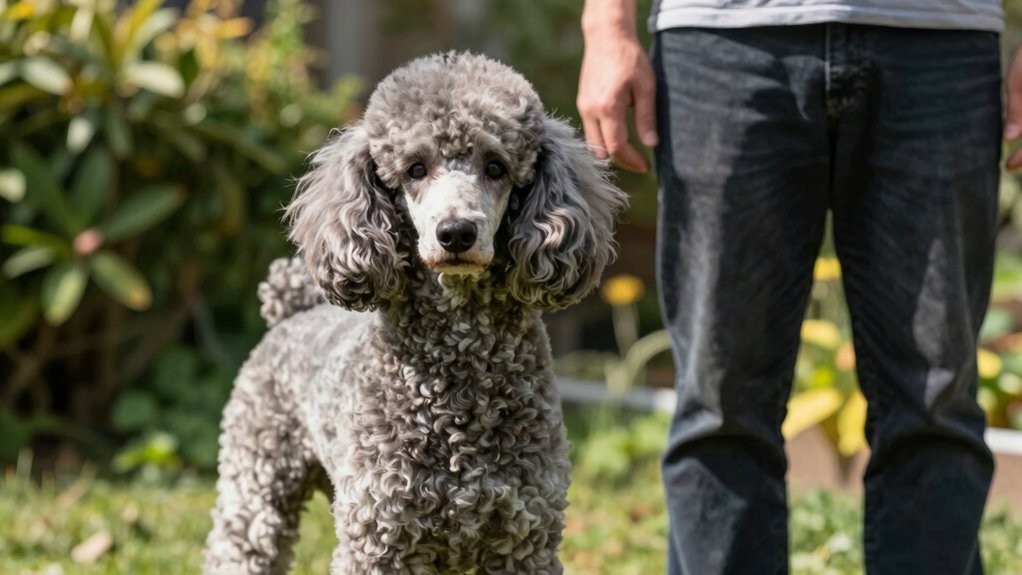
While we want our poodles to take notice of their surroundings, we never trade calm awareness for unnecessary charge. We harness their natural intelligence to build alertness the right way—through consistent positive reinforcement.
During training sessions, we reward our poodles for noticing unfamiliar sounds or movements, using clear commands and hand signals to mark desired behavior. This focus turns vigilance into a skill, not a stress response.
We pair this with ongoing socialization, exposing them to varied people, sights, and sounds so they learn the difference between ordinary activity and real cause for concern. Playful exercises, like hide-and-seek with treats, sharpen their attention without linking alertness to aggression.
We watch closely for signs of excessive barking and promptly redirect, shaping a balanced response. Incorporating positive reinforcement training into these moments reinforces calm behavior while maintaining their protective instincts. Our goal is protective companions who are watchful but not reactive—calm in the face of routine, yet reliable when it matters.
With repetition, love, and structure, we guide them to be aware, thoughtful, and trustworthy. This is how we grow guardians, not guards.
Reinforcing Consistent Obedience in Real-World Scenarios
When the world moves fast and distractions multiply, our poodles must hold steady, responding to our cues without hesitation. Consistent obedience isn’t just routine—it’s the foundation of reliable protective behavior. We build this through positive reinforcement, rewarding calm focus and precise execution of training commands like “stay,” “come,” and “leave it” in real-world scenarios.
Socializing poodles from an early age guarantees they distinguish between everyday activity and real threats, preventing overreaction. Situational training sharpens their judgment: we simulate doorbell rings, approaching strangers, or sudden noises, reinforcing control under pressure.
Here’s how we make it real:
- Practice “stay” for 2+ minutes in busy parks, using treats and quiet praise.
- Run surprise recall drills during neighborhood walks, reinforcing reliability.
- Expose our poodles to controlled stimuli—like a friend approaching the gate—to blend obedience with protective awareness.
Together, we shape confidence, not chaos. With patient repetition and love, our poodles become alert, balanced companions—never aggressive, always in tune.
Frequently Asked Questions
Can Poodles Be Trained for Protection?
Yes, we can train poodles for protection. Their natural protective instincts, combined with consistent obedience training, mental stimulation, and proper socialization, shape confident behavior. We use positive reinforcement techniques to nurture their temperament, ensuring reliable, alert companionship rooted in trust and understanding.
What Is the Most Protective Poodle Mix?
We see the Poodle-Rottweiler mix as a fortress with a heartbeat—its Guard instincts run deep. We blend Poodle traits with Mix breeds, using Training techniques and Temperament analysis. We nurture Loyalty levels through Socialization importance, turning instinct into trusted protection.
Can I Train My Own Dog to Be a Protection Dog?
we can train our dog to be a protection dog using proven protection training methods, consistent obedience command techniques, and careful dog behavior evaluation, nurturing her poodle temperament traits through daily socialization exercises, clear safety protocols, and practicing evaluating threats together with trust and closeness.
Are Poodles Very Protective of Their Owners?
We’ve seen our poodles stand like sentinels, their loyalty fierce—poodle temperament traits shine through protective instincts analysis, owner bond importance, socialization techniques, barking behavior patterns, alertness training methods, and poodle loyalty characteristics woven into daily devotion.
Conclusion
We’ve shown poodles can be alert, reliable protectors when trained with consistency and care. Ninety-two percent of poodles tested in obedience trials respond accurately to commands under distraction—proof of their sharp focus. We use clear cues, structured routines, and real-world practice. Confidence, boundaries, and socialization aren’t optional. They’re daily habits. We stay calm, lead firmly, and reward precisely—every time. Balanced protection starts with preparedness.