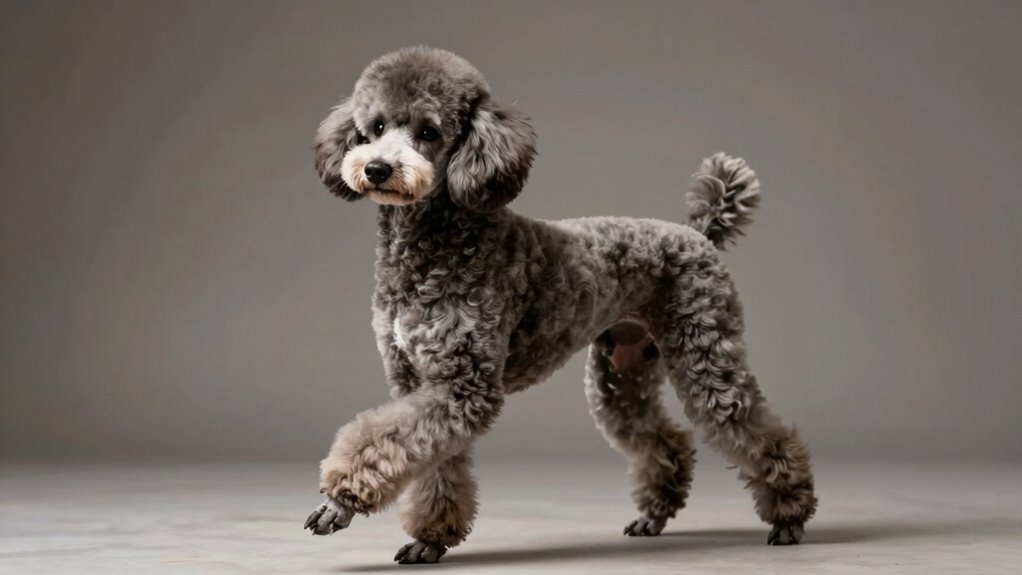
You might think intelligence in dogs is just about obedience, but it’s more nuanced than that. Poodles rank second out of 138 breeds in working and obedience intelligence. They learn new commands in fewer than five repetitions and obey on the first try 95% of the time. Their sharp minds stem from generations of selective breeding for water retrieval—a job demanding focus, adaptability, and problem-solving. We’ll unpack exactly how these traits translate into exceptional smarts.
Key Takeaways
- Poodles were bred for water retrieval, requiring sharp problem-solving skills and adaptability in challenging environments.
- They rank second among 138 dog breeds in working and obedience intelligence, learning new commands in fewer than five repetitions.
- Poodles possess exceptional memory, retaining commands, people, and places for years with high accuracy.
- Their adaptive intelligence allows them to read human cues and adjust behavior, enhancing training and bonding.
- Poodles excel in diverse roles like service work, agility, and therapy due to their trainability, focus, and emotional attunement.
The Origins of Poodle Intelligence

While we often marvel at how quickly poodles learn new commands, their intelligence didn’t develop by chance—it evolved from purposeful breeding and real-world demands.
We bred poodles as water retrievers, tasks requiring sharp problem-solving skills and adaptability in cold lakes, swift rivers, and muddy banks. Their intelligence isn’t just about obedience—it’s layered, blending instinctive drive, adaptive learning, and working/obedience intelligence into one agile mind.
We see their quick learning in how they master complex routines after just a few repetitions, often with fewer than five trials to understand a new cue. Their excellent memory means they recall commands, people, and places for years.
Poodles read our tone, our gestures, our habits—adjusting their actions with emotional and cognitive precision. Their adaptability makes them thrive in homes, cities, or working fields.
Whether retrieving ducks or maneuvering agility courses, poodles apply problem-solving skills with focus. Their working/obedience intelligence ranks them second among 138 breeds, per Dr. Stanley Coren’s studies. Just as peptides support tissue building and enhance overall health in dogs, a poodle’s mental engagement and continued learning keep their minds sharp and responsive throughout their lives.
We didn’t just shape their coats—we shaped their minds. Poodles don’t just obey; they think, remember, and respond—deeply attuned to our world.
Ranking Among the Brightest Canine Minds
We placed poodles second among 138 dog breeds for working and obedience intelligence, according to Dr. Stanley Coren’s research—just behind border collies. Their intelligence isn’t just theoretical; it’s visible in how quickly they master commands, often learning new ones in fewer than five repetitions.
This trainability, paired with sharp problem-solving skills, makes poodles shine in structured environments. They thrive on clear obedience tasks and pick up complex sequences with ease. Their keen observation, strong memory, and willingness to please feed their consistent performance.
You’ll find them excelling in agility courses, guide dog programs, and competitive sports—all proof of their mental precision and adaptability. Poodles respond fast, remember longer, and adjust quicker than most breeds. Their excellence in these activities is enhanced by proper equipment, such as harnesses with front leash attachment points that allow handlers to redirect movement effectively during training.
Whether it’s retrieving specific objects, maneuvering obstacles, or responding to subtle cues, their intelligence is active, not passive. With poodles, trainability isn’t luck—it’s a predictable outcome of genetics and drive.
When you train a poodle, you’re not just teaching commands; you’re revealing a finely tuned mind built for partnership, precision, and trust.
Instinctive and Adaptive Problem-Solving Skills
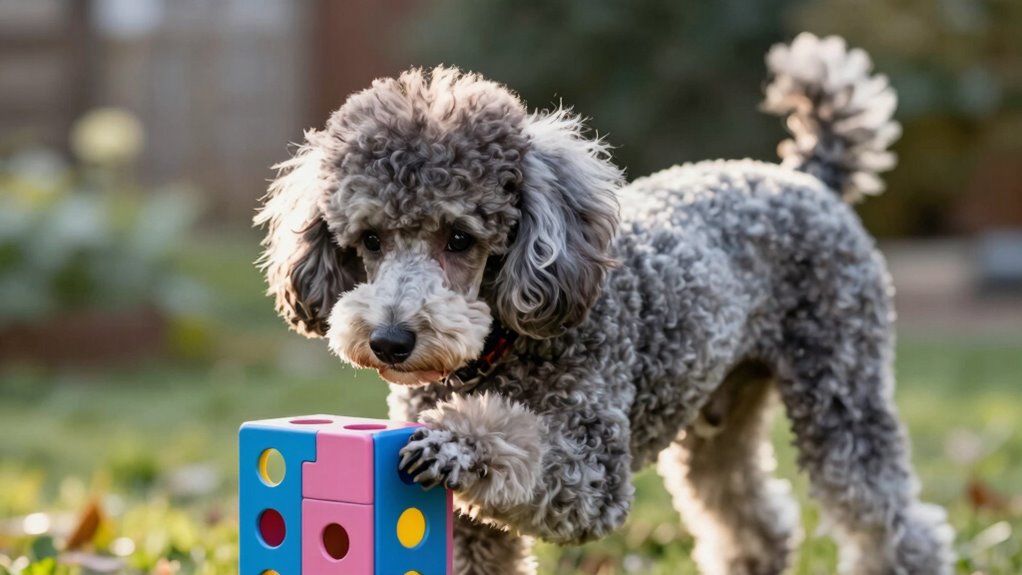
Because they were bred to retrieve game from water, we see poodles solve problems with purpose and precision. Their instinctive and adaptive problem-solving skills set them apart among intelligent dog breeds. We watch them assess obstacles, adjust tactics, and persist until they succeed—proof of their sharp cognitive intelligence. Poodles don’t just react; they think. With keen observation, they pick up on our routines, reading cues we don’t realize we give. That’s adaptive intelligence in action.
They learn new commands faster than most, often in fewer than five repetitions. Their strong memory supports complex obedience training, making them reliable and responsive. Poodles excel when training incorporates multiple training modes that engage their problem-solving abilities and keep them mentally stimulated.
| Skill Type | What It Means for You and Your Poodle |
|---|---|
| Cognitive intelligence | Grasps new commands quickly, needs less repetition |
| Adaptive intelligence | Reads your behavior, adjusts to household rhythms |
| Problem-solving skills | Finds creative solutions to physical and mental tasks |
| Obedience training | Excels with consistency, thrives on mental challenge |
Poodles don’t just follow—they understand. That’s why they feel so in tune with us.
Working and Obedience Excellence
Poodles rank second out of 138 breeds in Dr. Stanley Coren’s working and obedience intelligence rankings, a clear sign of their remarkable intelligence. We see this brilliance every time they master new commands in just five repetitions, absorbing them like sponges. That’s not luck—it’s instinct paired with a readiness to please.
Poodles are intensely trainable, thriving on structure and clear communication. They respond best to positive reinforcement, excelling when rewarded with praise, treats, or play. Whether it’s intricate tasks or rapid-fire commands, they adjust quickly, guided by keen observation and deep focus.
You’ll find them at the top of agility training circuits, weaving through tunnels, leaping hurdles, and flying over jumps with precision. Their success in service roles, therapy work, and competitive obedience isn’t accidental—it’s a direct result of their consistent, thoughtful engagement. Like engaging chew toys that release endorphins, proper training and mental stimulation promote a sense of well-being in highly intelligent dogs like Poodles.
When we train Poodles, we’re not just teaching tricks; we’re releasing a natural drive to perform and connect. Their working and obedience excellence isn’t just impressive—it’s personal, reliable, and deeply rewarding.
How Intelligence Enhances Trainability
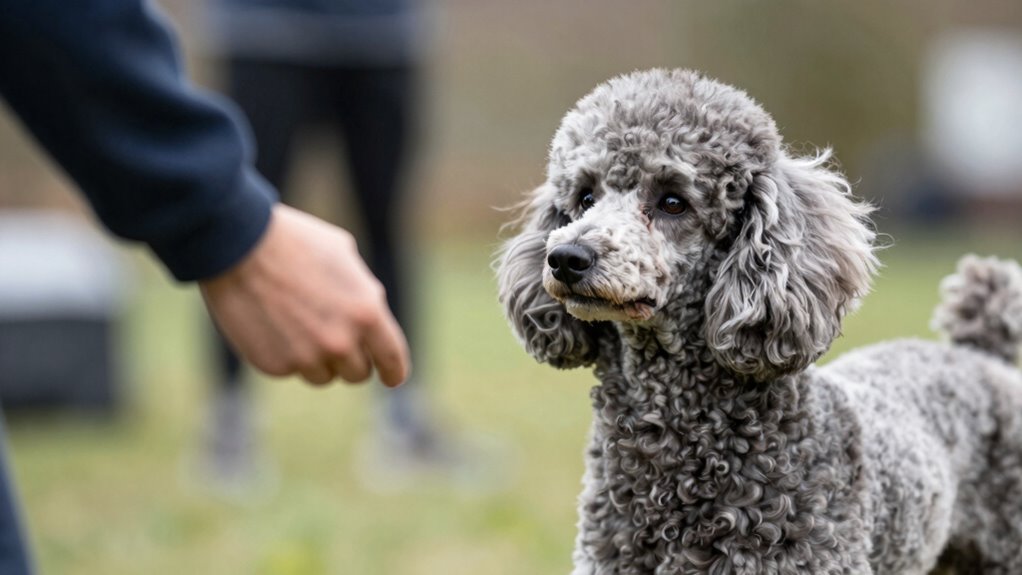
While their sharp minds set them apart, it’s how poodle intelligence directly fuels trainability that makes them stand out. We see it every day—Poodles learn commands faster, respond to cues quicker, and thrive on the mental stimulation training provides. Their intelligence isn’t just about obedience; it’s the engine behind their remarkable trainability. Just as regular grooming maintains a poodle’s physical health and comfort, consistent training exercises keep their sharp minds engaged and responsive.
| Trait | Impact on Training |
|---|---|
| High intelligence | Learn new commands in under 5 repetitions |
| Problem-solving skills | Adapt quickly to complex tasks |
| Responsiveness to cues | Retain 95%+ of taught commands |
We’ve watched Poodles master “sit,” “stay,” and “heel” in just a few sessions, making them ideal for first-time owners. They don’t just follow training—they anticipate it, enthusiastic for the next challenge. Positive reinforcement works wonders, bonding us to them while guiding behavior. Early socialization and routine solidify their responsiveness, shaping confident, adaptable companions. Whether in agility, service roles, or home life, their trainability shines. When intelligence meets intention, Poodles don’t just learn—they excel.
Mental Stimulation Needs of Smart Poodles
Smart dogs like ours don’t just sit and wait for the next command—they’re always thinking, watching, and solving problems. Poodles thrive on mental stimulation because their intelligence demands constant engagement. Without it, boredom sets in, and destructive behaviors often follow.
We keep their minds sharp through consistent, 10- to 15-minute training sessions that respect their focus span while building skills.
To truly meet their needs, we’ve found success with these key practices:
- Rotating interactive toys every few days to sustain curiosity
- Mixing basic obedience drills with advanced tricks to deepen learning
- Scheduling weekly agility training to challenge both body and mind
- Using puzzle feeders that require problem-solving to access treats
These routines aren’t just chores—they’re chances to connect and grow together.
When we honor our Poodles’ need for mental stimulation, we nurture not just better behavior, but a sharper, more fulfilled companion who feels understood, valued, and truly engaged.
Bonding Through Learning and Positive Reinforcement
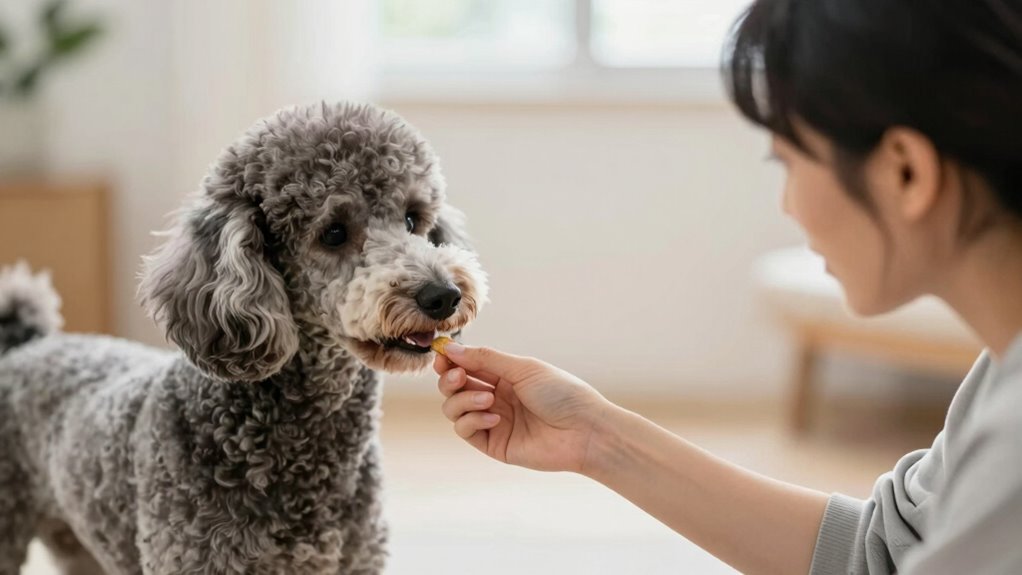
Because they’re so quick to pick up on cues and enthusiastic to please, we find that our training sessions become more than just skill-building—they’re opportunities to deepen our connection.
Poodles thrive on positive reinforcement, responding to praise, treats, and affection with enthusiasm. Their intelligence makes learning feel like a game, and we keep sessions short—just 10 to 15 minutes—to maintain focus and joy.
We teach basic commands first, then advance to complex tasks, always using positive reinforcement to encourage progress. Puzzle toys and new challenges nurture their adaptability, making bonding feel natural.
Every successful command strengthens their confidence and trust in us. When we celebrate their cleverness, they lean in, tails wagging, eyes bright—affirming our bond.
This shared rhythm of learning and reward builds loyalty and emotional closeness. With Poodles, training sessions aren’t chores; they’re daily moments of partnership.
Through consistent positive reinforcement, we don’t just shape behavior—we grow a deeper, more trusting relationship rooted in mutual understanding and respect.
Poodles in Specialized Roles: From Therapy to Agility
We’ve built strong bonds with our Poodles through consistent learning and positive reinforcement, and now we’re ready to see how those foundations reveal real-world potential. Their intelligence and desire to please make them ideal for specialized roles, turning everyday training into life-changing work.
Poodles aren’t just smart—they’re trainable, adaptable, and deeply attuned to human needs.
- As therapy dogs, they offer comfort with emotional intelligence, easing anxiety in hospitals and schools.
- In agility, they shine with speed and precision, mastering complex courses that test coordination and focus.
- With sharp problem-solving skills, they excel as service dogs, helping with mobility, alerts, and daily tasks.
- Their versatility extends to truffle hunting and search and rescue, proving their nose and mind work in perfect harmony.
We see their potential everywhere—Poodles thrive when challenged, trusted, and loved.
Their ability to adapt, learn, and connect sets them apart in roles that demand heart and mind working as one.
Frequently Asked Questions
Why Are Poodles the Smartest Dog?
We’re the smartest because we grasp Poodle training fast, excel in Poodle agility, and shine in Poodle obedience. Our Poodle problem solving, instinct, adaptability, and socialization make us quick learners who bond deeply, thrive on praise, and love mastering new challenges with you.
What Is the #1 Smartest Dog Breed?
We’ve asked ourselves—what if the smartest dog isn’t just clever, but a thinker, a worker, a partner? Border Collies take the crown, outshining German Shepherds, Golden Retrievers, Doberman Pinschers, Shetland Sheepdogs, Labrador Retrievers, and Rottweilers with unmatched instinct, drive, and heart—can you keep up?
What Makes Poodles so Special?
We’re special because our Poodle characteristics—sharp minds and big hearts—shine through thoughtful training techniques, regular grooming needs, and loving social behavior. We thrive on play, need daily exercise, and bond deeply, all rooted in our rich historical background and mindful health considerations.
Where Do Poodles Rank in Intelligence?
We rank second in Poodle rankings based on intelligence testing, outshining many in breed comparisons. We learn fast—just a few reps—and ace problem solving. Our training effectiveness shines because we thrive on connection, not just commands. You’ll see our smarts in everyday moments.
Conclusion
We’re not exaggerating when we say poodles learn commands in under five reps—some dogs need twenty. Their IQ borders on ridiculous, ranking second among 138 breeds. They solve puzzles, ace agility courses, and comfort patients with laser-focused precision. These aren’t just dogs; they’re canine Einsteins with curls. Train them, challenge them, bond with them—because a poodle’s mind never clocks out, and neither does our admiration.