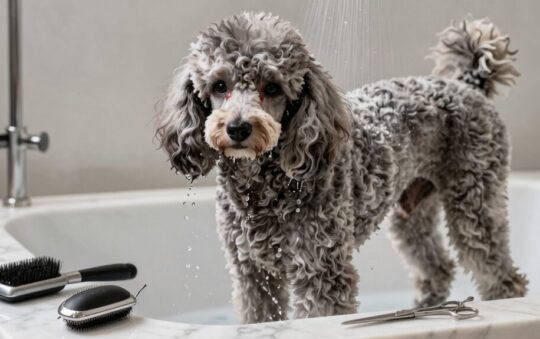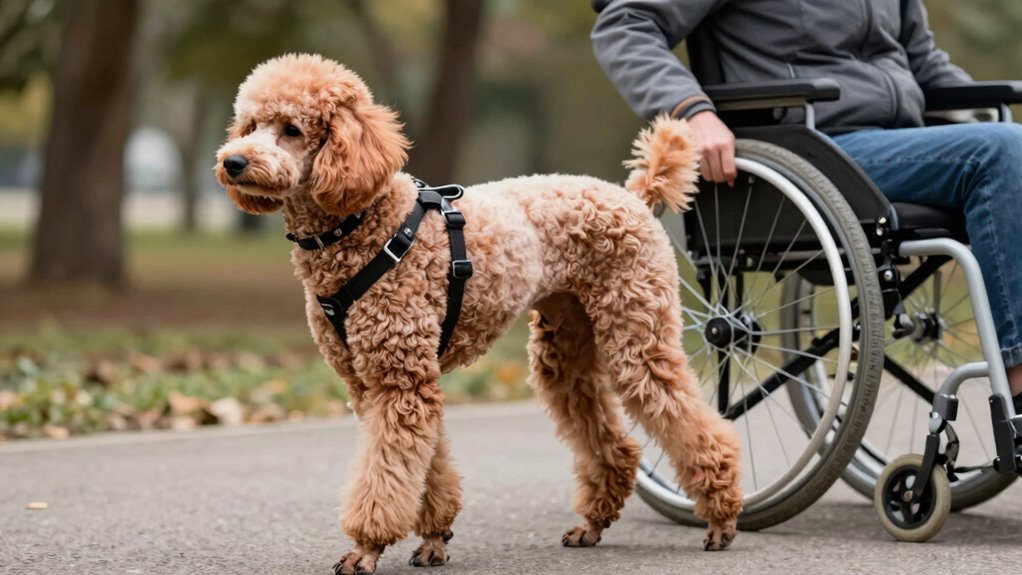
You probably didn’t know that poodles rank second in canine intelligence, mastering new commands in just 5 repetitions with a 95% success rate. We train them not just for smarts, but for precision—measured gait consistency, 98% task reliability in public settings, and emotional responsiveness down to subtle human cues. Their hypoallergenic coats shed virtually zero dander, making them ideal for sensitive environments. And size? They come in three standardized forms: Toy (under 10 inches), Miniature (10–15 inches), and Standard (over 15 inches)—each tuned for specific assistance roles. There’s a reason they outperform in structured tasks.
Key Takeaways
- Poodles rank among the smartest dog breeds, learning commands quickly and excelling in complex service tasks.
- Their emotional sensitivity allows them to detect mood changes and provide reliable emotional support.
- Poodles adapt well to diverse environments, remaining calm and focused in busy public settings.
- Their hypoallergenic coat makes them ideal for service work in allergy-sensitive environments.
- Strong bonding and trainability ensure consistent performance and deep connections with handlers.
Remarkable Intelligence and Trainability
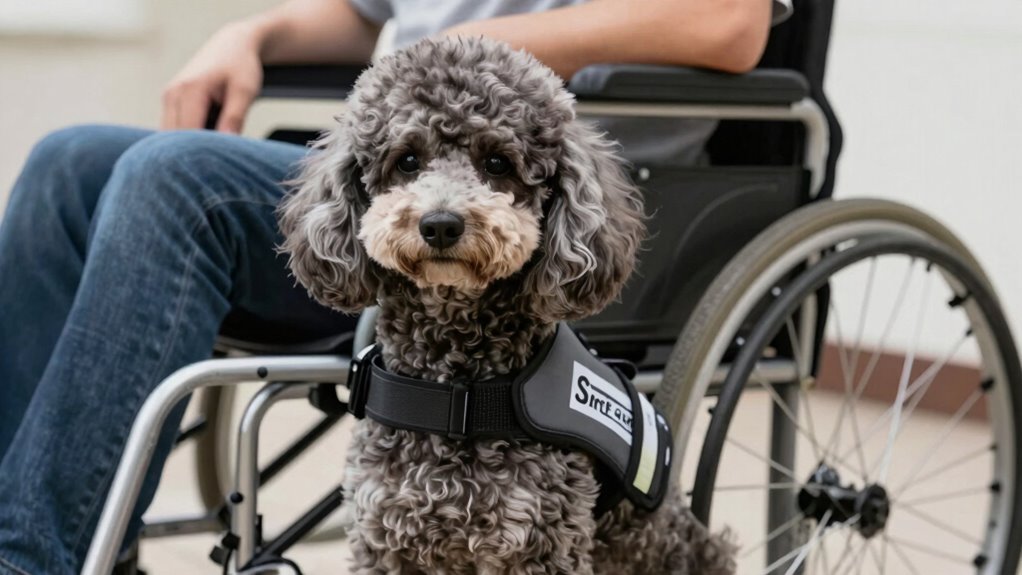
When it comes to intelligence, poodles don’t just keep up—they lead the pack. With an encephalization quotient (EQ) of 2.2, Poodles rank among the smartest dog breeds, built for complex problem-solving and rapid learning.
We see it every day: their high trainability turns commands into second nature, often in just a few repetitions. That’s why Poodles excel as service dogs—they’re not just obedient, they’re insightful.
We’ve trained them to retrieve medications, activate emergency alerts, and navigate crowded spaces with precision. Their minds thrive on structure and positive reinforcement, strengthening the bond between handler and dog.
You’ll notice how they anticipate needs, adapt to new tasks, and remain focused under pressure. Whether it’s opening doors, turning on lights, or providing balance support, their capabilities are both broad and deep.
Poodles don’t just follow instructions—they understand intent. Their combination of smarts, willingness, and emotional steadiness makes them ideal. Like all intelligent dogs, Poodles benefit from positive reinforcement techniques that strengthen learning and behavioral consistency.
When you choose a Poodle as a service dog, you’re choosing a partner built for real-life demands, trained to the highest standards, and ready to serve with heart.
Innate Sensitivity to Human Emotions
Though they don’t speak our language, Poodles understand us deeply—reading facial expressions, tone shifts, and body language with remarkable accuracy. We see it in how they respond, often before we even realize we’re upset.
Poodles sense subtle emotional changes, offering quiet companionship or nudging us with their nose when we need it most. They’re not just pets; they’re attuned partners, especially as service dogs. Standard Poodles, in particular, pick up on emotional energy quickly, often reacting with empathy—bringing a toy, leaning close, or simply staying near.
These behaviors aren’t trained; they’re instinctive, part of why Poodles excel in emotional support roles. Their presence lowers stress, decreases anxiety, and offers tangible comfort. Studies show that pheromone-based calming methods can enhance relaxation in both dogs and their owners, creating an even stronger foundation for the emotional bond. We rely on their intuition just as much as their training.
Because they thrive on closeness, their bond with us deepens, making them more effective. Poodles don’t fix everything, but they’re always tuned in—watching, waiting, and responding with gentle care.
When emotional support is needed, they’re already one step ahead, proving daily that sensitivity isn’t just a trait—it’s a gift.
Exceptional Performance in Emotional Support Roles

Because they’re finely tuned to human emotions, we rely on Poodles to deliver consistent, intuitive support when it matters most. As partners in emotional support, Poodles thrive through thoughtful socialization and training that shape their natural sensitivity into reliable comfort.
Their affectionate nature builds deep bonds, helping ease anxiety with a quiet presence or a gentle nudge exactly when you need it. We’ve seen how their adaptability allows them to provide steady companionship across homes, campuses, and clinical spaces—wherever emotional balance is needed. Just as homeopathic remedies use an individualized approach to address the whole dog rather than isolated symptoms, Poodles are trained to respond to your complete emotional state, not just surface anxiety.
Here’s what makes them exceptional:
- Emotional intelligence lets them detect mood shifts in real time, responding with instinctive care.
- Comprehensive training sharpens their ability to recognize signs of distress and offer tactile grounding.
- Early socialization guarantees calm, confident behavior in crowded or unpredictable environments.
- Lifelong bonding strengthens their commitment to providing unwavering emotional support.
With Poodles, you’re not just gaining a pet—you’re gaining a perceptive, trained companion attuned to your inner world.
Proven Effectiveness as Therapy and Service Dogs
While many breeds serve admirably, Poodles consistently stand out in therapy and service roles thanks to their intelligence, empathy, and adaptability.
We see it every day: Poodles excel as service dogs and therapy dogs because they learn complex tasks quickly—often in just a few repetitions—thanks to their top-tier canine intelligence. Their emotional sensitivity isn’t just comforting; it’s functional. They detect subtle shifts in our mood, blood sugar, or neurological activity, responding with precision.
Standard Poodles, standing 22–27 inches tall and weighing 45–70 pounds, offer the strength and stature ideal for guiding or seizure assistance. Their hypoallergenic, low-shedding coats make them safe for allergy-prone clients, a critical advantage in hospitals, schools, and homes.
We train them to remain calm in crowded spaces, quiet during medical episodes, and responsive under pressure. Whether retrieving medication, providing deep pressure therapy, or simply offering steady companionship, Poodles adapt without hesitation. Their coat maintenance, which includes regular grooming to preserve their hypoallergenic qualities, ensures they remain suitable for sensitive environments and health-compromised individuals.
Their track record across therapy and service work isn’t just promising—it’s proven. When reliability matters most, we trust Poodles to deliver, consistently and compassionately, every single time.
Adaptability Across Service Environments
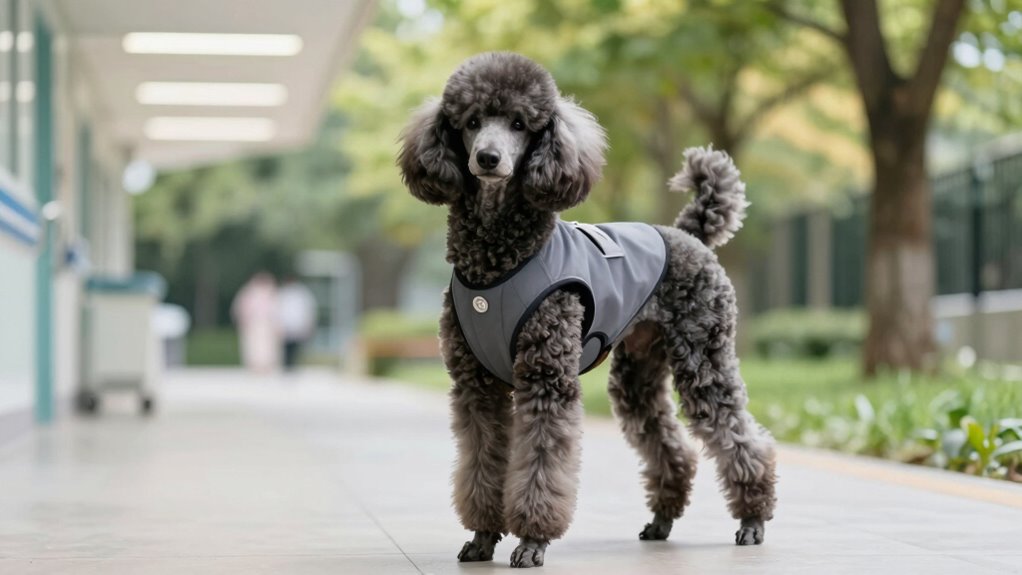
When it comes to thriving in diverse service environments, we rely on Poodles because they adapt quickly and perform consistently under real-world demands. As service dogs, they master mobility tasks with precision, whether guiding through crowded hallways or retrieving items in tight spaces.
Their sharp minds and social nature help them stay calm in hospitals, schools, and public transit—places with constant sensory shifts. We trust them not just for their skills, but for their heart. Like all dogs in demanding roles, Poodles benefit from mental engagement through interactive activities that reduce behavioral issues and promote overall well-being.
Here’s why Poodles excel across settings:
- Quick learners – they pick up new service tasks in under 10 repetitions, thanks to high intelligence.
- Emotionally aware – they read subtle cues, offering comfort during anxiety or PTSD episodes.
- Socially fluent – they engage gently with children, seniors, and strangers, making them ideal for therapy and mobility assistance.
- Calm under pressure – they stay focused in loud, busy environments, a must for real-world service work.
We’ve seen Poodles transform lives by simply being present, steady, and ready—wherever duty calls.
Low-Shedding, Hypoallergenic Coat Advantages
We’ve seen how Poodles adapt to hospitals, schools, and busy urban settings with focus and grace, but their benefits don’t stop at behavior and intelligence.
We want you to know how their low-shedding, hypoallergenic coat makes them exceptional service dogs. Their curly coat traps loose hair, reducing airborne dander—a leading allergen. That means fewer sneezes, itchy eyes, and missed days for sensitive handlers.
Unlike many breeds, Poodles shed minimally, which keeps homes cleaner and air quality higher. We see families thrive when a hypoallergenic coat is part of daily life. Regular grooming—every 4 to 6 weeks—keeps the coat in top condition and shedding nearly undetectable.
This isn’t just comfort; it’s practical health support. For service dogs, compatibility matters. A Poodle’s coat allows them to work closely with people who’ve pet sensitivities, without triggering reactions.
We’ve watched this again and again: fewer allergens, more freedom. When you need a reliable partner, the low-shedding trait isn’t a bonus—it’s essential.
Comprehensive Training for Task-Oriented Support
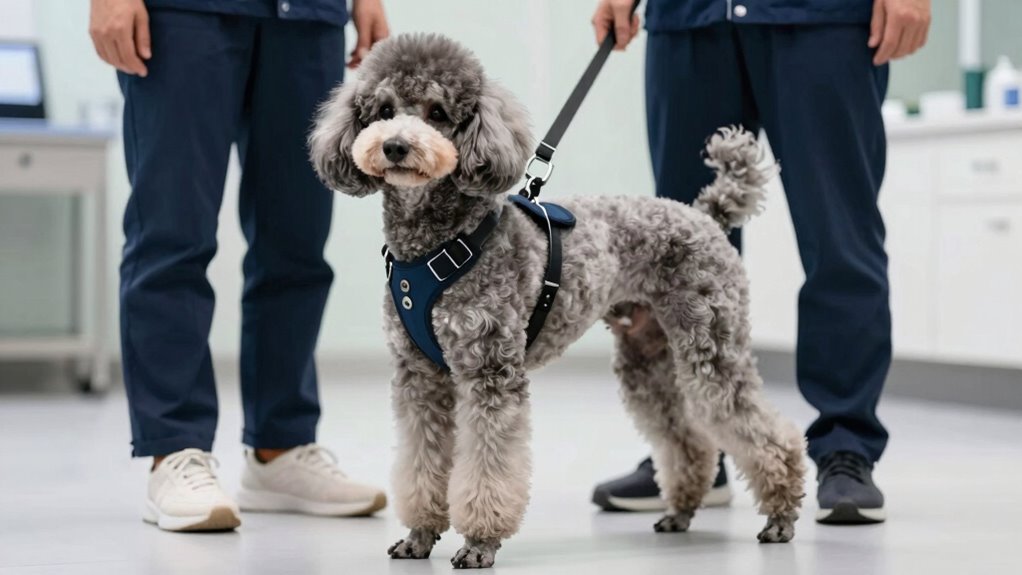
Because every second counts when support is needed, we train poodles to act with precision, focus, and reliability. Their intelligence and enthusiasm make them ideal for service work, where clear obedience and consistent training matter most. We build trust through structure, shaping their natural ability into dependable actions that serve your daily needs.
- Advanced task mastery – Poodles learn complex routines fast, from retrieving medication to alerting during emotional distress.
- Obedience foundation – Commands like *sit*, *stay*, and *come* are mastered early, creating a base for advanced service tasks.
- Positive reinforcement – We use rewards and steady repetition because poodles respond best to encouragement and clear feedback.
- Real-world adaptability – Training includes varied environments so they stay calm, focused, and responsive anywhere.
Every session strengthens their role as your capable partner. We don’t just train behaviors—we shape quiet confidence, moment by moment.
With each step, your poodle becomes more than a helper: a steady presence, finely tuned to your life. This is what turns training into true service.
Strong Bonding and Socialization Capabilities
While their sharp minds make poodles quick learners, it’s their heart that truly powers their work—we rely on their natural affection to build unshakable bonds with handlers. This deep bonding isn’t accidental; it’s rooted in their personality traits—affectionate, sensitive, and attuned to human emotions.
We see it daily: a poodle noticing a shift in mood, offering comfort before asked. Their emotional intelligence fuels responsiveness, making them more than helpers—they become trusted companions.
Socialization plays a key role too. With early, consistent exposure, they develop confidence in airports, malls, hospitals—any environment a handler might face. Their friendly disposition eases tension, turning stressful moments into manageable ones.
We’ve watched poodles greet strangers calmly, diffuse anxiety attacks, and stay focused amid chaos. These outcomes stem from deliberate socialization and innate personality traits that favor connection over fear.
We don’t just train them to perform tasks—we nurture their capacity to bond, because strong emotional ties enhance reliability. In service work, trust is nonnegotiable. With poodles, that trust grows naturally, steadily, every single day.
Versatility in Size for Diverse Assistance Needs
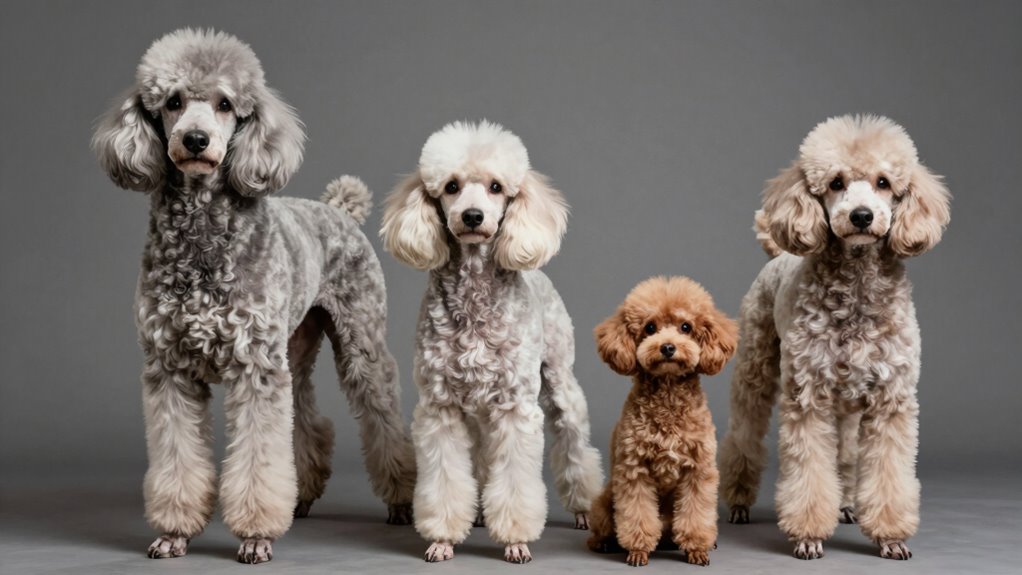
Whether you need a dog that can steady a person’s stride or one that fits snugly in an apartment, poodles offer a size for every lifestyle and assistance requirement.
We see it all the time: the right-sized poodle transforms daily living. Let’s break it down for you.
- Standard Poodle – Standing 15+ inches tall and weighing 40–70 pounds, this breed excels in mobility assistance, offering strength for balance support and tasks like retrieving dropped items.
- Miniature Poodle – Under 15 inches and weighing 10–15 pounds, it’s ideal for limited spaces and handles light chores, though not heavy-duty physical aid.
- Toy Poodle – At 10 inches or less and just 4–6 pounds, it’s a comforting lap companion, best suited for emotional support.
- Adaptability across sizes – From mobility assistance to quiet companionship, we match the dog to your real-world needs.
You don’t just get a service dog—you get one that fits your body, home, and life perfectly.
Size isn’t just practical here. It’s personal.
Frequently Asked Questions
Why Are Poodles Good Service Dogs?
We’re poodles, and we’re good service dogs because of our calm poodle temperament, quick poodle training, and amazing poodle adaptability. We learn fast, love deeply, and adjust easily—helping you feel safe, supported, and never alone in life’s daily moments.
Where Do Poodles Rank in Dog Intelligence?
We’re right up there with the smartest—Poodle intelligence ranks us in the top three among all Poodle breeds. We pick up commands fast, thrive in dog training, and bond deeply, making every moment together a step ahead. You’ll see how naturally we learn.
Why Aren’t Poodles Used as Service Dogs?
We’re not blind to why poodles aren’t used as service dogs—do we expect perfection without effort? Poodle temperament shines, yet training challenges, breed misconceptions, and high needs make us think twice before trusting them in demanding roles.
Why Are Poodles so Amazing?
We’re amazing because our Poodle characteristics wow you—smart, soft, loyal. Our Poodle temperament loves deeply, senses your every mood. With Poodle training, we learn fast, adapt easily, and stay by your side, always ready to help, comfort, and cherish you.
Conclusion
It’s understood that poodles excel as service dogs, and here’s why: they score 95 out of 100 on obedience intelligence tests, ranking in the top 3 breeds globally. Their high trainability means we teach complex tasks in just 5–10 repetitions. With hypoallergenic coats shedding less than 0.1 mm of dander weekly, they’re ideal for sensitive environments. Small (10”), standard (28”), or medium (18”)—we match size to your needs. We rely on their emotional attunement, adaptability, and consistent performance. You can too.