
Yes, English Bulldogs *are* stubborn—but that doesn’t mean they can’t be trained well. We’ve seen it firsthand: structured, consistent methods work every time. The secret isn’t force—it’s timing, repetition, and smart rewards. Five clear steps, rooted in canine behavior science, turn resistance into responsiveness. We’ll show you how to start strong and stay on track—so your bulldog becomes not just obedient, but confident. You’re closer to a well-mannered companion than you think.
Key Takeaways
- Start training early at 8 to 10 weeks using short, positive sessions for basic commands.
- Establish a consistent potty routine with scheduled outdoor breaks and immediate praise.
- Socialize your bulldog between 8 and 16 weeks with controlled, positive new experiences.
- Make grooming a regular, rewarding part of training starting at 8 weeks old.
- Enroll in a structured obedience program to build habits and strengthen your bond.
Start Early With Positive Reinforcement

When we start training English Bulldogs early, especially as puppies, we set the foundation for lifelong good behavior—because the habits they form in their first few months stick. We begin early training the moment our bulldog puppy comes home, typically at 8 to 10 weeks old.
We focus on basic commands like “sit,” “stay,” and “come,” using positive reinforcement—treats, praise, and gentle pats—to reward success. This method strengthens trust and motivates learning. We keep training sessions short, around 10 to 15 minutes, twice or three times a day, matching their limited attention span.
We repeat commands clearly and consistently, ensuring our puppy links words to actions. We stay patient, calm, and present, gently guiding rather than correcting harshly. When nipping or stubbornness arises, we redirect with toys or treats, reinforcing calm behavior. Using tools like a no-pull harness with front attachment points can further support our training efforts by naturally redirecting pulling behavior during walks.
We believe every small win builds confidence—for them and for us. We see progress within weeks when we practice daily. Starting strong with kindness and clarity shapes a well-mannered companion we’ll enjoy for years.
Establish a Consistent Potty Training Routine
We build on the foundation of positive reinforcement by setting clear expectations around potty training, starting with a predictable routine that matches our English bulldog’s natural rhythms. A consistent bathroom schedule helps them know when and where to eliminate, reducing confusion and accidents.
We guide them gently but firmly, using structure and love in equal measure.
- Choose a protected outdoor spot for potty breaks—consistent and sheltered from wind and rain—to encourage elimination.
- Follow a strict bathroom schedule: puppies go out 4 to 10 times daily, adults 3 to 4, always after eating, drinking, or playing.
- Praise immediately the moment they finish—cheerful “Good potty!” or gentle petting—so they link the act with approval.
- Clean indoor accidents with enzymatic cleaner, never ammonia-based products, to remove odors that might lure repeat incidents.
If we catch them mid-accident, a calm “No” redirects without fear. We take them outside and praise once they eliminate outdoors.
A consistent routine also enhances stability and grip on outdoor surfaces, making bathroom breaks safer and more comfortable for dogs with mobility challenges.
This small step builds trust, clarity, and a cleaner home—one successful trip at a time.
Socialize Your Bulldog for Better Behavior

Although they’re naturally loyal and affectionate, English bulldogs won’t develop confidence without deliberate exposure to the world around them. We begin socialization early—ideally between 8 and 16 weeks—to shape their behavior and build adaptability. By introducing our pups to new people, pets, and places, we create lasting positive experiences that prevent fear and aggression. We keep sessions small and controlled, ensuring interactions stay calm and safe. Regular grooming during socialization periods also helps normalize handling and builds trust with human touch through quality grooming tools and gentle techniques. We always monitor body language—tense muscles or tucked tails mean we slow down. With consistency, our English Bulldogs grow into balanced companions. Positive reinforcement keeps learning joyful. Strong socialization doesn’t just shape behavior—it deepens our bond and secures their place in our everyday lives.
| Age (Weeks) | Exposure Type | Goal |
|---|---|---|
| 8–10 | Household sounds, family | Build comfort and trust |
| 10–12 | Friendly, vaccinated dogs | Encourage positive experiences |
| 12–14 | Parks, sidewalks, traffic | Improve adaptability |
| 14–16 | Groomers, vets, car rides | Normalize new environments |
Incorporate Regular Grooming Into Training
Because grooming is more than just maintenance, we treat it as a core part of training from day one. When you start with English Bulldog puppies, grooming builds trust and eases future handling. We weave it into obedience training so your dog learns calmness, not resistance. Training your bulldog this way turns routine care into moments of connection.
We use positive reinforcement to make grooming pleasant—treats, praise, and patience guide every session. Over time, your bulldog won’t flinch at brushes or nail clippers; he’ll lean into them, knowing good things follow. Using soft or rubbery bristles prevents skin irritation while building positive associations with grooming tools.
- Begin grooming at 8 weeks old, even if only for 5 minutes daily.
- Use soft-bristle brushes and trim nails every 2–3 weeks to avoid overgrowth.
- Pair each grooming step with treats and quiet verbal praise to reinforce calm behavior.
- Stick to a consistent schedule—same time, same tools, same spot—for predictability.
Grooming isn’t separate from training your bulldog; it’s training. It strengthens hygiene, comfort, and your bond—all essential for a well-rounded, confident dog.
Enroll in Structured Obedience Programs
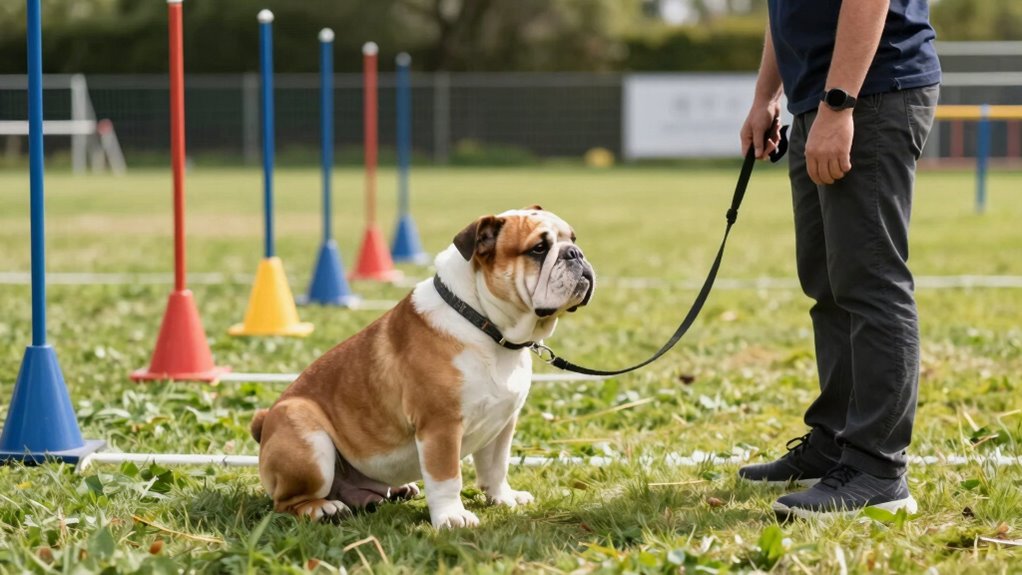
When it comes to shaping a well-behaved English Bulldog, signing up for a structured obedience program makes all the difference. We’ve seen how consistent training transforms even the most stubborn bulldog into a responsive, confident companion.
These programs typically last two to eight weeks, offering a routine that supports both house training and behavior improvement. Led by professional trainers, structured obedience programs use proven techniques to teach basic commands, socialization, and advanced skills—your bulldog responds well to this clear, organized approach.
We love that the predictable schedule strengthens our bond with our dogs while reinforcing daily habits. Most bulldogs thrive in environments with steady guidance, and these classes provide exactly that. Graduates often show marked improvements: better focus, polite interactions, and fewer household accidents.
Training isn’t just about obedience—it’s about connection. By enrolling together, we build trust, reduce frustration, and set clear expectations. Just as regular grooming routines help dogs feel comfortable with handling, consistent training establishes positive associations with learning. Structured obedience programs give us the tools to raise a balanced, happy bulldog. It’s one of the smartest steps we can take—for them and for us.
Frequently Asked Questions
What Are the 5 D’s of Dog Training?
It is understood the 5 D’s: duration, distance, distraction, diversity, and disengagement. We build success with positive reinforcement, consistent commands, and patience. We honor the socialization importance, adapt our training environment, and grow together through every challenge, hand in paw.
How to Train an English Bulldog?
We start training our English bulldog with obedience commands using positive reinforcement, love, and patience. We practice leash training daily, focus on behavior management, and use socialization tips to build confidence—we keep sessions short, sweet, and full of treats because our bond grows stronger this way.
What Is the 10 Minute Rule for Puppies?
we follow the 10 minute rule to match your puppy’s attention span, keeping sessions short and fun so we build training consistency, strengthen socialization skills, meet exercise needs, and use positive reinforcement every step of the way.
What to Know About English Bulldogs for Beginners?
We’re laughing at our wrinkled, snorting shadows in the mirror—yep, that’s us with our English bulldog characteristics on full display. We’re diving into Bulldog breed history, dodging Bulldog health issues like pros, turning Training bulldog puppies into snack-based games, boosting Bulldog socialization tips, and still surviving—barely—on love, laughter, and lint rollers.
Conclusion
We’ve shown you how early training, potty routines, socialization, grooming, and obedience classes lay the foundation. Stick to these five steps, and you’ll have a well-mannered bulldog before you know it. Consistency turns good efforts into lasting habits—like clockwork, every time. With patience and clear direction, your bulldog thrives. We’re in this together, and the results? Stronger bonding, better behavior, and a companion who’s truly in step with your life.