
English Bulldogs are practically perfect pets—if we ignored their quirks entirely. We bond deeply with families, thrive on affection, and adapt easily to apartment living thanks to low exercise needs—just 20 to 30 minutes of walking daily. Our stocky build, weighing 40–50 pounds, and calm demeanor make us couch champions. Yet, we come with real challenges: breathing issues, stubborn streaks, and vet bills that can sting. You’ll want to know exactly what you’re signing up for.
Key Takeaways
- English Bulldogs make excellent pets due to their gentle, affectionate nature and strong bond with families.
- They adapt well to apartment living thanks to low exercise needs and calm, moderate playfulness.
- Their docile temperament and emotional intelligence make them great companions for children and stressed households.
- Regular grooming and health checks help manage breed-specific issues like skin infections and breathing difficulties.
- With consistent training and early socialization, Bulldogs can learn commands despite moderate training challenges.
Origin and History of the English Bulldog
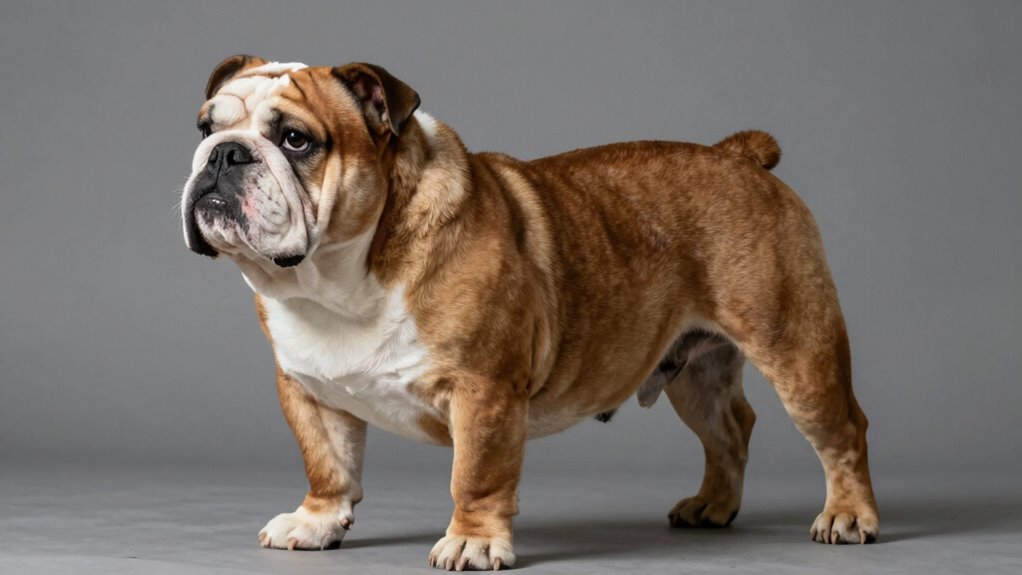
While their fierce reputation once made them staples of blood sports, we now recognize the English Bulldog as a gentle companion shaped by centuries of intentional breeding.
We trace this breed back to 13th century England, where English Bulldogs were built for bull-baiting—strong, low to the ground, with powerful jaws and fearless hearts. Bull-baiting ended in the mid-1800s, and that’s when we redirected their purpose.
Breeders softened their aggression, reshaped their bodies, and nurtured traits that made them companionable. By 1892, the American Kennel Club officially recognized the breed, cementing its shift from fighter to family member.
Today, they rank 5th in popularity among 2024 AKC breeds—a reflection of their appeal. We no longer value them for violence, but for calm presence, loyalty, and quiet courage.
Their stocky build, wrinkled face, and steady gaze remind us of their past, yet their behavior reflects our careful choices. We shaped them into pets who thrive in homes, not arenas. As modern companions, English Bulldogs require specific grooming approaches due to their sensitive skin and thick coats, which help maintain their health and appearance.
That history? It’s not erased—it’s repurposed, making the modern English Bulldog a living bridge between resilience and tenderness.
Understanding the Bulldog Temperament
Because we recognize what makes English Bulldogs tick, we can confidently say their temperament sets them apart as true companions. We see it in their gentle and docile demeanor, a hallmark of the Bulldog personality.
These dogs thrive on closeness, offering an affectionate disposition that bonds deeply with us. They’re not hyperactive; instead, their moderate playfulness fits seamlessly into calm households. You’ll find them nudging for cuddles, not chasing the yard for hours. That sweetness, paired with quiet courage, makes them reliable family pets.
They’ll alert you to a knock at the door—brief, firm barking—but greet guests warmly once introduced. We’ve noticed their stubborn streak, yes, but it’s part of their charm, not defiance. They prefer routine, soft blankets, and your lap.
No demanding sprints or intense training—just presence. We value their predictable moods, low noise levels, and steady affection. With us, they’re not performers; they’re members.
Their emotional intelligence surprises many. They sense stress, lean in, and stay. In every quiet sigh and patient gaze, we see loyalty. This is companionship without chaos. Their unique facial structure requires thoughtful care considerations, including providing suitable water bowls designed specifically for flat-faced breeds to ensure comfortable hydration and reduce mealtime mess.
What Does an English Bulldog Look Like?
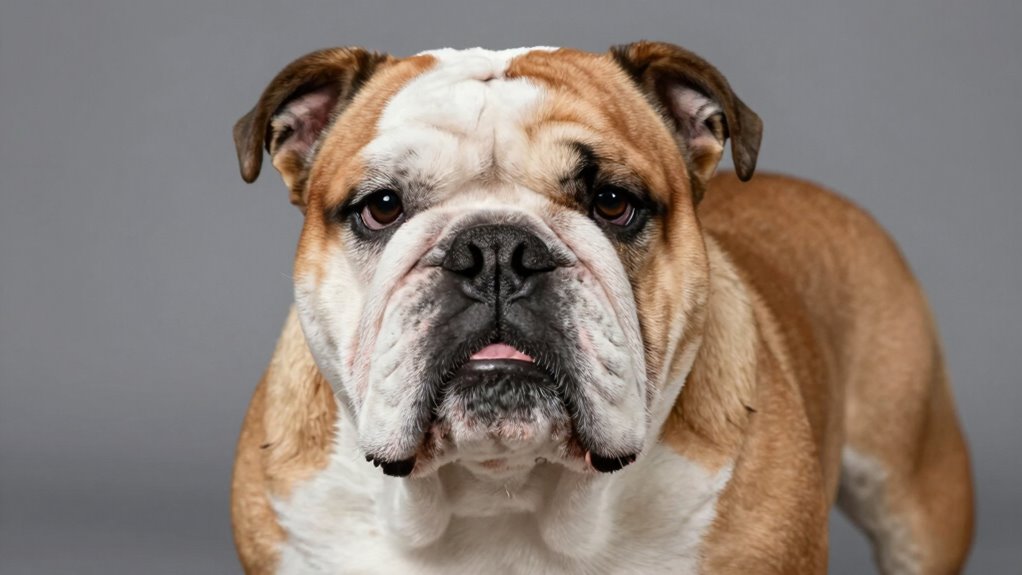
We see them coming—low, solid, unmistakable—and it’s clear the English Bulldogs carry a look all its own. Their muscular build is compact, with males standing 14–15 inches tall and weighing 50–54 pounds, females slightly smaller at 40–50 pounds.
They move low to the ground, sturdy and balanced, with a wide frame and a corkscrew tail that adds to their charm. Their wrinkled face softens every expression, framing soulful eyes and a definite underbite. That pushed-in nose is a breed hallmark, giving them their distinctive profile. You can’t miss it.
Their short coat feels like premium velvet—smooth, close to the skin, and easy to care for. It comes in colors like brindle, red, lilac, and piebald, each dog unique. Unlike curly-coated breeds that require specialized grooming tools, their short coat requires minimal maintenance and brushing.
English Bulldogs aren’t sleek or flashy, but their look is honest, grounded, and full of character. Every fold, every curve speaks of strength wrapped in gentleness. We see them, and we recognize: this is a dog built for presence, not speed.
And that face—wrinkled, earnest, a little tough, a lot loving—tells you everything you need to know before they even sit at your feet.
Common Health Issues in English Bulldogs
Though built tough and full of quiet confidence, English Bulldogs face a set of health challenges we must be ready for. We understand their flat faces can lead to breathing difficulties, so we keep an eye on their activity, especially in heat or humidity.
Their deep skin folds trap moisture, which means skin infections are common—we clean those wrinkles daily to stay ahead. Hip dysplasia shows up early or late, affecting how they move, so we schedule regular vet visits to catch it fast.
Weight gain? It’s a real risk. Bulldogs love food and hate exercise, so we measure meals, skip table scraps, and keep treats low-cal. Left unchecked, extra pounds worsen joint stress and strain their hearts. Using a slow feeder can help with portion control and prevent overeating, supporting their digestive health during mealtimes.
We stay proactive because their average lifespan is just 8 to 10 years, and we want every one of those years to be healthy. With consistent care—cleaning, monitoring, and regular vet visits—we manage most issues well.
We’re not just owners; we’re guardians of their well-being, and that closeness makes all the difference.
Managing Brachycephalic Obstructive Airway Syndrome (BOAS)

Many English Bulldogs face breathing challenges due to Brachycephalic Obstructive Airway Syndrome (BOAS), a direct result of their short skulls and compressed airways. As brachycephalic dogs, Bulldogs often struggle with breathing difficulties, especially in heat or during exertion. We monitor their snoring, panting, and stamina closely—signs like narrowed nostrils or gagging mean it’s time for a vet check. Keeping our Bulldogs at a healthy weight eases strain on their airways, so we stick to a balanced, portion-controlled healthy diet and daily regular exercise, like short, slow walks. Additionally, consulting with your veterinarian about appropriate chew options is important, as some treats like raw bones can pose choking hazards for dogs with compromised airways.
Surgery can correct structural issues in moderate to severe cases, improving airflow and long-term well-being. Below are key care actions we take:
| Preventive Step | Specific Action | Frequency |
|---|---|---|
| Weight Management | Measure food, limit treats | Daily |
| Regular exercise | Leashed walks, cool times of day | 2–3 short sessions/day |
| Veterinary Monitoring | BOAS screening, airway check | Every 6 months |
We stay proactive—early care means our Bulldogs breathe easier and live fuller lives.
Daily Care and Grooming Needs
Keeping our Bulldog’s airways clear goes hand in hand with keeping them clean and well-groomed—routine care directly supports their overall health.
We groom our dogs 2–3 times weekly with a soft brush to manage shedding and support skin health. Weekly to bi-weekly baths keep their coat clean, while daily checks of facial wrinkles prevent moisture buildup. We clean those folds gently with a cotton ball and peroxide to avoid skin infections.
Their ears and tail pockets need regular cleaning too—neglect can lead to serious health issues. We trim their nails every two weeks to maintain comfort and posture. This isn’t just grooming; it’s preventive care.
During shedding seasons, consistent brushing becomes even more essential. These routines let us monitor for redness, irritation, or early signs of skin problems. We bond during care sessions, turning hygiene into moments of closeness.
Good grooming supports long-term health, catching small issues before they grow. For bulldogs, clean skin and a well-kept coat aren’t cosmetic—they’re necessities.
We stay on top of it, because our dogs deserve to feel as good as they look.
Nutrition and Feeding Guidelines for Bulldogs

A balanced diet is the foundation of a healthy Bulldog. We understand how much they love to eat, but proper nutrition keeps them strong and reduces the risk of obesity. Their short snouts mean they’re prone to breathing issues, so hydration is non-negotiable—always provide fresh water. We monitor calorie intake closely because Bulldogs gain weight easily. Treats? Sure, but keep them under 10% of daily calories. Choose high-quality food tailored to their life stage—puppy, adult, or senior—for ideal diet support. Watch for food allergies and ask your vet before adding safe human foods. | Focus Area | Guideline |
| —————— | ———————————— |
|---|---|
| Calorie Intake | Match to age, weight, and activity |
| Obesity Prevention | Measure portions, limit treats |
| Hydration | Clean water available at all times |
We’ve discovered that consistency prevents digestive stress. Partnering with your vet guarantees your Bulldog’s nutrition plan fits perfectly.
Exercise Requirements and Activity Levels
Since English Bulldogs aren’t built for marathons, we keep their exercise routine practical and safe—aiming for 20 to 40 minutes of moderate activity each day. Their exercise requirements are modest, matching their naturally low activity levels.
We stick to gentle walks and short play sessions, avoiding intense exertion, especially in heat. Their brachycephalic structure makes breathing difficult during overexertion, so we prioritize cool, calm movement. Moderate exercise like indoor fetch or a lazy backyard game of tug-of-war keeps them engaged without strain.
These moments also deliver essential mental stimulation—something they crave just as much as movement. We watch their weight like a hawk because even small gains can lead to serious health issues, including joint stress and heart strain.
Adjusting their routine based on energy, weather, and weight helps us stay ahead. We’ve learned that consistency, not intensity, is key. Our Bulldogs thrive on routine, predictability, and gentle engagement.
Training Challenges and Socialization Tips

While English Bulldogs bring charm and loyalty, it’s understood their training journey comes with unique hurdles—so we tackle it with clear strategies and realistic expectations.
It’s acknowledged their trainability score of 4 means we’ll face training challenges, but consistency and positive reinforcement turn resistance into responsiveness. Their stubborn streak demands patience; we repeat commands calmly, rewarding even small wins.
We start early with socialization—between 8 to 16 weeks—introducing them to people, dogs, and environments to build confidence. Puppy training classes offer structured socialization, sharpening their adaptability in controlled settings.
We supervise all interactions with other pets, recognizing that individual temperament affects how they respond. We use treats, praise, and play as rewards, avoiding harsh methods that shut down learning.
We stay committed every day, understanding progress is gradual but steady. With us, they learn not just obedience, but trust.
We lead with consistency and empathy—essential tools in shaping a well-mannered companion. We’ve got this, one patient step at a time.
Living With an English Bulldog: Pros and Cons
When life leans toward calm and connection, we find the English Bulldog fits right in, offering quiet strength and big-hearted loyalty without demanding endless activity.
We love them for their affectionate nature and low exercise requirements—just 20 to 40 minutes of gentle walks daily keeps them happy. They tend to thrive in apartments, making them ideal for city living or cozy homes without yards.
But we must stay mindful: English Bulldogs tend to face potential health challenges, including breathing issues and skin issues from their wrinkled folds, which need daily cleaning. Their brachycephalic structure means they snore and drool more, something we adjust to in close quarters.
Still, their docile temperament builds deep bonds, especially with children, though we always supervise play. We commit to regular vet visits and temperature-controlled spaces—overheating risks are real.
Yes, grooming and healthcare require consistency, but their quiet companionship balances the effort. In return, we gain a devoted friend who asks for little but gives love freely.
Frequently Asked Questions
What Are the Cons of an English Bulldog?
we’ll be honest with you—english bulldogs come with serious health issues, high grooming requirements, and tricky temperament traits. their exercise needs are low, but socialization challenges and stubbornness demand patience. we’ve found they’re not the easiest, but we love them anyway.
Do English Bulldogs Make Good House Pets?
Yes, we’ve found English bulldogs make excellent house pets; they’re affectionate companions with a gentle temperament. We see them as family friendly dogs—low exercise and loyal. A watchdog isn’t a guard dog, but they’ll alert us, proving every ounce of love they give.
Are English Bulldogs High Maintenance?
yes, we see english bulldogs as high maintenance—our bulldog grooming needs are constant, their exercise requirements are low, and we manage health issues often. their sweet temperament traits shine, yet we face training challenges and extra care with their drooling and breathing.
Do English Bulldogs Like to Be the Only Dog?
we’ll tell you this—your bulldog might crave the spotlight, but don’t let that fool you. they can struggle with dominance behavior, yet their socialization needs and playtime preferences shine when we nurture breed compatibility, tackling training challenges with love and consistency.
Conclusion
We’ve walked you through the bulldog’s history, temperament, and care with purpose. These compact, 40–50 pound companions bring calm loyalty to any home. It is understood that their wrinkles need wiping, their airways demand awareness, and their stubborn streak asks for patience. Yet, with consistent training and proper nutrition—measured portions, high-protein kibble—life hums smoothly. Think of them as Victorian-era gentlemen in a modern world: dignified, steadfast, and oddly timed. We stand by them.