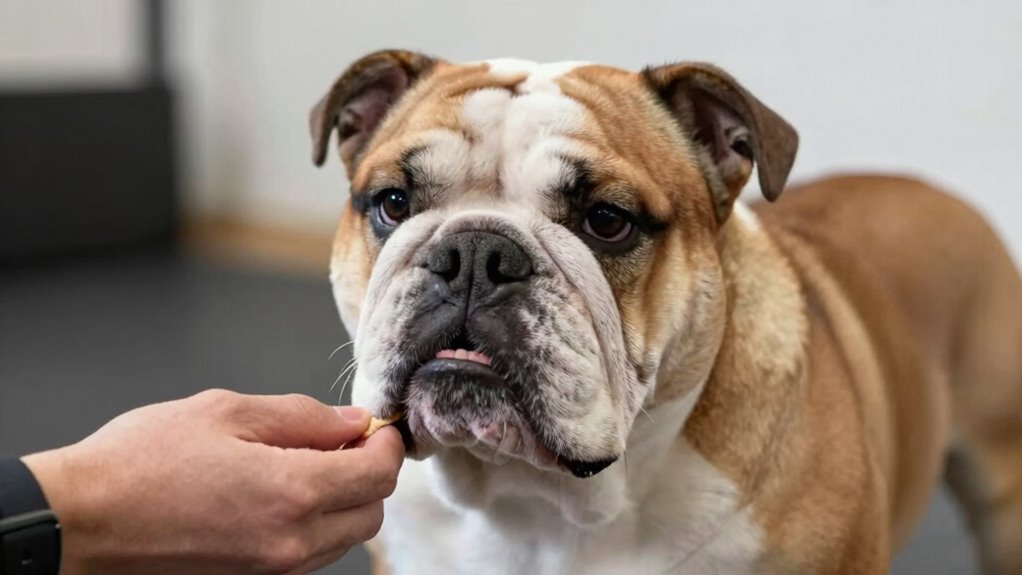
Yes, English Bulldogs can be stubborn—but that doesn’t mean they can’t learn. We’ve trained dozens, often in just 10-minute daily sessions using treats no larger than a pea. They respond to consistency, not force. Positive reinforcement, clear cues, and patience reveal their adaptive intelligence. They notice subtle shifts in tone, routine, and body language—sometimes better than we expect. Their real challenge isn’t understanding—it’s staying motivated. And that hinges on one key factor most owners overlook.
Key Takeaways
- English Bulldogs possess adaptive intelligence, excelling in learning routines when training aligns with their temperament.
- Their problem-solving skills improve with short, reward-based tasks using visible or scented incentives.
- Consistent positive reinforcement builds trust and encourages cooperation during training sessions.
- Bulldogs communicate needs and emotions through distinct vocalizations and body language, aiding tailored training approaches.
- Emotional awareness allows Bulldogs to respond to human moods, strengthening bonds and enhancing training effectiveness.
Decoding the Bulldog Mind: Instinctive and Adaptive Intelligence

While they may not top the list of fastest learners, English Bulldogs possess a distinct blend of instinctive and adaptive intelligence that shapes how we train them.
We see their dog’s instinctive intelligence in their quiet vigilance—standing alert when strangers approach, leaning into us when sensing distress. These aren’t trained behaviors; they’re hardwired. Their protective instincts fuel deep companionship, not performance.
Adaptive intelligence emerges in how they adjust—learning the household rhythm, recognizing daily cues like leashes or treat jars. Still, their stubborn streak resists rigid commands, making training a test of patience.
We succeed not through repetition alone, but through positive reinforcement: treats, praise, consistency. We avoid force; we invite cooperation. Short, engaging sessions work best—five to ten minutes, two to three times daily—paired with simple puzzle toys that gently stretch their adaptive intelligence. These activities provide mental stimulation similar to what’s recommended for other bulldog breeds to support their cognitive development.
They may not solve complex tasks quickly, but they learn what matters: trust, routine, connection. We’re not shaping obedience; we’re nurturing partnership.
Their intelligence isn’t flashy—it’s felt, quiet, loyal. And in that, they’re brilliant.
Problem-Solving Prowess in English Bulldogs
Because they’re motivated by rewards they can smell or see, we channel English Bulldogs’ natural curiosity into problem-solving challenges that sharpen their minds. Your dog isn’t just stubborn—she’s highly intelligent and enthusiastic to learn through exploration.
We use simple puzzle toys with hidden treats, like a Nina Ottosson interactive feeder (8 inches wide, 2.5 inches tall), to teach cause-and-effect. These short tasks—lasting 5 to 10 minutes—match their low-energy style but still boost focus. With positive reinforcement, like a treat or soft “good girl,” we help them learn new commands while building trust.
Watch how your Bulldog nudges a sliding lid or flips a flap to reach a prize—clever, focused behaviors that reveal deep understanding. At the Bulldog Club, we’ve seen dogs solve three-step puzzles in under a week with consistent training.
Problem-solving isn’t just mental exercise—it’s bonding. When we honor their pace and reward progress, we release their quiet brilliance. They may not race through agility courses, but they think through them. And that makes all the difference. Interactive puzzle toys also release endorphins, promoting a sense of well-being and reducing anxiety during training sessions.
Communication Styles of the Breed
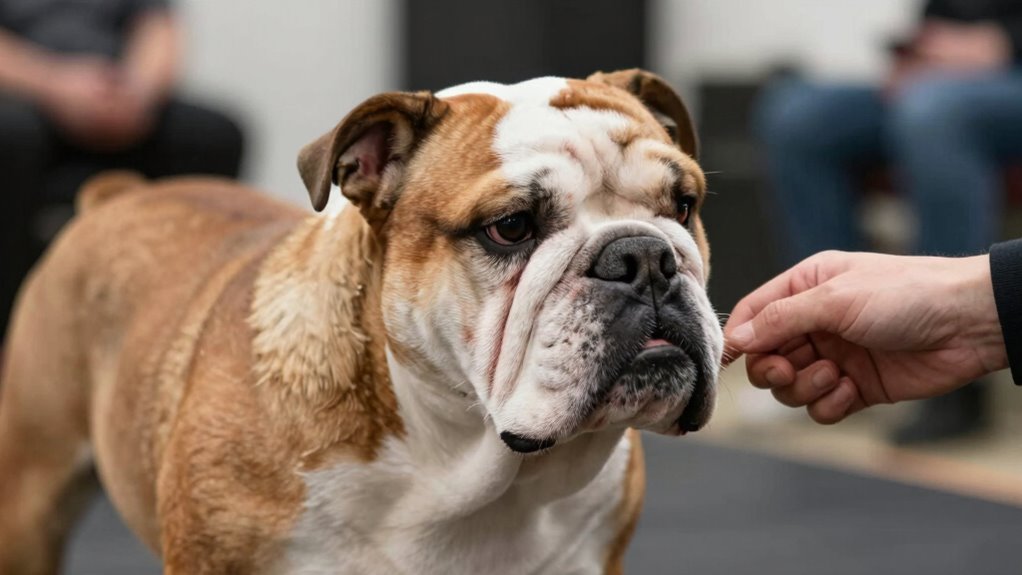
When our English Bulldogs want something, they make sure we grasp—using a blend of distinct vocal cues, expressive faces, and deliberate body movements to get their point across. Their communication styles reveal a deep emotional intelligence, shaped by their role as devoted family dogs.
We’ve all felt that quiet stare or heard the soft grunt that says, “I need you.” These aren’t random sounds or gestures—they’re purposeful signals built from years of bonding and observation.
- Unique facial expressions like raised brows or puckered lips signal curiosity or affection.
- Grunts or whines at the same time each day often mean they want food or a walk.
- Tail wags paired with paw taps serve as polite requests, not demands.
- Responses to positive reinforcement become faster when we acknowledge their efforts.
This clear back-and-forth strengthens the bond with owners. Their ability to read our tone, timing, and touch makes training a shared language, not a command. Just as chewing stimulates saliva production in dogs during natural behaviors, their communication patterns develop through consistent, rewarding interactions with us.
They’re not just communicating—they’re connecting.
Emotional Awareness and Bonding Behavior
As we spend more time with English Bulldogs, their emotional awareness becomes unmistakable—they don’t just live with us, they tune in. Their emotional intelligence lets them read our moods, offering quiet comfort when we’re down or matching our joy with playful nudges. This deep bonding behavior isn’t accidental—it grows from daily connection, trust, and consistent positive reinforcement. They sense subtle social cues, adjusting their energy to fit the household’s rhythm.
Their loyalty isn’t loud, but it’s constant—watching over family members with a calm, reassuring presence. When raised with kindness, they form gentle bonds with children and adults alike, thriving in emotionally attuned homes. You can enhance training and engagement by using training treats and reward systems that tap into their natural desire to bond with their owners.
| Behavior | Meaning |
|---|---|
| Leaning against you | Seeking closeness, showing loyalty |
| Mirroring your mood | Responding to social cues with empathy |
| Calm presence near kids | Trust, emotional intelligence in action |
We strengthen this bond through patience and love. These small acts deepen our connection, making our Bulldogs not just pets, but family. Their quiet understanding speaks volumes.
Training Techniques That Work for Stubborn Bulldogs

While English Bulldogs carry a reputation for being set in their ways, we can shape their behavior effectively with methods that respect their temperament. Their stubborn nature means we need patience, not force. We’ve learned what truly works:
- Short training sessions of 5–10 minutes keep them engaged without overwhelming their focus.
- We rely on positive reinforcement—treats and praise—because our Bulldogs respond to love, not scolding.
- We use simple commands like “sit,” “stay,” and “come” to make basic obedience training clear and stress-free.
- We weave in play—tug or fetch—as a reward, turning lessons into shared joy.
We stay consistent, knowing progress may be slow. Each small win builds trust. With patience, even the most stubborn Bulldog learns.
We don’t rush. We celebrate effort, not just perfection. This journey isn’t about control—it’s about connection.
When we honor their pace and personality, they surprise us. They’re not difficult; they’re deliberate. And with our steady guidance, they thrive.
For walks, pairing training with proper equipment like front attachment harnesses helps redirect pulling and reinforces the lessons learned during training sessions.
Frequently Asked Questions
What Is the IQ of an English Bulldog?
we don’t have a fixed iq, but our bulldog behavior shows unique canine intelligence. through social learning and gentle training techniques, we surprise you. our breed characteristics shape how we tackle problem solving, proving there’s more to us than meets the eye.
Do Bulldogs Pick a Favorite Person?
Yes, we see our bulldogs pick a favorite person through subtle loyalty cues and warm attachment styles. We bond by sharing moments, shaping trust, and honoring their personality traits, where bonding techniques meet love, loyalty factors deepen, and social behaviors reveal favorite person dynamics we cherish.
How Do I Know if My Dog Is Smart?
We understand our dog’s smart when he picks up on training techniques quickly, solves problems around the house, and adjusts to environmental factors. His sharp cognitive skills shine through in daily dog behavior, problem solving, and warm social interactions—we see it in how he responds to us and learns.
Are Bulldogs Intelligent Dogs?
It is understood that bulldogs are intelligent, despite common misconceptions. Their breed characteristics shape bulldog behavior, so we use positive training techniques, mental stimulation, and early socialization tips to connect deeply and reveal their true, smart nature.
Conclusion
We’ve opened the quiet brilliance of English Bulldogs together. Their minds aren’t loud, but deep—like underground rivers shaping stone. We use short 5-minute sessions, 0.5-inch soft treats, and consistent cues: *sit*, *stay*, *come*. Patience, not force, builds trust. We read their sighs, stiff tails, lowered heads. We respond with calm, clear choices. Training isn’t control—it’s conversation. We speak their language, they learn ours. Every small win bonds us tighter.