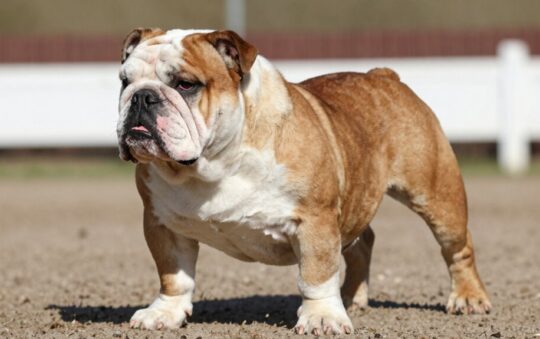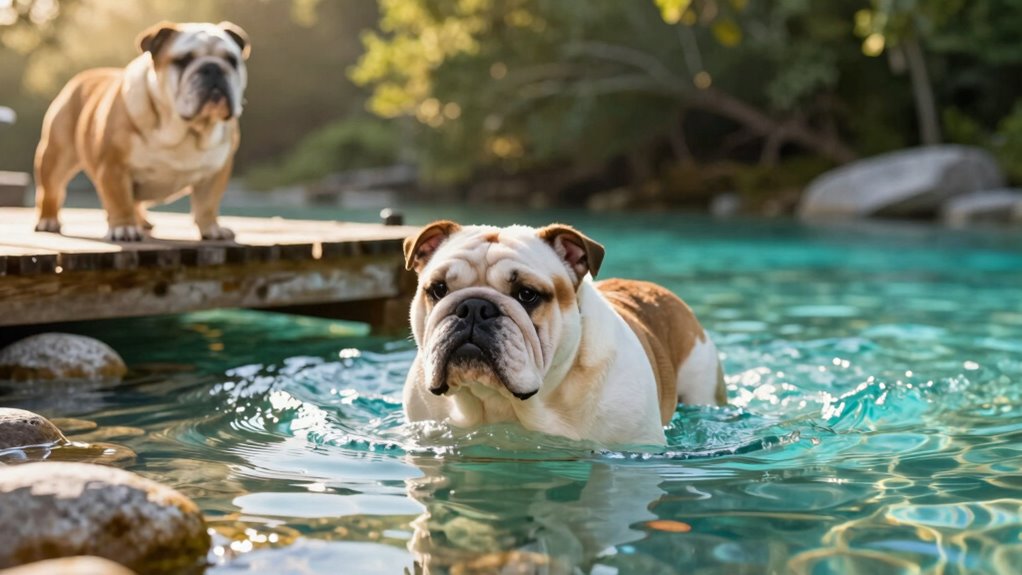
We assess, prepare, and protect our Bulldogs because safety starts with foresight. Their stocky 40–50-pound frames, short muzzles, and limited lung capacity make floating difficult, even in shallow water. A properly fitted life vest with a handle—like the Outward Hound Granby Splash in size large—can mean the difference between struggle and security. We stay alert, arms ready, and never assume instinct will take over. Water outings can work, but only with the right plan in place.
Key Takeaways
- English Bulldogs struggle to swim due to flat faces, heavy bodies, and short legs, requiring constant supervision in water.
- Always use a properly fitted, U.S. Coast Guard-approved life vest to keep Bulldogs buoyant and safe.
- Introduce Bulldogs to water gradually, starting in shallow areas with positive reinforcement and easy exit access.
- Watch for signs of distress like frantic paddling, labored breathing, or wobbling after swimming.
- Limit swim sessions to 5–10 minutes, rinse off chlorine or salt, and dry ears to prevent health issues.
Can English Bulldogs Swim Naturally?
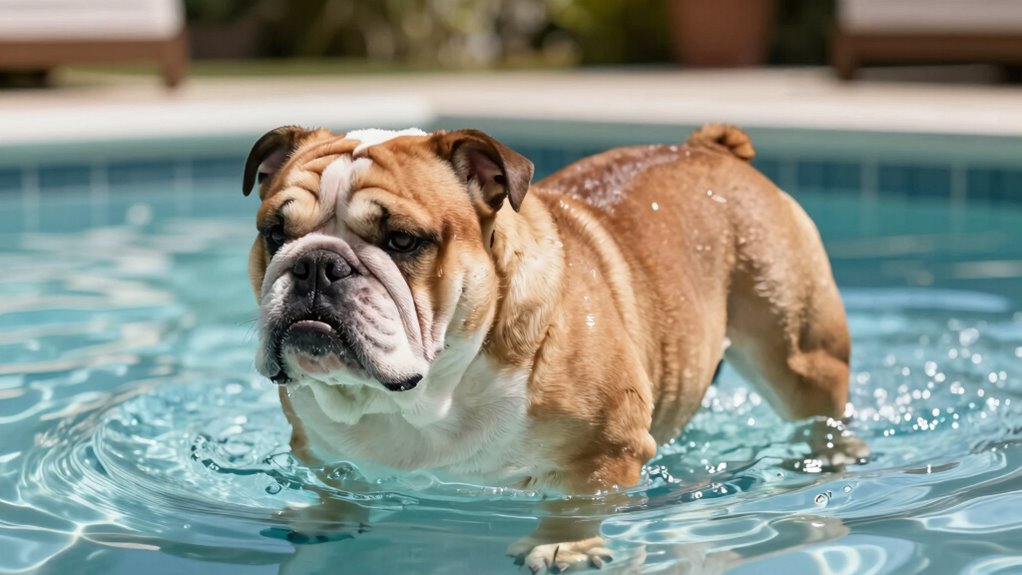
How do we explain why most English Bulldogs struggle in water? We’ll tell you straight: they can’t swim well, if at all. Their flat faces make breathing hard when the head dips, and their dense, muscular bodies lack buoyancy.
Short legs can’t paddle efficiently, leaving them sinking, not gliding. Even if your Bulldog seems curious near water, don’t assume they’re safe. They often panic—watch their body language closely: frantic paddling, head bobbing, or silent distress.
That’s why water safety isn’t optional. Always supervise, every second. Never toss them in to “just swim”—that myth risks lives. A properly fitted life vest with a handle is essential. It boosts floatation and lets you lift them fast.
Think Durable, U.S. Coast Guard-approved vests with adjustable straps (30–40 lb capacity fits most). For peace of mind, start with shallow, calm environments. Similar to how slow feeders help manage health risks for bulldogs, life vests are critical safety tools designed specifically for their physical limitations.
Follow these safety tips: enter slowly, stay close, keep sessions short. We watch. We protect. Because loving them means keeping them safe—even in water.
Understanding Bulldog Physical Limitations in Water
While their sturdy build and bold personalities might suggest otherwise, English Bulldogs face real physical challenges in the water that we must take seriously.
It’s clear that these lovable pups aren’t like other dog breeds when it comes to swim time. Their brachycephalic snouts — squished and short — limit airflow, making it tough to breathe while swimming.
Couple that with a stocky chest, dense muscle mass, and a top-heavy frame, and you’ve got a dog who struggles to stay afloat. These physical characteristics mean most English Bulldogs can’t paddle efficiently and tire fast.
Even if your Bulldog, like Honeybun, seems to enjoy the water, the breed simply isn’t built for it. We can’t rely on instinct here — most Bulldogs don’t swim naturally. That’s why close supervision is non-negotiable. Consider using breakaway buckles on any collar to prevent additional choking hazards while your dog is in or near water.
And while we’re not saying they can never get in the water, we *are* saying a life jacket is essential. It provides buoyancy and support, letting them enjoy shallow play without the risk.
We’ve got to respect their limits to keep them safe.
Essential Safety Gear for Bulldogs Around Water
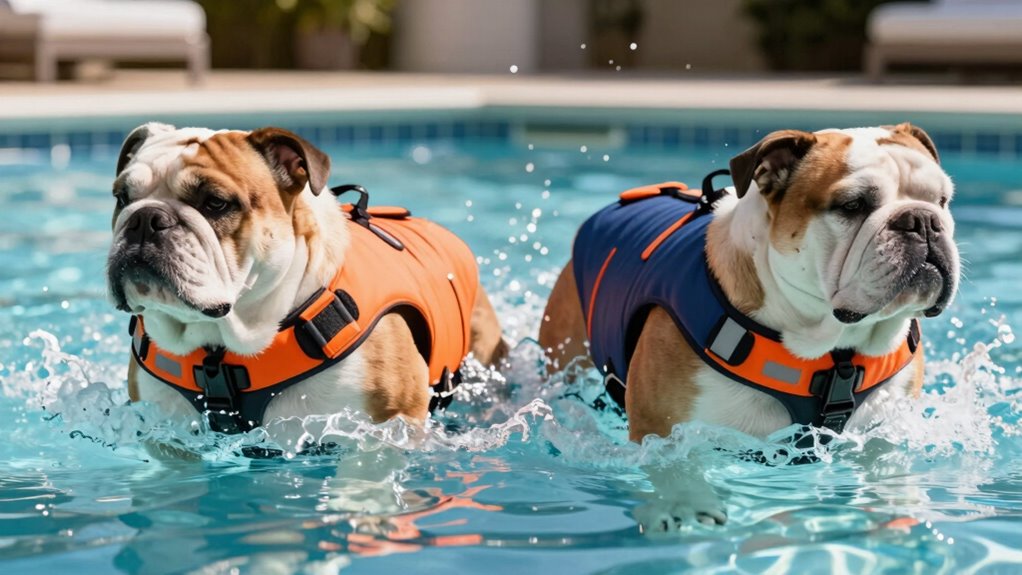
Every time we take a Bulldog near water, we make safety our top priority—and that starts with the right gear. Bulldogs aren’t natural swimmers, so life vests are non-negotiable. We always choose bright-colored vests for visibility and models with sturdy handles—crucial in an emergency.
The vest must fit snugly but allow full movement; we check the chest and neck girths carefully, following size guides by weight and breed proportions. We never skip a pre-activity check of all safety gear: zippers, straps, seams. A damaged vest won’t protect when seconds count.
Beyond life vests, we use safety harnesses clipped to leashes to prevent surprise dashes into lakes or pools. These keep our Bulldogs secure without restricting breathing—a critical detail for their brachycephalic anatomy. For maximum effectiveness, we select harnesses with front attachment points that redirect steering and reduce pulling during walks.
We treat every water activity as potentially risky, so our safety gear is always within arm’s reach, not tossed in a bag. Preparedness isn’t fear—it’s love in action. When we keep our Bulldogs safe, we both enjoy the water with peace of mind.
Step-by-Step Guide to Introducing Bulldogs to Water
Since water can feel intimidating to a Bulldog at first, we start by bringing them to a quiet, shallow area—just 3 to 4 inches deep—where they can stand comfortably without fear of submersion.
We keep the space dog friendly and free of distractions so they can focus on building confidence. Here’s how we ease them in:
- Begin sessions in shallow water, letting your pup explore at their own pace—never force them in.
- Use positive reinforcement like treats, gentle voice cues, and affection the moment they step near or into the water.
- Make sure your Bulldog wears a properly fitted life vest for safety and added buoyancy, even in minimal depths.
- Monitor your Bulldog closely, watching how they move and balance, and always provide easy exit access like a ramp or pool steps.
We stay patient and present, letting trust grow slowly.
Calm, consistent exposure—paired with love and encouragement—helps them adapt.
We supervise every session, because when it comes to water, safety and comfort go hand in paw. Consider pairing water activities with cooling collars or vests to help keep your Bulldog comfortable during warm-weather swimming sessions.
Recognizing Signs of Distress in Bulldogs During Swim Time
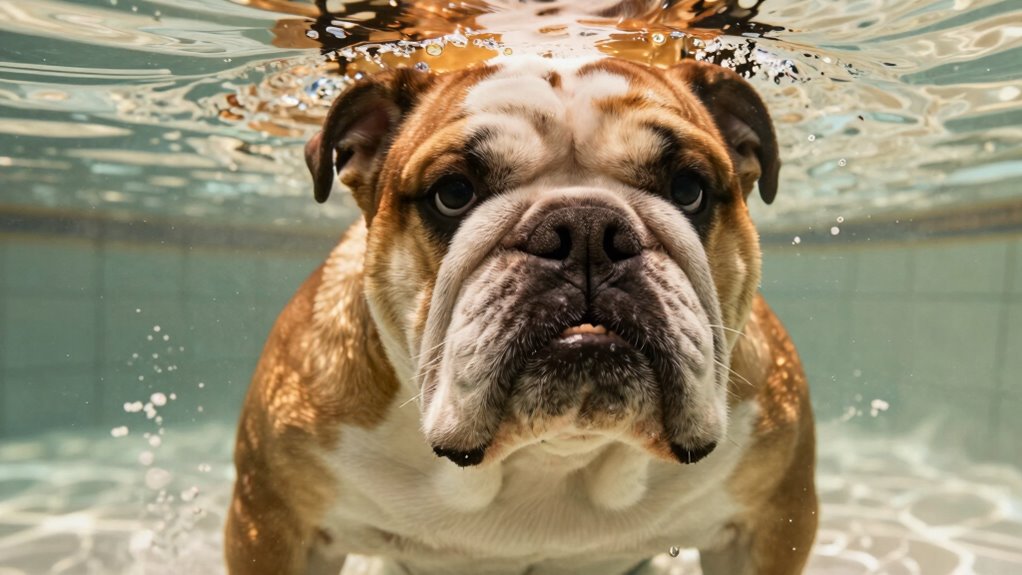
While dogs can swim, Bulldogs often struggle due to their heavy chests and short muzzles. We must supervise Bulldogs at all times—drowning risks rise fast.
Watch for signs of distress: frantic paddling, stiff posture, excessive splashing, or attempts to climb out. These aren’t just discomfort cues—they’re panic signals.
Pay close attention to breathing patterns; gasping or labored breaths mean trouble. If your Bulldog barks unusually or seems disoriented, act immediately.
After swimming, lethargy or wobbliness may point to overexertion or even water intoxication—a real danger if they’ve swallowed too much. Similar to how bacterial contamination can occur from raw food exposure, water ingestion poses its own serious health risks requiring immediate veterinary attention.
We understand you want fun, safe moments, so stay alert. Keep sessions short—5 to 10 minutes max. Use a life vest with a handle.
Trust your gut: if something feels off, end swim time. Our love for them means protecting them, even in water.
Preparing Your Yard and Pool for Bulldog Safety
When preparing your yard and pool for your Bulldog’s safety, start by installing a secure, dog-safe fence around the entire pool area—this means at least a 4-foot barrier with self-latching gates that close automatically, so your pup can’t wander in unsupervised.
These important considerations protect your dog and give us peace of mind. Always keep a close eye on your Bulldog near water, even in familiar spaces.
To make the area truly safe, we recommend:
- Safe entry and exit points like steps or ramps so your dog can get in and out without strain
- Maintaining chlorine levels between 1–3 ppm to prevent skin and eye irritation
- Shaded zones around the pool to prevent overheating—Bulldogs overheat fast
- A clean, hazard-free perimeter free of sharp objects or floating covers
These steps guarantee we can take your dog to the pool with confidence.
A well-prepared space means fewer risks and more safe, joyful moments together near the water.
Best Practices for Beach and Outdoor Water Trips With Bulldogs
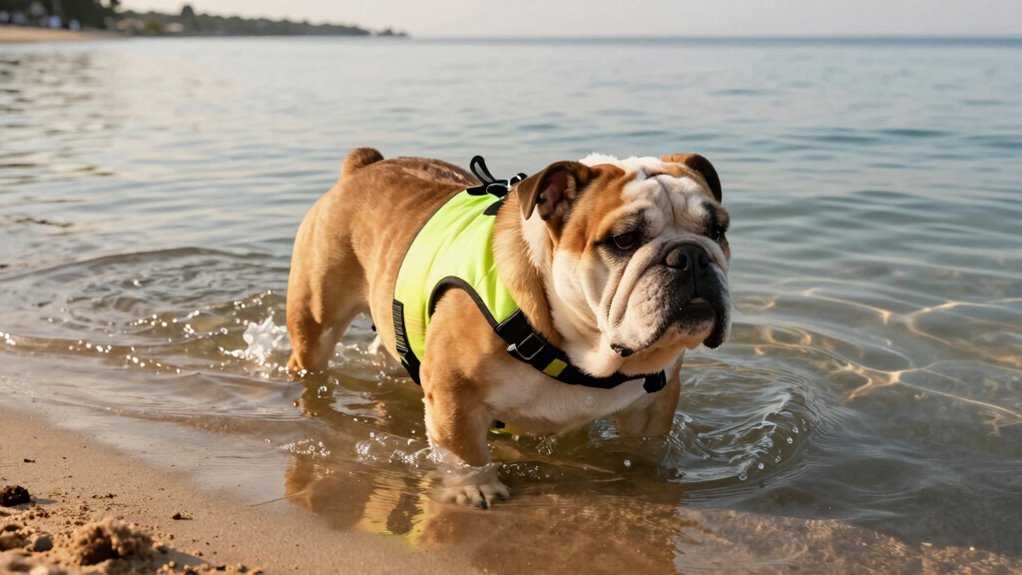
Taking the safety steps we put in place around the backyard pool and applying them to natural water settings guarantees our Bulldogs stay protected wherever water is involved.
The best practices for beach and outdoor water trips start with a properly fitted life vest—non-negotiable, given their stocky build and limited swimming ability. We never leave your dog unattended near water; even shallow waves can overwhelm them fast.
We choose calm, shallow areas under 82°F, where overheating risks drop and confidence in swimming grows. We monitor Bulldogs constantly, watching for labored breathing or wobbling—they tire fast and can’t self-rescue.
Always rinse them with fresh water post-swim to strip away salt or chlorine, and gently dry ears to prevent infections. These steps aren’t just cautionary—they’re care in action.
When we stay alert and prepared, we give our Bulldogs joy without gamble. This is how we love them well: close, calm, and completely there every moment.
Frequently Asked Questions
Are English Bulldogs Good Swimmers?
we’re not naturally good swimmers, but with english bulldog swimming techniques and english bulldog water safety, we can enjoy english bulldog water play. use english bulldog swimming gear for support and share safe, joyful english bulldog swimming experiences together.
Can Bulldogs Swim in Water?
we can swim in water, but it’s tough—we weren’t built for it. with bulldog water training, the right bulldog swimming gear, and water safety precautions, we’ll stay safe. always pick ideal swimming locations and use bulldog swimming tips to keep us happy and afloat.
What Is the Most Common Cause of Death for English Bulldogs?
We lose our bulldogs too soon—respiratory failure’s the leading cause. We face bulldog health risks daily, from bulldog breed vulnerabilities to common bulldog diseases. We worry about bulldog lifespan concerns, but we fight them with love and vigilant bulldog preventive care, knowing every moment together matters deeply to us.
What Is Swimmer Puppy Syndrome in English Bulldogs?
We see it in our litters sometimes—a swimmer puppy, limbs splayed like starfish, struggling. It’s a developmental issue tied to breed characteristics, impacting bulldog health. We watch closely, support gently, prioritize swimming safety, knowing early love and care guide stronger, waddling steps ahead.
Conclusion
We’re in the boat together, paddling with care. Like clumsy otters in borrowed flippers, our bulldogs need us to steer safe. Their bodies—dense, low, 40–50 pounds of muscle—sink faster than confidence without support. So we arm them: U.S. Coast Guard-approved life vests, 1-inch foam padding, secure belly straps. We watch, we guide, we rinse with freshwater—30 seconds post-swim, every time. Together, we turn struggle into strength, one calm splash at a time. Safety isn’t optional; it’s the current that carries us all.