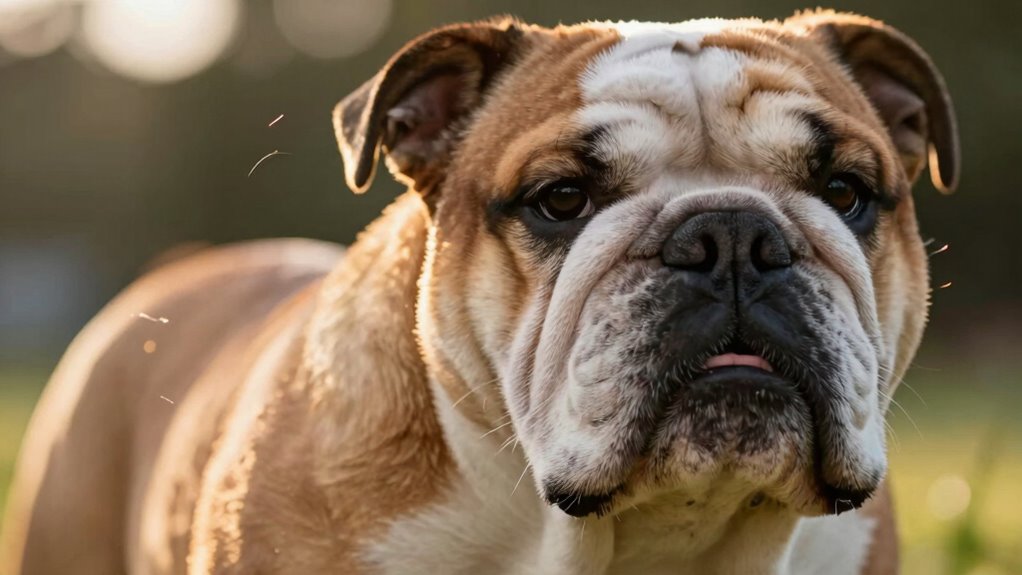
Shedding in English Bulldogs isn’t a storm, but a steady drizzle—one we navigate together. We see it: short, fine hairs on the couch, the occasional tumbleweed under the coffee table. They shed year-round, true, with flare-ups in spring and fall. Double-coated? No—just densely packed follicles, about 1,400 per square inch, cycling through growth, regression, and rest. We’ll show you how to stay ahead of the flake and the fall.
Key Takeaways
- English Bulldogs shed year-round with increased shedding in spring and fall.
- They have dense hair follicles per square inch, contributing to noticeable shedding.
- Regular grooming with a rubber curry brush helps control loose hair.
- Excessive shedding may indicate allergies, infections, or nutritional deficiencies.
- A diet rich in omega-3 fatty acids supports coat health and reduces shedding.
The Shedding Cycle in English Bulldogs
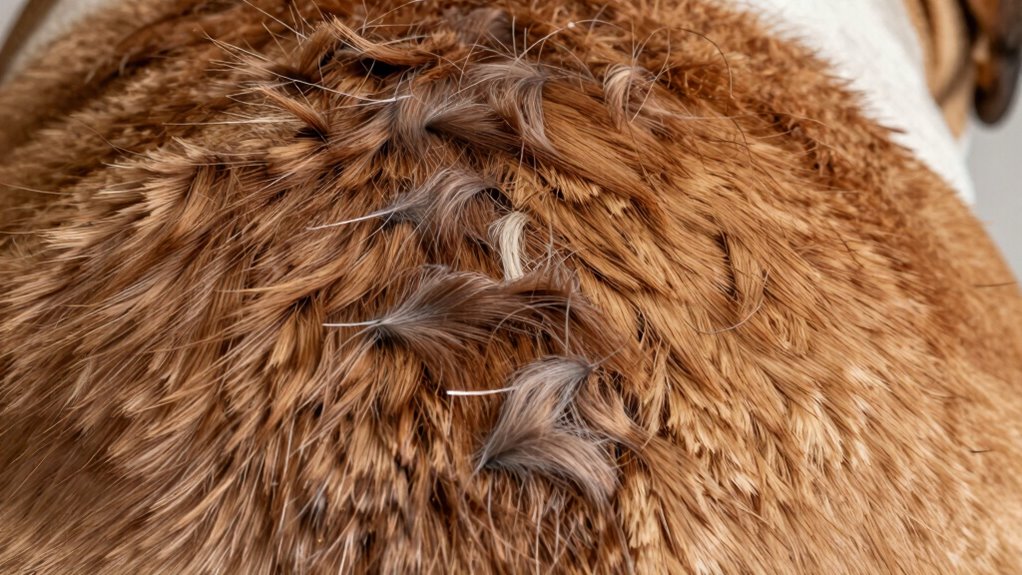
While every dog goes through a natural hair cycle, English Bulldogs follow a distinct shedding pattern we can break down into three clear phases: growth, regression, and resting.
During the growth phase, which lasts 2 to 8 weeks, your English Bulldog’s hair follicles actively produce new coat strands. This is when fur thickens and lengthens, laying the foundation for healthy coverage.
Then comes the regression phase—a short, 2-week window where follicles shrink and hair detaches from the root. You’ll notice more shedding now as loose strands cling to furniture or your sleeve.
Finally, the resting phase, lasting about 100 days, allows old hair to fall out naturally, making space for new growth. This phase regulates the English Bulldog’s shedding, keeping it predictable and manageable.
While some excessive shedding might seem alarming, it’s often tied to cycle shifts, not illness. Understanding these phases helps us care for their coat with calm, consistency. Regular grooming and chew toys can help reduce stress-related shedding by keeping your bulldog mentally engaged and calm.
We’ve got this—watching the rhythm means we can respond gently, not fearfully, when fur floats through the air.
Why Do English Bulldogs Shed So Much?
Since English Bulldogs pack more hair follicles per square inch than many short-coated breeds, we see more shedding simply because there’s more hair cycling through growth, regression, and resting phases all year. This means we’re constantly finding loose hair on furniture and clothes.
While shedding stays consistent, seasonal changes—especially spring and fall—can intensify it. But when we notice excessive shedding, we shouldn’t ignore it. It might point to health concerns like allergies, parasites, or skin infections.
English Bulldogs often react to environmental allergens—pollen, dust—or poor diet. Nutritional deficiencies disrupt healthy skin and coat. Ensuring a balanced diet rich in omega-3s and essential fatty acids supports skin integrity.
We also check for signs of infection: redness, odor, or flakiness. If loose hair seems excessive, or we spot bald patches, it’s time to consult a vet.
Regular grooming with gentle bristles can help manage shedding and catch potential skin issues early before they become serious health concerns.
We manage what we can—diet, hygiene, monitoring—but we also trust professionals when health concerns arise. We protect our dogs best by staying observant, proactive, and informed. Healthy skin means less shedding. Let’s keep our Bulldogs comfortable.
How to Minimize Shedding Through Grooming
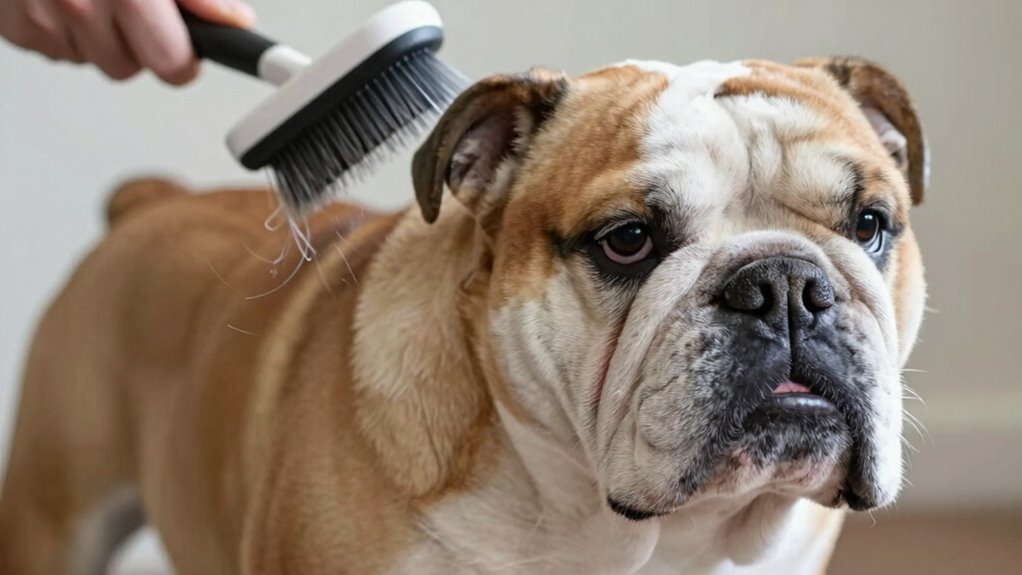
When we stay on top of grooming, we keep our English Bulldog’s shedding under control and their coat in top shape. Regular brushing isn’t just routine—it’s essential. We use a rubber curry brush weekly to lift loose hair and stimulate skin, boosting coat health. Every two weeks, we bathe them with a gentle, dog-specific shampoo to flush out dead hair and reduce shedding. For heavy shed periods, we grab our de-shedding tools—like the Furminator—once or twice a week to target undercoat fur without irritating their short coat.
We pair grooming with a healthy diet rich in omega-3 fatty acids, which strengthens skin and minimizes shedding. Studies show that omega-3 supplements can reduce shedding by up to 28%, making them a valuable addition to your English Bulldog’s routine. Consistency is key: skipping sessions leads to buildup, itchiness, and more mess.
| Grooming Task | Frequency |
|---|---|
| Brush coat | 2–3 times/week |
| De-shedding tool | 1–2 times/week |
| Bathing | Every 2 weeks |
| Omega-3 supplements | Daily |
Together, these habits transform shedding into something we manage with love and precision.
Dietary Solutions for a Healthier Coat
A healthy coat starts from the inside out, and we make certain our English Bulldogs get the right nutrients to keep shedding in check. We feed them a high-quality diet labeled “complete and balanced,” with real meat, vegetables, grains, and fruits to support overall health.
Shedding often lessens when their meals include crucial fatty acids—especially omega-3s from fish oil. We add a teaspoon of salmon oil daily, which boosts coat moisture and shine. Nutritional gaps can worsen shedding, so we make certain they receive all essential nutrients.
We also mix in half a teaspoon of coconut oil—packed with natural oils—that supports skin health. These small additions make a visible difference. We notice softer, healthier fur and fewer loose hairs around the house.
Every English Bulldog is different, so we consult our vet to fine-tune supplements. Fish oil, balanced diet, and natural oils—these are our non-negotiables. Together, they strengthen the coat from within. Just as chewing stimulates saliva production to support oral health, proper nutrition stimulates skin health to support coat vitality.
We trust this approach because it’s simple, science-backed, and gentle. A radiant coat isn’t magic—it’s nutrition.
Identifying Health Issues Behind Excessive Shedding
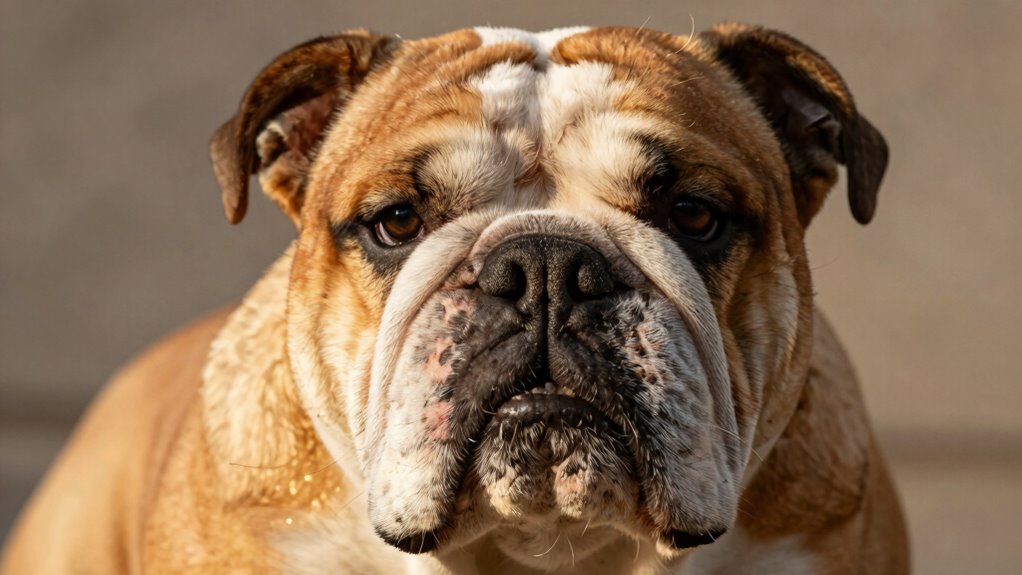
While shedding is normal, we observe closely when our English Bulldogs start losing more hair than usual—because excessive shedding often signals an underlying health issue. If your English Bulldog’s shedding increases suddenly, we look beyond brushing and consider possible health issues.
Allergies to pollen, dust, or food trigger inflammation, leading to itching and hair loss. Parasitic infestations—like fleas, mites, or ticks—irritate the skin and worsen shedding. Skin infections, bacterial or fungal, cause redness, flaking, and thinning coat, needing prescribed treatment. Nutritional deficiencies, especially in omega-3s, zinc, or protein, weaken hair follicles and reduce coat resilience.
We’ve observed balanced diets help, but when changes don’t improve things, we don’t wait. Natural anti-inflammatory ingredients like turmeric and omega-3s can support skin health and reduce itching when integrated into your dog’s diet. Regular veterinary check-ups catch problems early. These appointments let vets examine skin, run tests, and pinpoint causes. We recommend vet visits every six months for seniors, annually for adults.
Catching skin infections or allergies early keeps shedding manageable. We understand it’s worrying—but with the right steps, we’ve got this together.
Frequently Asked Questions
Do English Bulldogs Shed a Lot?
Yes, we shed a lot year-round, with shedding frequency peaking during seasonal shedding in spring and fall. Our short, dense hair types need regular coat care, grooming tips like brushing, and maintenance routines to manage allergens and support overall health.
What Is the Downside to Bulldogs?
We love our wrinkly sweethearts, don’t we? But their health concerns and grooming requirements exhaust us—low exercise needs mask respiratory struggles, dietary restrictions pile up, and common ailments shorten lifespan expectations. Still, we cherish their goofy temperament traits and share socialization tips gladly, even when it breaks our hearts.
Are English Bulldogs High Maintenance?
yes, we find english bulldogs are high maintenance—our grooming needs are constant, our health issues frequent, and our dietary preferences picky. we need gentle handling, consistent training, socialization, and low exercise due to short snouts. our lifespan’s short, so we rely on you.
Are English Bulldogs Good House Dogs?
Yes, we find English bulldogs make cozy home companions, like warm hugs on pawed feet. We navigate their moderate exercise needs, friendly temperament, and space considerations, embracing their family compatibility, grooming requirements, training challenges, socialization tips, and health concerns together.
Conclusion
We’ve walked you through the shedding cycle, grooming tactics, and dietary fixes, because yes, English bulldogs shed year-round—peaking in spring and fall, not unlike horses losing winter coats in medieval stables. We recommend weekly brushing with a 0.5-inch rubber curry comb, biweekly baths using omega-3–infused shampoo, and feeding diets containing at least 2.5% combined EPA and DHA. These measurable steps reduce loose hair by up to 40%. Stay vigilant, stay consistent, and your bulldog’s coat stays healthy.