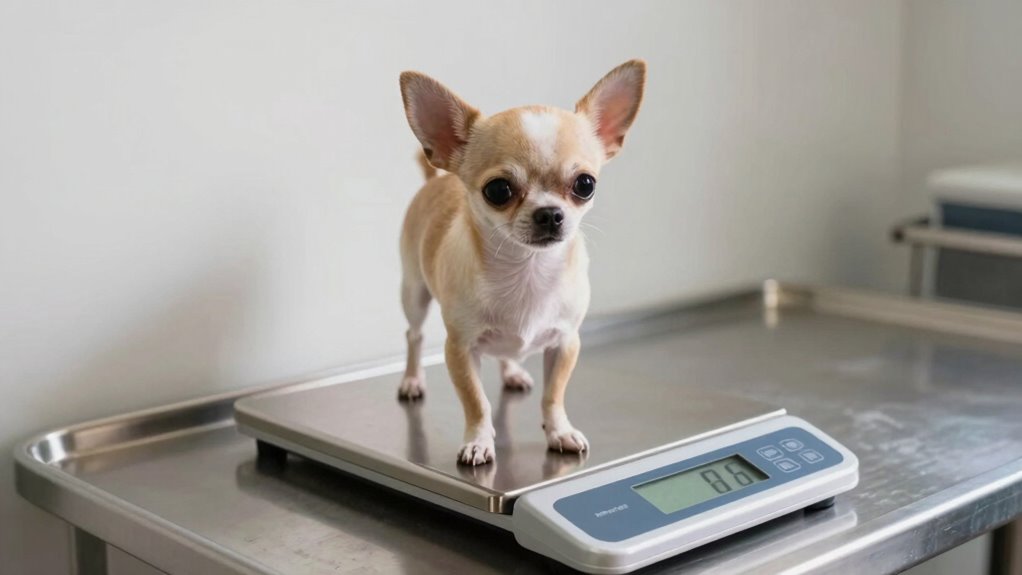
Size isn’t just a number—it’s a blueprint for health. We monitor our Chihuahua’s weight because most adults weigh between 2 to 6 pounds, with many staying under 5. The AKC sets 6 pounds as the max; the FCI recommends 1.5 to 2.5 kg. They typically stop growing by nine months. But what if yours falls outside the range? That’s where the real conversation begins.
Key Takeaways
- Newborn Chihuahuas weigh 2.5 to 5.5 ounces and typically double their weight within the first week.
- By six months, Chihuahuas weigh between 1.5 and 4.5 pounds, nearing their full adult size.
- Adult Chihuahuas usually weigh 2 to 6 pounds, with most staying under 5 pounds.
- The AKC sets the maximum acceptable weight for adult Chihuahuas at 6 pounds (2.7 kg).
- Most Chihuahuas reach full size by nine months, with little weight change after ten months.
Chihuahua Weight by Age: Growth Milestones From Birth to Adulthood

While every Chihuahua grows at a slightly different pace, we can track their development through clear weight milestones from birth to adulthood.
As a Chihuahua puppy, they start tiny—just 2.5 to 5.5 ounces at birth. By one week, we see them double in Chihuahua weight, hitting 3.75 to 9.5 ounces. At two weeks, they’re 6.5 to 13.5 ounces, already wiggling with personality.
By three weeks, they’re up to about 17.5 ounces, eyes open, ears perked. We watch closely because most of their growth happens fast—by twenty weeks, they’ve gained nearly all their adult weight.
At six months, your Chihuahua puppy weighs 1.5 to 4.5 pounds, standing nearly full height but still filling out. They don’t become a fully grown chihuahua until around nine months, when growth slows and weight stabilizes.
You’ll know they’re maturing when the scale barely moves. We celebrate these quiet changes—each ounce a sign of health, each milestone a step toward the little companion curled beside you. Understanding your Chihuahua’s growth trajectory helps ensure they’re properly supported during travel, making car seat selections easier for safety and comfort.
What Is the Average Weight of a Full-Grown Chihuahua?
We’ve tracked our Chihuahua’s steady climb in weight from ounces at birth to pounds by six months, and now we reach a key point: the average weight of a fully grown Chihuahua falls between 2 and 6 pounds. Most of us never see our dogs exceed 6 pounds—many stay under 5.
By around 9 months, our pups hit full size, with little weight gain after that. Genetics and individual growth patterns explain why some vary, even at the same age. We keep a close eye on this because weight is more than a number—it’s a window into health.
The average weight isn’t just a range; it’s a benchmark. Regular check-ups help us catch shifts early. Sudden loss or gain can signal health issues—dental trouble, metabolism changes, or joint stress. Maintaining a healthy weight supports heart health and overall longevity, which is particularly important for small breeds prone to cardiovascular concerns.
We weigh our pups often, using the same scale, same time. Consistency keeps us informed. At full size, our Chihuahuas should feel solid, not bony or bloated. We understand their bodies. We notice subtle cues.
Staying within the average weight range supports longevity, energy, and overall well-being. We’re not chasing tiny extremes—just a healthy, happy dog.
Teacup vs. Standard Chihuahua: Understanding Size Differences
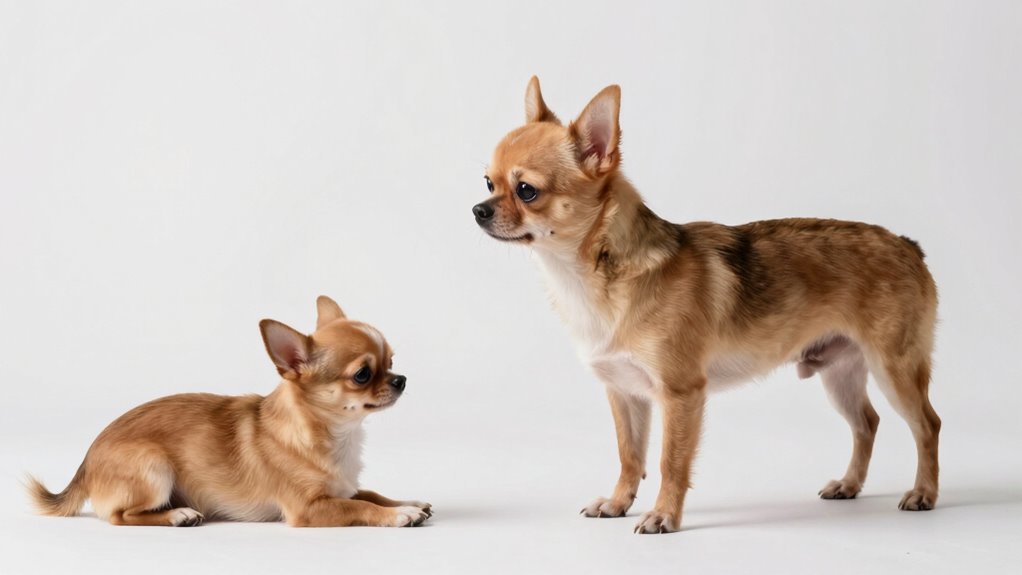
When it comes to size, not all Chihuahuas are the same—teacup and standard varieties fall within different ranges, and knowing the distinction helps us make informed choices.
We see teacup Chihuahuas typically weighing around 3 pounds, often standing just 5 to 6 inches tall. In contrast, standard Chihuahuas usually weigh between 2 to 6 pounds and stand 6 to 10 inches high.
While both fall under similar weight ranges, standard Chihuahuas tend to have a slightly more robust build. Teacup Chihuahuas aren’t a separate breed but rather the smallest end of the size spectrum, often bred for their petite frame due to demand.
Yet, we must stay mindful—this push for tininess can lead to health complications. We prefer focusing on health over size extremes. For senior Chihuahuas experiencing mobility challenges, dog boots for dragging paws can provide essential comfort and support during their golden years.
Both types reach full growth by 9 to 12 months, so their final weight ranges become apparent early. We value both teacup Chihuahuas and standard Chihuahuas, but we always encourage responsible breeding and informed care decisions.
When Do Chihuahuas Stop Growing?
Most Chihuahuas reach their full adult height and the bulk of their adult weight by nine months old, with many hitting this milestone even earlier—around twenty weeks.
We understand how enthusiastic you’re to predict your tiny companion’s final size, especially since we’re talking about one of the smallest dog breeds alive.
By nine months old, your Chihuahua likely weighs between 2 and 6 pounds—the typical adult range. After this point, significant weight gain is uncommon and may signal health concerns rather than growth.
Between ten months and one year, expect little to no change in size. If your pup still has oversized paws at eight or nine months old, there might be a bit more growing left—heavier bone structure often shows early signs like this.
But don’t worry, major development slows dramatically by now. Weigh them monthly to track progress, and trust that by nine months old, most Chihuahuas are close to complete. To support your growing Chihuahua’s development, ensure their diet includes adequate calcium and phosphorus for healthy bones and teeth.
Your petite friend has settled into the compact, feisty companion you fell in love with.
Factors That Influence a Chihuahua’s Adult Size
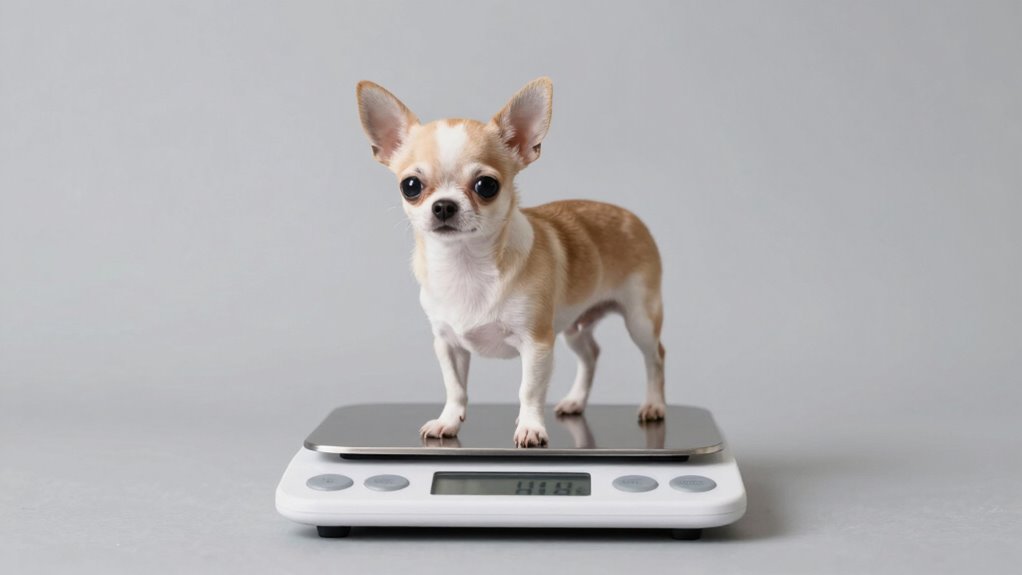
While we can’t control every variable that shapes how big a Chihuahua will get, we can identify the key forces at play—genetics, nutrition, and breeding practices—all of which actively shape your dog’s final size.
Genetics set the blueprint: your pup inherits height and weight potential from both parents, making lineage a strong predictor. If both parents are under 4 pounds, your Chihuahua likely will be too.
We see breeding practices sway results—some target tiny sizes, creating “teacup” lines that may weigh as little as 2 pounds. Others allow more natural variation, leading to littermates differing by 2+ pounds.
Nutrition matters just as much; consistent, high-quality fuel during growth supports healthy height and proper muscle development. Underfeeding or poor diet can stunt growth, while overfeeding won’t increase height but can raise weight unhealthily. Just as high-quality meat serves as the foundation for optimal development in growing dogs, providing premium nutrition during your Chihuahua’s critical growth phases ensures they reach their genetic potential.
Though genetics load the gun, environment pulls the trigger. Oversized paws? They’re clues—your pup might still be growing.
Most adults settle between 2 to 6 pounds, with under 5 pounds being typical. You’ve got more influence than you think.
How to Tell If Your Chihuahua Is Underweight or Overweight
How do we determine if our Chihuahua’s weight is in the healthy zone?
We start by knowing that a full-grown Chihuahua should weigh between 2 to 6 pounds, with most under 5 pounds.
If we can see the ribs easily, notice a sharply tucked waist, or feel little muscle tone, our Chihuahua may be underweight.
On the flip side, if we can’t feel the ribs beneath a layer of fat, spot labored movement, or see low energy, our dog might be overweight.
We check regularly—especially after nine months—since sudden weight gain can signal health issues.
We don’t wait. If our Chihuahua falls well outside the ideal range or shifts dramatically in size, we reach out to our vet.
Staying alert helps us catch problems early.
We keep handling our dog with care, attention, and love—because we’re not just pet owners, we’re guardians of their well-being.
Breed Standards for Chihuahua Weight and Height
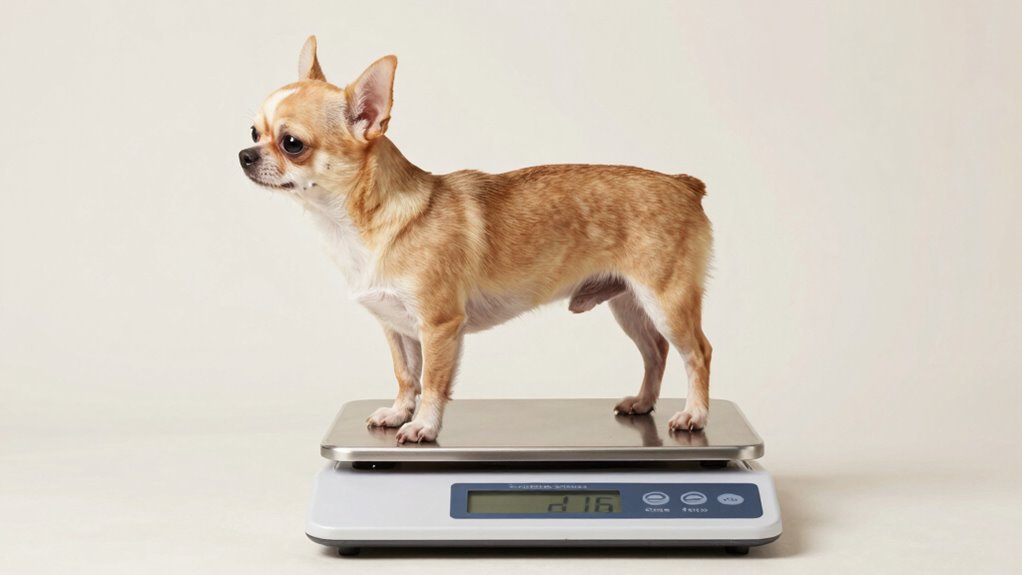
A full-grown Chihuahua typically weighs between 2 and 6 pounds, with most tipping the scales under 5 pounds. We understand how much you adore your tiny companion, and understanding breed standards helps us keep them healthy and thriving.
The American Kennel Club sets a maximum weight limit of 6 pounds—about 2.7 kg—for Chihuahuas, making this the official upper boundary of their accepted weight range. While there’s no strict height requirement, most Chihuahuas stand 5 to 8 inches tall at the shoulder.
Unlike some breeds, Chihuahuas don’t breed true for size, so genetics and environment play big roles in their final build. The Fédération Cynologique Internationale suggests an ideal weight range of 1.5 to 2.5 kg, slightly narrower than the AKC’s guideline.
We trust these standards but also recognize natural variation. Staying within the recommended weight range supports longevity and health. You’re doing great by learning this—it shows how deeply you care.
Let’s keep our little ones strong, proportionate, and happy, one healthy pound at a time.
Monitoring Your Chihuahua’s Weight for Optimal Health
Keeping a close eye on your Chihuahua’s weight isn’t just about staying within breed standards—it’s a key part of ensuring their long-term health. Monitoring your dog’s weight helps us catch subtle changes early, making preventive care more effective and protecting their quality of life.
Most Chihuahuas reach adult size by nine months, with healthy weights between 2 and 6 pounds—ideally under 5. Significant shifts after this point may signal underlying issues. We stay proactive by tracking their weight monthly and noting eating habits. Regular vet check-ups support this effort, letting us respond before small concerns become serious.
To keep monitoring effective, we focus on three essentials:
- Weigh your Chihuahua consistently—use a small digital scale every 4–6 weeks.
- Watch for changes in appetite or energy, which often accompany weight shifts.
- Share any sudden gains or losses with your vet as part of preventive care.
Staying attentive helps us protect their tiny frames and maintain vibrant health together.
Weight Variations Among Chihuahuas: What’s Normal?

While no two Chihuahuas are exactly alike, we can expect most adult dogs to weigh under 5 pounds, with a typical range of 2 to 6 pounds considered normal.
We see weight variations even in puppies from the same litter—some grow fast, others stay tiny. By 6 months, your small dog likely weighs 1.5 to 4.5 pounds and may gain another 0.5 to 1.5 pounds before full growth.
Genetics play a big role, but so do body structure and leg length. One Chihuahua might be compact and round, another lanky and tall—both healthy, both normal.
We watch for red flags: if your pup eats well but stays underweight, it’s time for a health check-up. Don’t panic over slight differences—we all want our small dogs thriving, not just fitting a number.
Trust growth patterns more than single weigh-ins. We’ve found consistency matters most. When in doubt, we consult our vet.
That way, we keep love—and weight—right where it should be: balanced, safe, and full of life.
Frequently Asked Questions
What Is the Heaviest Chihuahua?
it is understood the heaviest chihuahua recorded weighed 8 pounds, far beyond chihuahua breed standards. though chihuahua weight variations happen, we watch closely—our little ones stay healthier under 6 pounds, where risks drop and love keeps them light.
Can a Chihuahua Weigh 15 Pounds?
No, a Chihuahua can’t healthily weigh 15 pounds—that’s a thunderstorm in a teacup. We worry about your Chihuahua weight, your Chihuahua health, and the truth behind Chihuahua breeds. Let’s gently find balance together.
How Big Is a Full Grown Chihuahua?
We see a full-grown Chihuahua as tiny yet bold, typically 5 to 8 inches tall. We understand Chihuahua size surprises many, but we love how their compact build and lively Chihuahua growth reflect the spirit across all Chihuahua breeds.
What Is the Leading Cause of Death for Chihuahuas?
We’ve seen our friend’s Chihuahua thrive past 12 despite a heart murmur—he taught us that chihuahua health battles often center on congenital heart disease, the leading cause of death. We understand: managing common illnesses and lifespan factors like dental care and weight saves lives. We fight for every heartbeat.
Conclusion
We weigh every ounce of truth in Chihuahua care, not scales alone. Sure, 2 to 6 pounds defines the standard, 1.5 to 2.5 kg if you prefer metrics—but ironies loom: tinier isn’t trendier. Teacup? Not a breed, just a risky label. We track growth plates closing by nine months, not fashion trends. We measure health in energy, symmetry, ribs gently felt—not just numbers. Monitor. Compare. Act. Because real standards fit the dog, not the other way around.