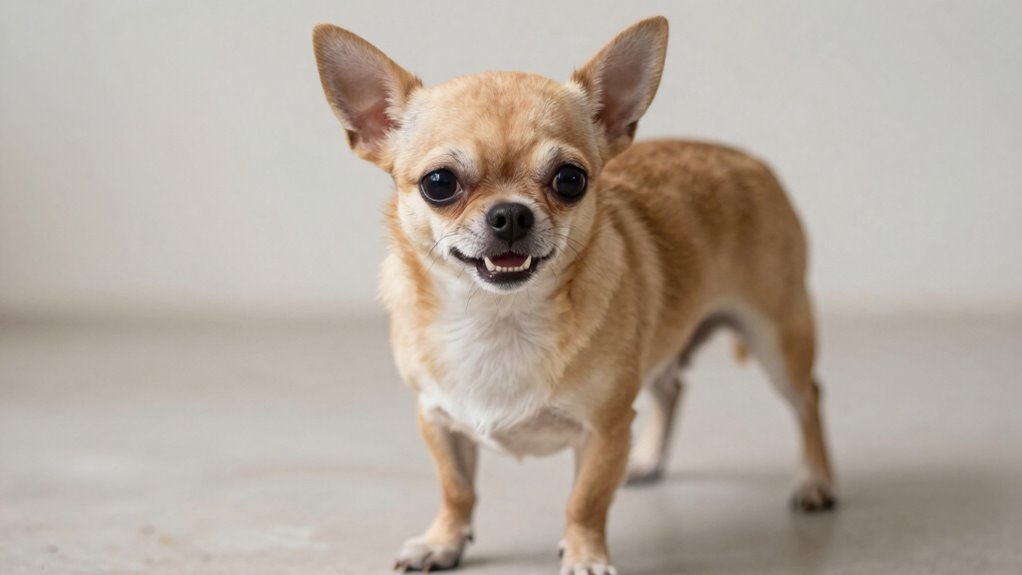
A Chihuahua’s sharp bark can be a thunderclap in a teacup—sudden, startling, and often misunderstood. We see it often: these 3- to 6-pound dogs puffing up like they’re ten times their size. Their aggression isn’t random. It’s rooted in biology, experience, and environment. Think fear, poor training, or unseen pain. The real triggers? They’re more specific—and fixable—than most guess.
Key Takeaways
- Genetics and individual personality significantly influence a Chihuahua’s tendency toward aggression.
- Lack of early socialization between 3 to 14 weeks can lead to fear-based aggressive behaviors.
- Inconsistent or inadequate training creates confusion and reinforces aggressive or defensive habits.
- Fear and anxiety triggered by loud noises, strangers, or unfamiliar environments may provoke aggression.
- Undiagnosed health issues like dental pain, spinal injury, or illness can cause sudden aggressive behavior.
Individual Personality and Genetic Influences
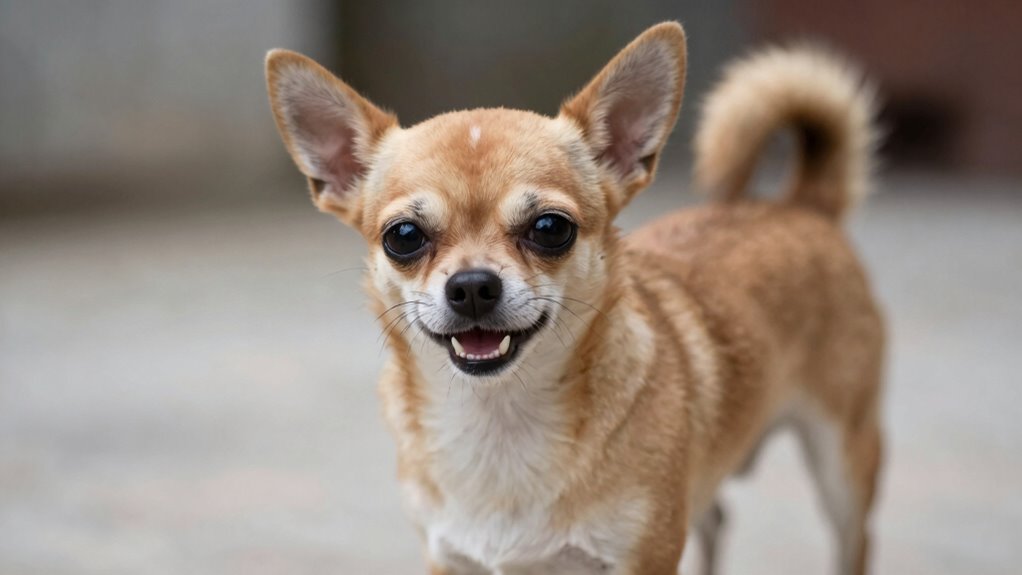
While genetics can influence how a Chihuahua behaves, it’s understood that individual personality plays just as critical a role in shaping their responses to people, pets, and new environments.
We see it often: two pups from the same litter, raised under similar conditions, yet one blossoms with confidence while the other flinches at shadows. That’s the power of individual personality traits. Some Chihuahuas are born bolder, even feistier, while others carry a natural wariness.
These differences directly affect aggressive tendencies. Yes, genes load the gun—but environment and upbringing pull the trigger. A dog’s early socialization experiences, consistency in training, and daily interactions sculpt their worldview.
We’ve watched anxious pups thrive in calm homes and confident ones grow defensive when mishandled. It’s not just about bloodline; it’s about lived experience. You shape your dog as much as their DNA does. Just as individualized approach to addressing behavioral issues proves more effective than one-size-fits-all solutions, recognizing your Chihuahua’s unique temperament allows you to tailor training methods that work best for their specific personality.
Lack of Early Socialization
Something about a well-adjusted Chihuahua just clicks—they’re curious, calm, and confident in the world around them.
It’s understood this isn’t always the case, though. The lack of early socialization is a key reason some Chihuahuas develop fear-based aggressive behavior. Between 3 to 14 weeks of age, puppies need consistent, positive socialization opportunities—with people, dogs, sounds, and environments.
Without them, they’re more likely to perceive the unfamiliar as threatening. We see it often: undersocialized Chihuahuas become overly protective, reactive, or territorial. Their fear isn’t stubbornness—it’s uncertainty. They haven’t learned how to respond calmly.
That’s why missed socialization windows lead to heightened stress and aggression toward new stimuli. But we can prevent it. Simple steps—like weekly park visits, gentle introductions to new guests, or quiet exposure to household noises—build resilience. Incorporating positive reinforcement during these early experiences helps puppies associate new environments with reward rather than threat.
These experiences shape how they interpret the world. When we prioritize early socialization, we don’t just reduce fear. We give them confidence. And that confidence replaces aggressive behavior with curiosity, trust, and ease.
Inadequate Training and Reinforcement
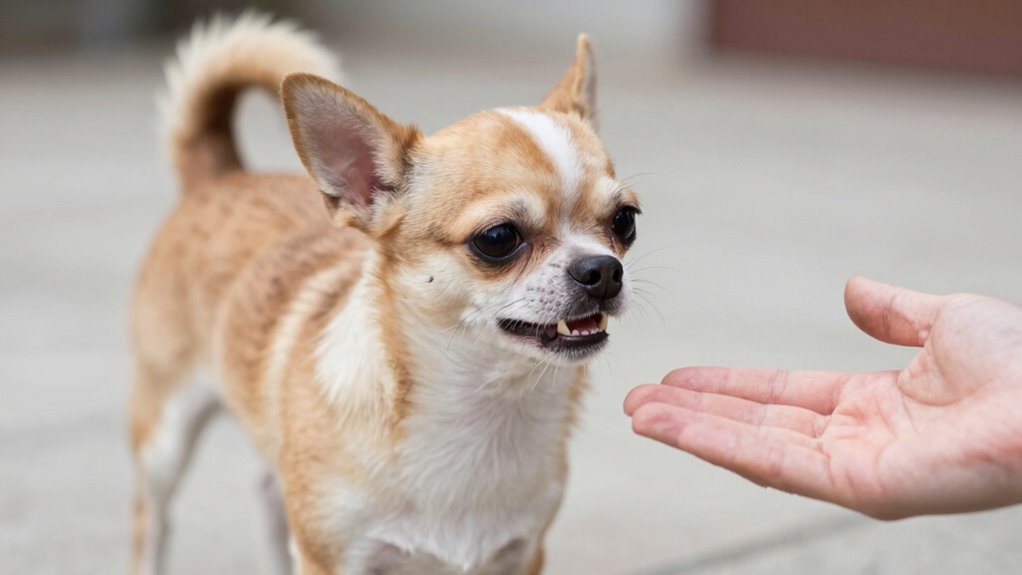
When we skip proper training or treat it as optional, we set Chihuahuas up to fill the behavioral gaps on their own—and that’s when aggression often takes root. Inadequate training leaves them confused about boundaries, leading to bad habits and unchecked aggression in Chihuahuas.
Their small size makes it easy to overlook the need for consistent training, but that leniency backfires. Without structure, they assume control, reacting aggressively to perceived threats. We see it often: nipping, lunging, excessive barking—all preventable with early, consistent training.
Positive reinforcement methods work best. Reward calm behavior with treats, praise, or play. It builds trust, not fear. A well-timed treat after a quiet greeting reinforces peace, not panic. Tools like front attachment harnesses can also support training by redirecting a dog’s natural pulling instinct during walks, reinforcing the calm behavior you’re working to establish.
We must be patient, firm, and predictable. Inconsistent responses confuse them, fueling insecurity. Daily 5-minute training sessions strengthen bonds and clarify rules.
When we commit to consistent training using positive reinforcement methods, we replace confusion with confidence. That’s how we prevent aggression in Chihuahuas—not through dominance, but through guidance, clarity, and care.
We’ve seen the transformation in hundreds of homes. It starts with us.
Fear and Anxiety Triggers
Because they’re so small—typically weighing 2 to 6 pounds—Chihuahuas often see the world as full of looming threats, and that constant sense of vulnerability can turn fear into aggression fast.
It’s clear that unaddressed fear and anxiety are key triggers for aggressive Chihuahuas. Without early socialization—exposure to people, dogs, and environments before 16 weeks—our pups can develop deep-seated anxiety. Sudden noises, like thunder or doorbells, or even a change in routine, become triggers.
These stressors spark fear, and fear leads to barking, growling, or snapping. We must recognize these behaviors not as dominance, but as distress signals. Common triggers include unfamiliar guests, crowded spaces, and loud environments. Complementary tools like calming collars can help reduce anxiety during stressful situations while you work on addressing the underlying fear.
Aggression is their defense, not defiance. By identifying and managing these anxiety triggers—using gradual exposure, safe spaces, and consistent cues—we reduce fear. We create calm. We build trust.
Understanding our Chihuahua’s emotional experience—honoring their size, sensitivity, and needs—transforms reactive responses into resilience. With patience and awareness, we help them feel secure. And when they feel safe, they don’t need to be aggressive.
Territorial and Protective Instincts
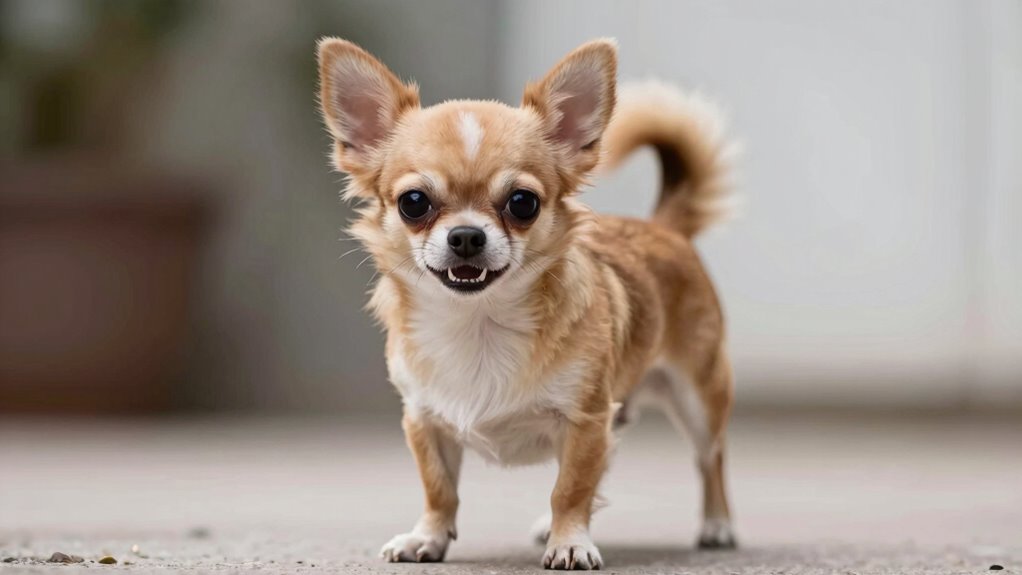
A fortress no larger than a studio apartment, your Chihuahua’s world is built on vigilance. Their small frame hides a powerful protective nature, one that flares at the slightest intrusion. They may bark, lunge, or snap—classic signs of territorial aggression—when strangers, pets, or even familiar guests cross their boundary.
We’ve seen it often: a 4-pound dog standing like a guard dog, ears forward, body tense, defending a 10-foot doorway or a favorite chair as if it were sacred ground. This instinct isn’t unusual; it’s bred in. Their alertness keeps them locked on potential threats 24/7.
But unchecked, this can escalate into excessive territorial aggression—disrupting peace at home or walks in tight hallways. We can’t ignore it. Early socialization is our best tool: exposing them to varied people, sounds, and pets between 8–16 weeks old. For more structured behavior management, consider training tools with multiple training modes that allow for customizable corrections.
It teaches discernment. With patience, we shape their loyalty into calm confidence, not constant conflict. You’re not asking them to surrender their guard duty—just to know when the alarm isn’t needed.
Underlying Medical Conditions
Pain hides in silence, and your Chihuahua might not cry out when something’s wrong—they might snap instead. Sudden aggression often points to underlying health issues we can’t see. Dental problems, like fractured teeth or gum infections, cause intense pain. So do spinal issues such as slipped discs. When your dog hurts, they lash out to protect themselves—it’s instinct.
That’s why regular veterinary check-ups aren’t just routine—they’re essential. They catch problems early, before aggression becomes a pattern. Treating the root cause often resolves the behavior.
Watch for subtle signs. Changes in appetite, stiffness, or reluctance to jump can accompany aggression. Together, they signal something medical.
Here’s what to monitor closely:
| Symptom | Possible Cause | Action |
|---|---|---|
| Snapping when touched | Spinal pain, injury | Schedule vet exam |
| Drooling, chewing one side | Dental problems | Dental check-up |
| Withdrawn behavior | Underlying health issues | Blood work, exam |
| Aggression out of nowhere | Pain or illness | Immediate vet visit |
We’ve got this—stay observant, stay proactive.
Frequently Asked Questions
Why Is a Chihuahua Aggressive?
We observe our Chihuahua act out when fear responses spike, often from poor socialization. We understand behavioral triggers like anxiety or pain fuel aggression. That’s why we prioritize gentle training techniques and early socialization—we’re building trust, not control, one calm moment at a time.
Why Is My Chihuahua Suddenly Aggressive Towards Me?
It’s understood it’s not like you to see this sudden shift, but we’ve noticed behavior changes can mask underlying fears or health concerns. It’s not you—it’s likely pain, socialization issues, or stress. Let’s figure this out together, calmly and close, just like before.
What Is the #1 Most Aggressive Dog?
we’ve found the #1 most aggressive dog isn’t just about breed—it’s pit bull aggression shaped by poor training; we stress dog training techniques, breed temperament evaluation, and socialization importance to truly understand what’s behind the behavior we all fear.
What Is Rage Syndrome in Chihuahuas?
It is understood that rage syndrome in Chihuahuas shocks owners—it’s rare, affecting less than 1% of cases. We see sudden aggression with no warning, and we’re learning its causes are genetic. When rage strikes, we stay calm, avoid escalation, and seek vets who guide us through treatment options like meds and behavior plans to manage rage episodes safely.
Conclusion
We see it often: a 4-pound Chihuahua, untrained, growls at every mail carrier. That’s not evil—that’s fear. When we skip socialization by 16 weeks, reinforce bad habits, or ignore pain from dental disease, aggression grows. We fix it with consistency: daily 10-minute training, vet checks, and controlled exposure. We prove safety through routine. We build trust with calm, clear rules. We do this not to dominate, but to guide.