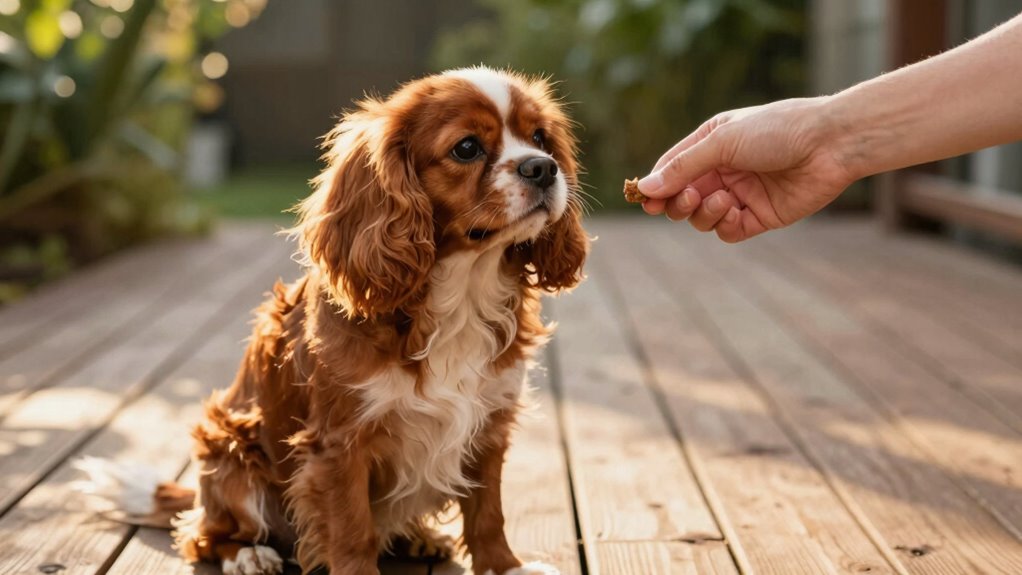
We start building a strong bond with your Cavalier King Charles Spaniel the moment you bring them home. Early training sets the foundation—simple commands, consistent routines, and daily 5- to 10-minute practice sessions make all the difference. We use treats, praise, and patience, focusing on one skill at a time. Every interaction shapes behavior, and soon, those tiny steps become lasting habits. You’ll see progress faster than you expect.
Key Takeaways
- Start training early with short, positive sessions to build obedience and trust using treats and praise.
- Establish a consistent daily routine for feeding, potty breaks, and training to support housetraining and emotional stability.
- Socialize your Cavalier between 3 and 12 weeks by exposing them to new people, sounds, and environments safely.
- Use a well-fitted harness and comfortable leash for loose leash walking to prevent strain and encourage good habits.
- Crate train early to create a secure, den-like space that aids in housetraining and prevents separation anxiety.
Key Milestones: Birth to 6 Weeks

While the first six weeks of a Cavalier King Charles Spaniel’s life may seem defined by eating and sleeping, we’re actively shaping their future behavior and resilience through deliberate, science-backed steps.
From birth, we handle each puppy daily, building trust and initiating socialization. By day 3, we begin Early Neurological Stimulation—five seconds of gentle stress followed by rest—to boost adaptability. This isn’t just care; it’s training disguised as touch.
During the critical period of development—3 to 12 weeks—positive interactions are non-negotiable. We expose puppies to varied sounds, surfaces, and human scents, ensuring broad familiarity.
At five weeks, individual crates become part of their routine, teaching separation without distress and laying foundations for housetraining. By six weeks, they meet calm adults and well-behaved children in sanitized settings.
We supervise every interaction to guarantee positivity. These moments aren’t incidental—they’re intentional. We build resilience through repeated, gentle exposure.
And we do it all so you inherit a pup already on the path to confidence. Every touch, sound, and moment apart is a quiet investment in who they’ll become.
Key Milestones: 7 to 10 Weeks
We start preparing your Cavalier King Charles Spaniel for real-world experiences the moment they hit 7 weeks. Between 7 to 10 weeks, we lay the groundwork for housetraining, crate training, and lifelong learning using consistency and positive reinforcement. This short window is powerful—your pup begins absorbing structure, building confidence, and forming habits that stick.
- We introduce soft collars and supervise short leash dragging sessions to gently acclimate your puppy to leash walking.
- Housetraining starts with timed outdoor trips—right after meals, naps, and play—so success becomes routine.
- Basic commands like “sit” and “stay” are taught daily in two-minute sessions, using treats and praise.
- Grooming begins early: light brushing, brief baths at 8–9 weeks, and gentle nail clipping to build trust and comfort. Starting a consistent grooming routine during this critical period helps your Cavalier become accustomed to handling and prevents future matting issues.
Crate training becomes part of their daily rhythm, turning their crate into a safe, cozy den. Every interaction centers on patience and positive reinforcement, making learning feel like love.
These small, intentional steps during 7 to 10 weeks create a well-rounded companion ready for what’s next.
Key Milestones: 10 to 12 Weeks

As your Cavalier King Charles Spaniel settles into their new home between 10 and 12 weeks, we shift focus to building structure, confidence, and consistency.
This is the perfect time to establish a predictable routine—feed your puppy at the same times each day, schedule regular potty breaks, and set boundaries early.
We incorporate crate training using a 24-inch crate, making it a safe, cozy den your puppy learns to love.
Short, daily training sessions of 5–10 minutes work best for these enthusiastic learners.
We use positive reinforcement—treats and gentle praise—to reward desired behaviors, reinforcing housetraining and basic commands.
Socialization becomes essential now; we gently expose our puppy to new people, sounds, and surfaces to build trust.
Cavalier King Charles Spaniels thrive on affection and attention, so we make every interaction warm and encouraging.
We stick to the routine even on busy days—consistency builds security.
High-quality dry food with moderate protein and fat content supports your puppy’s growth and energy levels during this critical developmental stage.
With patience and calm guidance, we’re shaping a well-adjusted companion who feels safe, understood, and deeply bonded to us.
Key Milestones: 3 to 4 Months
Three months marks a turning point in your Cavalier King Charles Spaniel’s development—this is when consistent training, grooming, and socialization take center stage.
It’s clear how precious your pup is, and these months lay the foundation for a well-adjusted, happy companion. Let’s make every moment count with simple, loving routines that bond us closer.
- Start gentle grooming routines now: brush their silky coat every few days, bathe monthly, and introduce dental care to prevent future issues.
- Practice loose leash walking daily using treats as lures—short sessions of 5–10 minutes build focus and good habits.
- Prioritize socialization by safely exposing your puppy to new sights, sounds, and people, especially post-vaccination.
- Enroll in puppy kindergarten for structured socialization and to teach basic commands through reward-based training.
- Consider protective gear like dog boots for outdoor walks to enhance stability and grip on various surfaces as your puppy explores new environments.
Cavalier King Charles Spaniels thrive on attention and consistency.
Key Milestones: 9 Months to 1 Year

Confidence, consistency, and connection define the 9-month to 1-year mark for your Cavalier King Charles Spaniel. This phase shapes their long-term behavior, and we can’t afford to overlook their growing emotional and physical needs. Their affectionate nature deepens, but so does the risk of separation anxiety. We prevent this by using positive reinforcement during short, structured absences. Daily walks of at least 30 minutes, twice a day, help manage their high energy levels and support joint health. Enrolling in obedience classes sharpens focus and strengthens our bond. Consider agility or therapy work—perfect for their enthusiastic spirit. Using a no-pull harness with front attachment points during these walks reduces pulling and makes training more effective while keeping your Spaniel safe and comfortable.
| Focus Area | Action Step |
|---|---|
| Separation anxiety | Practice 10-minute alone sessions |
| Obedience classes | Attend weekly group training |
| Daily walks | 30 minutes, twice daily |
| Affectionate nature | Channel into therapy training |
We nurture their confidence with calm leadership and consistent routines. Positive reinforcement stays our go-to—because love and treats open more doors than force ever could.
Understanding Your Cavalier’s Personality and Needs
We’ve built structure and routine through consistent training and daily walks, but now let’s shift to what drives that behavior—your Cavalier King Charles Spaniel’s personality and needs.
These dogs aren’t just adorable; they’re deeply attuned to our emotions and crave connection. Understanding them helps us build a bond rooted in trust and mutual joy.
- Cavalier King Charles Spaniels love being close to their people—they need a lot of affection and companionship to thrive.
- They’re easy to train because they’re intelligent and keen to please, responding best to gentle, positive reinforcement like training clickers and treat pouches.
- Cavaliers require a moderate amount of exercise—about 30 to 60 minutes daily—to stay balanced and healthy.
- With their sweet, patient nature, they’re good with children and other pets, though supervision around young kids is wise.
We’ve seen firsthand how consistent training supports their emotional well-being.
These sensitive souls don’t just follow commands—they respond to love, routine, and clear guidance.
When we meet their emotional and physical needs, we don’t just raise a well-behaved dog—we grow a true companion.
Essential Equipment for Effective Training
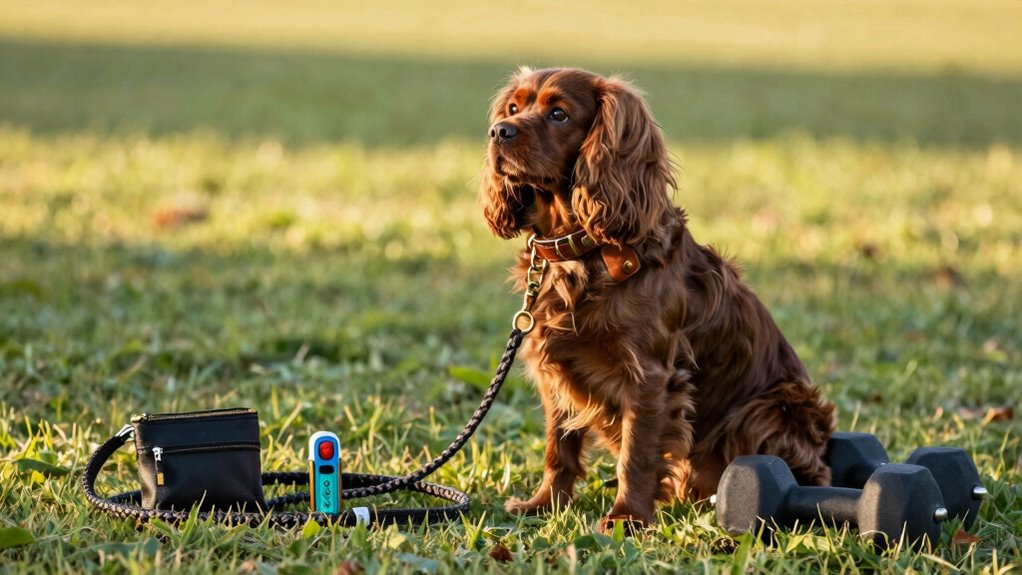
A well-prepared toolkit makes all the difference when training your Cavalier King Charles Spaniel. Let’s gather the essential equipment to set both of you up for success.
Start with a comfortable lead—4 to 6 feet in length—and a well-fitted harness to prevent strain on their delicate necks. Pair it with a soft, adjustable collar for everyday use.
A properly sized crate, just large enough for your pup to stand and turn around, becomes their safe den at night or during rest. Add a puppy playpen to create a secure, confined space for daytime exploration. These boundaries help build confidence.
From a reputable breeder, you’ll learn your pup’s early habits, making training smoother. Use positive reinforcement tools like small, soft treats, their favorite toy, or warm praise.
Training aids like a simple clicker sharpen timing and reinforce good behavior. Together, these tools form a consistent, loving framework. You’re not just teaching obedience—you’re building trust.
Teaching Basic Commands With Positive Reinforcement
When your Cavalier King Charles Spaniel masters basic commands, you’re not just building obedience—you’re creating a shared language that keeps them safe and deepens your connection.
We use positive reinforcement to teach your puppy effectively, rewarding good behavior with treats, praise, or toys the moment it happens. Training your Cavalier should be joyful, not overwhelming—so keep sessions short, just 5 to 10 minutes, to match their attention span and prevent frustration.
Here’s how we make it work:
- Practice basic commands like “sit,” “stay,” “come,” and “down” daily, using consistent cues
- Use short training sessions in different locations to build focus and adaptability
- Try clicker training—the click marks the exact moment of good behavior, followed by a reward
- Reinforce every success with positive reinforcement to strengthen trust and motivation
Together, we’re shaping good behavior through patience and love. This is how we teach your puppy with clarity, care, and confidence.
Building Confidence Through Socialization

While your Cavalier King Charles Spaniel is still young, we’re already shaping the foundation of their confidence through intentional socialization. This critical window—3 to 12 weeks—is when they’re most receptive to new experiences. We help them interact with people, dogs, and environments early so they grow up calm and curious, not fearful. Introducing them to well-behaved children and clean spaces by six weeks reduces anxiety long-term. Enrolling in puppy kindergarten gives them structured chances to socialize safely. We always use positive reinforcement—treats, praise, pets—to reward brave moments, making building confidence a joyful journey.
| Experience Type | Goal for Confidence |
|---|---|
| New people | Encourage friendly interaction |
| Friendly dogs | Foster safe play and boundaries |
| Household sounds | Reduce anxiety from noise |
| Car rides | Normalize travel |
| Puppy kindergarten | Support consistent socialization |
We’re with you every step, turning uncertainty into trust through patience and love.
Creating a Consistent Daily Routine for Success
Because predictability builds trust, we’ll shape your Cavalier King Charles Spaniel’s days around a steady, clear routine that sets them up to thrive. A consistent daily schedule isn’t just comforting—it’s essential for housetraining, learning, and emotional well-being.
We use positive reinforcement at every turn, celebrating small wins with treats and praise to strengthen good habits and deepen our bond.
To keep life smooth and effective, we focus on:
- Scheduled meals and potty breaks every 30 minutes, especially after eating, napping, or playtime to support reliable housetraining.
- Short training sessions of 5–10 minutes, repeated several times a day, so learning sticks without frustration.
- Daily grooming, a must for their silky coat, paired with gentle touch to build trust and catch skin or tangle issues early.
- Set times for walks and socialization, ensuring they grow into well-mannered, confident companions.
With structure, love, and consistency, we’re not just raising a pet—we’re raising a family member who knows exactly what to expect and how to succeed.
Frequently Asked Questions
Are King Charles Cavaliers Easy to Train?
Yes, we find King Charles Cavaliers easy to train because they’re smart and enthusiastic to please. We use positive reinforcement, stay consistent, and practice obedience commands daily. We start early with housebreaking methods, leash training, socialization tips, and short, fun sessions that strengthen our bond.
What Are the Negatives of a Cavalier King Charles Spaniel?
We’ll be honest with you—Cavaliers come with health concerns like heart issues and shorter lifespan expectations. We manage their grooming needs daily, meet their exercise requirements, and work through separation anxiety. Their temperament traits mean they’re overly friendly, with minimal barking tendencies, yet socialization challenges can arise.
Where Should Cavalier King Charles Sleep?
We keep our Cavalier King Charles in a cozy crate nearby us, making their sleeping arrangements feel safe and loved. We prioritize comfort levels with ideal bedding, stick to night routines, guarantee temperature control, use crate training, choose a quiet bedroom location, and offer gentle reassurance—they thrive in our warmth.
What Are Common Behavioral Problems in Cavalier King Charles Spaniels?
We’ve seen Luna, a sweet 10-month-old Cavalier, jump up wildly during greetings—just like so many others. We understand separation anxiety, excessive barking, leash pulling, house training hiccups, food aggression, jumping up, and fearfulness issues are common, but we handle them with love, patience, and consistency—you’re not alone.
Conclusion
We’ve walked you through pivotal phases, practical tools, and proven techniques. Consistent commands, calm confidence, and caring connections create capable Cavalier companions. Short, savvy sessions of 5–10 minutes, twice daily, build brilliance. Pair praise with precision. Practice patience, persistence, and positive reinforcement. Start solid, stay steady, see success. Your devoted dog deserves diligence, direction, and love. Together, you’ll thrive.