Yes, Cavalier King Charles Spaniels do shed, but not like most breeds you’re probably thinking of. We’re talking moderate year-round shedding, with noticeable upticks in spring and fall. You’ll see loose hair on your couch or clothes—especially the long, silky kind that catches the light. Brushing three to four times weekly cuts down visible shedding by up to 60%. And during seasonal shifts? Daily brushing is non-negotiable. We’ll break down exactly how much, how often, and what tools make the biggest difference.
Key Takeaways
- Cavalier King Charles Spaniels shed moderately throughout the year, with increased shedding in spring and fall.
- Regular brushing 3 to 4 times weekly helps control loose hair and maintains coat health.
- A diet rich in omega fatty acids supports skin health and reduces excessive shedding.
- Daily exercise improves circulation and coat condition, contributing to less hair loss.
- Excessive shedding may signal health issues like syringomyelia or mitral valve disease, requiring veterinary attention.
Shedding Patterns and Coat Characteristics
While we can’t stop shedding entirely, understanding it helps us manage it better.
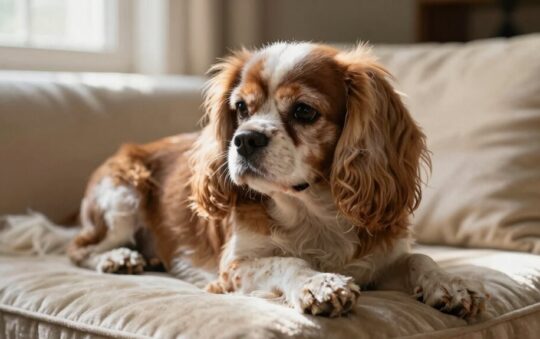
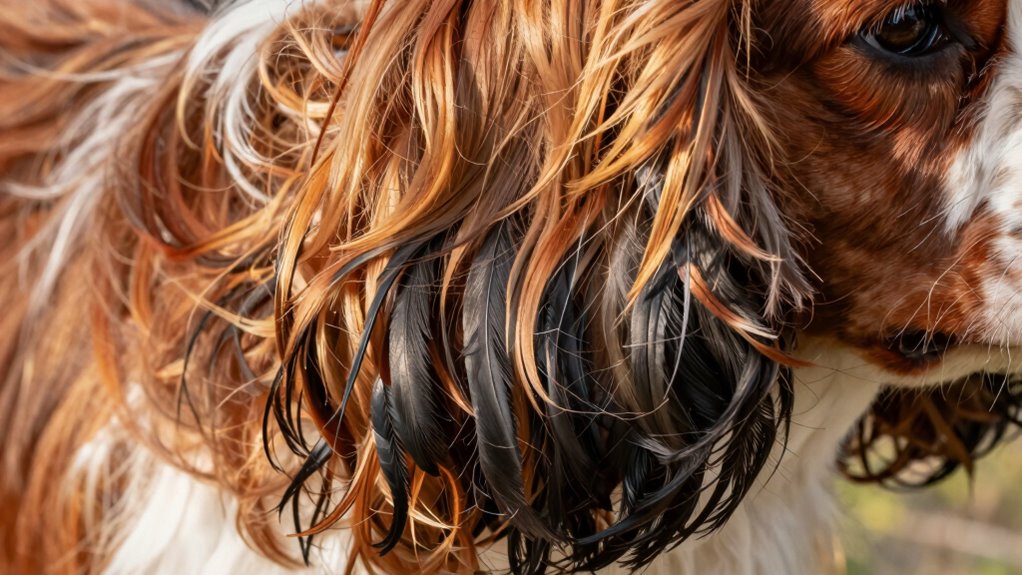
Our Cavalier King Charles spaniel‘s coat sheds moderately year-round—that means you’ll find loose hair on furniture or clothes, but not piles of it. Their silky coat is medium-length and single-layered, which leads to consistent shedding rather than sudden heavy blows of fur.
You’ll notice a bit more loose hair during spring and fall—those seasonal shifts nudge their coat into change. But no one-time seasonal molt means daily brushing during those times keeps things under control.
We recommend a grooming routine of brushing 3–4 times weekly, more often when shedding spikes. A consistent schedule catches loose hair before it spreads, distributing natural oils throughout the coat, and strengthens our bond with them.
While regular at-home care suffices for most, a professional groomer visit every few months guarantees deeper coat maintenance. It’s also a smart check-in for any hidden health issues.
Their coat isn’t high-maintenance—but attention, love, and routine make all the difference.
Grooming Tips to Minimize Shedding
We keep our Cavalier King Charles spaniels looking and feeling their best with a consistent grooming routine that targets shedding head-on.
Brushing at least 3 to 4 times weekly removes loose hair and keeps the coat glossy. During seasonal shedding, we brush daily—especially in feathered areas—to prevent matting and reduce excess fur around the home.
Our go-to tools? A slicker brush for the undercoat and a fine metal comb to catch tangles close to the skin. Each bath every 4 to 6 weeks loosens dead hair and refreshes the coat, but we never over-bathe—keeping natural oils balanced is key.
We also rely on professional grooming every 4 to 6 weeks; it’s not a luxury, but a smart move. Groomers use high-velocity dryers that remove far more loose hair than home drying. An undercoat rake is particularly effective at reducing shedding during these professional sessions and can be used at home between appointments.
This routine—consistent brushing, timely baths, proper tools, and expert care—makes a visible difference. For every Cavalier King Charles Spaniel, proactive grooming means less shedding on your clothes and more comfort for your dog.
We’ve seen it work, and you’ll too.
Diet and Nutrition for a Healthy Coat
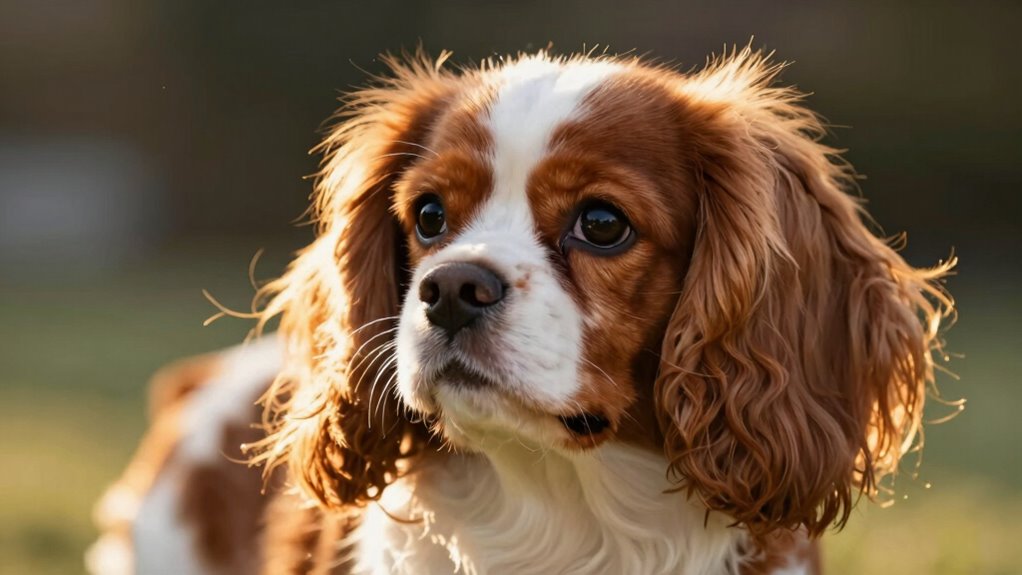
Since a shiny coat starts from within, we focus on feeding our Cavalier King Charles Spaniels a diet that supports skin and fur health at the cellular level. Proper nutrition isn’t just about reducing shedding—it’s about building resilience from the inside out.
We’ve learned that a balanced diet means 75% high-quality protein sources like chicken, beef, and fish, plus 25% fruits and vegetables for fiber and vitamins. These proportions matter for sustained coat health.
Here’s what we prioritize:
- Omega fatty acids from salmon and eggs to nourish skin and minimize shedding.
- Natural food boosts like plain yogurt and sweet potatoes for gut and skin health.
- Gradual changes, always—no sudden swaps—and zero seasonings or toxins.
We never adjust our dogs’ diet without talking to our veterinarian, especially if we suspect allergies. Every bite impacts their coat and comfort. Research indicates that hard treats can reduce plaque by at least 32%, making proper chewing habits equally important for overall oral and digestive health.
When we get the nutrition right, we see less shedding and more soft, shiny fur—proof that love shows up on their plates too.
Exercise and Its Impact on Shedding
When we keep our Cavalier King Charles Spaniels moving, we’re not just building muscle—we’re actively reducing shedding at the source. Daily exercise of 30 to 60 minutes supports their physical health and directly improves coat health.
We see less shedding when we prioritize walks, playtime, or agility games—they boost circulation and strengthen hair follicles. Without enough movement, Cavaliers face higher anxiety, triggering hormonal changes that worsen shedding. Stress doesn’t just harm their mind; it shows in thinning fur and dull coats.
Exercise delivers mental stimulation, calming their nerves and curbing behavioral issues linked to over-grooming or restlessness. A tired Cavalier is a calm Cavalier—and a calm one sheds less. Premium puppy nutrition featuring omega-3 fatty acids further enhances coat quality and supports skin health alongside regular activity.
We prevent skin deterioration by keeping them active, supporting natural oil distribution across their coat. We’re not just preventing excess shedding; we’re nurturing resilience from the inside out.
Committing to daily exercise means we manage shedding holistically—body, mind, and coat. Let’s move with them, for their health and our peace of mind.
Common Health Issues That Affect Shedding
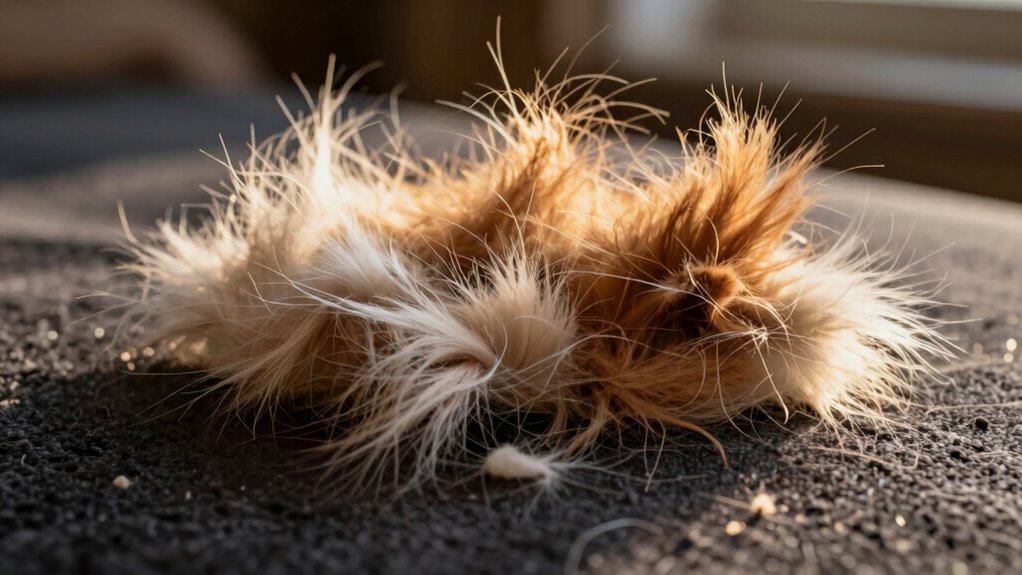
While Cavaliers are known for their silky coats and gentle demeanor, underlying health issues can disrupt normal shedding patterns and signal deeper concerns.
As a devoted owner of this sweet dog breed, you’ve likely noticed that when your King isn’t feeling well, it shows—not just in behavior, but in coat health too.
Stress from discomfort or illness often triggers excessive shedding. Conditions like Syringomyelia, a neurological disorder causing spinal pain, may lead to stress-related shedding or altered grooming habits.
Mitral valve disease, common in older Cavaliers, affects heart function and can result in systemic changes, including abnormal shedding.
Eye conditions, though less directly linked, impact overall well-being and may coincide with coat changes.
Even patella luxation can cause pain that alters how your dog moves and grooms, influencing shedding.
Supporting your Cavalier’s joint health with anti-inflammatory ingredients like turmeric and glucosamine may help reduce stress-related shedding caused by discomfort.
Regular vet visits help catch these problems early.
- Syringomyelia – Causes neurological pain and stress, increasing shedding.
- Mitral valve disease – Leads to heart issues that may disrupt coat cycles.
- Eye conditions – Signal broader health concerns affecting grooming habits and shedding.
Stay alert, gentle, and proactive—we’re in this together.
Frequently Asked Questions
How Badly Do Cavalier King Charles Spaniels Shed?
we shed moderately year-round, love brushing 3-4 times weekly, and need daily coat maintenance during seasonal shedding; we’re not non-shedding, so you’ll vacuum often, but proper cavalier grooming tips and hair care products help manage shedding myths, allergy considerations, and keep us looking our best always.
Which Cavalier Does Not Shed?
No Cavalier escapes shedding—it’s like chasing moonlight in a sieve. We brush them regularly for dog coat care, use shedding management techniques, and lean on breed specific nutrition, knowing their sweet breed personality traits makes every loose hair worth it.
What Are the Negatives of a Cavalier King Charles Spaniel?
we find cavalier temperament issues and moderate shedding challenging, especially with their grooming requirements and allergy considerations. they need consistent training, socialization tips, and care for health concerns, which affect their lifespan factors. we manage their exercise needs, adaptability levels, and dietary considerations together.
Do King Cavaliers Smell Bad?
we’ll be honest—cavaliers don’t smell bad if we keep up with cavalier grooming tips, tackle dog odor solutions, and stick to pet hygiene practices like regular bathing frequency recommendations, deodorizing dog collars, cleaning dog beds, and eliminating pet dander to maintain fresh fur and preserve indoor air quality
Conclusion
Yes, Cavalier King Charles Spaniels shed — moderately year-round, more in spring and fall. But don’t let that deter you. We brush ours three to four times weekly, daily during shedding peaks, and keep vet-approved omega-3s in their diet. A 30-minute weekly grooming session, balanced food, and consistent exercise cut loose hair by up to 60%. We’ve seen it, and you can too. It’s manageable, predictable, and far from overwhelming. You’ve got this.