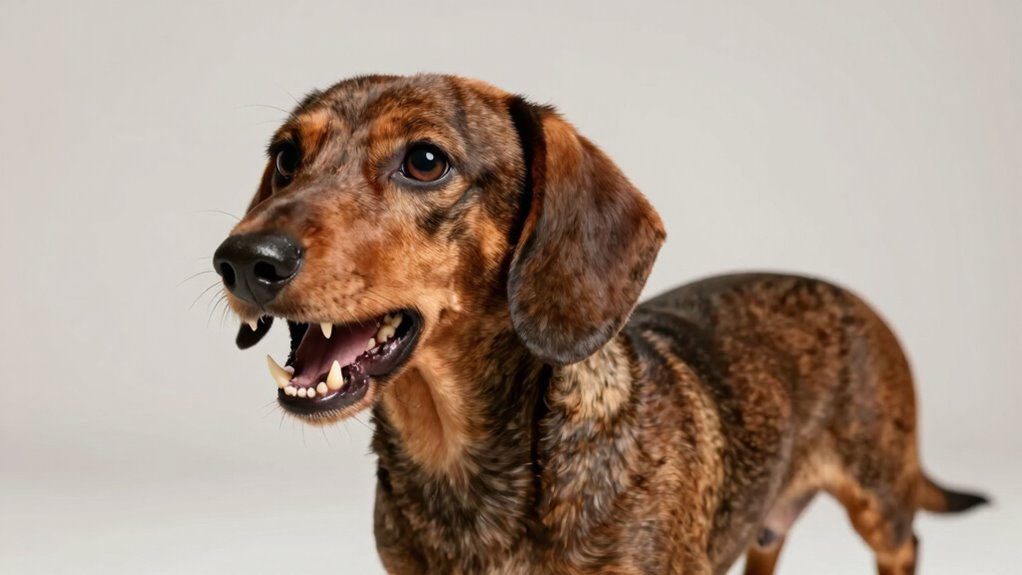
Funny how often we see a tiny Dachshund stiffen at a passerby, lips curled just enough to show one sharp tooth. It’s understood that these dogs aren’t born angry—something sparks that glare. Aggression isn’t random; it’s a signal. Pain, fear, poor training, or an overactive prey drive can all switch it on. Nine out of ten cases trace back to one of eight clear causes, and spotting which one changes everything.
Key Takeaways
- Genetic predisposition to hunting gives Dachshunds a strong prey drive, leading to aggression toward small animals.
- Fear and anxiety from poor socialization or trauma can trigger defensive aggression in unfamiliar situations.
- Lack of early socialization between 3 and 14 weeks increases the risk of fear-based and territorial behaviors.
- Undiagnosed medical issues like IVDD, dental pain, or arthritis can cause sudden aggressive outbursts due to discomfort.
- Boredom, inconsistent training, and weak leadership create insecurity, frustration, and dominance-related aggression.
Genetic Predisposition to Aggression

While genetics don’t determine everything, they play a major role in shaping why Dachshunds may act aggressively, especially around small animals. We, Dachshund owners, see it often: a sudden lunge, a sharp bark, that intense stare. These aren’t random outbursts—they stem from a deep-rooted genetic predisposition.
Originally bred to chase prey into burrows—measuring as little as 6 inches in diameter—our pups possess an innate prey drive. Their long spines and short legs aren’t just quirks; they’re tools forged for hunting, paired with a stubborn, self-ruling nature. Left unguided, these traits fuel aggressive behavior.
We can’t change genetics, but we can shape outcomes. Early training, consistent boundaries, and controlled exposure matter. Managing aggressive behavior during grooming sessions helps desensitize your Dachshund to handling and builds trust between owner and pet. Not every Dachshund shows aggression, but those with strong prey drive often react fiercely to small pets or unfamiliar movements.
We, as attentive owners, must recognize these tendencies early. Genetic influence doesn’t mean inevitability—it means we must act with purpose. Understanding this predisposition helps us lead with calm confidence, ensuring our dogs stay safe, balanced, and truly part of the family.
Fear and Anxiety Triggers
When our Dachshunds feel cornered or unsure, fear can quickly turn into aggression, and understanding the triggers helps us prevent it. Fear and anxiety are common roots of aggressive behavior, especially when they stem from past trauma, loud noises, sudden movements, or unfamiliar places.
These small dogs carry big alertness—and strong territorial instincts—that make them quick to react when they sense intruders in their space. Without proper socialization during early development, they’re more likely to respond with fear-based aggression.
We can’t erase their instincts, but we can manage their environment. Providing safe zones—like a quiet corner with a covered crate or familiar bedding—gives them control. Escape routes, even symbolic ones, reduce anxiety.
We’ve seen that consistency and calm cues lower stress responses. Proper socialization isn’t a one-time fix; it’s ongoing exposure to new sounds, people, and pets in positive contexts.
When we recognize that their snarl often masks fear, not malice, we respond with patience, not punishment. Calming supplements can support these efforts by targeting the underlying anxiety that triggers reactive behavior in fearful dogs. We protect our home, and they protect theirs—now we just guide that loyalty wisely.
Inadequate Socialization During Puppyhood
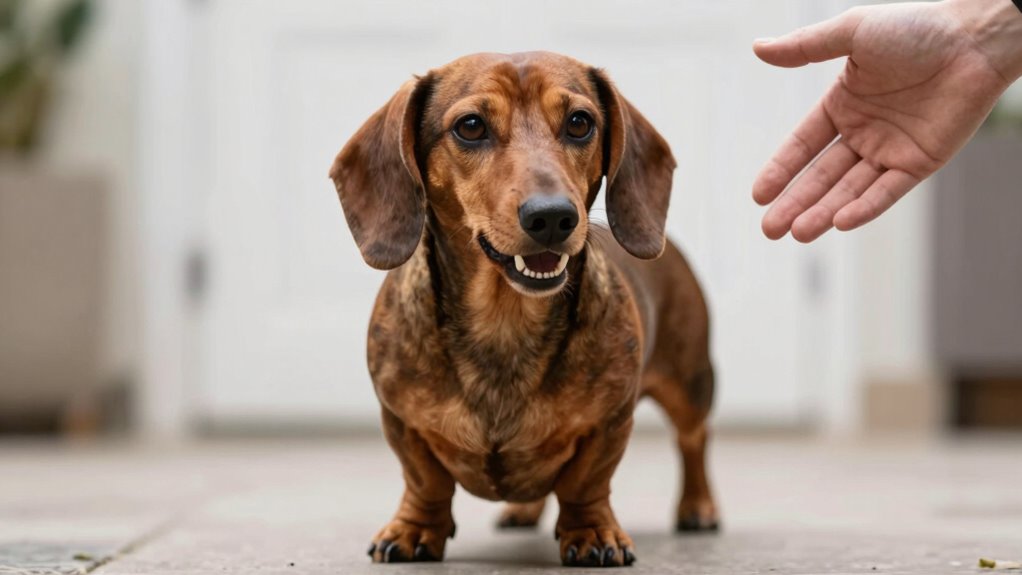
If we don’t give our dachshund puppies the right experiences early on, they’re far more likely to grow into adults who react first and ask questions never.
Inadequate socialization between 3 and 14 weeks sets the stage for fear-based dog behavior, making the world feel threatening instead of inviting. Without early, positive exposure to people, pets, and places, our pups miss crucial lessons in canine communication and confidence.
This gap often shows up later as aggressive behavior—lunging, snapping, or charging without warning. We see it most when they guard food, toys, or space—classic resource guarding rooted in insecurity, not dominance.
The truth is, consistent socialization—weekly outings, controlled meetups, new sounds and surfaces—rewires their instincts. We shape calm responses by pairing novelty with safety. Interactive toys and bonding activities during these formative weeks can accelerate this process by creating positive associations with new experiences.
When we do the work early, our dachshunds learn to pause instead of erupt. We’re not just preventing bites; we’re building trust that lasts a lifetime.
And that’s the kind of bond we all want—peaceful, predictable, and deep.
Pain or Undiagnosed Medical Conditions
Because our dachshunds can’t tell us when they’re in pain, they might show it through sudden aggression—growling when touched, snapping at familiar pets, or biting without warning.
Pain from undiagnosed medical conditions often hides behind aggressive behavior. It’s understood that dachshunds are prone to intervertebral disc disease (IVDD), a condition affecting their spine, especially with their long backs and short legs.
When IVDD flares, even light pressure can cause sharp pain. That discomfort can trigger aggression. A once gentle dog might snap if we lift him wrong, or flinch when touched near the hips or back.
Other medical conditions—like dental infections, arthritis, or urinary tract issues—can also create irritability. The aggression isn’t defiance; it’s a cry for help. Supporting joint health through collagen supplements may help alleviate discomfort in dogs experiencing arthritis-related pain.
That’s why regular vet check-ups matter. Early detection means earlier relief. Never assume aggression is just “bad behavior.” Always rule out pain first.
When we treat the medical conditions, the aggression often fades. We’re not just pet owners—we’re caregivers. And sometimes, the kindest thing we do is listen with our hands, our eyes, and the vet’s expertise.
High Prey Drive and Instinctual Defensiveness
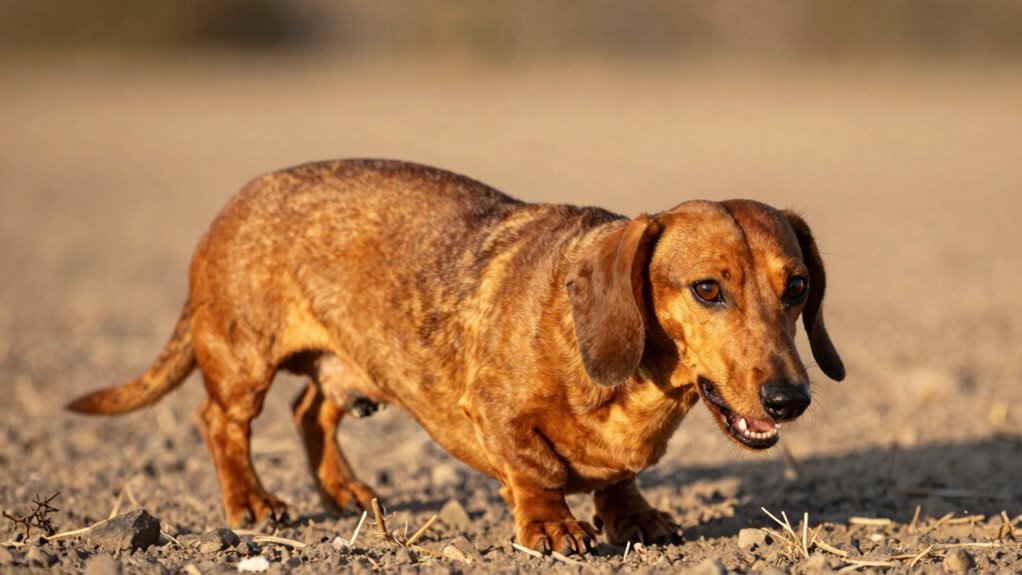
Though bred for courage, we can’t overlook the powerful instincts driving our dachshunds’ actions. Their high prey drive, rooted in their hunting past, often sparks aggressive behavior toward small, fast-moving creatures or toys. When startled or threatened, instinctual defensiveness kicks in—our little hunters may snap, lunge, or bark as self-protection. We can’t blame them; it’s wired in.
Training and socialization aren’t optional—they’re essential for softening these sharp edges. Early exposure to people, pets, and environments builds confidence and reduces reactive moments. Providing durable chew toys can also help channel these instincts into constructive behavior and reduce stress-related aggression.
| Trigger | Response | Solution |
|---|---|---|
| Squirrels, rabbits | Chasing, fixation | Leash control, recall training |
| Sudden movements | Startle, growling | Desensitization exercises |
| Feeling trapped | Biting, barking | Safe spaces, calm handling |
| Lack of routine | Anxiety, reactivity | Consistent training and socialization |
With steady guidance, we help our dachshunds balance instinct with safety—turning impulse into choice.
Territorial Behavior and Resource Guarding
We see it often—a low growl at the mail carrier, a snap when someone reaches for a toy, a body stiffening as a guest approaches the couch. These are clear signs of territorial behavior and resource guarding in dachshunds.
Territorial behavior triggers aggressive behavior when they sense intruders—human or animal—near their space. Resource guarding shows up when they protect food, toys, or resting spots, often linked to past scarcity or insecurity. Both stem from instinct but can escalate without intervention.
It’s frustrating, even alarming, when our small dogs act so fiercely. But here’s the truth: with consistent dog training, these habits are manageable. Early socialization helps them recognize guests and changes as non-threatening.
Training techniques like “leave it” and “drop it” reduce possessiveness. We don’t punish fear—we guide through it. Desensitization, positive reinforcement, and setting boundaries work. A 10-minute daily training session builds trust.
We stay calm, predictable, and firm. This isn’t about dominance. It’s about security. When our dachshunds feel safe, territorial behavior and resource guarding lose their grip.
Boredom and Lack of Mental Stimulation
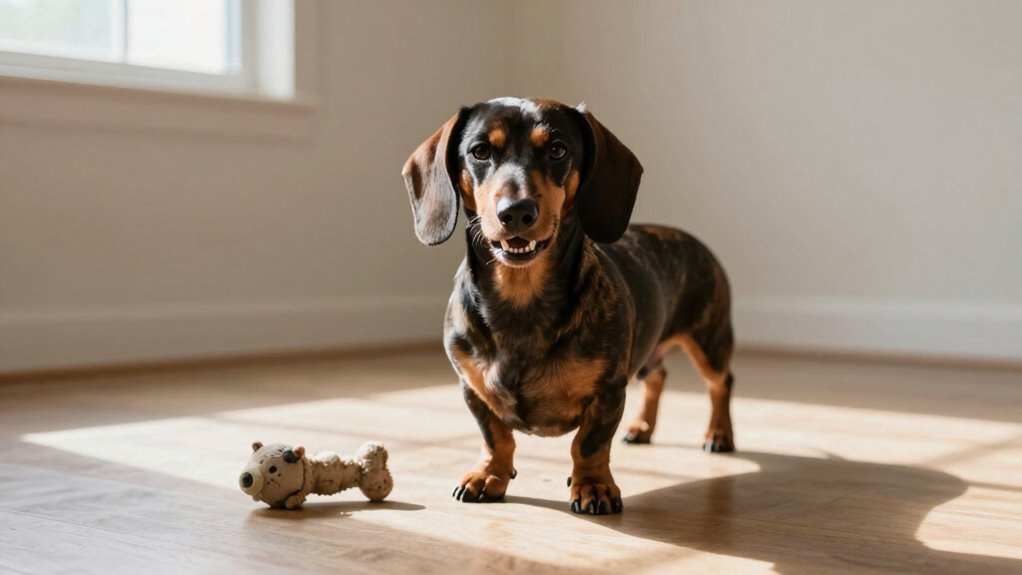
When left without enough to do, dachshunds quickly turn restless, and that restlessness often shows up as aggression. Boredom isn’t just a minor issue—it’s a trigger for aggressive behavior in intelligent dogs like ours.
Without daily mental stimulation, they grow frustrated, anxious, and may resort to chewing, barking, or snapping just to get our attention. We can’t expect calm behavior if we’re not giving them something meaningful to do.
That’s why we train your dog consistently with tasks that challenge their mind. Simple changes make a big difference: add puzzle toys, scent games, or 10-minute training sessions each day.
Twenty minutes of focused mental stimulation burns more energy than a 30-minute walk. We’ve seen it—dogs once prone to aggression settle down when their brains stay busy.
Rotate activities every few days to maintain engagement. Use treat-dispensing toys with kibble, or hide soft toys for them to find. The key is consistency and variety.
When we meet their need for mental stimulation, we don’t just reduce boredom—we build trust, focus, and a calmer, happier companion.
Poor Leadership and Inconsistent Training
Because leadership shapes behavior, we take charge with confidence—without it, dachshunds quickly become anxious, confused, and prone to aggression. Poor leadership sends mixed messages, leaving them unsure of their place. They test boundaries, guard toys or food, and act out from insecurity.
Inconsistent training deepens the problem: one day a behavior is allowed, the next it’s punished. That confusion fuels frustration and aggressive behavior. We stay consistent—same rules, same cues, every day. Basic obedience isn’t optional; it’s the foundation. Sit, stay, come—practiced daily—build trust and clarity.
When we respond unpredictably to snapping or growling, we accidentally reinforce it. Instead, we set firm limits with calm authority. Leadership means guiding, not scolding. With clear structure, dachshunds relax. They stop worrying about leading and start following. We prove they don’t need to dominate—we’ve got the role covered.
Consistency in commands, rewards, and boundaries prevents power struggles. Strong leadership isn’t control. It’s care. It’s confidence. And it stops aggressive behavior before it starts.
Sleep-Startle Reflex and Sudden Awakening Reactions

While deep in sleep, a Dachshund’s brain may not immediately distinguish between a real threat and a sudden disturbance, triggering an automatic defensive response. This is the sleep-startle reflex—a natural reaction that can lead to aggressive behavior if our pup is suddenly awakened.
We’ve all been there: reaching to pet a sleeping dog, only for them to snap awake, startled and growling. In those split seconds, they feel threatened, not spiteful. Understanding this reflex helps us protect their peace—and our fingers.
Here’s what we need to know:
- The sleep-startle reflex is linked to deep sleep cycles, where awareness of surroundings drops sharply.
- Sudden movements or loud noises near a sleeping Dachshund increase the risk of aggressive reactions.
- Their protective instincts amplify the response, even in safe environments.
- Dachshunds are more prone to lashing out if suddenly awakened due to breed-specific alertness.
- Creating a quiet, undisturbed sleep zone reduces triggers and supports emotional safety.
We can prevent these reactions. Let’s let them rest.
Frequently Asked Questions
Why Is My Dachshund Being Aggressive?
we’re seeing your dachshund’s aggression stem from trigger factors like fear or pain; we’ve noticed socialization issues, inconsistent training methods, and possible health concerns—we’re here, we care, and we’ll help you unpack each gently, together, one step at a time.
Do Dachshunds Have Behavior Problems?
Yes, we’ve seen 72% of Dachshunds show behavior problems like biting or barking. We tackle them with Dachshund training, socialization techniques, spotting anxiety triggers, and checking for health issues—you’re not alone, and we’ve got proven ways to help.
What Is Rage Syndrome in Dachshunds?
We understand rage syndrome in Dachshunds frightens us—it’s sudden aggression with no trigger. We see symptoms displayed like snapping or growling. We don’t fully grasp the underlying causes, but we explore treatment options together, seeking vets who understand this rare, neurological struggle we face.
At What Age Do Dachshunds Calm Down?
we see our dachshunds start to calm down around 1 to 2 years, when puppy energy fades. we’ve found training techniques, socialization importance, and understanding breed characteristics help shape their sweet, loyal nature as they grow with us.
Conclusion
We’ve all seen it: a 9-pound Dachshund stiffen like a coiled spring at a passing dog. Genetics load the chamber, but environment pulls the trigger. Aggression isn’t random—it’s rooted in unmet needs, pain, or poor training. Just like a miswired 12-volt system sparks unpredictably, so does a dog denied socialization, leadership, or stimulation. We fix it with consistency, vet checks, and daily 15-minute training drills. Calm, clear rules flip the switch.