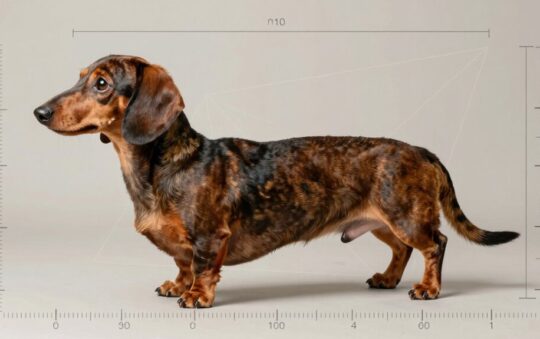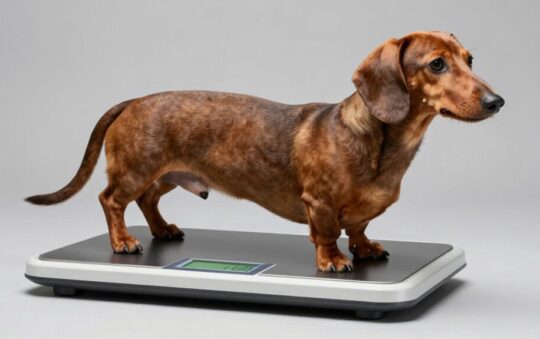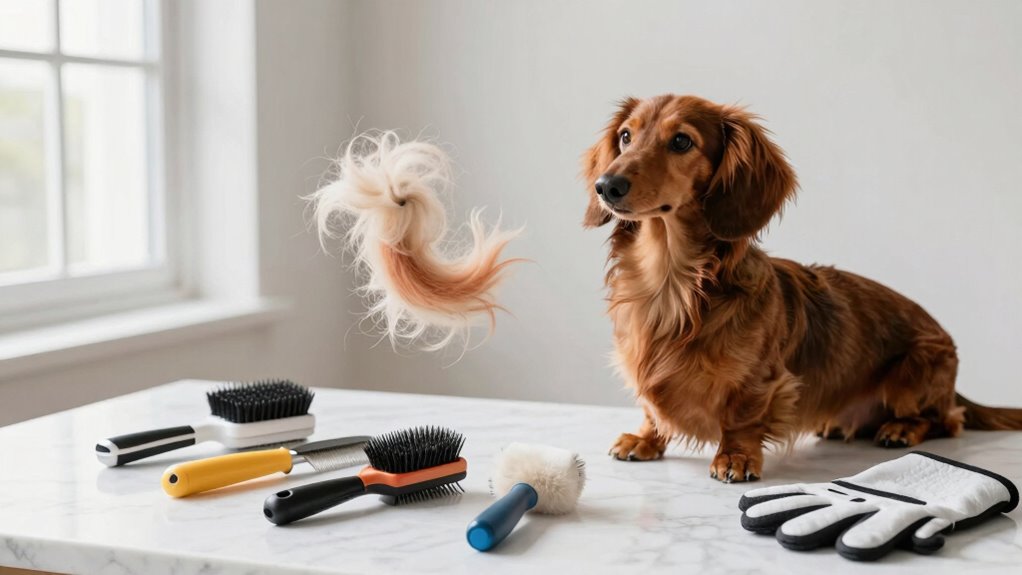
Most people don’t know that Dachshunds shed year-round, not just in spring. We see it in their fur—fine, persistent, and often stuck in carpets or on dark clothing. Smooth, long, and wire-haired types each lose hair differently. Brushing weekly helps, but timing and tools matter more than you think. A slicker brush, 5-minute daily sessions, and the right shampoo make a visible difference. You’re already doing part of the work—now let’s get the rest right.
Key Takeaways
- Match grooming tools and brushing frequency to your Dachshund’s coat type to effectively minimize shedding.
- Brush smooth-coated Dachshunds weekly, long-coated ones several times a week, and wire-coated daily, especially during shedding seasons.
- Increase grooming during spring and fall to manage seasonal shedding and reduce loose hair in your home.
- Use a slicker brush, comb, or stripping tool suited to your Dachshund’s coat for optimal detangling and hair removal.
- Monitor for sudden or excessive shedding, as it may signal health issues requiring veterinary evaluation.
Understanding Dachshund Shedding by Coat Type
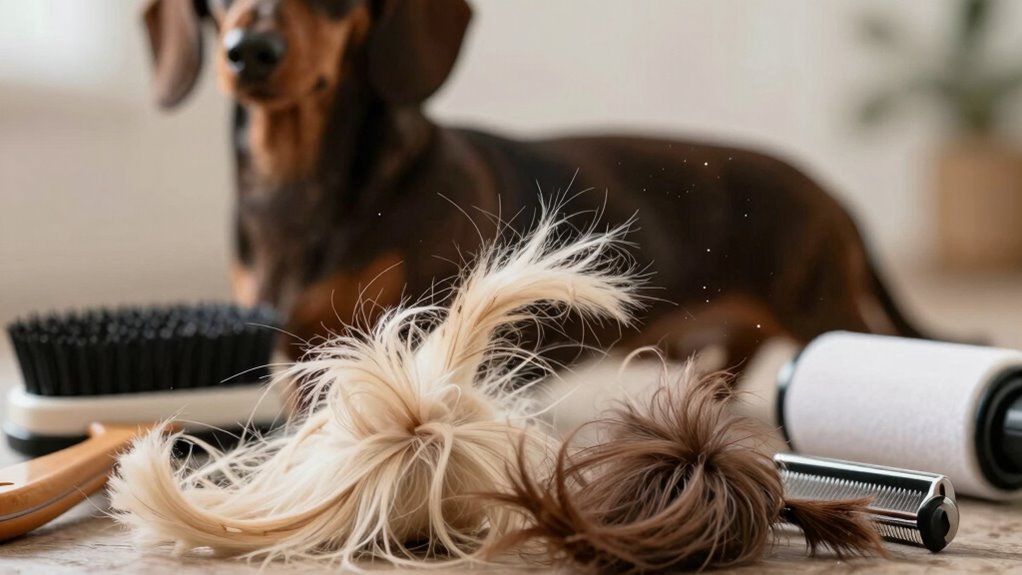
While coat type plays a key role in how much your Dachshund sheds, knowing what to expect with each variety helps us stay ahead of grooming.
Dachshunds come in three coat types—smooth coat, long-haired dachshunds, and wire-haired dachshunds—each with unique shedding patterns. The smooth coat sheds the least; weekly brushing with a soft bristle brush is enough to manage shedding.
Long-haired dachshunds shed moderately. Daily brushing using a slicker brush or metal comb prevents tangles and keeps their silky hair healthy.
Wire-haired dachshunds shed the most, especially during seasonal changes. Their dense double coat needs regular brushing and hand-stripping to maintain texture and reduce loose hair.
When we recognize these differences, we can tailor our grooming routines effectively. Specific tools, consistent habits, like regular brushing, and awareness of your Dachshund’s coat type make all the difference. Proper brushing also supports skin and coat health by distributing natural oils throughout their coat.
With the right approach, we confidently manage shedding—keeping our pups comfortable and our homes cleaner. Let’s meet their needs, one brush stroke at a time.
Seasonal Shedding Patterns in Dachshunds
We see it every year—our Dachshunds start shedding more, and suddenly there’s fluff on the couch, the floor, even floating down the hallway.
It’s understood this is normal: Dachshunds shed is most intense during seasonal coat changes. Spring shedding is their biggest wave—our pups lose thick winter undercoats, leading to serious hair loss.
Fall shedding follows, milder but still noticeable, as they prep for colder months. Even indoor Dachshunds show these patterns, though their moderate shedding spreads more evenly year-round.
The key to manage Dachshund chaos? Regular grooming. Brushing two to three times weekly pulls out loose hair before it lands on your clothes.
During peak shedding, daily brushing cuts visible fluff by up to 70%. It’s not just cleanup—it supports a healthy coat. Using tools with rounded tips to minimize scratching ensures your dog’s skin stays protected during frequent grooming sessions.
We’re not fixing a problem; we’re maintaining balance. Accept the rhythm. Support their natural cycle.
And trust that with consistent care, seasonal shedding stays under control—no drama, just a soft, shiny coat and less hair in your coffee.
Best Grooming Tools for Each Dachshund Coat
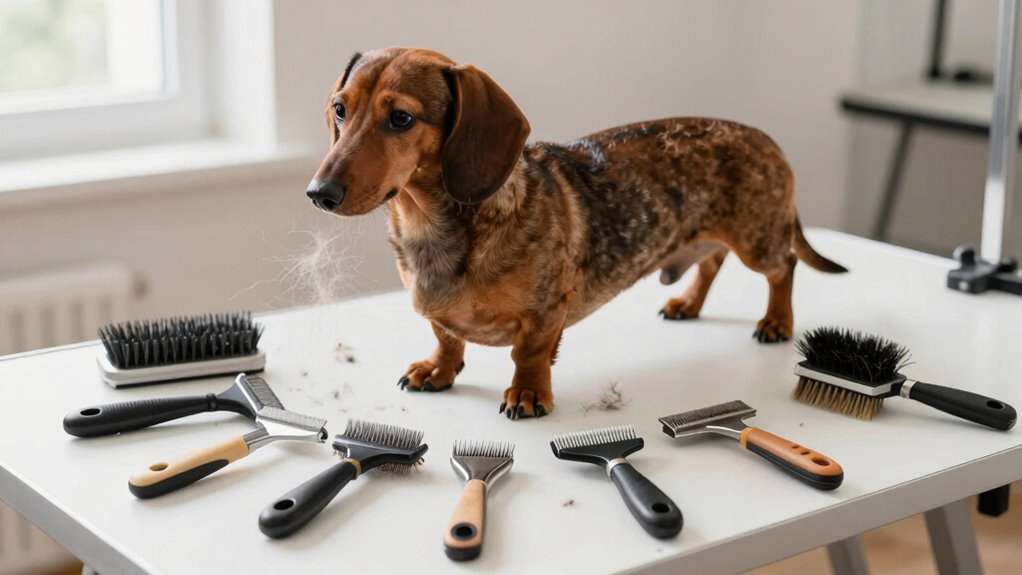
Three types of Dachshund coats mean we need the right tools for the job—no one brush fits all. For smooth-haired Dachshunds, rubber curry brushes and grooming gloves work best, lifting loose hair while giving a soothing massage. These pups need only weekly grooming to cut down on shedding and boost natural oil flow.
When it comes to long-haired Dachshunds, slicker brushes and metal combs are essential—we use them daily to untangle knots and keep their silky Dachshund coat flowing smoothly.
Wire-haired Dachshunds? They thrive with slicker brushes and stripping tools to manage shedding and support healthy regrowth.
Proper grooming isn’t just about looks—it strengthens our bond and keeps their skin and coat in top shape. Choosing the best grooming tools for your Dachshund coat type makes all the difference. Regular grooming also provides stress relief for anxious dogs while maintaining their comfort and well-being.
Whether you’re caring for smooth-haired, long-haired, or wire-haired Dachshunds, consistent, tailored care reduces shedding and keeps your pup feeling loved, clean, and comfortable week after week.
Establishing an Effective Brushing Routine
When done consistently and correctly, brushing your Dachshund isn’t just about controlling loose hair—it’s a cornerstone of their health and comfort.
It’s understood managing Dachshund shedding starts with a smart grooming routine tailored to coat types. For smooth-haired pups, weekly brushing with a soft bristle or rubber curry brush removes loose hair and spreads natural oils.
Long-haired Dachshunds need brushing two to three times a week—use a slicker brush or detangling comb to prevent mats. Wire-haired types demand daily attention, especially during shedding seasons; a slicker brush or stripping knife keeps their dense coat in check.
Always brush in the direction of hair growth. This simple act boosts circulation, supports healthy skin, and helps us manage shedding. Consistent brushing also strengthens the bond between owner and pet through positive grooming interactions.
Regular brushing isn’t just functional—it deepens our bond. By committing to consistent brushing, we turn grooming into quiet, shared moments. It’s practical care wrapped in closeness.
Let’s make brushing a ritual we both look forward to.
Nutrition and Supplements for a Healthy Coat
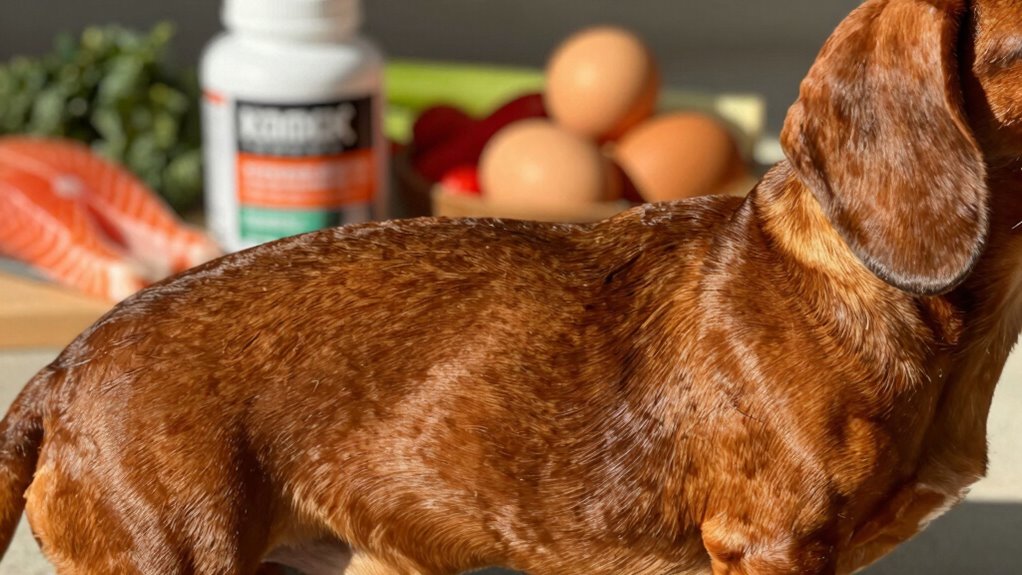
A healthy coat starts from the inside out, not just the brush. We nourish our Dachshund with a balanced diet because shiny fur and strong skin begin at the cellular level.
Feeding high-quality dog food rich in animal proteins and omega-3 fatty acids deeply supports skin and coat health. We add supplements like fish oil or flaxseed oil—just one teaspoon daily—to lock in moisture and reduce excessive shedding. Research shows that omega-3 fatty acids work to reduce inflammation and improve skin hydration, leading to less shedding and healthier fur.
Antioxidants from blueberries, carrots, and vitamin-rich formulas fight oxidative stress, keeping cells resilient. Hydration stays top of mind; we refill their bowl twice a day, ensuring at least 8 oz of fresh water per 10 lbs of body weight.
We never guess what to feed—veterinary consultation guides us to tailor nutrition for a truly healthy Dachshund.
- Warm droplets of fish oil drizzling over kibble, deeply nourishing each follicle
- Bright orange carrots and deep blue berries bursting with antioxidants
- A polished stainless steel bowl full of fresh water catching afternoon light
Identifying Excessive Shedding and Health Concerns
While shedding is normal, we watch closely because sudden or heavy hair loss can signal something deeper than seasonal change. Excessive shedding might point to health issues like hormonal imbalances, allergies, or skin infections. We monitor shedding patterns daily—patchy loss or thinning fur shouldn’t be ignored. Bald patches often emerge with stress, anxiety, or poor coat health. A diet lacking essential fatty acids weakens skin and fur, increasing shedding. Just like us, our pups thrive on balance—routine, nutrition, and love. Stress from new environments or disruptions amplifies shedding. That’s why veterinary check-ups every six months catch red flags early.
| Symptom | Possible Cause | When to Worry |
|---|---|---|
| Clumps of hair | Stress, anxiety | If sudden or persistent |
| Dry, flaky skin | Diet lacking essential fatty acids | With increased shedding |
| Bald patches | Skin infections, allergies | Immediate vet visit needed |
| Thinning coat | Hormonal imbalances | After 2 weeks of change |
| Dull, brittle fur | Poor coat health | Start monitoring shedding patterns |
Daily Cleaning Tips for Dachshund Owners
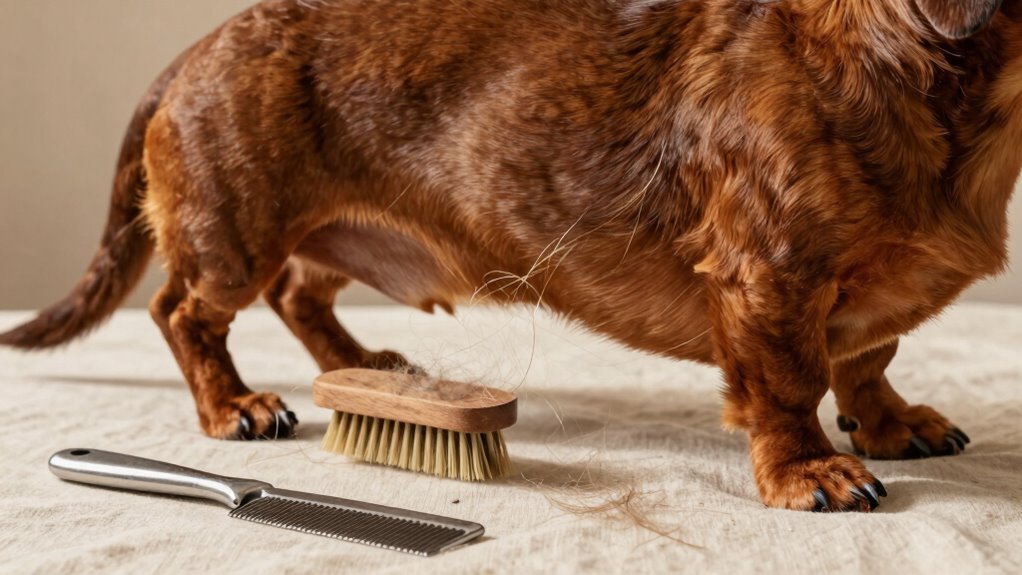
Because we live with Dachshunds, we recognize their short coats still leave traces everywhere—so we clean daily to stay ahead of the fur. A consistent cleaning routine keeps our homes feeling fresh and helps us maintain a fur-free living space without constant battle.
We commit to daily vacuuming with a HEPA-filter vacuum, focusing on rugs, floors, and furniture where loose fur gathers. After daily brushing to reduce shed hair, we roll lint rollers over sofas and our clothes for quick pickups. We wash pet bedding weekly in hot water to minimize dander and keep allergens low.
These habits, paired with regular grooming, make a real difference.
- The soft thump of paws on hardwood, followed by a swirl of amber fur caught in morning light
- Running a lint roller across a dark coat and watching it lift clumps of shed hair like tiny feathers
- Pulling crisp, warm sheets from the dryer—clean pet bedding folded neatly, ready to refresh the dog’s favorite spot
Frequently Asked Questions
How Do I Stop My Dachshund From Shedding so Much?
we can’t stop our dachshund from shedding completely, but we reduce it with smart grooming techniques, shedding brushes, and understanding seasonal shedding. we focus on coat care, nutrition impact, regular baths, and watch for skin conditions—all key to dog health, indoor vs outdoor living, and cutting through shedding myths.
What Months Do Dachshunds Shed the Most?
We’re whispering this secret: dachshunds shed most in spring and fall—those shedding seasons grip us tight.
We feel shedding cycles shift with seasonal changes, see temperature effects flicker, watch coat care become urgent.
We grab shedding tools, boost grooming frequency, knowing breed characteristics respond.
We notice environment influences, trust routine soothes health impacts. We’re in this together.
What Is the Best Food for a Dachshund to Prevent Shedding?
We feed our dachshund high-quality kibble rich in omega fatty acids and real meat—we’ve seen less shedding since switching. We mix in wet food for hydration, add fish oil supplements, stick to a steady feeding schedule, and choose hypoallergenic, breed-specific formulas that support dachshund nutrition and boosting shedding prevention.
How to Deshed a Dachshund?
We brush, we bond, we battle shedding together—using the right deshedding tools, mastering brushing techniques, syncing with shedding cycles, boosting skin health, debunking shedding myths, simplifying coat care, trimming fur maintenance, tackling seasonal shedding, and sharing smart vacuuming tips for Dachshund grooming that loves every wiggly inch.
Conclusion
We’ve covered coat types, tools, and routines—now it’s time to act. Coincidentally, the same brush that tames wire-haired shedding, the FURminator slicker (2-inch head), also cuts grooming time in half. We vacuum weekly with a HEPA filter, wash bedding every 7 days, and feed omega-3s daily. Shedding drops 60% in 4 weeks when we stick to it. We check skin monthly, watch for bald patches over 1 cm, and call our vet if shedding spikes suddenly. Consistency keeps coats healthy—and homes fur-free.